Showing posts with label berlin. Show all posts

Monday, 3 November 2014

Neue Kreuzberger Zentrum

P8282351

P8282356

P8282355

P8282352

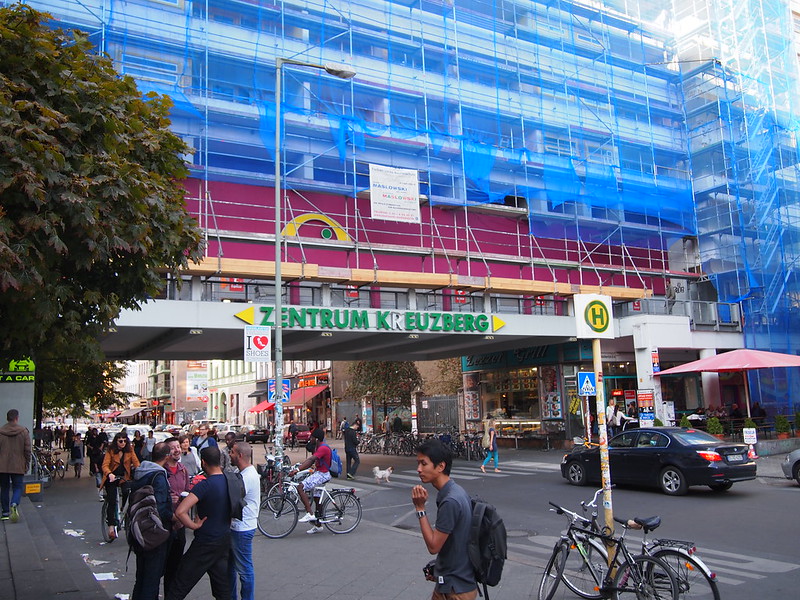
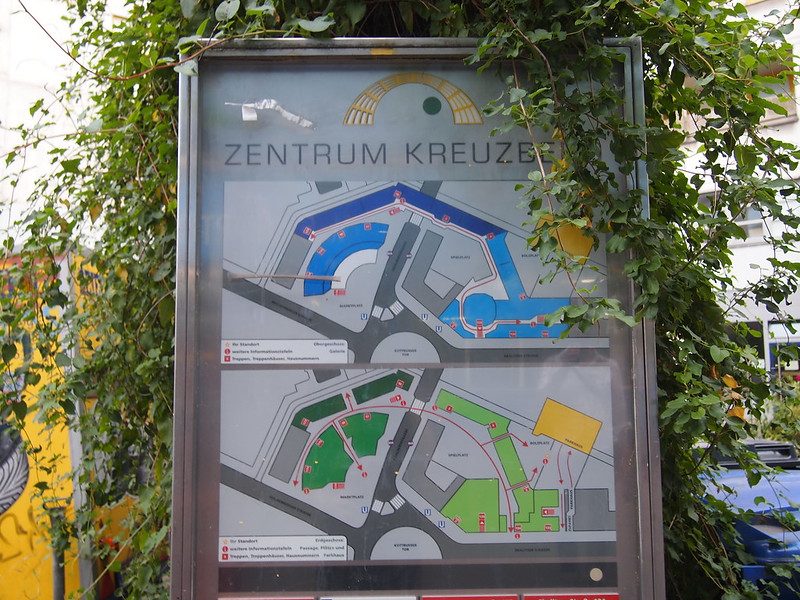
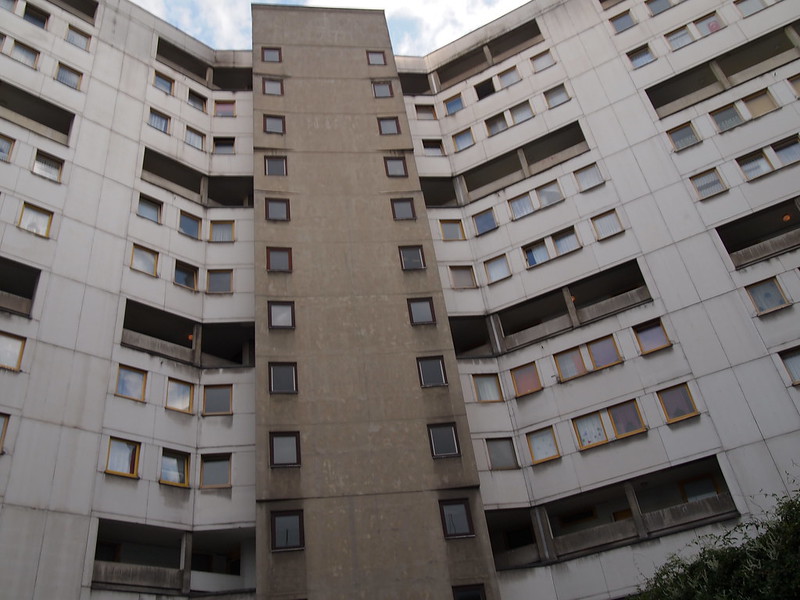
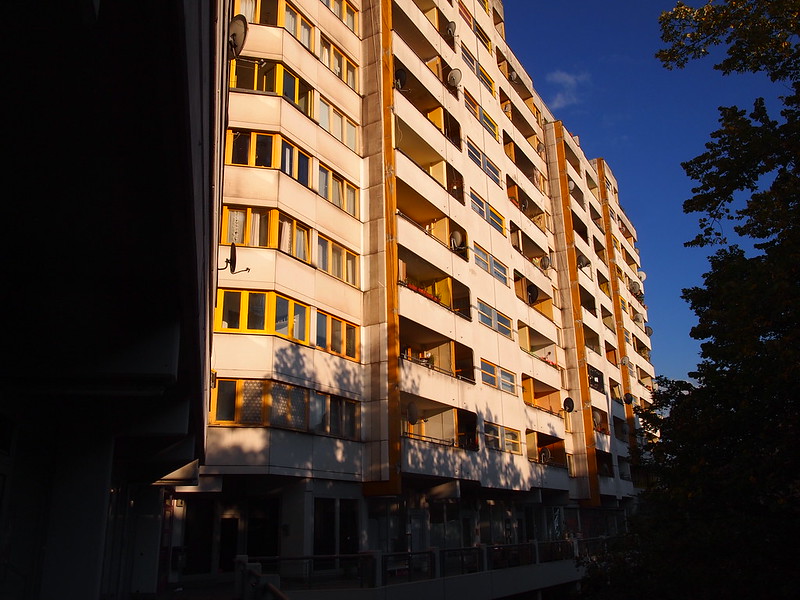
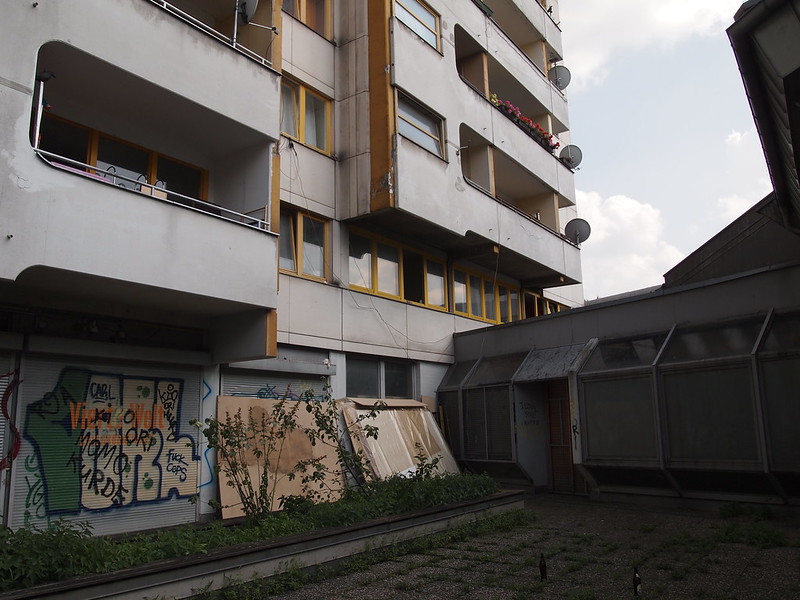
In 1974, some 40 years ago, the Neue Kreuzberger Zentrum (NKZ) was built. A staggering mammoth of a mixed-use tower block, it stands at the centre of the chaotic and noisy Kottbusser Tor traffic junction. Its construction required the complete demolition and rebuilding of the area, and the word “neue” was surely in its name to suggest that it was imagined to be the starting point for a new urban direction in Kreuzberg. Its arch design was meant to compliment the development of the future ring road whilst allowing the building to serve as a wall for the traffic sounds.
P8292505

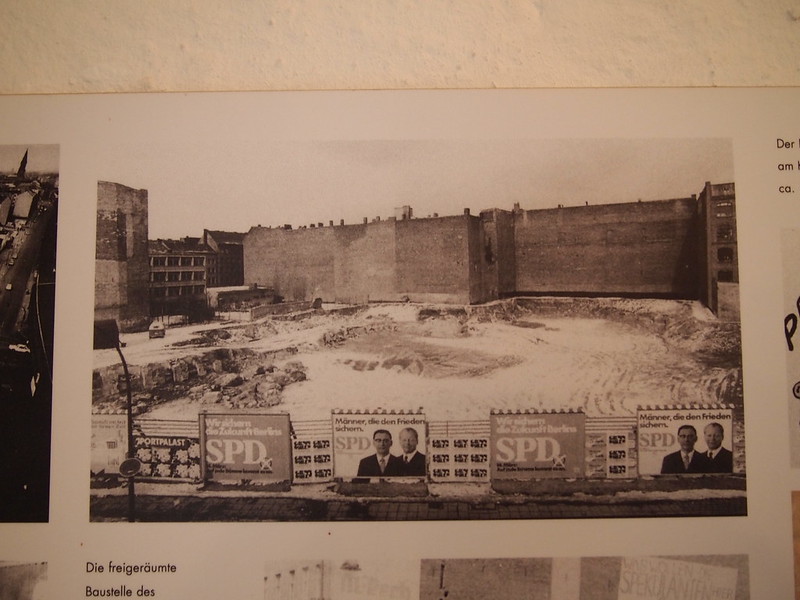
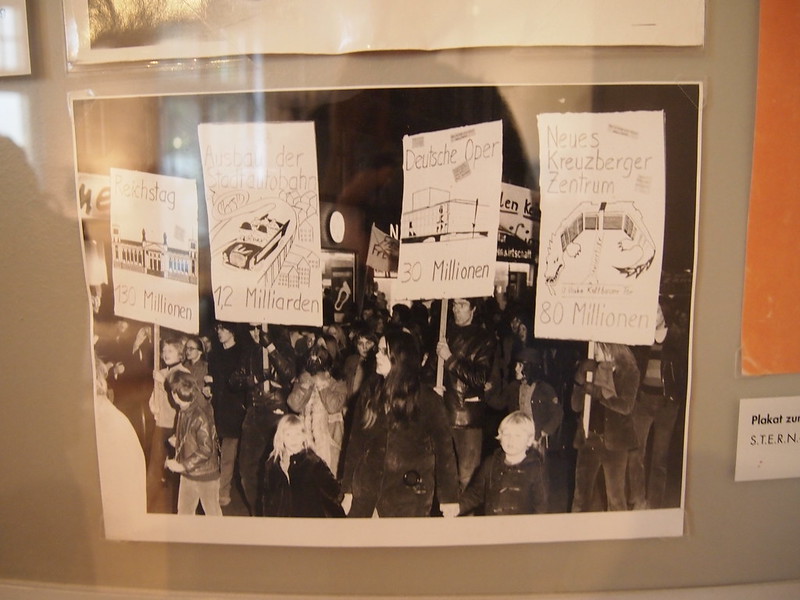
If you go down to the FHXB Museum near the NKZ, they have a permanent exhibit of how the building and area was redeveloped, including a photo of the site upon which the NKZ has been built, in which the outside of the demolished site has huge posters from the Social Democratic Party stating “Wir sichern die Zukunft Berlin” (We ensure/secure the future of Berlin). A dream for the future, to build more social housing in the area which sorely needed it in the post-war era, but blighted by different demands and interests pulling it in all directions and pushing it forward against the will of the people living in the area. The NKZ was criticised for having been built without sufficient public consultation or participation and having used brutal forced evictions to clear the land.
P8292489

P8282360

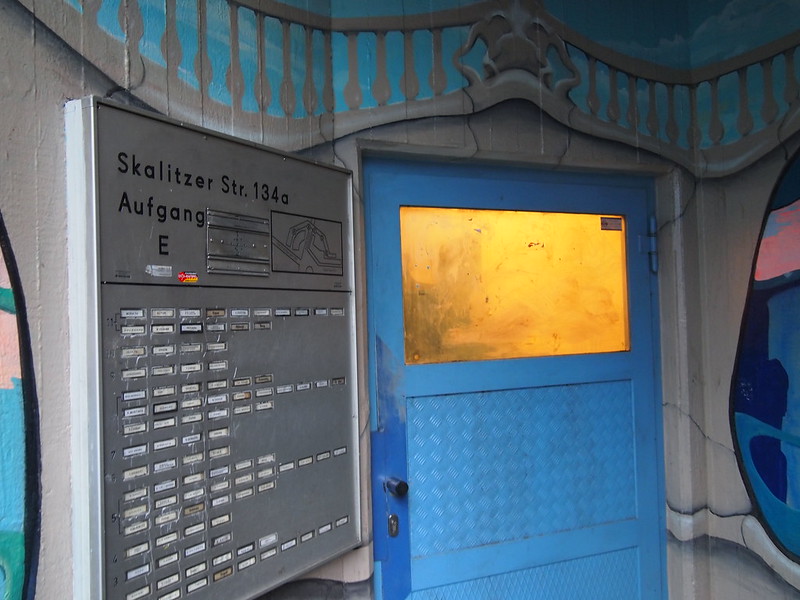
When I was in Berlin for the summer, I frequented a printer on Dresdener Straße in Kottbusser Tor which was directly behind this mammoth of a building. On exiting the dead-end of Dresdener Straße, I saw a stair leading upwards, which took me to an fantastic upper level that crossed over to the other side. I was instantly attracted to it, although it was hard to explain why.

The main issue was that I couldn’t even recall why it looked familiar to me - did I see this on my last trip to Berlin in 2011? Or was it 'familiar' because I had seen a similar building in the Genting Highlands, or Singapore? Was it a falsely displaced nostalgia for this sort of dated architecture; or was it the pleasure of discovering something that seemed like a fantastic urban playground to me, with its numerous stairs and corners and vantage points?

Today the word “neue” has been removed from its name, and it is simply known as the Kreuzberg Zentrum. But in some ways, the NKZ reminded me of Golden Mile in Singapore, one of my favourite buildings in Singapore. Both the Golden Mile and NKZ were planned as buildings which would be at the centre of a glittering, golden era of modern urban development, although in both cases it did not materialise as such in those locations. Golden Mile has been later described as a vertical slum, but it remains as one of my favourites because of the diversity of spaces within it, and how well used it appeared to be. I suppose I was fascinated that the thai people in the Golden Mile Complex would sit on the stairs and use them as picnic areas. To some it might seem like a unorthodox use of the spaces within the building but in my opinion they had done it all right! The food was tasty, the spaces were welcoming, the music went on and on - in my opinion the building was a success!
P8282357

P8282358

P8282359

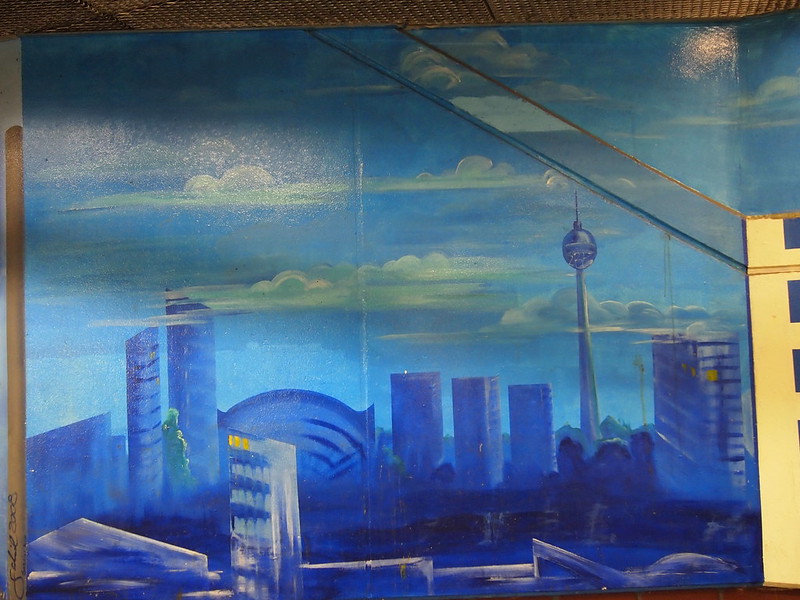
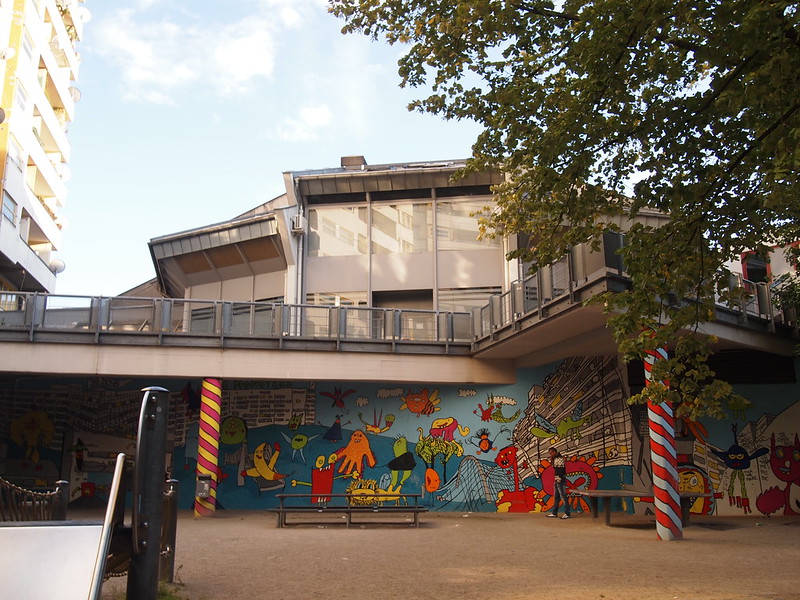
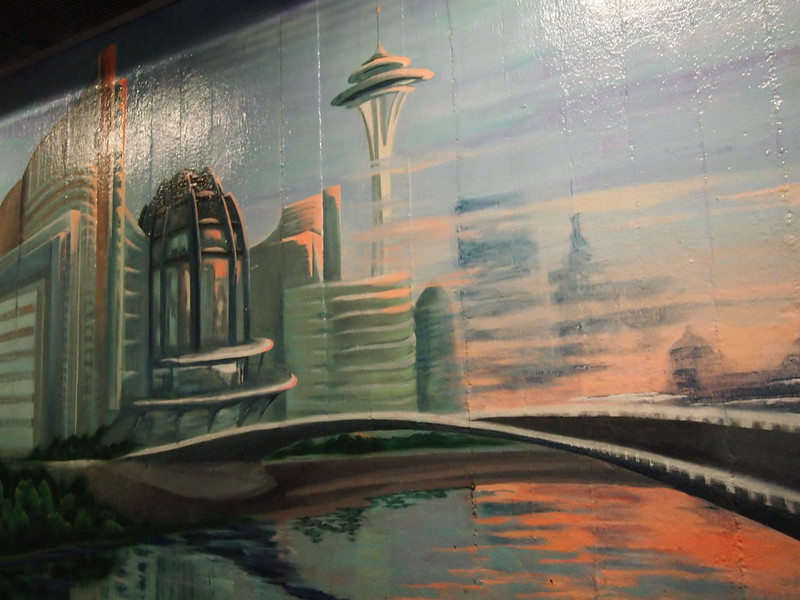
Tucked away in one part of the NKZ is this beautiful covered corridor which has been painted with murals of a futuristic Berlin city. This area in which the murals are located seems less than perfectly maintained and is a well-trafficked public thoroughfare which is littered with rubbish and strongly reeks of urine in one corner. I adore the strange juxtaposition of these odd future visions, placed right smack in a rather grim urban setting.
P8081110

P8081109

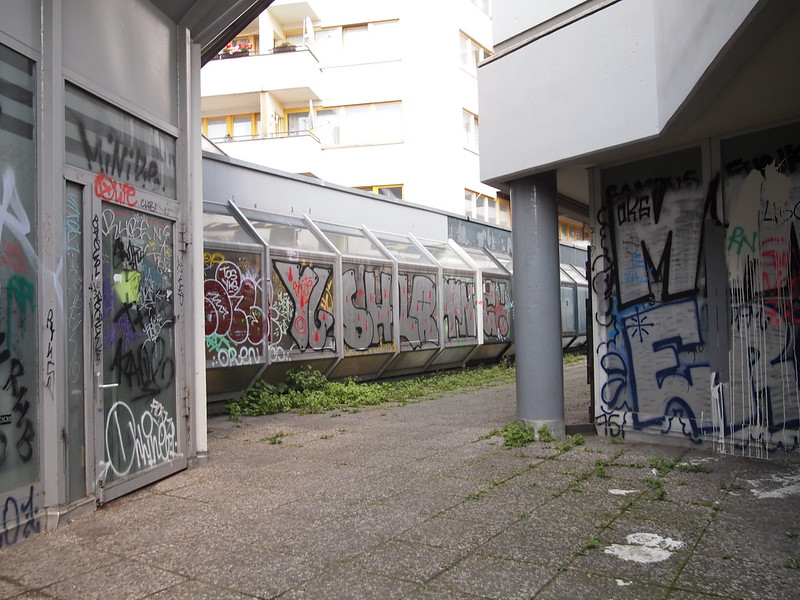
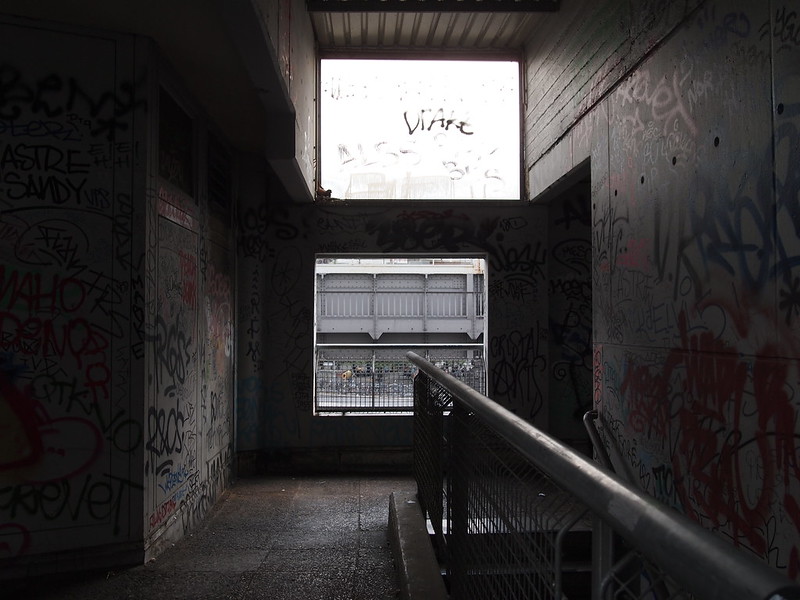
Whilst its not to say that I like any old sort of place which is rundown and poorly maintained, I realised that I do like places for the very same reasons which turn it into such an anti-social space: littered throughout the complex are these tiny pockets of empty space - sometimes disused and uncared for, covered in broken glass and graffiti, but on other occasions you may find a hidden dead-end public corner filled with plants and small comforts, places where one can find privacy for a moment within a very public space. They are spaces to be experienced, but which have no real purpose except perhaps to be a walkway between places; a temporary halfway house. And in a huge building like the NKZ there are so many of them.

One may debate that it is these hidden spaces within the building which engender antisocial behaviours because no one can see or police the activities that go on within it, yet perhaps naively I think they are also alternative spaces for dreaming. Strange isolated spaces from which the outside city is not visible for a moment, just as the city cannot see inside it. It is really just... an empty space, and I am attracted to that.
P8081107

Saturday, 5 July 2014

Arriving at ZK/U / Baugips Casting Experiments / Moabit and Behala Westhafen

A few days ago I got to ZK/U in Berlin (finally) where I’ll be doing a residency for the next two months. I’m also going to try to catch up on a lot of backlog on documentation and writing here.

On seeing a sink in my studio, I decided it was as good a reason as any to experiment with something horribly messy and wet, like plaster casting. So far I’ve only had one other experience trying to use plaster - earlier in the year I went to a two-day plaster casting workshop by Kevin Callagan at London Sculpture Workshop - it was great because it was more about making quick “sketches” in 3D through hand sculpted clay moulds and plaster casting - instead of drawing sketches, the idea was to produce quick 3d plaster sketches of visual ideas, which I really enjoyed doing - and which I want to do more of for “The Library of Pulau Saigon” project I’m working on.

One of my goals for the year is to improve on my model building skills - sadly I have never ever had to chance to do a proper wood/metal workshop/design & tech class, neither have I ever done a foundation art course, so I am generally very clueless (and completely lost) when it comes to what is the proper way to build something. I mean, I build things because I want to build things, but actually I don’t know what I’m doing really....

I found a bag of ‘baugips’ (building plaster) and ‘modellgips’ (modelling plaster) in the communal material shelf, and I happened to chance across some squishy ‘plaster mixing pots’ for 70 cents in a hardware shop along Turnstrasse, so...

20140705_011200

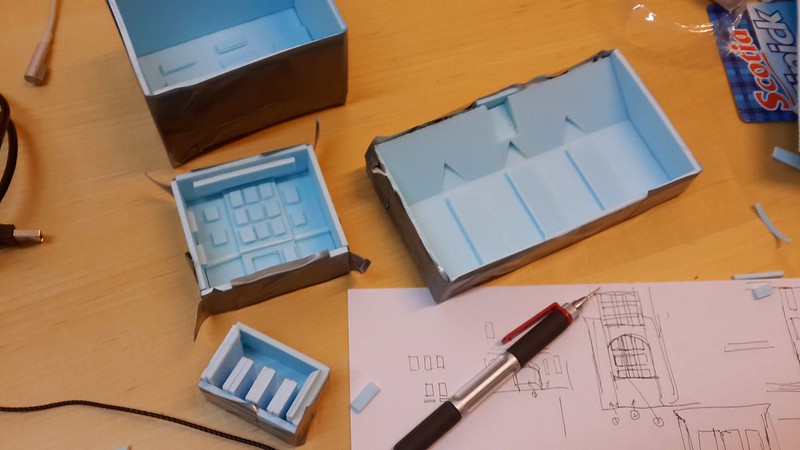
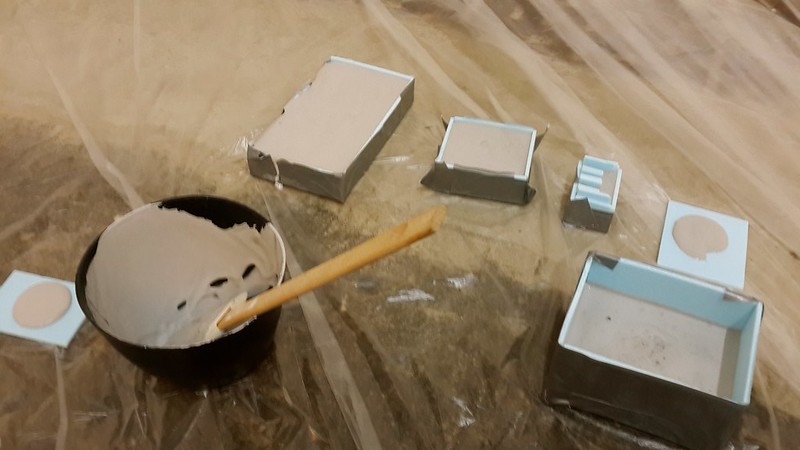
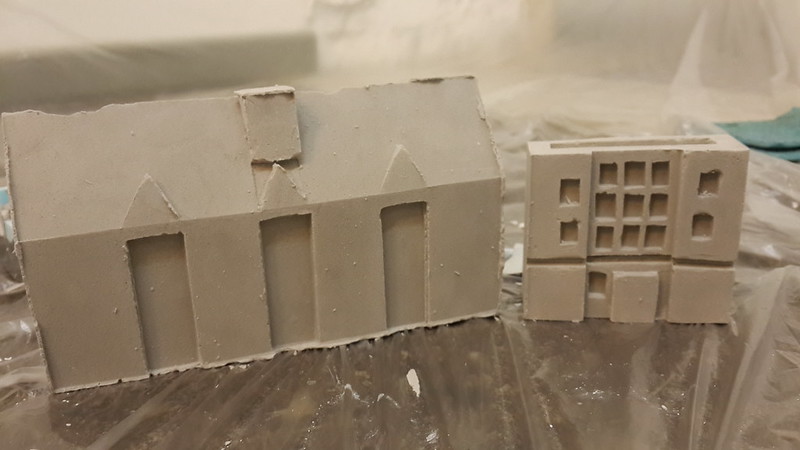
First, I made some moulds to cast the plaster in. I wanted to make some of buildings; the end result turned out to be gross renderings of what I imagine to be ‘berlinesque’ buildings and also the Behala Westhafen building which looms in the distance from my window. I found some blue foam in the communal pile - it is also so easy to work with and make into prototypes! Good thing is that blue foam is a perfect material for plaster casting, and for me it feels less wasteful than using clay, which can quickly become messily inpregnated with shards of plaster, rendering it unusable after a few uses.

20140705_164721_Siemensstraße

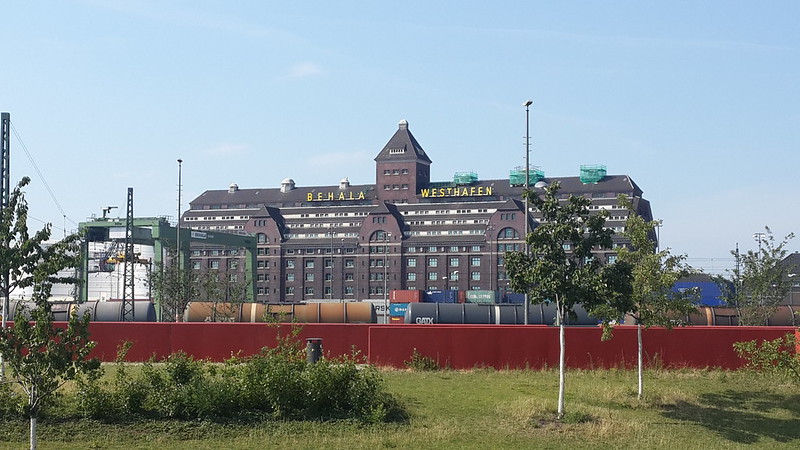
The actual view of Behala Westhafen from the terrace of ZK/U

I wanted to add a note on the Behala Westhafen - it is easy to forget that technically speaking Moabit is an island, bordered by the River Spree, the Westhafen Canal and the Berlin-Spandau Navigation Canal. Looming in front of my window view is the massive, red-bricked Behala Westhafen building, and the trains which come in ever so often, presumably hauling the cargo to be shipped to and from the Westhafen habour. Behala is the company that runs a harbour which ZK/U is right next to here in Moabit, built in 1914, forming Germany’s largest inland port. It is surprising to see the busy port in the middle of the land. You would imagine a sight like this should be at the coast or at the edge of the sea, but here the busy cranes and container port is right in the middle of Berlin!

20140705_011558

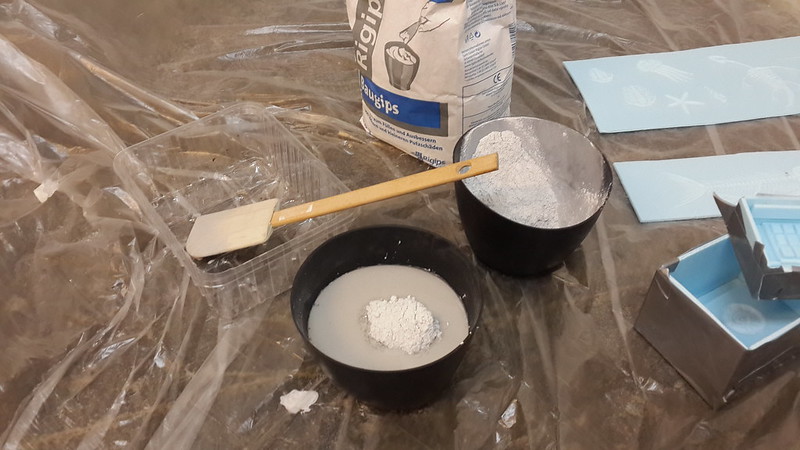
I had half of cup of water in the container and poured in the plaster slowly, allowing the plaster to ‘absorb’ the water. It will make a distinctive sound... if "the sound of water being absorbed" can actually be described as a sound? Well you’ll have to hear it to know it. When the plaster begins to stop sinking and starts forming islands that stick out on the surface of the water, you can start to mix it. I am a lazy person so I got a discount rubber spatula to mix it with instead of my hands. Of course if you are a purist you should use your hands to knead out all the lumps, but without introducing too many bubbles.

20140705_012942

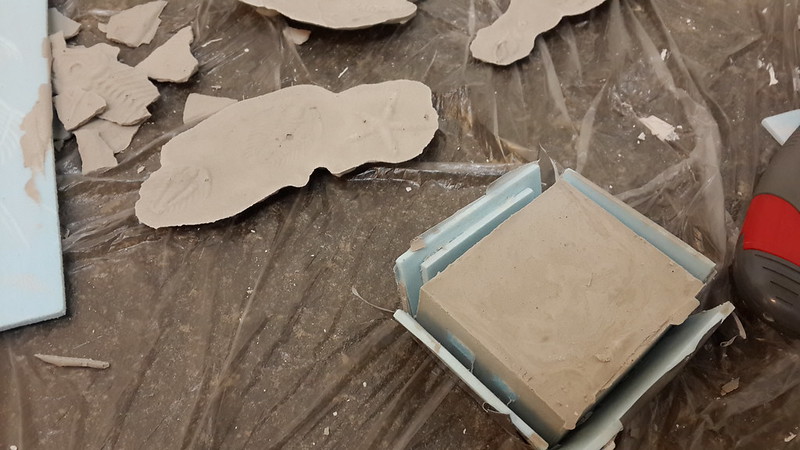
Poured into the casts and left overnight to dry.

20140705_091341_Siemensstraße(

Ready to peel away from the mould

20140705_091353_Siemensstraße

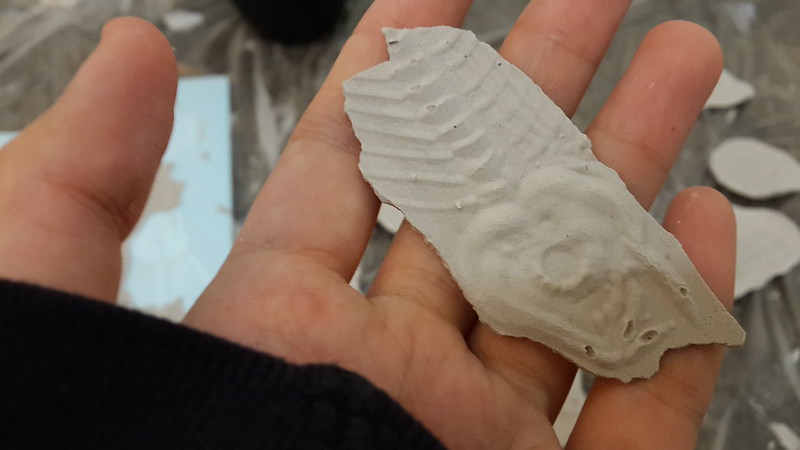
"Fish skeleton"

20140705_091406_Siemensstraße

"Trilobyte"

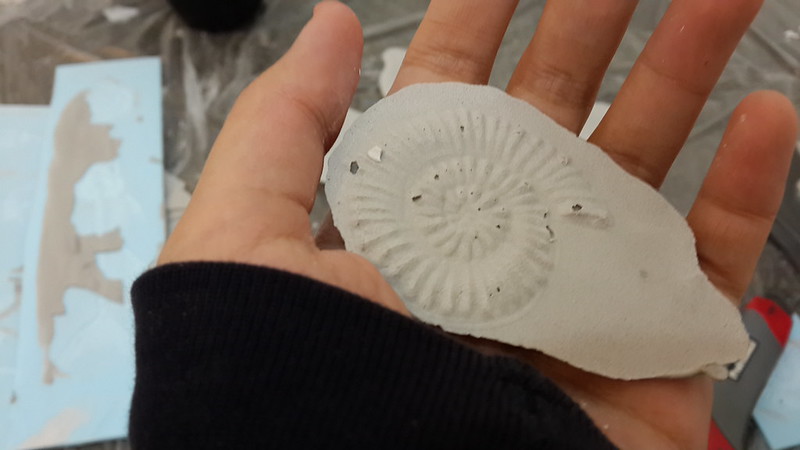
20140705_091359_Siemensstraße

"Ammonite"

20140705_092332_Siemensstraße

Some manner of a building facade - at this point I’ve realised I’ve done it all inversely by mistake! LET THIS BE A LESSON - is the feature sticking out on the building? To make a mould you should only be cutting out shapes representing each of the recesses, NOT the protuberances on the building! The next time I make a mould of Behala Westhafen I will do the cutouts in reverse.

Friday, 19 April 2013

Maps without Buildings (2011-2013)

Maps With/out Buildings is a hand-illustrated study of place, the map-making process and natural geogrpahical features as they are commonly represented in topographic maps. I have been working on an ongoing collection of "maps" of my dreams since around 2009. However, along the way I realized that all of my dreams had buildings in them, such that all the “dream maps” that I used to draw upon waking were technically more like dream building plans than maps of places. I wondered why it was that I didn't have dreams without buildings in them. So I became interested in exploring the process of making maps which did not have urban features in them. By studying the landscapes I encounter in my travels, and by trying to visualise landscapes devoid of buildings, one day I hope to have dreams without buildings in them.

P4171250

Maps without Buildings (2011-Present)

P4171252

Ellipsis (2013, London)

P4171253

Lichen Mountain (2011, Cornwall)

P4171254

Le Petit Arbre (2012, Paris)

P4171255

Gepenstermauer (2011, Berlin)

P4171256

Lake of Dreams (2011, London)

The texts are integral to the pieces. One of the accompanying texts was generated by running the contents of this long-running blog through a markov text generator, automatically producing a text which sounds like Debbie. More on that in another post!...

The work is being shown at "Theo.do.lites", an exhibition curated by Kent Chan and Silke Schmickl, at Institute of Contemporary Art Singapore (Lasalle ICAS Gallery 1). Featuring the works of Apichatpong Weerasethakul, Raqs Media Collective, Uriel Orlow, Alexander Schellow, Charles Lim, Romain Kronenberg & Benjamin Graindorge, Marylène Negro, Tan Pin Pin, Daniel Hui, Masayo Kajimura, Massimilian & Nina Breeder, and Debbie Ding. Show's on from now until 12 May.


See also:

Photos from Opening Night -

P4171276

P4171279

More Photo Documentation of Theo.do.lites, the exhibition.