Caird Library, National Maritime Museum, London
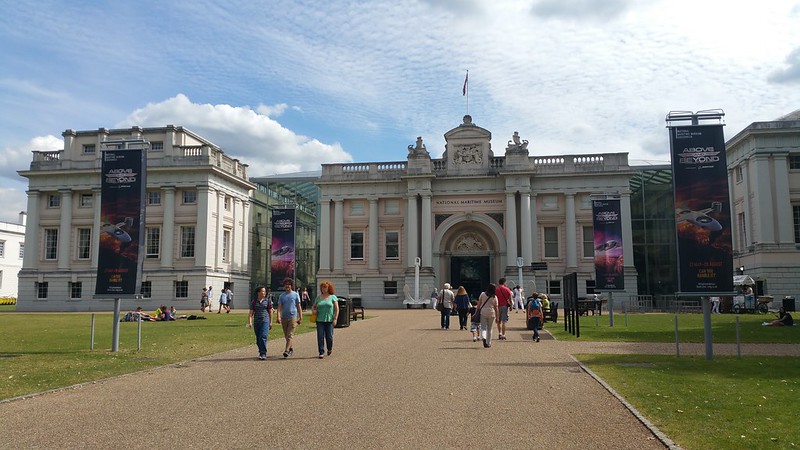
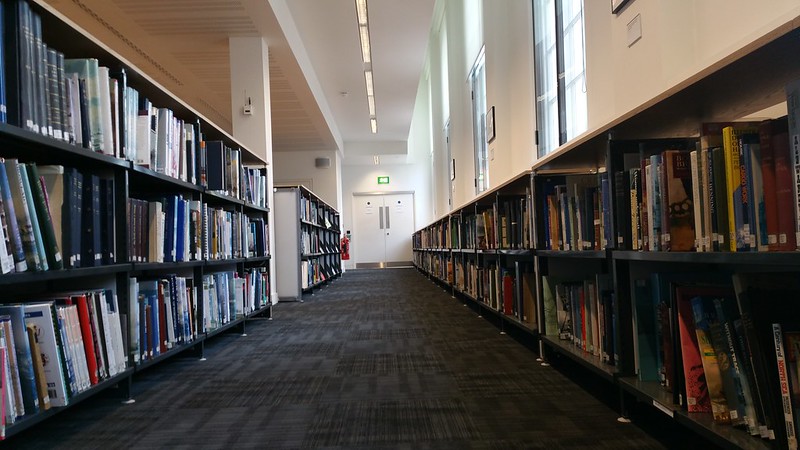
The Caird Library is located inside the National Maritime Museum. After being to many old libraries in London it was a little surprising to see the contemporary and modestly-sized Caird - despite being housed within a rather historic building. However, what's on shelf is only a small fraction of its collections - and the staff there are also incredibly helpful if you need help in locating resources!
I was admittedly being unrealistic about what information I could actually find there - as ship logs and documents that survived long sea journeys were often only kept out of particular necessity. Furthermore the conditions at sea are in fact particularly unconducive to the preservation of information about cargo (esp since commanders and sailors often supplemented their paltry emoluments with smuggling and privateering). So instead I spent a fruitful afternoon (but quite different to how I imagined) reading up on the history of maritime insurance...
At the time the name 'Lloyd' was neutral - very ordinary but not too commonplace and held no other associations or particular connotations of class, making it suitable as the name for a coffee house which turned into a business centre; information about the progress or fate of merchant ships and other maritime intelligence were ultimately obtained by overhearing the conversations and gossip of sailors who had returned. Early underwriters would have done their underwriting at the Exchange but then the merchants and underwriters alike would seek out news through the coffee houses where people gathered.
As Charles Wright and C. Ernest Fayle's "A History of Lloyds: 1689-1713" noted: "At no time, so far as we are aware, did any group of men say to each other, "Go to; let us make the greatest centre of insurance in the world!".

There were ample opportunities where fraud could be committed where the information upon which people made business decisions was entirely hearsay, and it is also written in 1728's The Case of the Coffeemen of London and Westminster (Or An Account of the Impositions and Abuses, Put Upon Them By the Present Set of News-writers), that the coffee men complained that the news-men would come to their coffee shops where "all sorts of rousing falsehoods" were uttered until they became news, and that the coffee shops effectively played a similar role in distributing news for free, whereas the news-writers were raking in money from advertisements.

The earliest surviving copy today is from Friday Jan 3 1740 (#560)
In response to the haphazard state of the news, the coffee men decided to utilise their position as the centre of shipping intelligence of the day and make their own news. This was years after the titular Lloyd (Edward Lloyd) had passed but the name Lloyd had already become . Lloyd's List - a public report published every friday and tuesday, gathering up all the scattered pieces of shipping intelligence - covering a gamut of events such as sinkings, disasters, abandonments, vessels spoken with, ships saved, damaged, fate of crews, lost cargo, mysterious floating objects, and from time to time, occasional extraordinary occurrences.
Example: random fragments from the year of 1834...
Brest 7 Jan 1834
A quantity of Canadian timber marked M.B & SW has been driven on shore on this coast.
Neath 12 Jan 1834
A considerable quantity of palm oil and a great number of hides have been washed on show at Newton with two lower masts and several other articles
Liverpool 31 Jan 1834
Charles Joseph saw a vessel bottom up, nearly new, bottom painted green.
Liverpool 31st March
Articles picked up: segarbox, dealboxes marked D545 & a quantity of segar washing about the rocks...
From May 2 1834
Singapore, 19th Dec
"The Baltic" sailed from Marietta for this port and has not since been heard of...
If this were to be a story about the changing modes of transmissions of shipping knowledge and intelligences, then one would also imagine that by today most of the above records (even historical records of shipping information) would all have been digitised; and this should not have required my pilgrimage all the way down to these physical repositories to read them...
Digital Sheds

And indeed I've also noticed that Wikipedia actually has an extremely detailed list of shipwrecks - even if you wanted to search about something as specific as 1834, there is a list of shipwrecks in 1834 which from a quick glance seems to be largely written by a very prolific wikipedia editor 'Mjroots' (who describes himself as someone with a hobby/interest in "molinology, deltiology, civil aircraft, railways and Dutch").
I've been fascinated by Mjroots' general sandbox - which is truly an amazing digital "junk shed-cum-workshop" of snippets. As so much of the text within seems to have been written to be the very example of a well-written wikipedia page, the Sandbox where the user Mjroots has collected all his half-written draft pages reads like a techno-poetic dream; an Infobox which tries to define all the possible parameters that might need to be known about a windmill; a Human-Markovian-wikipedia-daydream of lost ships, steam trains, windmills, tramway track maps and aircraft crash investigations...

Source: Mjroots' General Sandbox
PS: I don't know you, Mjroots, but thanks for the hard work on wikipedia and all the lists of shipwrecks!


