Showing posts with label latergram. Show all posts

Saturday, 16 December 2017

A Tour of London's Historical Wetherspoons

Untitled

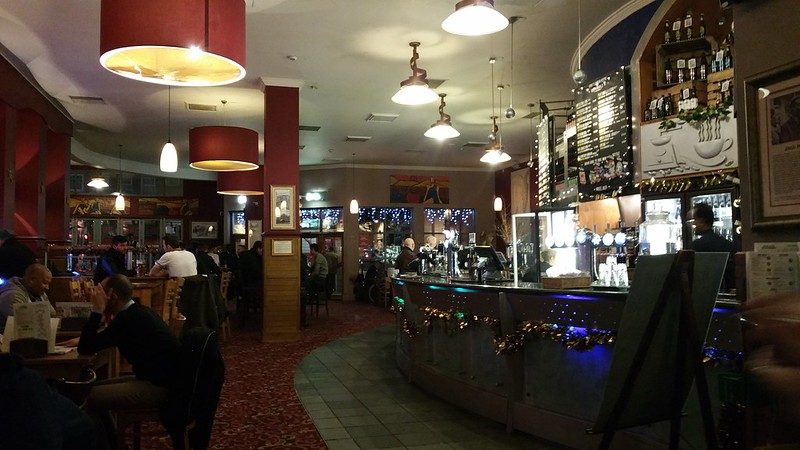
Wetherspoons! The smell of spilled ale, steak pie, salt and pepper, and red wine stains on the carpets! I've always liked the historical buildings in which Wetherspoon pubs are located, so for Boxing Day LAST YEAR I decided to design a tour of London's historical Wetherspoons! (Unfortunately I have only come around to writing out my guide NOW, and I'm in a different country, but still..)

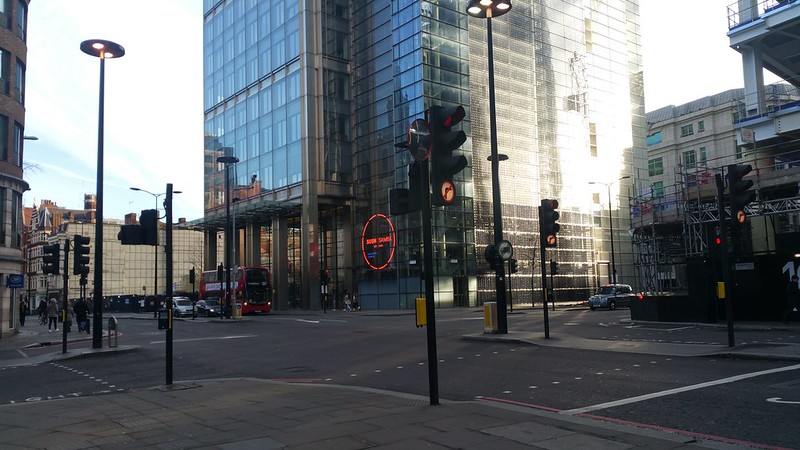
In theory, a spoons day sounds like it would be an excellent boxing day out, but all of central London seems to shut down on Boxing Day so the pubs in the most central part of town are closed. So we had to make a visit to some of the pubs on the list on another occasion.
Untitled
Empty Central London.

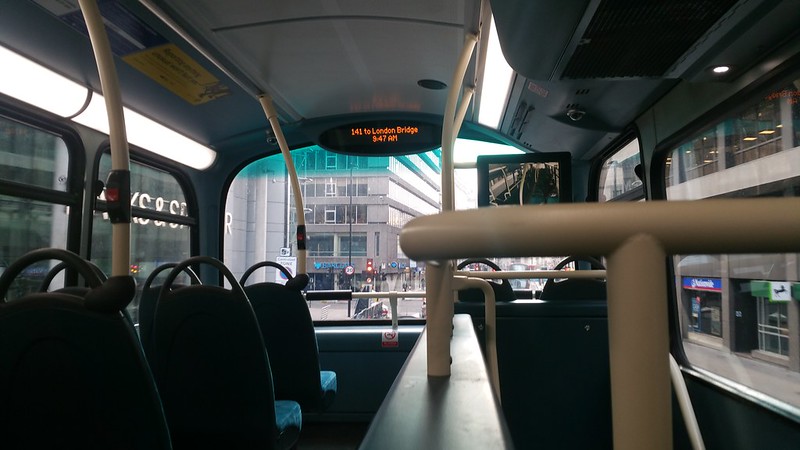
Secondly, London is a pretty big town so any "cross-London" journey is going to involve a significant amount of time and energy spent walking or taking public transport.
Untitled
Hours and hours of Buses. Forever.

Finally, what follows is obviously going to be a day entirely centred around the endless consumption of ales and pub food, which starts off well and fine until you get to the fourth Wetherspoons of the day and will suddenly find yourself (and anyone else unfortunate enough to have done the route) having voluntarily sworn off going to any more pubs for possible for the next month.... (Or at least until the next weekend, when the wild pubbing can start all over again!)

Debbie's Historical Wetherspoons Tour

(Central and North London)


My selections were based upon the following simple three criteria:

IS IT HUGE?
IS IT HISTORIC?
IS IT EPIC?

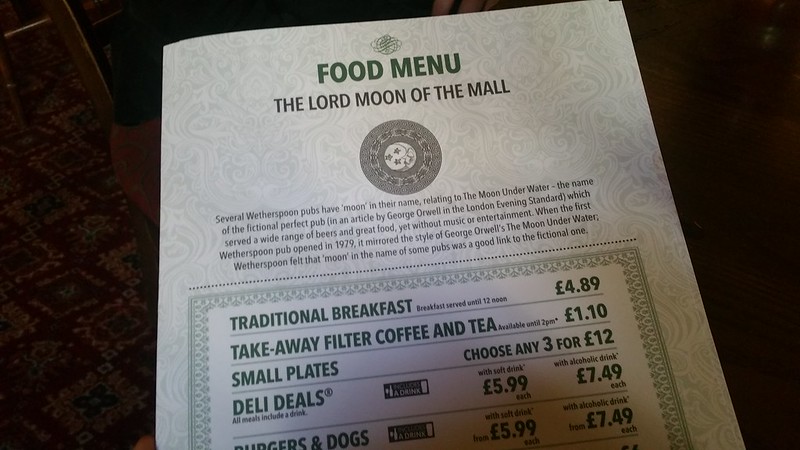
You'll have noticed that several Wetherspoon pubs have got 'moon' in their names. These all relate back to "The Moon Under Water" - the name of a fictional pub in an article by George Orwell, published in the London Evening Standard. This fictional pub was described as the perfect pub, serving a wide range of beers, extremely decent food, and yet curiously without any music or loud entertainment. So indeed the Wetherspoon pubs have been modelled after that idea of the ideal pub - a pub without loud music you have to shout over! Indeed, Tim Martin also felt that 'moon' was a good link for some of the pubs to have to the fictional one. Some required reading is the Orwell's "Moon Under Water".
Untitled

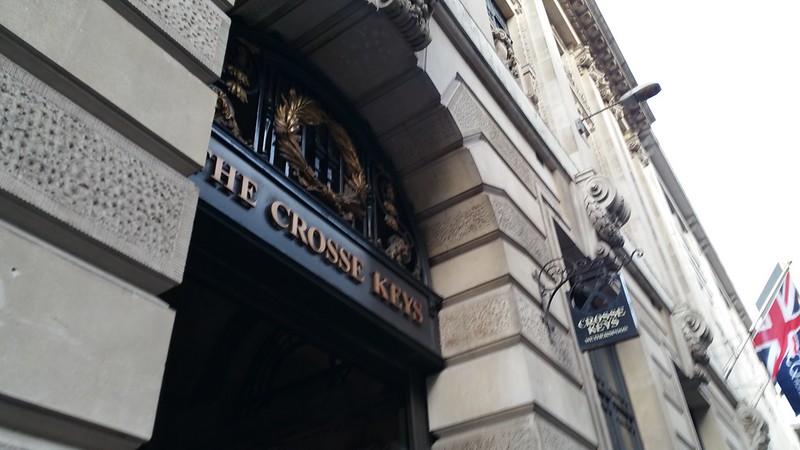
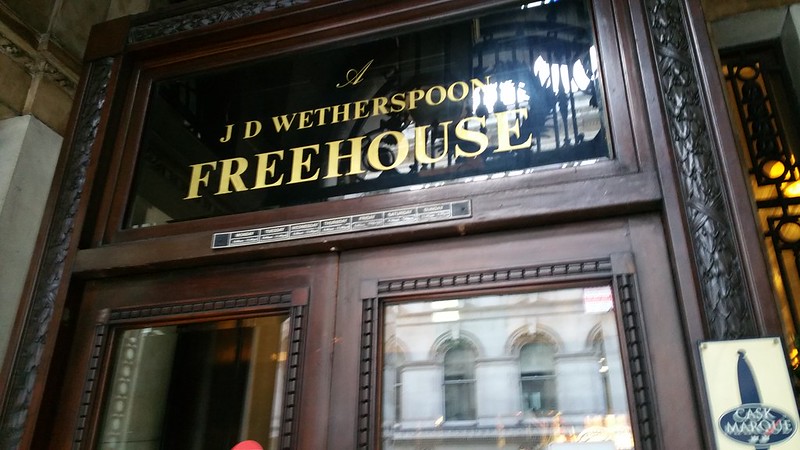
1. The Crosse Keys

9 Gracechurch St, London EC3V 0DR, UK
Untitled

Untitled

IS IT HUGE? - Tall ceilings. Said to have the MOST NUMBER of handpulls in any Spoons pub. 24 in total apparently.
IS IT HISTORIC? - It was first built as the Woolpack Hotel & buffet in 1899 and later
IS IT EPIC? - “Marbled columns, coffered ceilings a Victorian baroque facade and a drinking space large enough to house a whole fleet of Routemasters..."

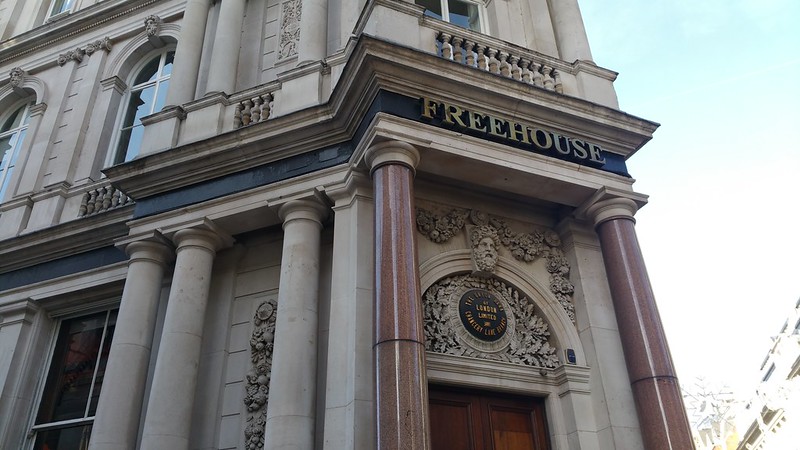
2. Knights Templar

95 Chancery Ln, London WC2A 1DT, UK
Untitled

IS IT HUGE? - A very high ceilinged bar.
IS IT HISTORIC? - The Knights Templar owned land on which Chancery Lane was built, along with this former Union Bank of London. Grade II Listed building. Its front railings are also listed! And it was in that Da Vinci Movie or something...
IS IT EPIC? - It has retained many decorative features such as the original scroll of the "union bank of London".

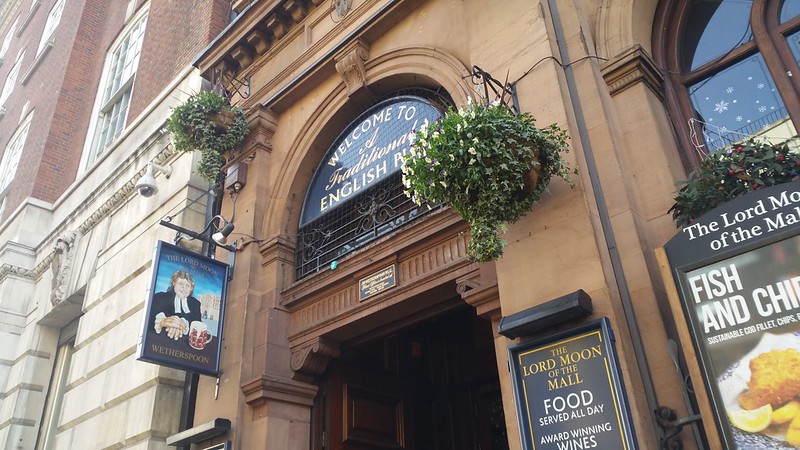
3. Lord Moon of the Mall

16-18 Whitehall, Westminster, London SW1A 2DY, UK
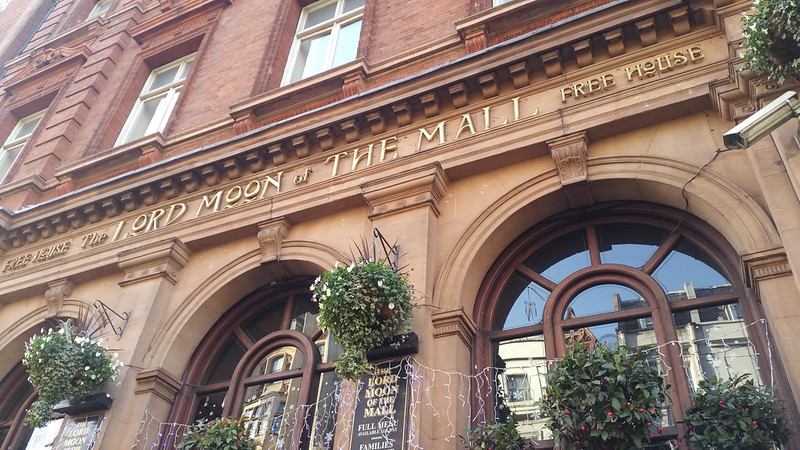
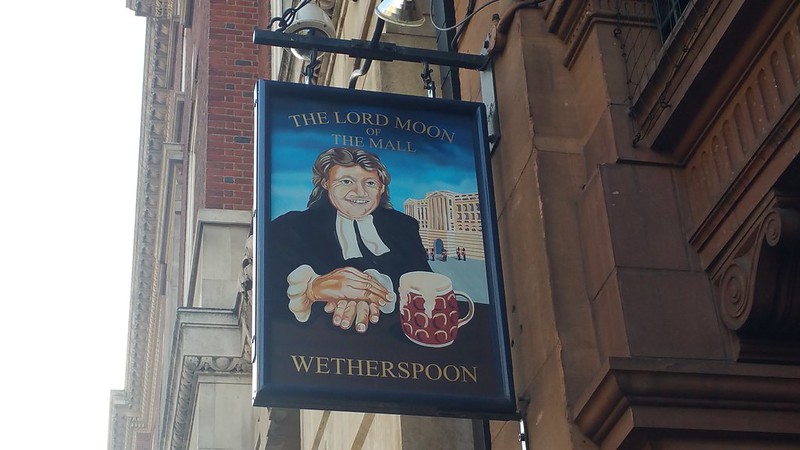
Untitled

Untitled

IS IT HUGE? - Huge and tall ceilinged
IS IT HISTORIC? - Former Cocks Biddulph Bank. Latterly Martins Bank. Then Barclays, closed 1992.
IS IT EPIC? - This is Spoons home turf – perhaps could be seen as its the Central London home. There’s a massive painting of Tim Martin in here. Also the pub sign has his face on it. Apparently this is often lauded in tour books for being “too grand”. People comment that its like “withdrawing a beer” instead of investing in a pint.

This place has rather more the vibe of a tourist trap than the earlier two (Knights Templar and Crosse Keys). Teeming with gaudy signs in multiple languages warning of pickpockets and thefts, its hard to

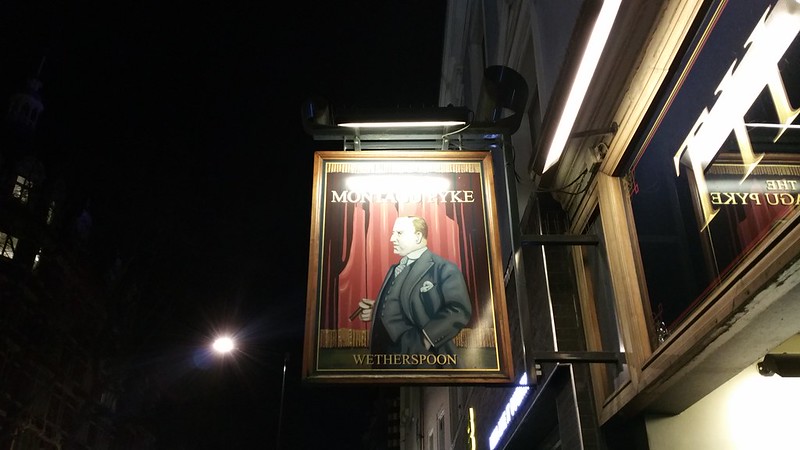
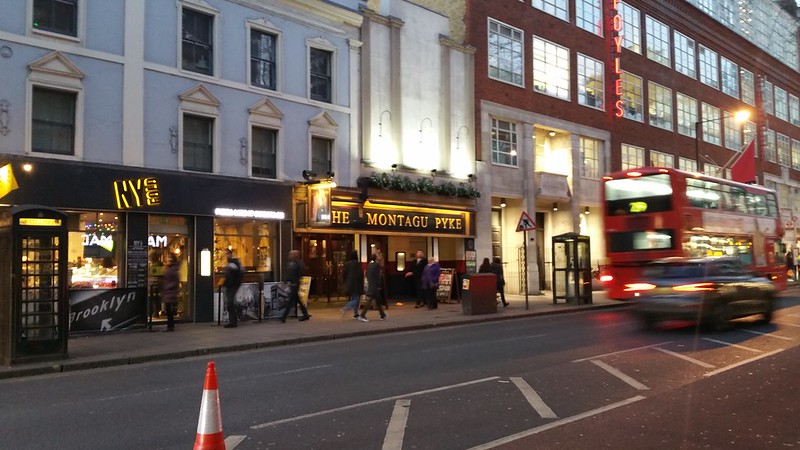
4. Montagu Pyke

Untitled

Untitled

Untitled

Untitled

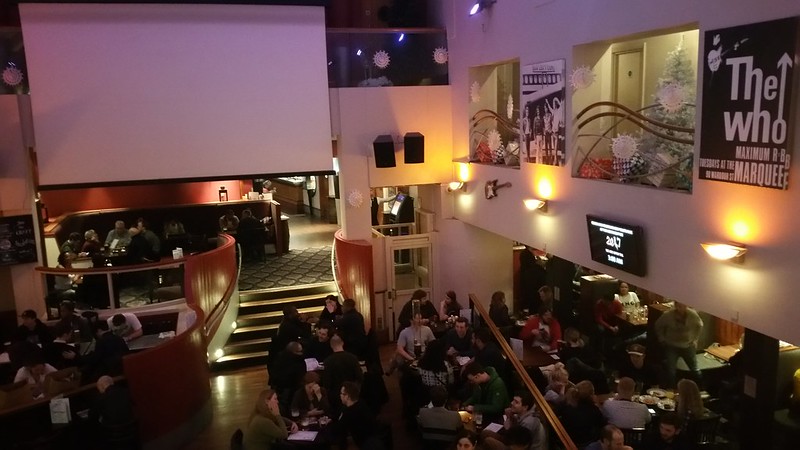
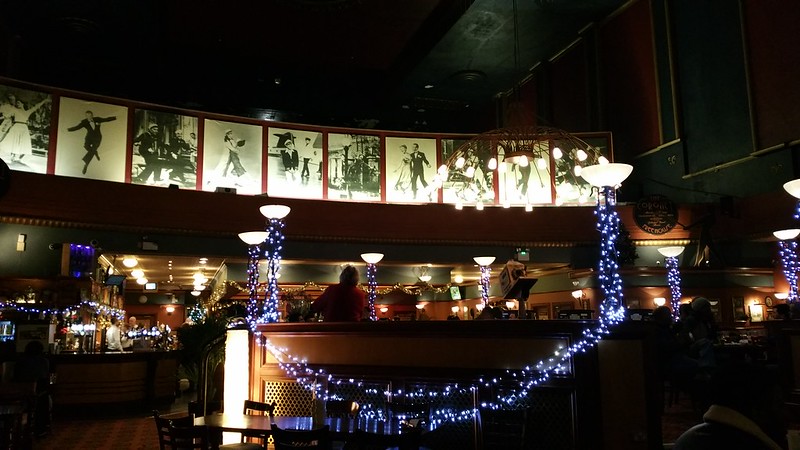
IS IT HUGE? - Huge old cinema
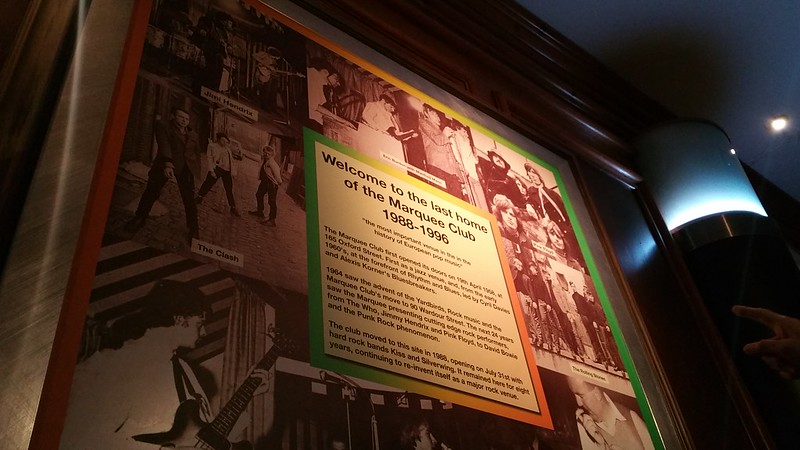
IS IT HISTORIC? - 1911 cinema and former Marquee Club venue
IS IT EPIC? - It feels squeezed in the middle of high street shops. From its description it was very promising, as most pubs do not have the benefit of a large interior area like this, however its current modern interior update doesn't seem to do the historic venue justice.

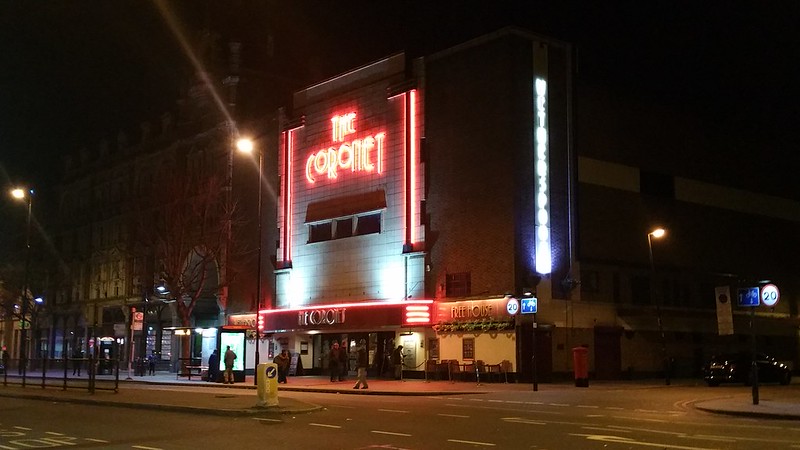
5. The Coronet

Untitled

Untitled

Untitled

Untitled

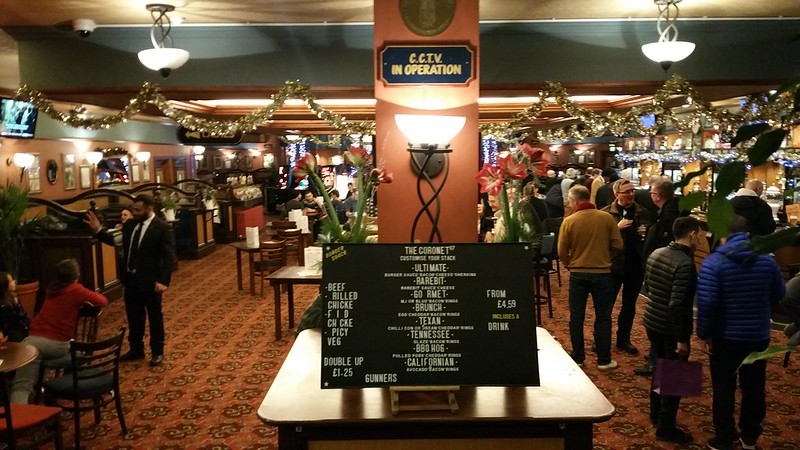
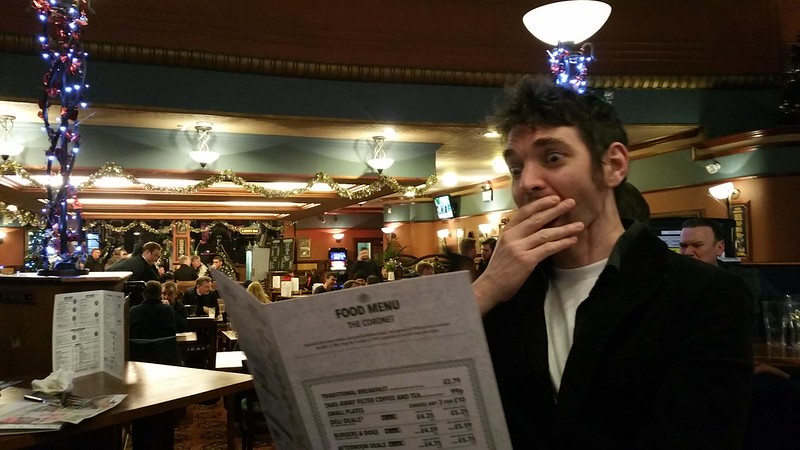
"WHAT? ITS THE SAME MENU AGAIN?"

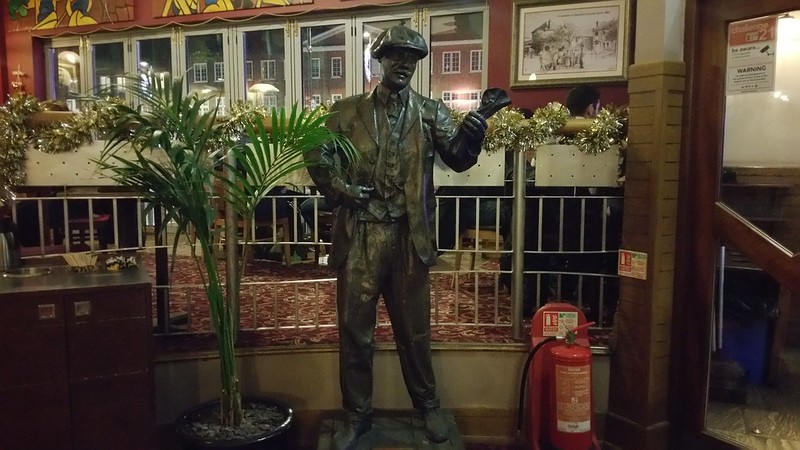
IS IT HUGE? - Huge old cinema
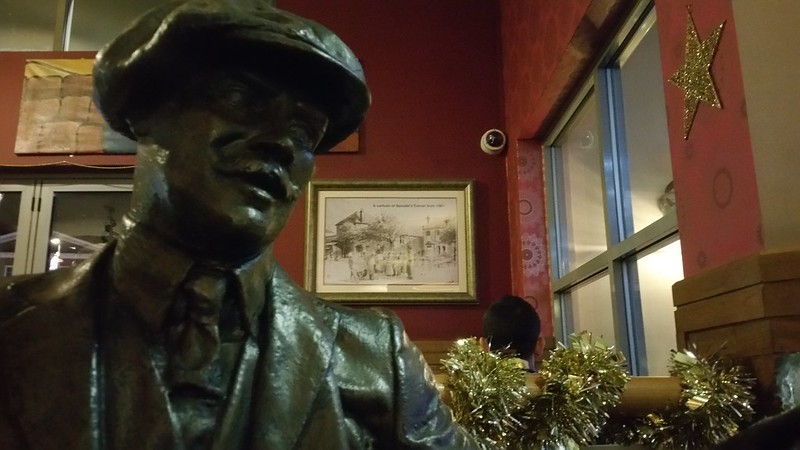
IS IT HISTORIC? - Former Savoy Cinema. Was renamed ABC in 1962, then Coronet in 1979; last screened a film in 1983.
IS IT EPIC? - Appears on many highlights lists of spoon pubs in London for its grandeur and interiors

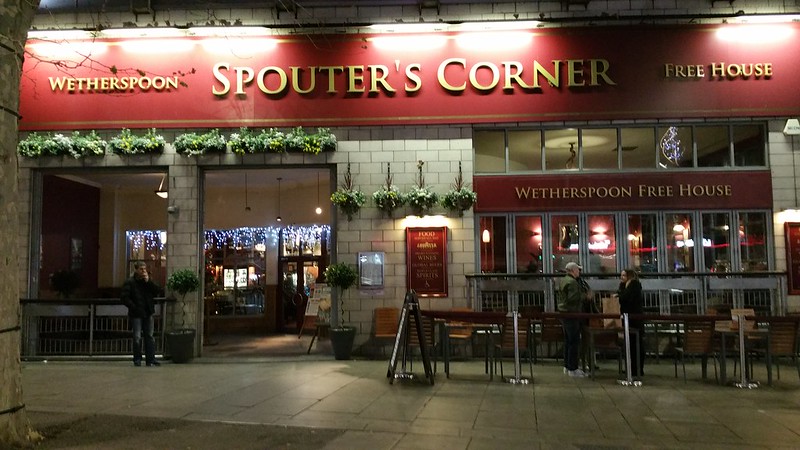
6. Spouter's Corner

Untitled

Untitled

Untitled

Untitled

IS IT HUGE? - No
IS IT HISTORIC? - Part of the Hollywood Green leisure complex, that corner of the High Road was called Spouter's Corner in the past for its popularity for free speech, or "spouting" in a similar style to Speaker's Corner at Hyde Park. Open air meetings were held until the 1950s and it was also an assembly point for hiring workers.
IS IT EPIC? - Honestly, I only added this one as a palette cleanser and because it was pretty close to home.


#LATERGRAM
I hope it doesn't confuse people that I've decided to backdate my posts even though I'm writing this in Dec 2017 - but it does make more sense since I've had such a huge number of posts to push out and I like to think of this as a #latergram

Sunday, 30 April 2017

The Exotic Mushrooms and Trees of Canberra: Fly Agaric, Death Cap, and London Plane

On my first week in Canberra, as I was running to the National Gallery of Australia to get to the first guided tour of the day, I was greeted by the most astounding sight of several Fly Agarics (Amanita muscaria) growing right on King Edward Terrace, magically lit in a spot of sun. Alas I only took one picture of this classic fairytale toadstool as I was running late...

Untitled

I used to be in Brownies when I was in primary school, which had all of its patrols named after fantastical (and decidedly Victorian/European) fairytale creatures such as PIXIES and ELVES (with all of these after-school activities naturally being european/british imports). Naturally everyone wanted to be a goddamned fairy, but when it came to the draw, I was designated to be in the GNOME PATROL. A wizened, landbound, garden gnome. Me and the rest of GNOME PATROL met every week to decide what 'Fun Thing' we would learn that week, like how to do ironing, how to sew a button, how to tie a round-turn-and-two-half-hitches, or recite the national anthem in Malay or something like that. For some reason my memory holds that we even sat around an actual model of a fairy toadstool that was plonked in the middle of our circle, although NO SUCH MUSHROOMS EVER EXIST IN SINGAPORE (CAN YOU UNDERSTAND HOW EXCITED I AM TO SEE ONE IN REAL LIFE).

As a young child unimpressed by the mundaneness of garden gnomes, on one of the first meetings after being assigned as GNOME I asked, "WHAT DO GNOMES DO? WHAT FANTASTICAL MAGIC POWERS DO GNOMES HAVE?". I was given the answer that "Gnomes come in and happily clean the house whilst you're not in". Ignoring the part where the poor gnome is mysteriously compelled to perform hard domestic labour for no remuneration, I remember then asking "But where do the Gnomes live if they don't live inside the house?" The teacher clearly struggled to invent an answer and eventually gestured towards the mushroom in front of us. "The gnomes live under the fairy toadstool?..." (Ah the fairytale origins of the English notion of the "mushroom hall"...)

Source: Forest Mushroom Woodgnome (Public Domain image)

Its worth noting that this predominantly northern hemisphere toadstool was actually first introduced to Australia together with the pine trees which had been imported over from Europe, so they always grow alongside the pine trees which are technically exotic to Australia.

Later, I returned to the same spot in hopes of sighting more of these delightful mushrooms in a less harried fashion, but I strangely could not find them despite combing the stretch for at least 20 minutes. Instead I found a load of boring mushrooms which resembled shiny, slightly greenish potatoes.

Untitled
PICTURE DOES NOT REFLECT ACTUAL COLOUR, which was very distinctly greenish yellow and shiny

Not to be deterred by the boringness of the mushrooms, when I got back home I fired up the ol' Google machine to try to identify these mushrooms and to my horror...


...which explains all the overbearing DON'T EAT WILD MUSHROOM flyers found at tourist information points, as it appears some foragers with a passion for fresh food have even died... IN THIS SAME AREA IN CANBERRA!!! When viewed in person, the mushrooms in the picture above totally match the images in this article about death caps.

Royal Botanic Gardens Victoria notes that the Death Caps (Amanita phalloides) are "always under exotic trees, especially Oak (Quercus), including broad-leaved and cut-leaved oaks. There are reports of Amanita phalloides growing under Eucalyptus in Algeria and Tanzania, but there are no confirmed sightings of the Death Cap away from exotic trees in Australia."

How curious to describe the oaks that basically dominate many of the streets of Canberra civic as 'exotic' - but I guess likewise despite years of living in London and getting to know oak trees, the oak is possibly always going to be exciting and FOREVER EXOTIC to me, since I never grew up with oak trees.

And speaking of "exotic" trees, I noticed some of the seed balls of what I thought to be London Plane Trees were so big (exceeding 3cm) that I couldn't imagine they could be the same as the London Planes I had seen in London. So I had to read up on the whole Plane tree family...

Untitled

It turns out that the humble London Plane is doubly exotic to Australia! A hybrid tree produced by the combination of oriental plane (P. orientalis) and American Sycamore (P. occidentalis) being brought together in the same place in the 17th century (location disputed: spain? london?) and reciprocal pollination occurred when the trees were next to each other... and then this hybrid being spread all over the world since it was found to be efficient in filtering out small particulate pollutants. Today it has surely become one of the most ubiquitous trees in many parts of London, and I've been observing it all over Canberra, Sydney, and Melbourne...

Tuesday, 11 October 2016

My Mother is a Text-classification Algorithm

Some time ago, whilst having an extended discussion of the type of tiny bananas we were eating, my mother took out a scrapbook to see if she had kept any newspaper clippings on bananas. She had made these clippings in the 80s - before I was even born. The book fell naturally open at a page about tomatoes, which she had partially cancelled out, and had annotated the rest with these mysterious letters written into the margin... Why had she made these strange annotations? She really could not recall or explain to me why she had done this...


A closer reading reveals that what she has done is to cancel out the non-factual portions (ie: the story about how the grower was "thrilled" and all that) and then she has given each sentence a category?

LET ME DECODE IT FOR YOU
H refers to History of Tomatoes
T refers to Facts about Tomato Varieties
CT refers to Methods of Cooking Tomatoes
GK... I'm not sure but they are all about the flavour and acidity of Tomatoes

MY MOTHER IS A TEXT-CLASSIFICATION ALGORITHM!

I suppose I am really my mother's child...


#latergram: Post has been backdated to 11 Oct 2016 which is the date I first observed this phenomena