Showing posts with label stoke newington. Show all posts

Tuesday, 4 July 2017

The Impossiblity of grave-hunting in Abney Park Cemetery

20170701_160125

Recently I attempted to go headstone hunting or grave hunting in Abney Park Cemetery after noticing there were many requests for people to find the grave sites - from descendants who no longer lived in the UK. There were so many plaintive requests for photos of lost memorials. I wondered why no one had helped these people with their requests for photos, and I thought I'd try to do this over the weekend, for just an hour or two. You know, just head on to Abney one afternoon and FIND ALL THE GRAVES. Fulfill a photo request. Or two. Or three.... Or a hundred and eighty five?


20170701_160454

At first when I scrolled down the list I thought it would be a piece of cake to help search for the graves. There didn't seem so many when you're just speed scrolling through the names. But when I tried to copy out the data, I realised there were actually a whopping total of 185 requests. This was more than I had expected in terms of a number. 185 individuals had clicked on this site wanting to find a specific grave for a specific person in this cemetery. And these were just the people who knew where the memorials were located in the cemetery. I mean, from a brief glance, I had thought there were just a few dozen requests online, but not 185 requests. Perhaps I was out of my depth trying to attempt to fulfill all 185 requests. It sounded like a tall order to photograph, let alone locate 185 graves in an afternoon. But every name was a person, and how could I miss a single name on the list?

As I copied out the names, I began to develop the illusion that this was not a world so far away. I knew the area and the roads of Stoke Newington like the back of my hand, I had already read a lot about the local history, I could imagine the roads and places and houses and the work and lives that went on inside them; certain surnames resurfaced many times like Wood, Woods, Watts, Loomes, Levesque,... as I copied the names out I began to imagine I could understand how this cemetery worked, but that was definitely just some weird kind of survivorship bias...

20170701_160451

For some reason I erroneously had the number "40,000" in my head - I thought there were 40,000 people buried in Abney Park's 12.53 hectares (31.0 acres). I realise now that I thought this because I must have seen this signboard stating that there were 40,000 headstones still remaining. But the real number of burials in Abney Park is actually well over 200,000 at this point! I was surprised by this density. For my own reference I went to google the size of one of Singapore's oldest cemeteries, Bukit Brown, which occupies about 85 hectares (211 acres) and is said to house "over 100,000 graves". The British Isle Genealogy website keeps an online index of the 194,815 burials that took place in Abney Park from 1840 to 1978. 185 out of the 194,815 graves tabulated in 1978 in a time before I was even born - that makes a mere 0.09496188691 % of the graves there at Abney. Alas, 'twere nothing but an illusion of understanding the sheer volume of graves at Abney....

20170701_155629

After tediously copying out and cross referencing the lost graves and memorials onto a section map I made my way down to Abney. By the way, if anyone wants a copy of my list, here is the google doc: Abney Park Cemetery Photo Requests

20170701_160656

20170701_162054

I was instantly overwhelmed and completely thwarted by thick overgrowth. It was not even possible to go beyond the second or third row of graves in a section unless I wanted to step on countless gravestones which had fallen over. Now I always knew it was thick in there, but until you attempt to match a name to a grave in a specific section, you may not fully appreciate how many graves there are!

20170701_170811

There were Commonwealth war graves at this cemetery - instantly recognisable from afar - now that I've visited many Commonwealth war memorials...

20170701_155820

20170701_165835

20170701_165607

Because the war graves were standardised through the war graves commission, I always knew what I was looking at when I saw a war grave.

20170701_162859

But graves come in all shapes...

20170701_165323

in all formats...

20170701_165538

in all sizes....

20170701_161320

Some are very wordy...

20170701_160318

Some get straight to the point...

20170701_161802

Many are standing (or falling over) in all sorts of different angles...

I have a newfound respect for gravehunting as it is extremely difficult. In fact, I think it is entirely impossible. George also said I shouldn't just go around the cemetery "randomly" shrieking out names as I was looking for them.

20170701_164636

"SECTION D06!!! HENRY VALE! WHERE ARE YOU?"

20170701_163622

"Could Henry Vale be in there?"

20170701_163630

"Or is Henry Vale in there?"

20170701_163818

"Ada Wincup? Is that your headstone?"

20170701_164442

"Mary Wood? Is your stone somewhere in there?"

CONCLUSION:
When people post a request for a photo of a grave, it is probably because:

- the grave stone no longer exists
- the grave stone cannot be found within the cemetery due to overgrowth
- the grave stone is broken or in pieces (sad but common sight)
- the text on the grave stone was too worn to read
- the location provided was wrong
- the surname provided was wrong because the female had her surname changed from her maiden name to married name
- the person requesting for the photo was simply hoping for a complete miracle

Alas I cannot work miracles, and I have much respect for the countless findagrave contributors and your tireless searching for lost memorials! I could not even find a single headstone out of my list of 185! AH! I HAVE FAILED!!! But at least I tried...

And speaking of the impossibility of finding graves in Abney, its worth noting that Abney Park Cemetery is no longer a 'working' cemetery accepting new burials, so you can't find a grave plot there anymore even if you were wanting to have yourself buried there. In case you were wondering what is the cost of being buried at one of London's 'finest' such as Highgate Cemetery, it was mentioned in a Guardian article that the cost of being buried at Highgate is currently £18,325. £16,475 for the plot and £1,850 for digging. So... yep, unless you are rolling in the money, it would truly be pretty impossible to find your grave here...

Tuesday, 14 March 2017

Capital Ring #1: Stoke Newington to Hackney Wick

Stoke Newington to Hackney Wick
Distance: 4 miles / 6.4 km
Feels like: a breeze through the marshes
Date: 14 March 2017


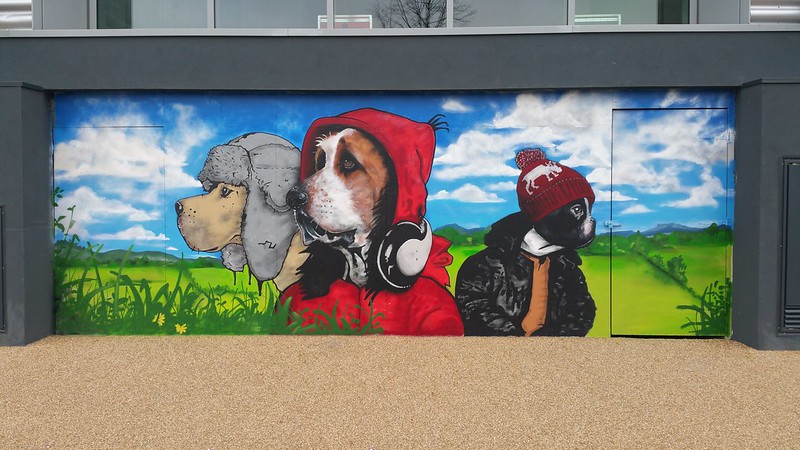
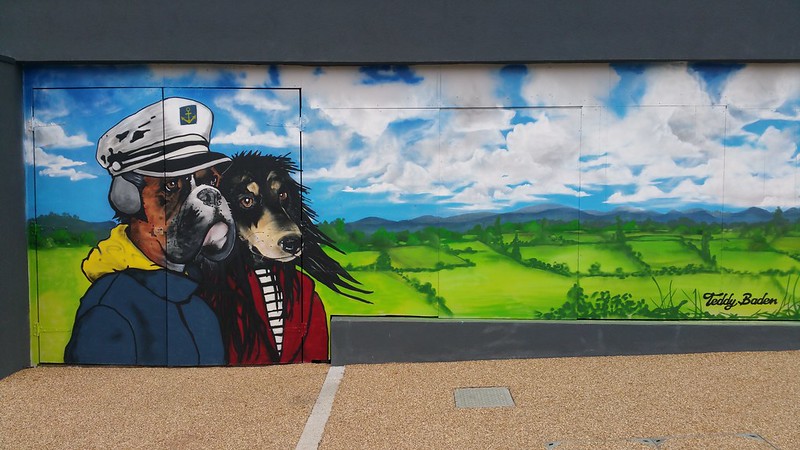
A Return to the Rochester Castle - Springfield Park - Wilsons Hill - Avroplane crash landing site - Hackney Henge - Wick Woodland - Giant dogs with headphones and hoodies - Approaching Olympic territory

This is the start of 15 posts about how I did the Capital Ring in 6 days...

THIS IS HOW IT ENDED:

Untitled

AND THIS IS HOW IT BEGAN:


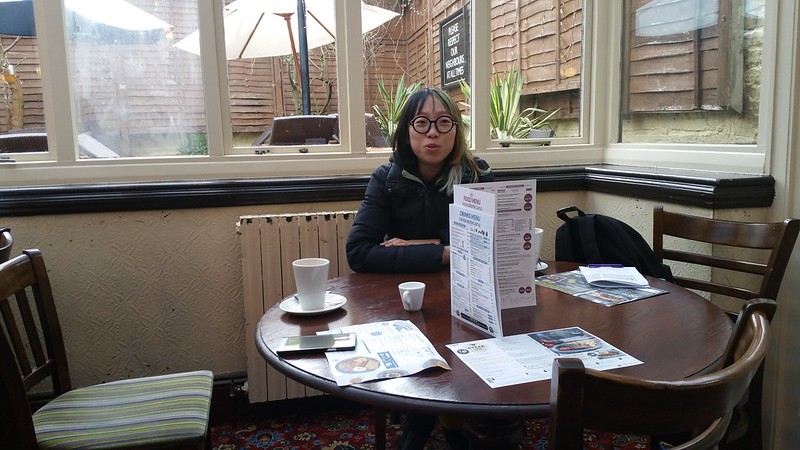
The walk usually begins in Woolwich, but I decided to start my loop in Stoke Newington. The first time that I came to the UK, the first area that I landed in happened to be Stoke Newington, and the first establishment I went to was also the splendid Rochester Castle which has the distinct honour of being the oldest Spoon, with its skylights, carpets, strange paintings, and wooden box seating. The familiar red-wine-and-pepper stained carpets of the humble Spoon! The extremely reasonable prices! So it seemed only fitting to begin my walk here with a hearty hot (kid-sized!) breakfast...

Untitled
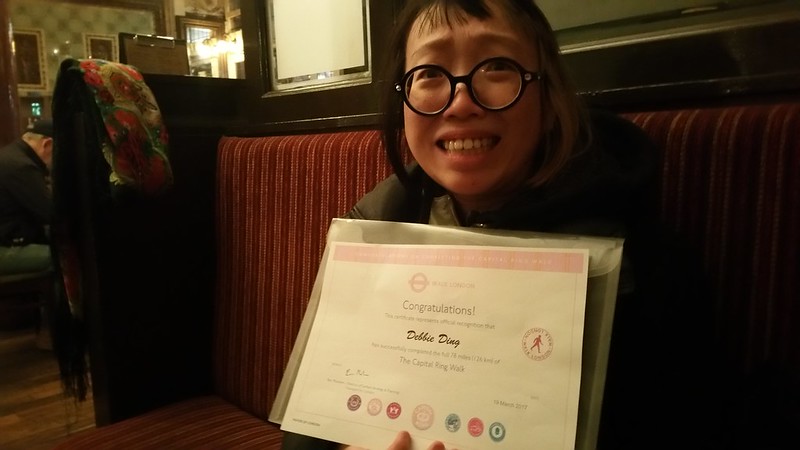
THE START! THE START! Why do I always make this unfortunate face on camera.

Most of Stoke Newington and Stamford Hill is already intimately familiar to me, having lived around those parts over the years. These parts of Hackney are scattered with these large rocks embedded into the pavement at junctions, and lots of community scribblings engraved into the pavement. At certain hours one also sees a lot of the Hasidic Jews with their distinctive hats (and secretive lives) quietly crossing from building to building.

Untitled

Untitled
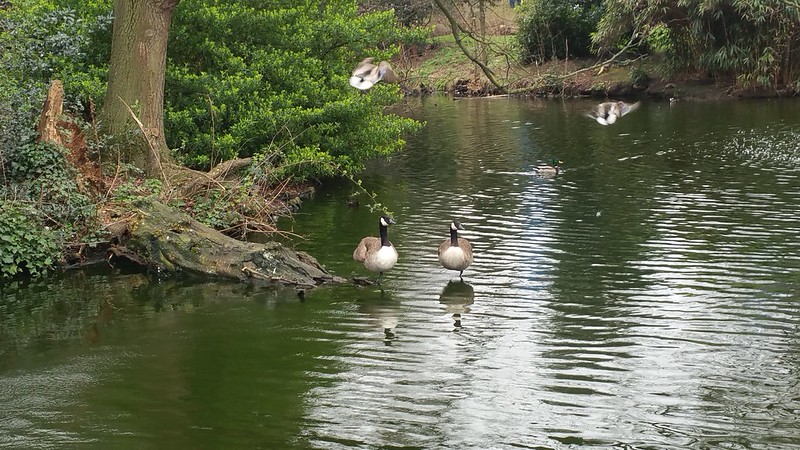
Ducks of Springfield Park

Untitled

The first significant stop on this walk is Springfield Park, which I personally always seem to forget the name of, until I am there, because its name sounds so generic. Springfield is one of those words like Sunnyvale (SEE ALSO: TRAILER PARK BOYS, HOUSOS). I'm not sure if the name Stamford Hill refers to any particular hill really, but if it were to be a hill this is the point at which Upper Clapton riseth-upper to a peak, thus it involves what some would say is an open slope down into the valley of River Lea. But of course in Debbie's world this hill is a potentially vertiginous tumble that reminds me of that one time I got on a bike in this park, instantly almost fell off it, and concluded that combination of said bicycle and hill was most certainly a DEATH TRAP.

Untitled

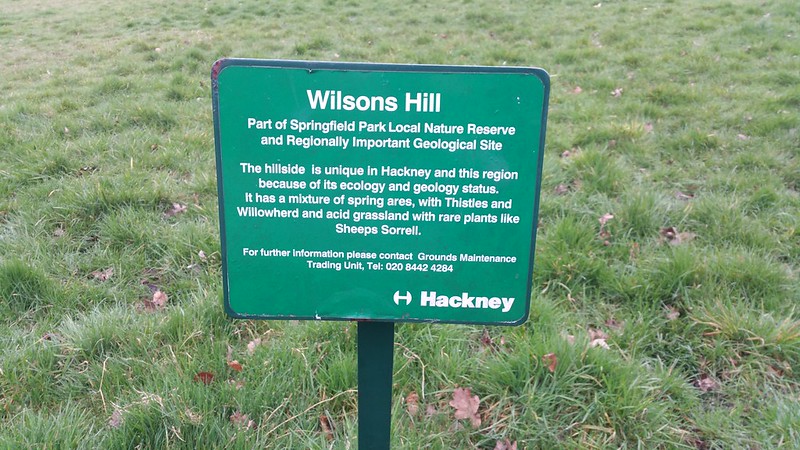
The most prominent part of the hill, also known as Wilsons Hill, has existed here for at least 200 years in this singularly sloped form.

Untitled

Untitled

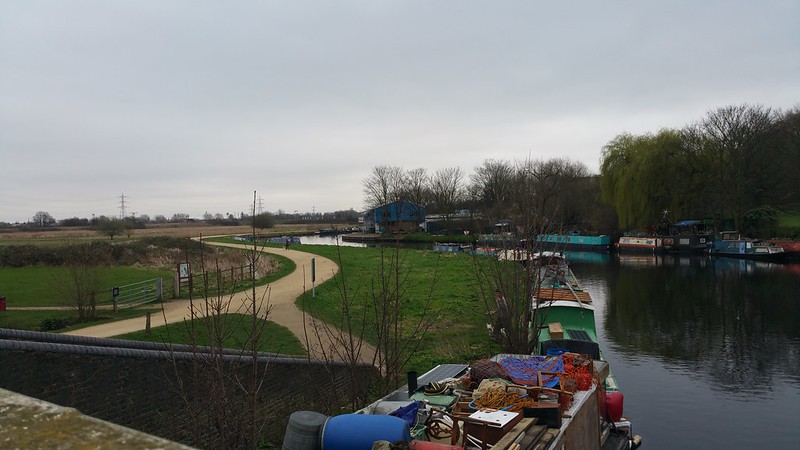
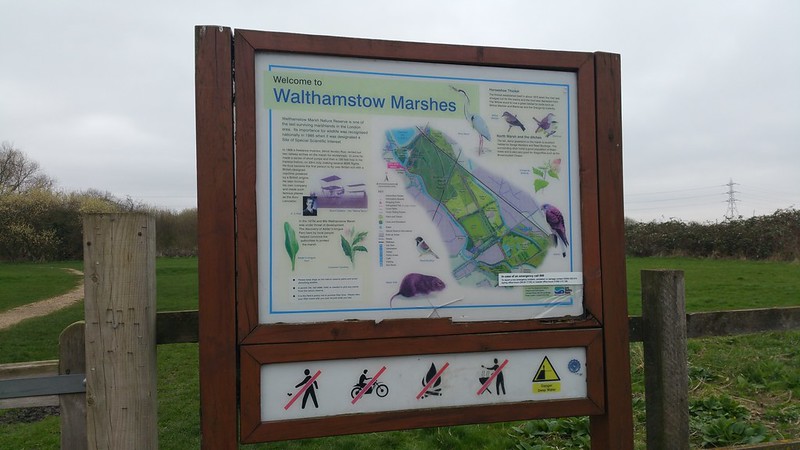
From the northern end of Springfield Park, there's a gate and footbridge leads out into the Lea Valley's Walthamstow Marshes. Variously spelt LEY, LEE and LEA, its original name was Ley, but it was more commonly written as Lea on maps, whilst Acts of Parliament referred to it as Lee. Ultimately it was decided that natural elements of the river would be spelt as LEA and man-made features would be spelt as LEE. As the natural river winds through here, it is spelt as LEA.

As there is very little to hold on to, this part of the Lea Valley, as with other parts of the Lea Valley I've walked along is vertigo territory for me. But I'll get back to that later.

Untitled

Untitled

Untitled

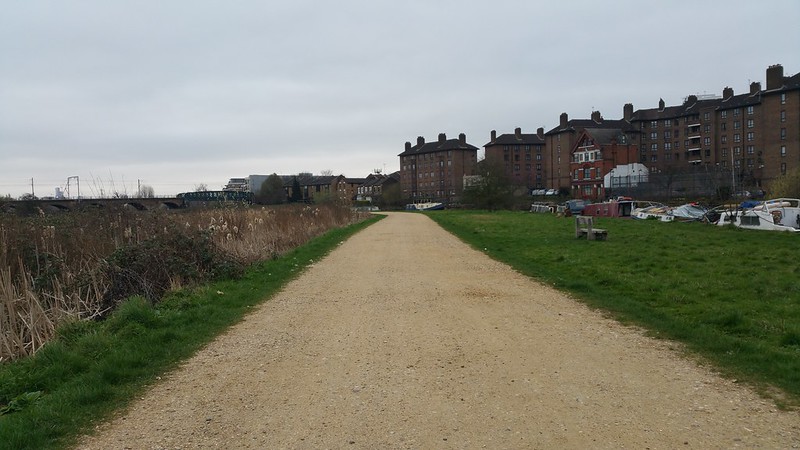
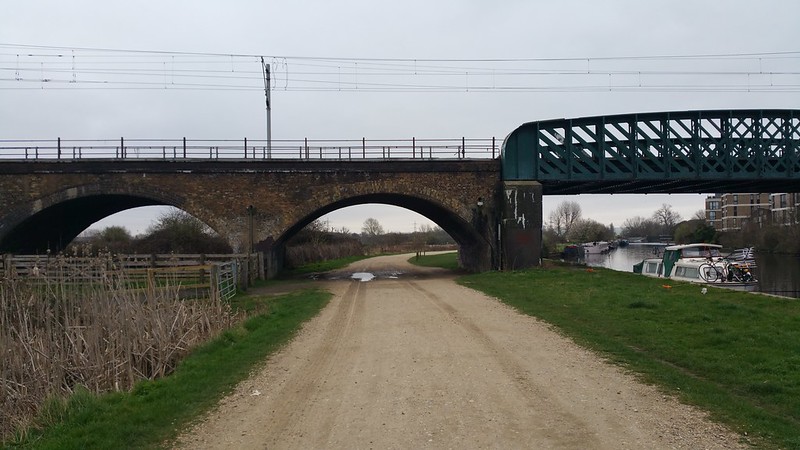
The open sandy track goes under a railway arch under which Aliot Verdon-Roe rented in 1909 to build his "Avroplane", the first all-british tri-plane. He used the soft marshes of Walthamstow for his flight and crash landings. If you've ever seen one of these early experimental airplanes up close, it consists of wooden sticks and control cables and flaps and its one of my favourite eras of airplane building since it was so much so a prototype in progress and its an absolute marvel these precarious contraptions ever flew...

Untitled
Kings Head bridge

Untitled

Untitled

Untitled
Middlesex Filter Beds

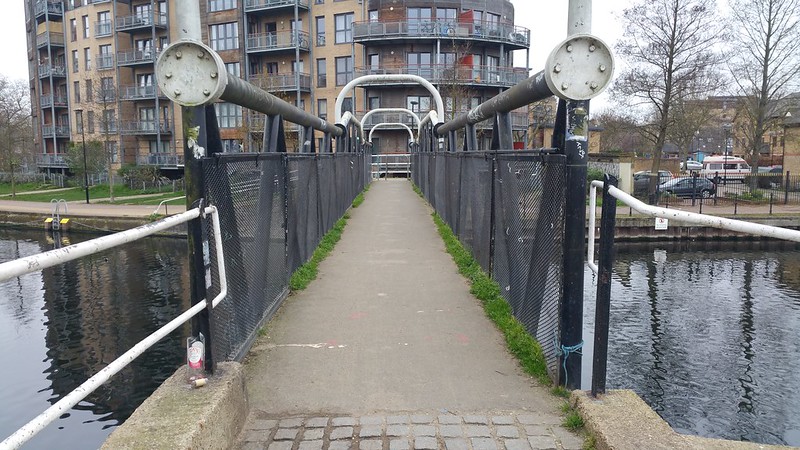
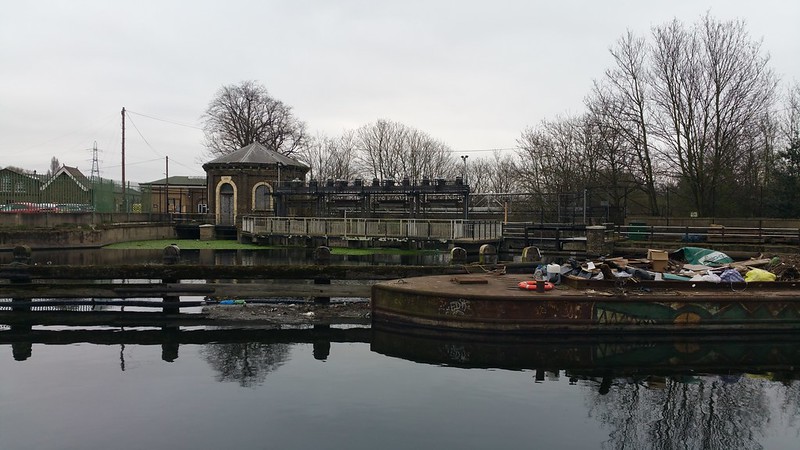
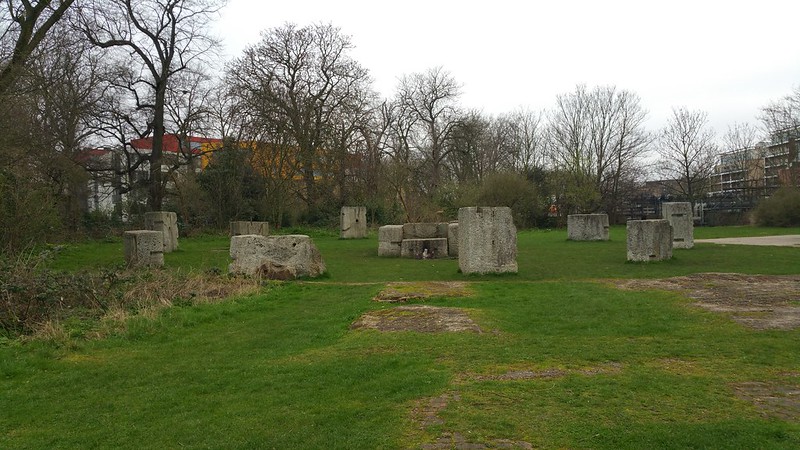
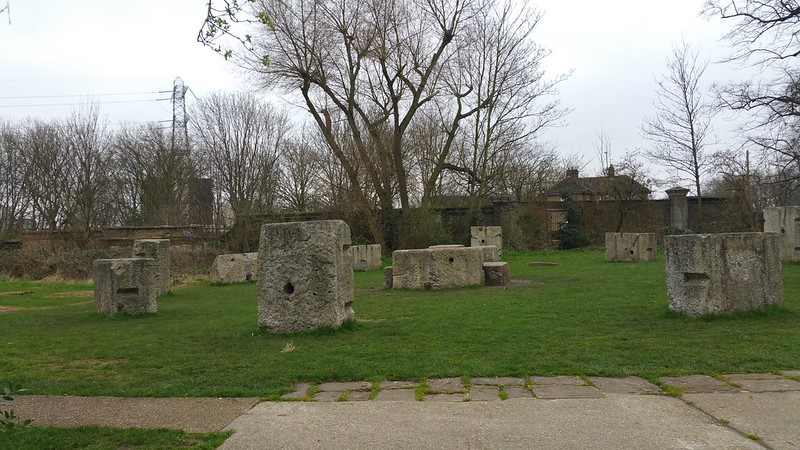
Continuing on via the heavy black "Kings Head" footbridge to the canalised section of the Lee Navigation, one eventually passes the Middlesex Filter Beds on the left, more commonly known as the Hackneyhenge because huge blocks of granite formerly used as the foundations of the engine house have been converted into a mini Stonehenge.

Untitled

Untitled

Untitled

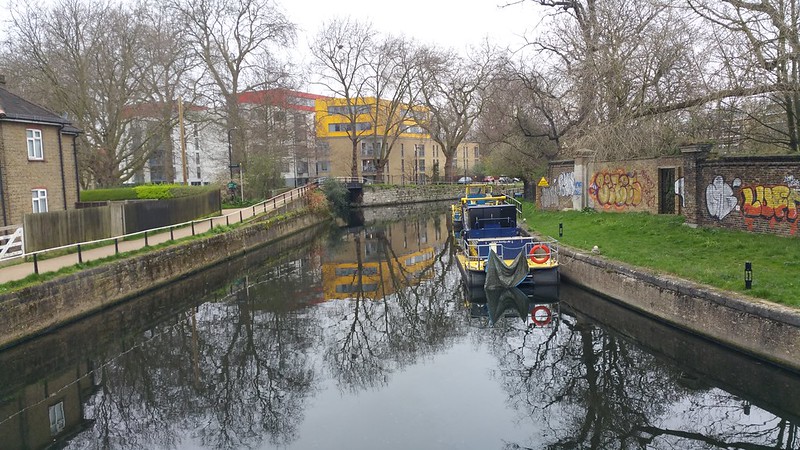
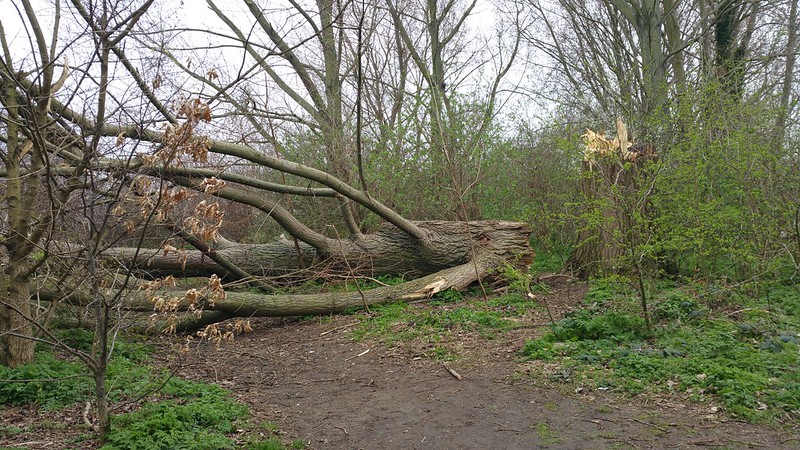
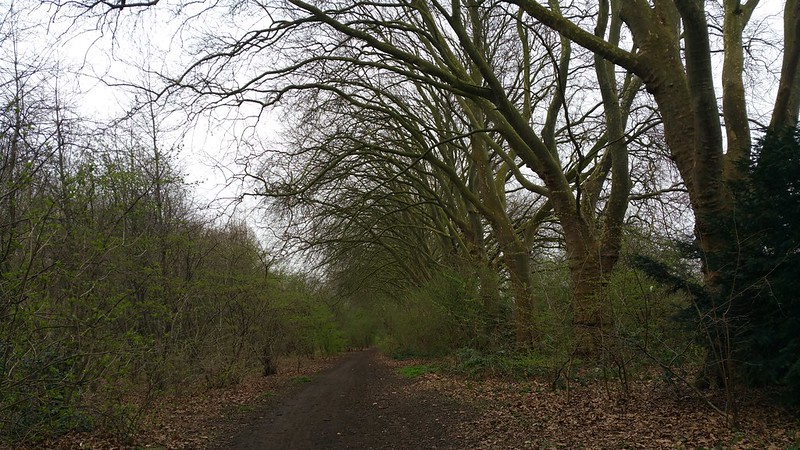
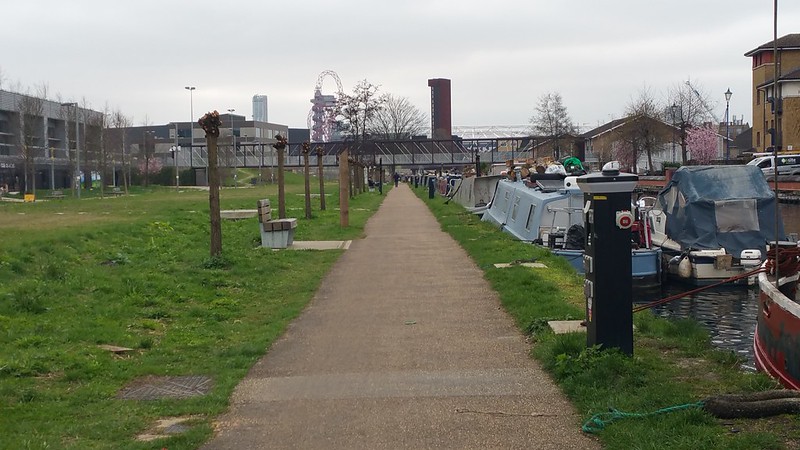
The canalway follows on for quite some distance, passing quite a lot of plane trees (including a giant dead plane tree cracked into two).

Untitled

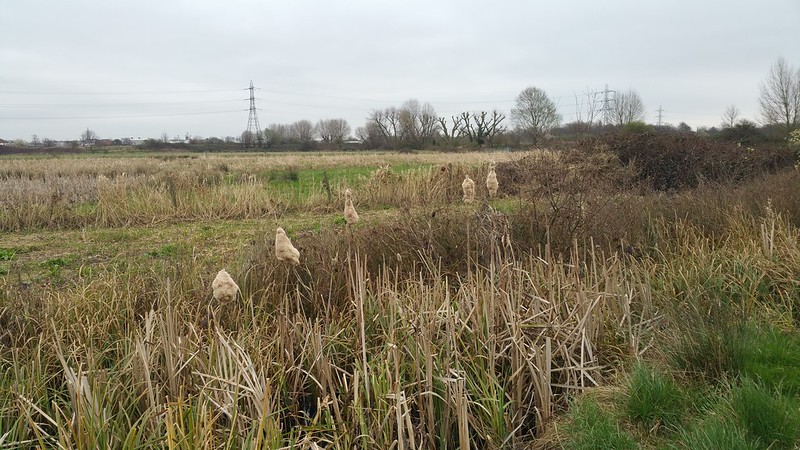
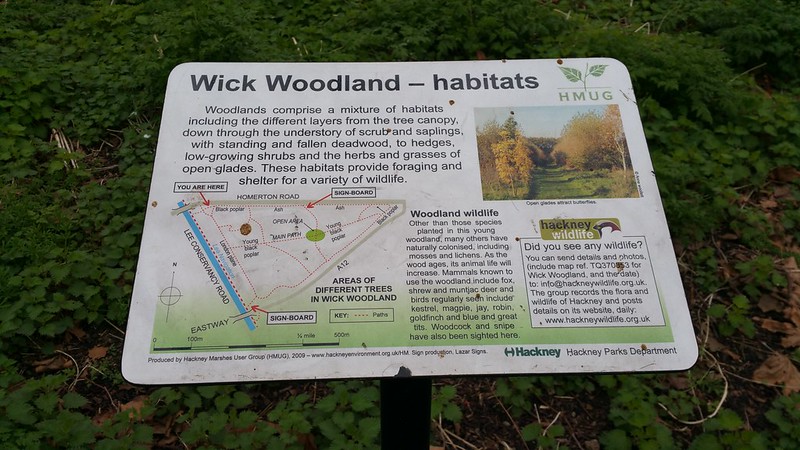
As recent as 1995 all of these woodlands did not exist; beyond the trees, the Hackney Marsh once were the site of WWII gun emplacements and bunkers. After the war its vast open space were used as football pitches, until the 90s when it was decided that part of the space would be converted back to woodland. The success of the woodland has been due to planting programmes as well an episode of accidental flooding in 1997 (water mains burst!) which attracted ducks and other waterfowl to move in on their own accord.

Untitled
Wick Woodland

Untitled

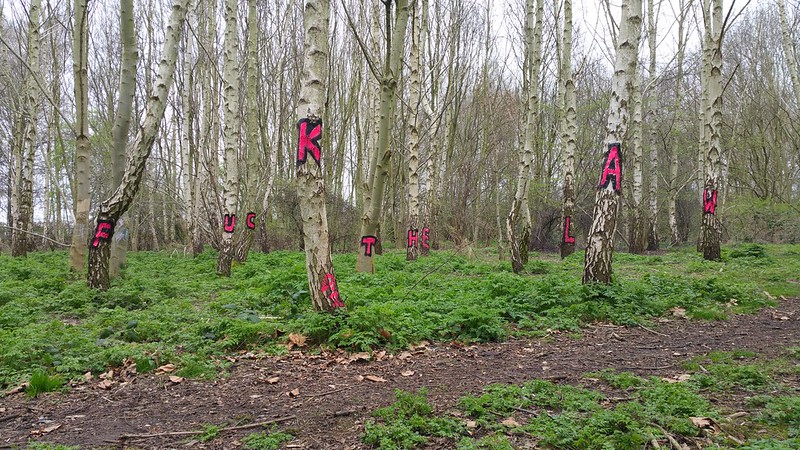
Further down there is Wick Woodland - from a distance I saw some splotches of bright pink and could not resist walking towards it until I found the magic spot where one could see the message...

Untitled

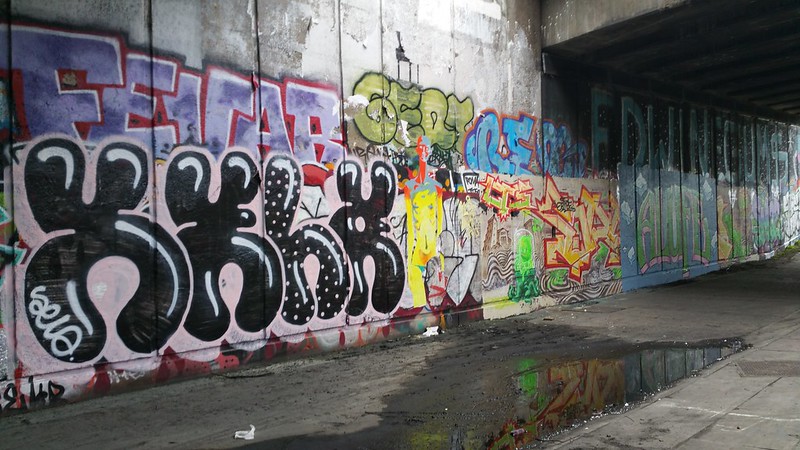
This segment of the walk ends at White Post Lane, just after a well-graffitied bridge and several giant murals of urban dogs, and we're entering into Stratford Olympic territory proper...

Untitled

Untitled

Untitled

Untitled
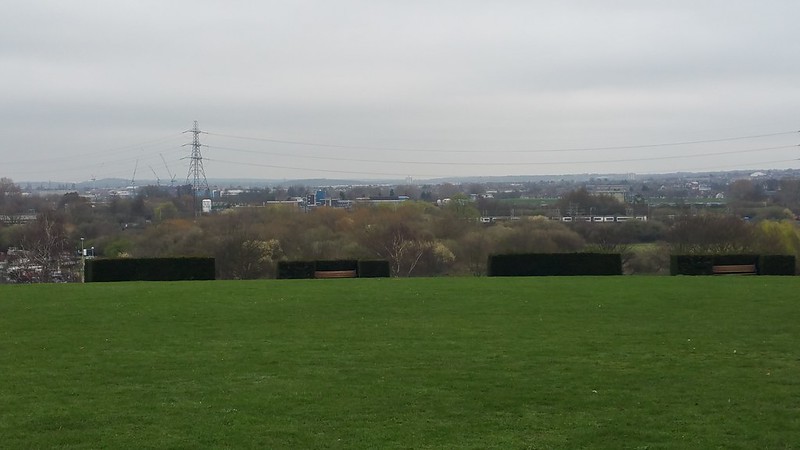
The visible change in the landscape says we're entering Stratford!

Thursday, 26 December 2013

A Walk around Stoke Newington on Boxing Day


Yesterday I decided to walk from Stamford Hill to Stoke Newington via the residential backroads. My plan had been to go to Abney Park Cemetery (which turned out to be very muddy and full of warnings of wasp nests in the vicinity) and Clissold Park (which turned out to be very full of screaming toddlers and toy dogs). For some reason the sun had already faded by the time I actually walked down to Stoke Newington, so it seemed all grey and almost all of the shops were still shut for Christmas. Our friends were out of town, and the only people still on the street seemed to be people packing up their bags and foldable chairs into their cars after visiting the family, or people alighting from the buses with their crazy boxing day shopping bags from town. The streets were conspicuously empty. However, it was not entirely devoid of life. When I walked past the Stoke Newington Town Hall, I discovered that over the christmas holiday its entire front lawn had been quietly taken over by hundreds of little brown mushrooms, crawling out of a mound of hard black soil, and clustering right in front of the Town Hall sign.