Showing posts with label geology. Show all posts

Saturday, 19 March 2016

Second-hand Rocks and Prosperity Pricing

A long time ago, I remember reading a book which described sedimentary rocks as a kind of "second-hand" rock because they are formed from other materials - such as, from the remains of previously living organisms, or from fragments of other older rocks. But yesterday, I encountered some literal second-hand rocks!...

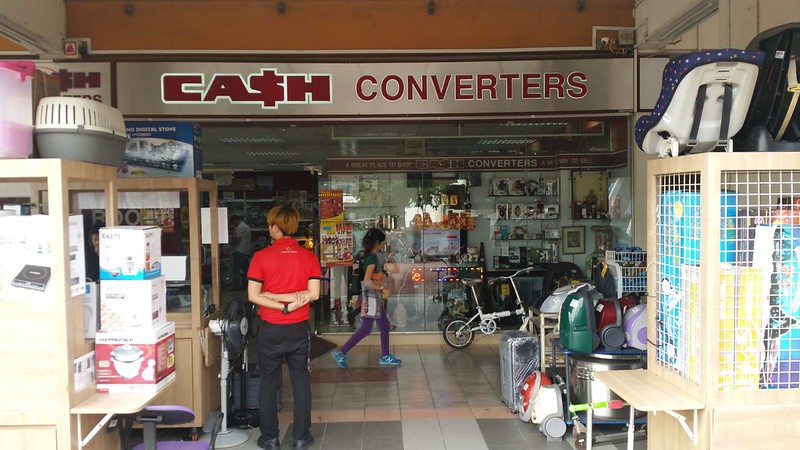
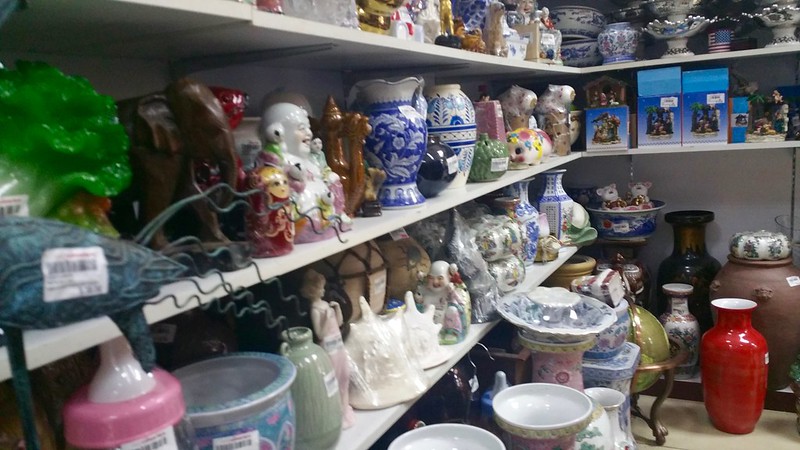
Whilst returning back to town from FOSSASIA 2016, I passed a familiar second-hand store that I used to go to whenever I was in Jurong East. CASH CONVERTERS! - that good ol brick-and-mortar franchise in the business of "buying and selling unwanted goods" - land of excess factory stock, used CDs and other outmoded forms of media entertainment, joblots of made-for-tv egg cooking devices, tennis racquets tanned yellow with age, furry massage mats, porcelain dogs, used mugs, extruded plastic god-of-fortune statuettes, bowling balls wrapped in cellophane...

Untitled

Untitled

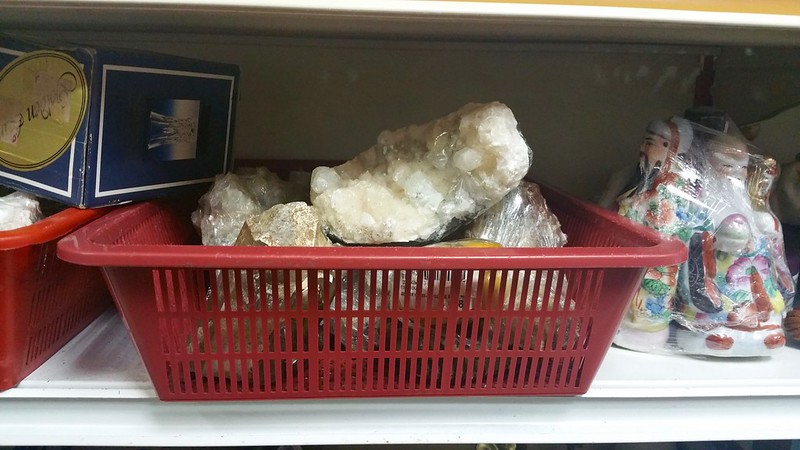
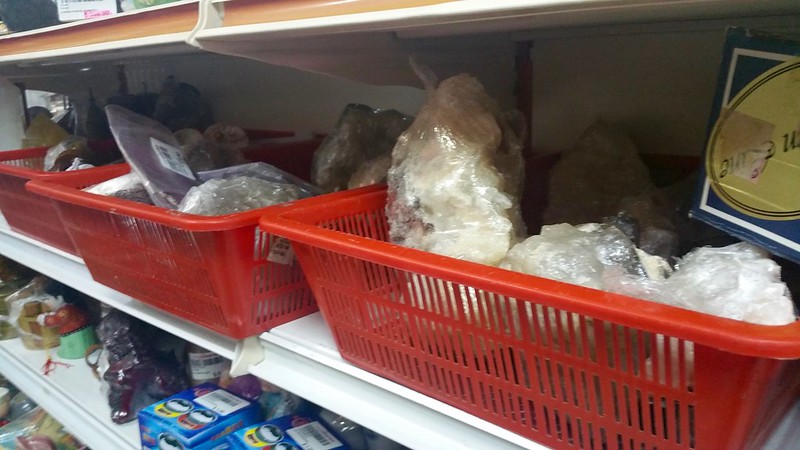
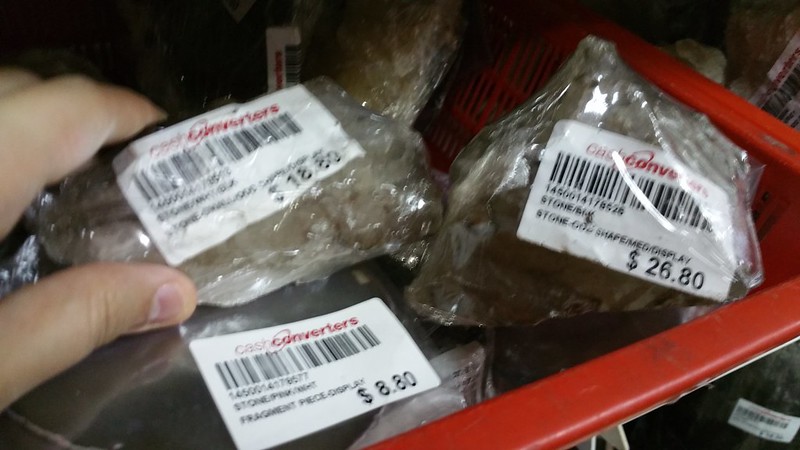
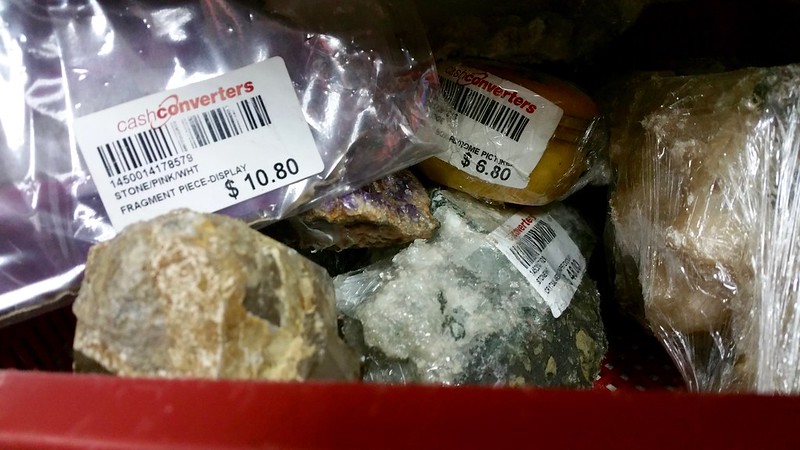
Speaking of hard objects enthusiastically wrapped in plastic, I came across a section that I hadn't quite noticed in previous visits. Lodged in a rather small shelf, in a few red plastic baskets (not dissimilar to the green plastic baskets I used for sorting my rocks in the past), I discovered that someone had secreted a whole cachet of rocks. Yes my friends. In the middle of Jurong East's Cash Converters is an entire SECOND HAND ROCK SECTION. (Maybe I should start my own rock shop like them too huh)

Untitled

Untitled

Untitled

Untitled
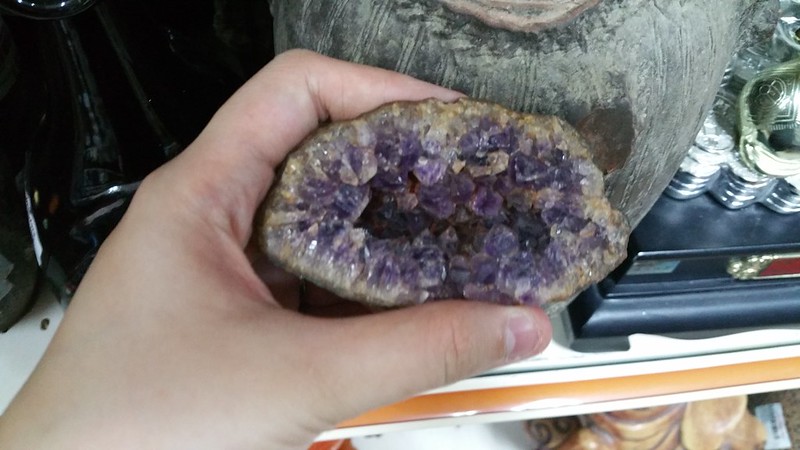
THIS IS A GEODE, BTW

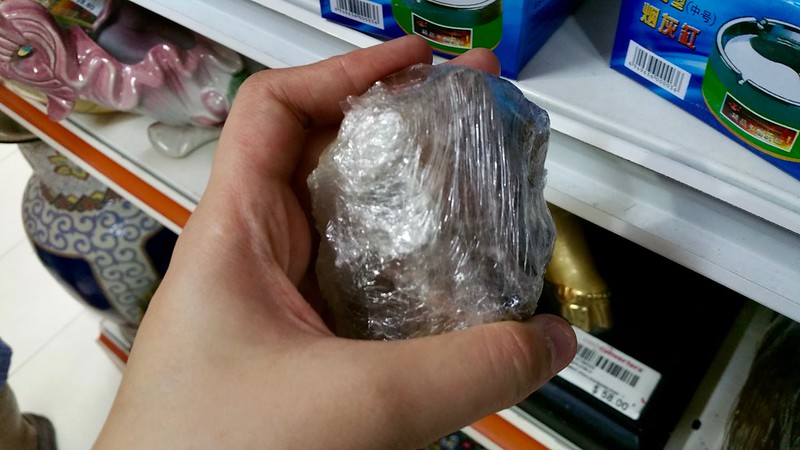
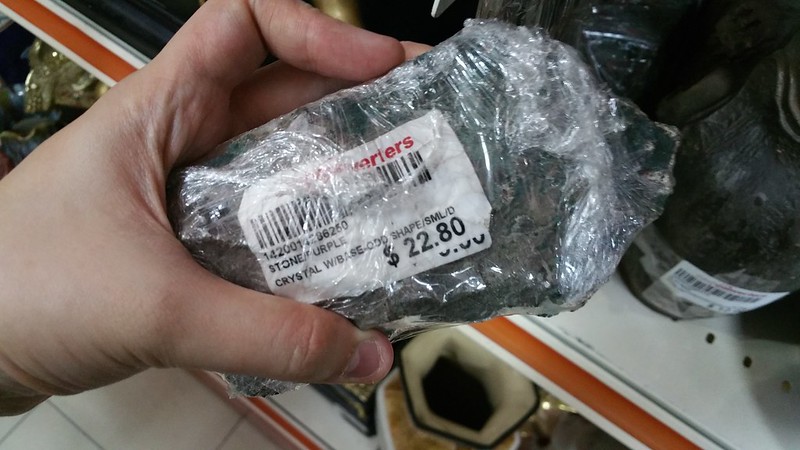
No provenance. No information. Just rocks wrapped so tightly in plastic that in some cases you couldn't see them properly. Which makes it slightly alarming when a few of them are not in protective plastic shells (I worry for a moment, is the sweat on my grubby hands in danger of inflicting corrosion upon these rocks??)

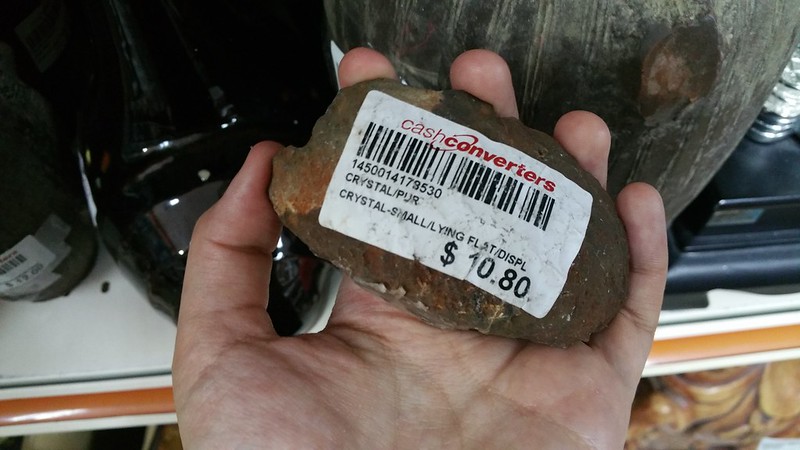
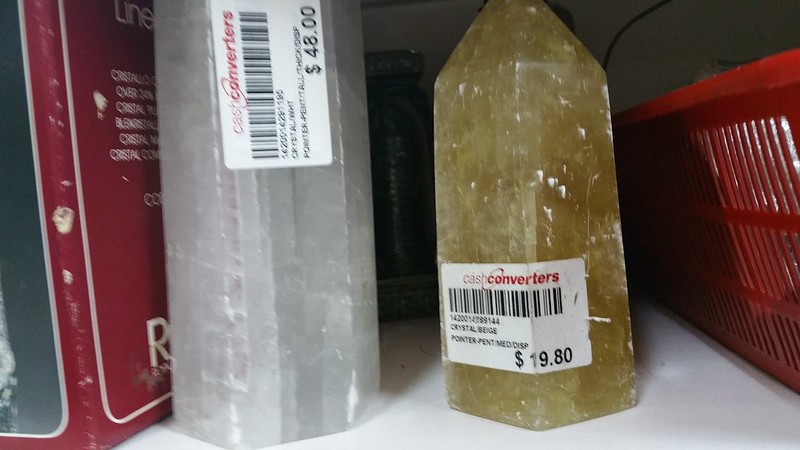
And of course, because Cash Converters has made the re-selling of seemingly unwanted and useless objects their entire business, there is also a price tag.

Untitled

Untitled

Untitled

How does Cash Converters determine the price for rocks? From looking online, people say that Cash Converters in other places use the prices of other existing online catalogues such as ebay, argos, etc to determine an object's value (when it was new) and then quotes a fraction of that (pricing it so that CC would eventually still make a significant 60-100% profit on the sale of the object).

But... rocks? Even as ornamental fengshui rocks? Is there a special catalogue for fengshui rocks here? How does the CC staff evaluate it? Is it size, weight, appearance?

Also, seriously, what is up with the prices all being XX.80 or with the number 8 in them? Is the inclusion of 8 in the pricing a strategic tactic for pricing within chinese markets?

Untitled

Untitled

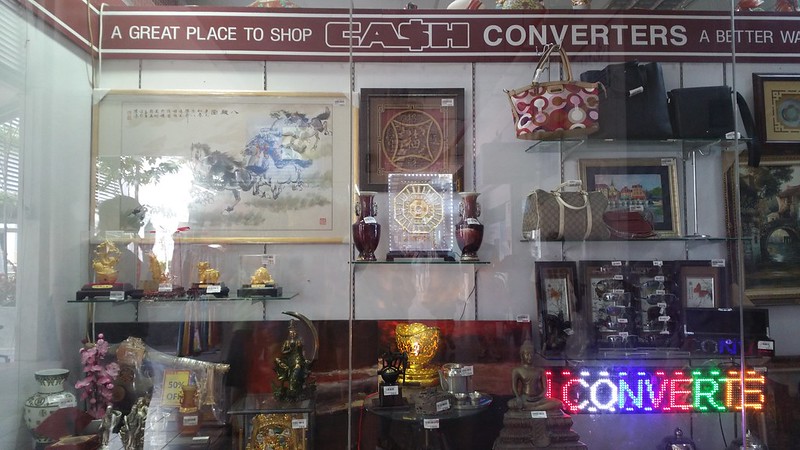
What is fascinating is that when you look at the centrepiece display within the interior of second-hand shops like Cash Converters in Singapore and the glass front of the second hand shop, it is often dominated by highly valued prosperity symbols and objects of religious syncretism, mixed up with the visual language of designed lifestyle objects, on a bed of laser-cut acrylic and LEDs.

Untitled

I also hasten to add that whilst I was at Cash Converters, no less than 4 middle-aged Chinese men shuffled through this aisle and spent a long time carefully evaluating the rocks on this shelf, so I personally I did get the impression that these rocks were definitely an object of curiosity, and perhaps by extension, even objects of desire...


Prosperity Pricing? The use of number "8" in prices of Chinese consumer products


Some googling takes me to this paper: The Use of 'Lucky' Numbers in the Pricing of Chinese A-Share Initial Public Offerings where the abstract notes that existing marketing literature shows that "the number 8 is consistently used as a price-ending in advertising for Chinese consumer products" - to capitalise on investor sentiment.

Thursday, 18 December 2014

Tumbling down the Bismuth Steps

So the other day I went to see Interstellar, which was fairly enjoyable if not for the massive plot holes and inconsistencies and its unnecessarily long running time. If there was one thing I appreciated about Interstellar, it was that at least they attempted to visualise the 5th dimension. Even if it ended up looking a lot like a giant building-sized piece of bismuth built out of shonky wooden library shelves, tracing paper, and a lot of black thread. At least they tried. I'd like to see more people try to imagine what it might look like, even if the representations fall flat on their faces.

Bismuth Structural Rainbow
Bismuth from Flickr user cobalt123

The structural qualities of minerals is fascinating. On a personal level, I am attracted to rocks and geological features which are so orderly and angular that one imagines - that if the image were presented out of context - then one might just believe that it could be man-made, although in reality these shapes and forms are a product of nature. Like a artificial/man-made mine, in which square chunks are methodically hewn out, or dug out to form huge man-sized hollow hopper crystal structures in which humans could nestle within... To think of planets as petri dishes for life with their respective larder list of minerals and baking temperatures!...

P9176643

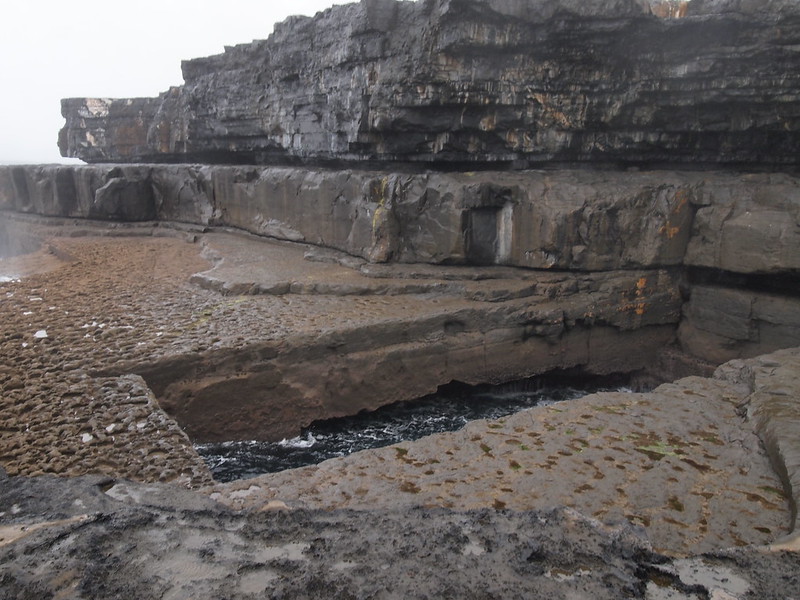
Here for example, this is the Pool of Serpents (Poll na bpeist) - a naturally formed olympic sized pool cut-out in the rocks of the Aran Islands, which I went to see last year. My wish list of places to visit in the coming spring includes Fingal's Cave on Staffa (Inner Hebrides, Scotland) with its hexagonally jointed basalt columns and the Delabole Quarry in Cornwall with its crazy steps of slate.

minerals 2
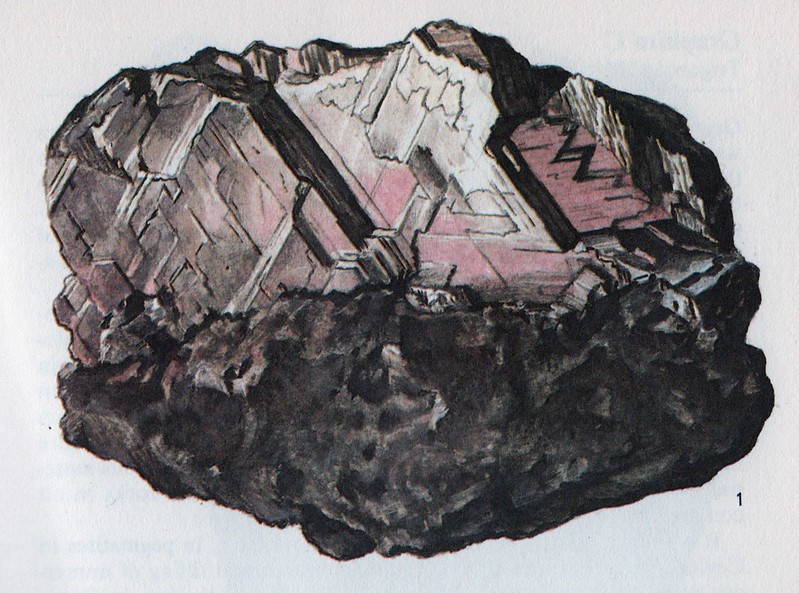
Naturally formed hexagonal Bismuth illustrated in my mineral book

The distinctive hollow stair-step crystals of the Bismuth are mainly the product of artificial processes - you can grow hopper crystals like these at home. The metallic iridescence comes from a thin layer of bismuth oxide causing light scattering.

Screen Shot 2014-12-03 at 2.39.01 pm

Who doesn't like shiny things? In my own digital paintings, I found that painting in some "shine" with pin-points of white light (like a 3D model) give an image a realism/fakeness to them. I would make latex clothing if I had the resources to or if I were more inclined to doing something fashion related (as it were, I do intentionally avoid having to think too hard about clothing as I think time can be better spent on other things). But I enjoy looking at glossy and shiny materials, and I don't understand why it has an image of being "kinky".


Perhaps I was born in the wrong time, and I think a skin-like rubber material like latex has an interesting shine to it and as a material for clothing it is more representative of the times. The question of how latex became kinky is something I shall have to look into further some other time, but to go on with the story...

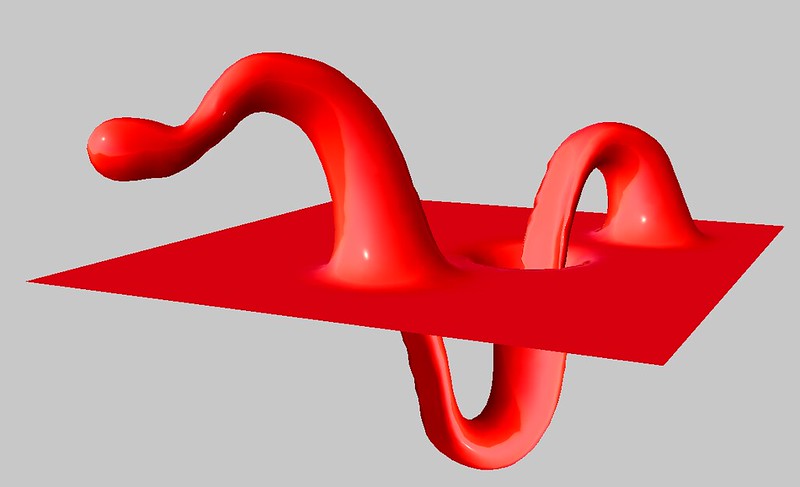
So this morning I continued experimenting with Meshmixer. I had drawn an imperfect klein surface and was hoping to figure out how to edit its shaders to make it less or more "shiny".

Screen Shot 2014-12-03 at 1.04.57 pm
(I do apologise for this poor approximation of a klein surface - with a red "rubber" shader)

Screen Shot 2014-12-03 at 1.06.13 pm

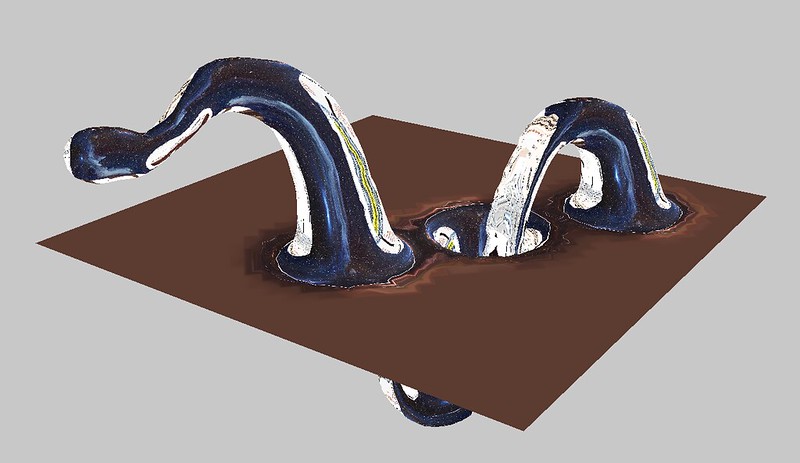
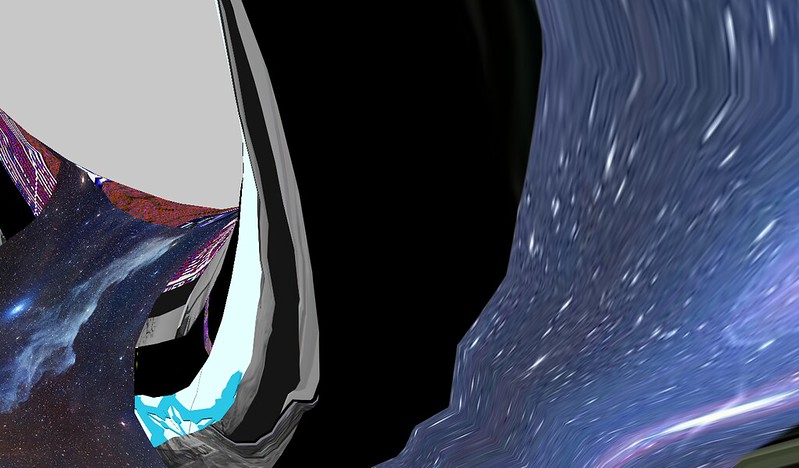
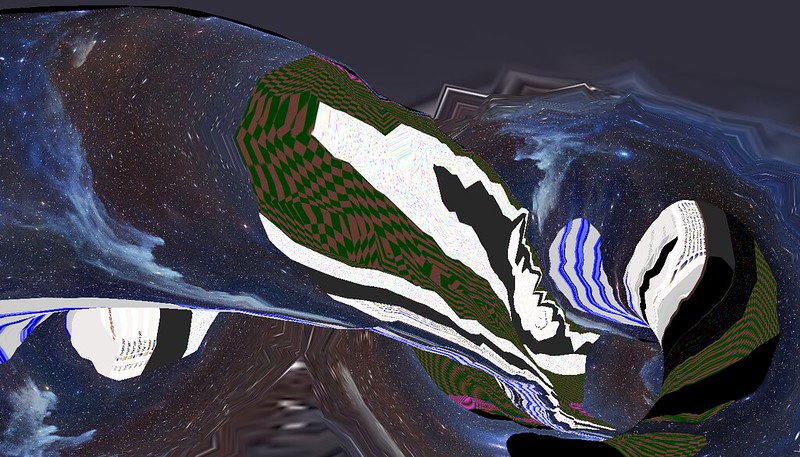
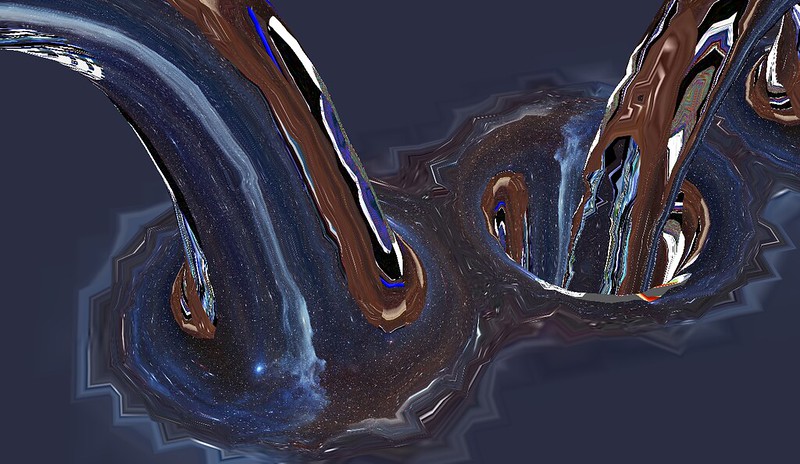
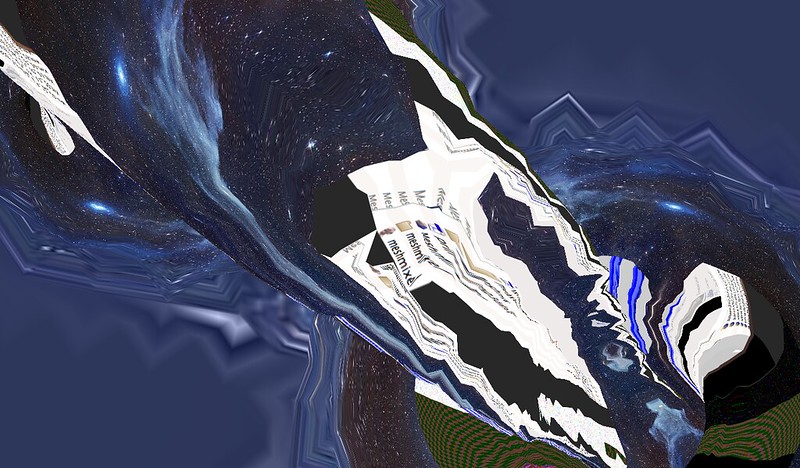
Next, I dropped in a jpg of the Witch Head Nebula which I had cut down in size into a “shader". This was the somewhat unexpected output...

Screen Shot 2014-12-03 at 1.09.14 pm

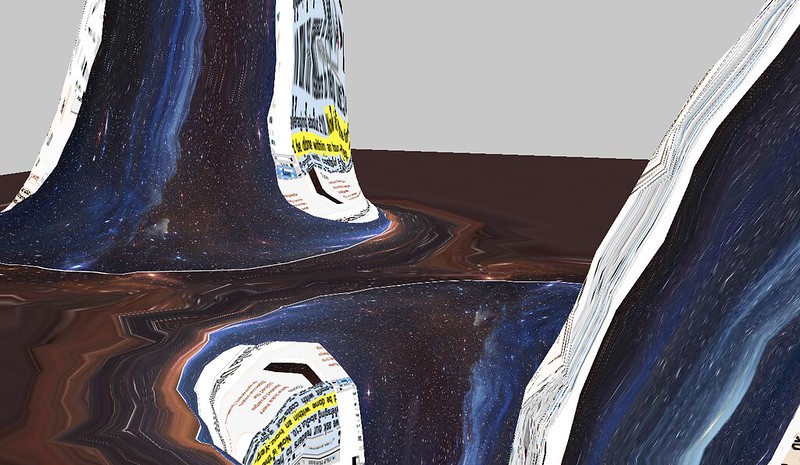
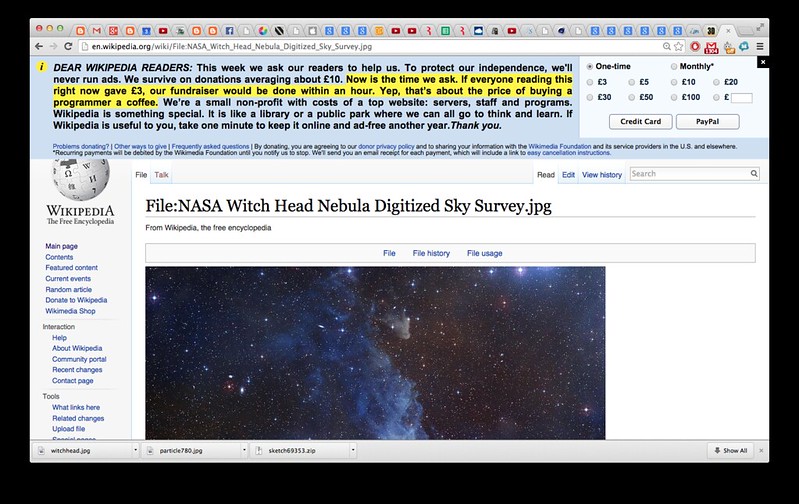
I realised... that's not just the shader. That's the shader... and the wikipedia page it came from!

Screen Shot 2014-12-03 at 1.06.01 pm
Wikipedia browser window underneath Meshmixer window

Screen Shot 2014-12-03 at 1.10.57 pm

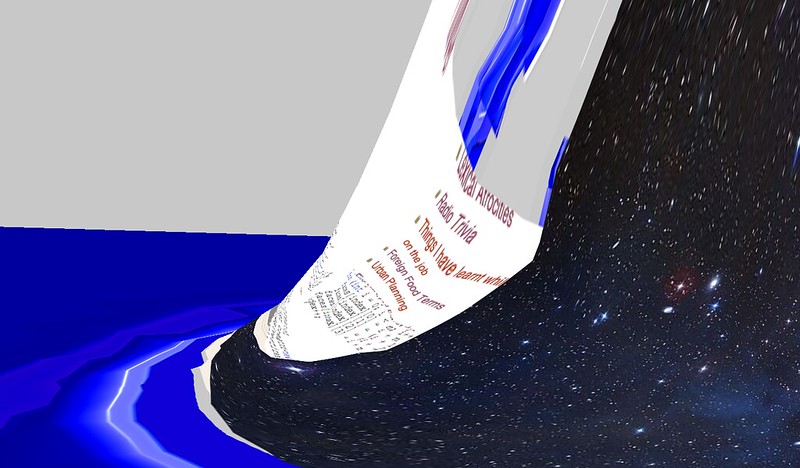
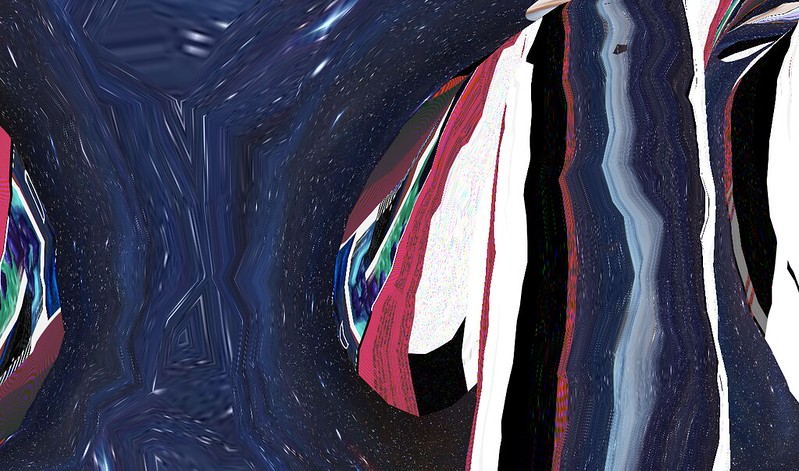
Looking more closely, I realised it was not only the image of the nebula; it was also reflecting other things I had recently accessed on my computer - there was my personal wiki on another browser window and some processing code I was looking at in a text editor! There were also glimpses of a generative snowflake I was coding up in openSCAD, turned blue instead of yellow.

Screen Shot 2014-12-03 at 2.04.07 pm

Screen Shot 2014-12-03 at 1.15.13 pm

Screen Shot 2014-12-03 at 1.12.13 pm

Screen Shot 2014-12-03 at 1.13.03 pm

Screen Shot 2014-12-03 at 1.14.16 pm

Congratulations to my mac and meshmixer for producing its own imaginative rendering of the 5th dimension before I could do so myself. I guess I'll have to catch up with it by producing my own visualisations...

Monday, 30 September 2013

The Rocks of Inis Mor

TEAM FIRE visited Inis Mor the other day. I asked to be taken to see the following: (1) a castle (2) an irish pub (3) a cliff by the sea (4) ROCKS; the first three were easy to find and on the last item, George exceeded himself by deciding to take us to Galway and then to THE ARAN ISLANDS! Galway on its own deserves a whole post to itself but the Aran Islands was completely unreal. Picturesque, completely isolated, harsh weather and extremely beautiful terrain, the island of Inis Mor was apparently the model for Father Ted's Craggy Island, and also the star of the documentary Man of Aran. We were to stay at a cottage that had been built for the filming of this fictional documentary about life on the islands, which had apparently represented a kind of traditional rural irish lifestyle, now lost in time...

To begin, the ferry ride was already something out of a storybook. One unaccustomed to the seas might be compelled to write home immediately after experiencing the life-changing highs and lows of the ferry from Rossaveal to Inis Mor. Seemingly death-defying, stomach-churning multi-storey heaves and drops over ridiculously high rolling waves of the Atlantic, at some points actually eliciting involuntary high-pitched screams from tourists onboard, clutching the armrests of their seats with white knuckles. With each roll, the horizon would completely disappear and reappear from view. We had already taken the largest ferry, a 400 seater, as we were told that the smaller ferries would not sail on days with poor weather. Indeed I'd imagine a smaller boat being easily swallowed by the waves. Having sat on a fair number of boats in my time but only in the relatively sheltered waters of Singapore, this kind of extreme sea-crossing was something I had never witnessed before.

P9176850

P9176859

After some confusion and having to call for help to get a taxi after we wandered away from the pier (into what we realised was a completely sleepy town) - we were eventually received with much hospitality at the Man of Aran Cottage by Joe and Moira. We read that the cottage had been built for the documentary "Man of Aran", hence its moniker. It is curious to think that it was probably built with the intentions of making it seem as authentic as possible, but now some 80 years on this house seemed as ancient as the others, perched on this unlikely point of the island.


The cottage is situated a fair distance from the "main town" area and this also meant there was absolutely nothing around us at night. The nearest shop (a SPAR, which closes at 6pm) and pub (Joe Watty's) are close to the port, whereas the Man of Aran is located at the centre of the island, close to the fort. But in the morning, the view from the Man of Aran Cottage is fantastically spectacular. You know like when you hear the frightfully loud sound of a heavy wind whistling on the window when you sit in your city flats and pretend you're far out in the wilderness? WELL PRETEND NO MORE! This is the real thing.

We were fortunate to have met Andrew at the Man of Aran Cottage; another guest at the Man of Aran at the time. He had spent almost a year on the island back in the 60s, and had penned a book about his experiences in a book, "An Aran Keening". (We later went down to the bookstores in Galway and tried to find it). He was very kind to show us the way to the Pool na Bpeist or Pool of Serpents, and as we walked there I realised it was very very fortunate that he brought us there the way he did, for we would never have found it otherwise, and the approach he took was very much better.

P9176733

For the most part, it is simply covered in this endless face of rock, cracking at the surface. Most of the rock is patterned in bold grykes. The rock itself is similar to that of the limestone at the Burren across the ocean; Burren from "Boireann" which means "a rocky place".

P9176732

Rocks

P9176689

Glacial Erratics

Glacial erratics are rocks which do not belong to the rest of the rock below it and is thought to have been deposited on top of the surface when they were carried on a giant iceberg that floated over the rest of this island during the ice age. Then when the ice melted these large odd stones were deposited on top.

P9176747

Another glacial erratic

P9176696

Green moss on Glacial erratic

P9176704

P9176706

P9176711

P9176712

P9176677

P9176673

P9176725

The plants that lived in the environment were also incredible. You would see these lovely little plants everywhere, growing between the cracks in this almost inhospitable environment and they would look so downy and soft and inviting but if you ever tried to peel one off you would discover they were ROCK SOLID. Tough as nails! Impenetrable! Unchewable! Teeth-breaking! Not to say I tried to chew them but attempting to dislodge a tiny corner of it was more like trying to chew on a car tire.

IMG_1252

IMG_1254

IMG_1249

IMG_1247

IMG_1273

IMG_1262

We were buffeted by strong gusts of wind, fit to blow a person off the cliff face, so we were sometimes crawling slowly towards the edge; creeping over the wet rocks of Aran, over an endless maze of low stone walls, endless landscape of nothing but craggy rock.

P9176643

This is the Pool of Serpents (Poll na bpeist), a naturally formed geological feature which looks like a rectangular olympic sized swimming pool. Although this is not evident in the picture, as the winds were high (and we so unaccustomed to walking on wet rocks) we were terrified walking so close to the edge...

IMG_1263

IMG_1282

P9176723

Dun Aonghasa can be seen at the top of this cliff. It is the one of the most important prehistoric forts on the island and a UNESCO world heritage site. It is basically a very very old fort that is thought to have been used since 1100 BCE.

We also discovered that an entrance fee was actually being charged for people entering Dun Aonghasa, but the point at which they charged travellers was down below. But because we had come from a more 'extreme' walk along the rocks and strong winds and then climbed over a low rock fence to get into a well-worn path covered with many tourists in hiking gear, we slipped through without passing that checkpoint. I find that it is a very curious thing to fence up all the rocks and set opening and closing times - we saw the same thing being practiced at Stonehenge. It is baffling because I think me and George operate more along the lines of the "let's walk in this direction until we find the rock" sort of manner, without care of the "opening or closing time of the tourist attraction". The rocks on this touristic path were rubbed smooth and very hard to walk on, unlike the rough rocks of the rest of the island.

P9176774

P9176773

Dun Aonghasa

P9176737

P9176734

P9176771

The view from Dun Aonghasa

P9176835

Finally I wanted to add that we found a large rock that had been intentionally placed on the road to stop cars from driving down it as it is used by children frequently. Not a glacial erratic, but I love how it has been placed there with a purpose, on a road. How lovely, to imagine a place where they put a rock to block up the road so that cars won't drive up and down it, so that people can walk on it freely!


I'll stop here for now but... NEXT UP: The plants and wildlife of Inis Mor!