Wednesday, 20 November 2013

The Flora and Fauna of the British Isles: Inis Mor

This post is way overdue. In September we went to the Aran Islands and we saw lots of plants and small animals (and a few large animals). I've noticed that for most of my time in Europe I have always been very excited about plants and animals but everytime I ask others, nobody around me can seem to tell me what they are called. Pish and Tosh! Uneducated heathens! I think its important to be able to identify plants and trees and animals (except that back in Singapore we didn't really have as many animals to identify). So in the face of this glut of animal and plant pictures harvested in September, here is an attempt to get to know the names of the plants and animals.... starting with some of what we saw in Inis Mor...

P9176714

This is the grove snail (Cepaea nemoralis) which is one of the most common types of European snails.

P9176716

I think this furry fellow is a Fox Moth Caterpillar (Macrothylacia rubi), also a very common european moth.

P9176817

This is likely to be a Viviparous lizard, a very common lizard in Europe. Viviparous means it gives birth to its young live, instead of laying eggs.

P9176801

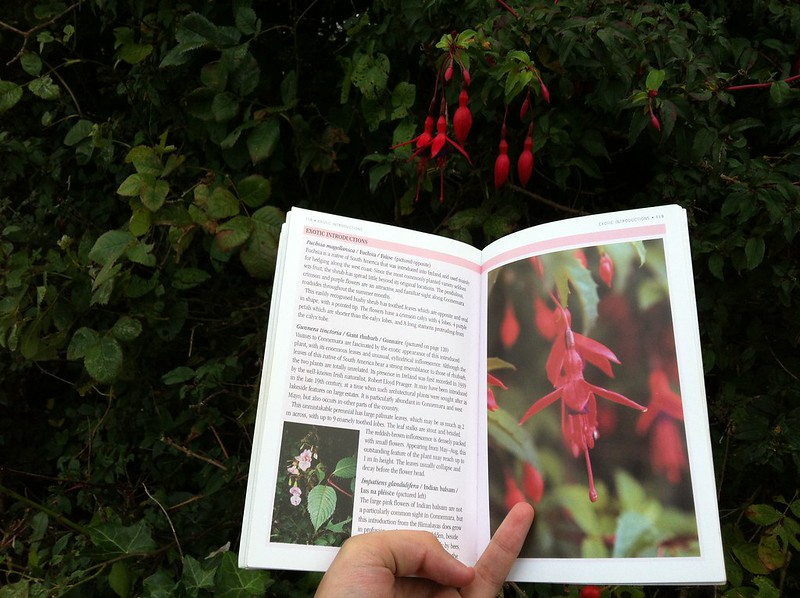
This is a Fuchsia plant, a very distinctive and hardy plant which can be seen all over Inis Mor's sheltered areas. This was not apparently native to Ireland or the Aran Islands but is an import from Central or South America where it originates from.

IMG_1307

Ahem. And this is how I found out its name...

P9176863

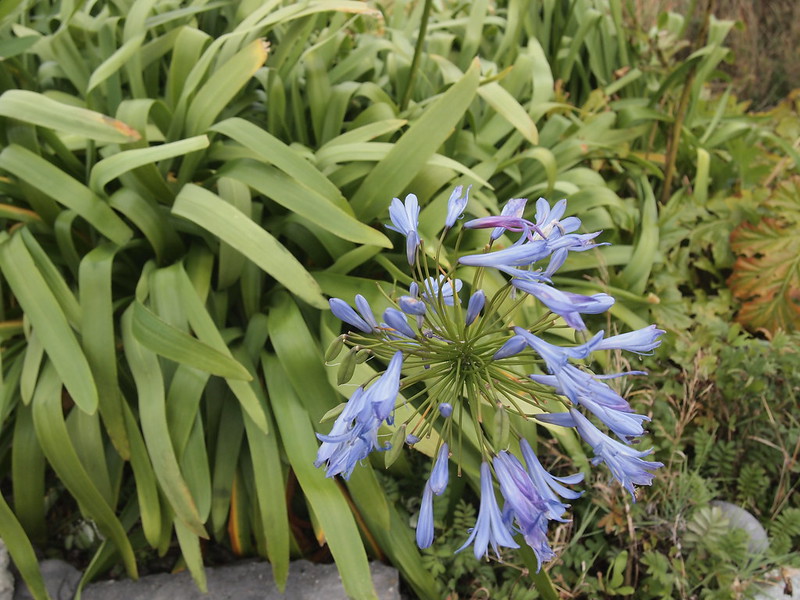
This seems to be a type of Bluebell. I'm not too sure if its the main type or a hybrid bluebell as it seems very pale and seemingly less "formed" than the curly shape of what one would expect of a bluebell. I'm not sure. Any ideas?

P9186894

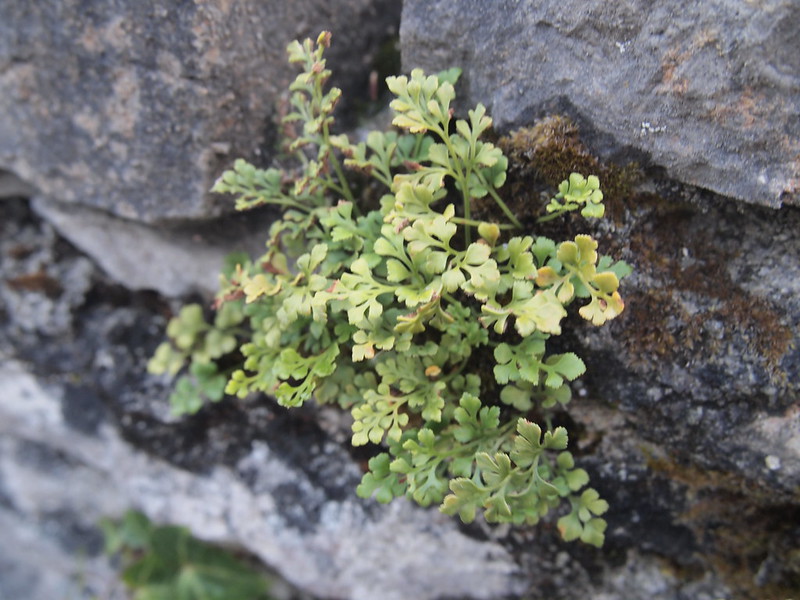
This is a small fern known as a Wall-rue, which mainly grows on limestone and other calcareous rocks. There's even a term for these sort of plants - "epipetric" - which means they grow on top of rocks.

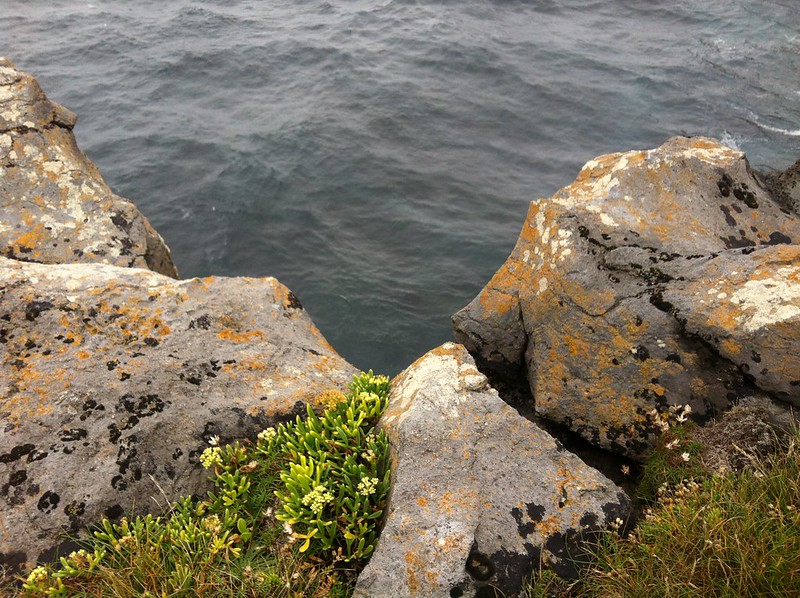
P9176625

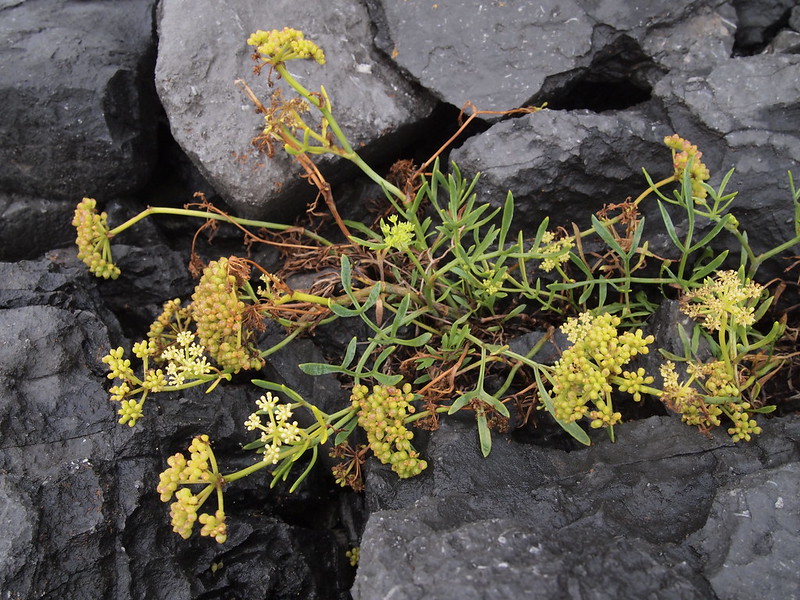
This is Rock Samphire (Crithmum maritimum) which is apparently edible and is said to have a "pleasant, hot and spicy taste". Sadly we didn't eat any. We did eat some raspberries on a bush but even that seemed risky because we were suspicious about doing it all wrong. Yes I suppose us paranoid city folk have a long way to go to becoming wild foragers living on nature's bounty...

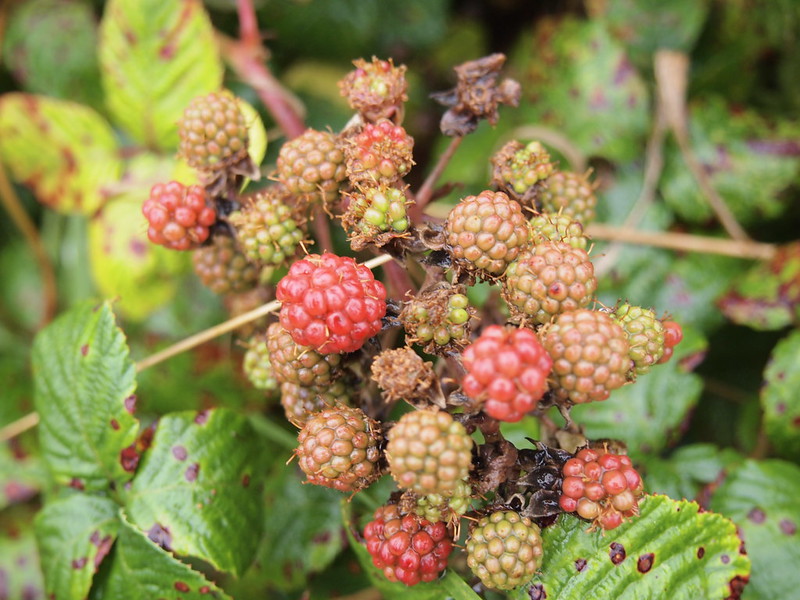
P9176576

Not the sweetest of black raspberries but... still a raspberry. Also in case you are wondering what is the difference between a blackberry and black raspberry, I think its that black raspberries have smaller cells and are a bit more furry like in the picture above.

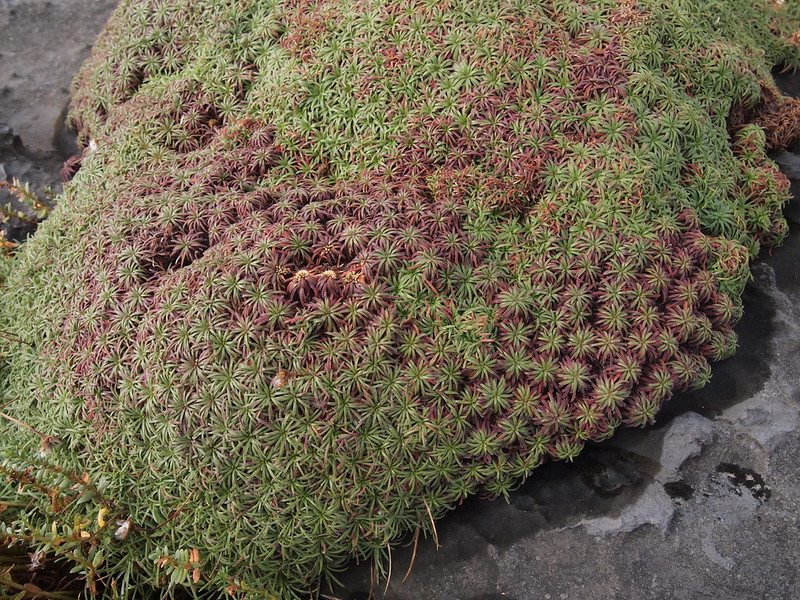
P9176724

I wish I could say I could identify this one but I actually don't know. It looked soft and inviting but when I tried to kick it with my foot, it was literally like a rock. You could jump on it and it would be unharmed although it looked like a pillow of green bursting out from between the rocks. It could not even be prised out from the rock with my fingers. It was like stone. This was a strange one... and mainly observed growing on the most extreme parts of the cliff...

IMG_1270

EXTREME CLIFF LIFE!

IMG_1282

MORE OF THE EXTREME CLIFF LIFE!

Well that's it for a short digression into the Flora and Fauna of Inis Mor. There were a lot more such as cows and a whole host of mysteriously similar red berries but finding out their names is quite hard so we'll go a few at a time. So next time: more on the flora and fauna of... Urban London?....

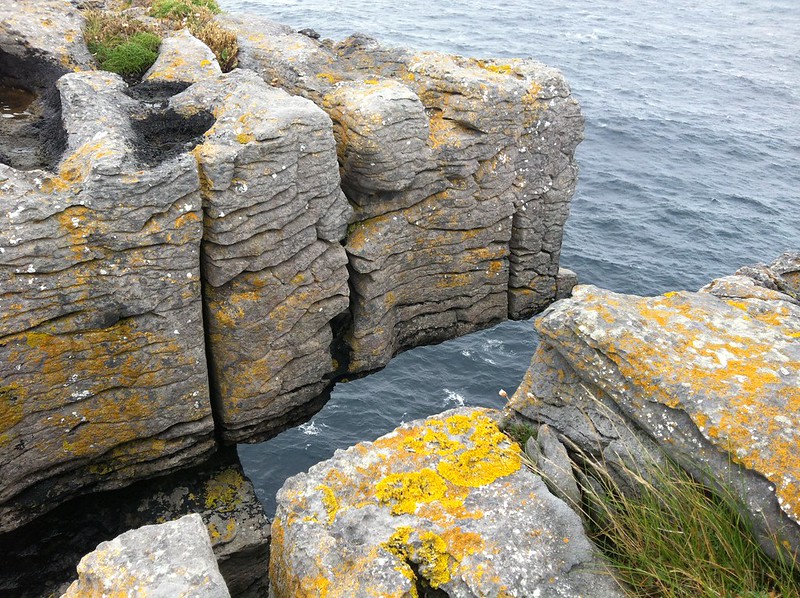
P9176627

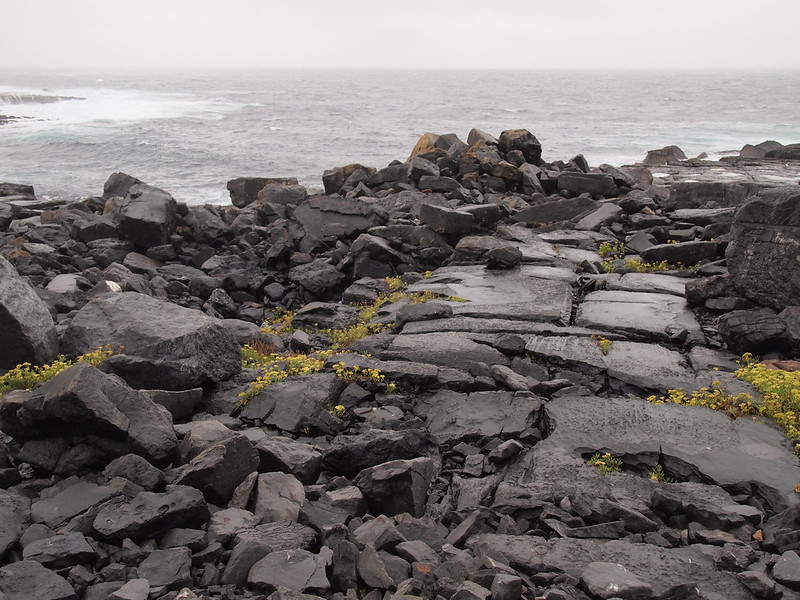
EXTREME ROCK LIFE!

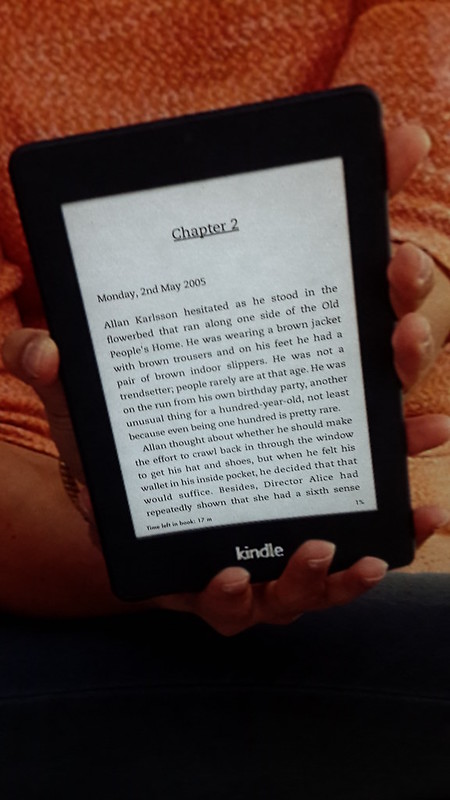
Everyone is reading the same book on Kindle Paperwhite

2013-11-11 14

The other day, I noticed that everyone on the Amazon Kindle Paperwhite adverts on the London tube (spotted along the Victoria Line and Jubilee Line) is actually reading the same book. You know those adverts where they have someone waving a Kindle and spouting something along the lines of "OH MY GOD I CAN READ IT AND ITS LIKE PAPER"? Yes. The book on screen in all of those ads is exactly the same! A simple search later revealed that the book in question was "The Hundred-Year-Old Man Who Climbed Out of the Window and Disappeared" by Jonas Jonasson. I wonder, did Jonas Jonasson or his publisher get a cut from doing this "spot"? I always look at books in display cases to see what they thought should be their mannequin's reading material. Has anyone else noticed that they put exactly the same book in every picture?

Curious as to how this book was selected, when I googled for information relating to "The Hundred-Year-Old Man" and its relationship to Amazon Kindle, the most prominent fact that seemed to come to the fore was that earlier this year the kindle version of the book had actually been sold for the staggeringly low price of 20p at one point. TWENTY PENCE! FOR A BOOK! Now I have not yet read the book, but the very idea of selling a book for 20p (0.40 SGD) naturally arouses suspicion that perhaps the book was a gimmick or had something seriously wrong with it to the point that they had to sell it for 20p to move those units. Perhaps it could even be a trashy novel with popular appeal like Fifty Shades of Grey. (Incidentally, there is also a parody novel called Fifty Sheds of Grey which is also on Kindle's 20p list). But a quick google of the book seems to indicate that it is a serious real book. In fact now it is now listed as being back to a 'normal' price of £3.99 on Amazon UK.

I think one tends to be immediately outraged to hear that any real books have been priced at 20p; I would be inclined to assume first that the person who has taken the cut must be the author or publisher rather than the massive e-retailer. But, in this case it was actually Amazon and Sony which had absorbed the cost of the book in the bid to attract more people to their e-book handsets. Turns out the 20p gimmick was simply a result of Amazon attempting to price-match Sony's discounts on those same books.

2013-11-11 10.10.49-2.jpg

2013-11-05 19

2013-11-11 14

Even if the author or publisher does not suffer financially from such a move, it seems like a very bad thing to value a book at something as low as 20p; like a a perfunctory token. Even if they are only to be temporarily priced at 20p, I wonder if in the long write people may come to expect that books CAN be expected to be valued at such prices in future. It is one of those things, like how writers often find that they do not get paid as much as they should do - when in actual fact all the content and meaning is in the writing itself! I do find it ludicrous that a designer and printer can always expect to get paid on time because they produce tangible deliverables, but something like being a copyeditor/writer is sometimes times harder to define and assign value to, when in fact it could very well be the most important part of the process! It seems like a bit of a mean-spirited thing to have a price war over e-books in particular - the thing is that they do not have a physical form, so the way in which we attach a price tag to them could in fact be completely arbitrary. The whole system and economy of the pricing of e-books could go either way right now, and I dislike the notion of a "price war" because I think you should either have it at a reasonable price (but then what would that be?) or completely free, rather than leveling it as CHEAP and almost worthless.

I think that in an ideal world, all e-books should be free because it is already in a format that cannot be controlled - in any case if consumers are used to not paying for e-books then it will be hard to ever re-institute prices on e-books after the precedent has been set on "selling" e-books for practically just pennies. Consequently, all printed books should understood to be sold at a price that must come at a reasonable premium because there is an inherent respect amongst people for the print format of the book. Logically, over time, as digital platforms become more and more prevalent but also cluttered and full of "noise" (due to the oversaturation of media and advertising) it will eventually become more and more desirable to have a physical, tangible form of a book that we can hold and touch and experience - the same way old physical playback formats like VHS and vinyl persistently retain a distinctive appeal despite there being many new digital methods of recording, playing, and distributing/selling music. On top of that, in an ideal situation, all readers should be educated and discerning of what they choose to read or not read. E-books in the public domain or which are offered for free do not pose a threat to the commercial viability of new books because people always desire good, intelligently written and fresh new literature to read and consume, and it will be commonly understood that this comes at a cost because of the immense amount of work, time, energy and authorial brilliance that is necessary to produce new literature.

Monday, 4 November 2013

Visit to a Semi-Anechoic Chamber / Cone-of-Silence

20131104_084939

Today some of us managed to have the brief opportunity to visit an anechoic chamber in Imperial College at the Centre for Bio-inspired Technology. However, I must admit that I would classify it more as a semi-anechoic chamber as it had a solid floor (probably due to the need to hold heavy laser equipment and other machinery in the room). Nevertheless, it was very interesting to see it in person.

20131104_092201

20131104_091805

Radiation absorbent material (RAM)

20131104_091724

To me, the room itself is visually impressive for its many striking angles. Which of course brings me to thinking of other "anechoic chambers" or radiation absorbing materials and its functions - not just for sound, but also other waveforms such as microwaves or radio waves (in the case of radar). The "look" of such rooms is not so much a design as it is functional. This sort of faceted/angular plane alignment helps reduce the "signature" of the interior space/object, because a curved surface usually reflects waves in a number of different directions whereas a singular plane will reflect them in one direction. As a result many examples of stealth ships and planes designed for military use have a particular look in order to minimise the directions in which radar signals will be reflected. Because there are only sharp angles and planes, this form of "purpose shaping" (as they call it) means that the surfaces that will inadvertently reflect energy can be designed to create some sort of "cone-of-silence" with regards to the object, as well as its intended direction of motion.

F-117_Nighthawk_Front

Lockheed F-117 Nighthawk (Image source: Wikimedia Commons)

K32_HMS_Helsingborg_Anchored-of-Gotska-Sandoen_cropped

Visby Corvette (Image source: Wikimedia Commons)

Thanks to the guys at Imperial for letting us visit their room and thanks to Sam for organising the visit.

Sunday, 3 November 2013

Blue Station Door/Structure ID Number Signs on the London Underground

2013-10-22 10.58.31-2.jpg

Outside Green Park station on Piccadilly, there is a curious blue sign near the busstop where I wait for the bus to school. I realized it must be a tube specific sign since I had also seen it inside the tube station. But what do the numbers mean? I decided to collect a few to see if there was a pattern.

20131022_160926(0)

20131022_161134

20131022_153248

20131022_153301

20131022_153238

20131022_153309

20131022_160949

20131022_161009

20131022_161121

20131022_161112

A couple of signs from Baker Street Station, Green Park Station, South Kensington Station, and Seven Sisters Station.

I'm afraid some of the shots were blurry as tube stations were probably not made for people to stand around and take photos in the corridors and it seemed to me as if people wanted to intentionally bump into me to show how annoyed they were at me for standing in the middle of the corridor taking pictures of weird numbers - preventing them from running a few milliseconds faster. Oh london commuters, you so funny.

I noticed that some were on doors, but some were on walls. All doors had these signs, but sometimes there would be a different sign right next to the door. Sometimes the numbers were sequential, and then at other stations, they were not in sequence! It was not hard to see that the first number referred to the level number, but what was the other number? How was it determined?

Eventually, I've traced it to the TFL's official London Underground signs manual. It says this is the "Standard door and level number sign"; aka "Station area ID codes". Searching for more information on this online seems to suggest, from discussions on various forums, that the first number stands for level below ground (Ground level is 1). The second number apparently refers to a room/structure number which is for the reference of the London Fire Brigade, which can refer to these numbers on a special station plan.

Screen Shot 2013-11-03 at 12.16.59 PM.png

Screen Shot 2013-11-03 at 12.17.41 PM.png

But... how is the second number derived? Why are the numbers so different?

Screen Shot 2013-11-03 at 12.16.57 PM.png

I tried to look for a detailed station plan but could not find one (I tried to find it for one example, Baker Street); I guess the unavailability of publicly available maps might be for security reasons. However, in the process I did find another great map - Detailed map of London Tube, Underground, Overground, DLR, Tramlink & National Rail:

Screen Shot 2013-11-03 at 12.42.11 PM.png

Further searching led me to this 3D visualisation of the station maps for certain stations by Andrew Godwin. Its a cool project but was apparently created from memory so it does not have the data that I am seeking:

Screen Shot 2013-11-03 at 12.53.51 PM.png

Nevertheless it is fantastic to have the complete overview of the position of the stations and all of their platforms. I like the idea of having the grand overview of how these transportation lines work together, bringing us one step closer to finding out the meaning behind each and every sign on the underground...

See Also:
Collection of 3D maps of London Underground/DLR stations
Detailed map of London Tube, Underground, Overground, DLR, Tramlink & National Rail
London Underground signs manual

Unusual Materials - Felted Human Hair Coaster

I'm going to bet that this is the point in the blog that people are going to go "UGH! GROSS! WHY WOULD YOU DO THAT?" But in the spirit of inquiry, I decided to investigate whether human hair will felt up into a mat or coaster.

It all began as a hairball that has been sitting in a tupperware in our room. This cachet of hair had been retained after I gave George a haircut recently, as a kind of joke; it was like a friendly "pet hairball". But over time, I thought that hair might be an interesting material. Eventually, it seemed natural that one should eventually turn to the question of whether this hair material could be transformed into any other form or shape...

2013-11-02 15

Following some instructions from nofolete's felting human hair tutorial, I attempted to use some liquid soap and a rough wooden table surface to felt up the hairball. How you do this is that you just rub the hair into flat layers with a little soap and water until it starts to almost "seize up" into flat clumps. Make a few sheets of matted clumps and then rub these sheets together to form a thicker layer...

2013-11-02 16

I do find that the water in London is hard enough to be such that if I washed my hair with straight up soap or shampoo, it would literally clump up and felt up if without the intervention of conditioner to stop it from doing so. In a sense, this is similar to the process of making dreadlocks.

You simply rub it in very well and then iron the water out, and repeat the process until it seems like a solid mat.

2013-11-02 22

So to answer the burning question:
Q: CAN HUMAN HAIR BE FELTED?
A: YES???


But with the hair being quite short, this piece is prone to shedding. So... um... I don't think I'm going to use this for any sewing projects soon. Perhaps I will need to mix this with other fibres of animal origin to get it to felt up convincingly well.

And in other less scintillating news, I also crocheted a normal coaster (from normal acrylic wool):

2013-10-26 18

Making a coaster like this just takes a few minutes and it also won't constantly shed human hair, and nor will it make your friends cry and make them all grossed out when they have to rest their mugs on it.

Aubergine and Portobello Lasagne / Pineapple Tarts

There was a big storm up in Britain recently which resulted in my having to take a detour at Seven Sisters because the overland had stopped running for the entire day. This resulted in me walking past the Tescos at Seven Sisters which then led to my discovery of LASAGNE SHEETS! And I thought that since we have been eating lasagne at Grodzinski's in Stamford Hill, why shouldn't we also try to make it ourselves?

PA297774

Aubergine and Portobello Lasagne


Aubergine Sauce
1 large aubergine or 2 smaller aubergines
half a box of mini portobello mushrooms
some tomatoes
handful of spinach
onions or shallots
3 or more cloves of garlic
extra virgin olive oil

Bechamel style white sauce
50g butter
50g flour
500g milk
4 tbsp grated parmesan cheese

You will also need lasagne sheets and a square baking tin.

Aubergine Sauce
Slice the aubergine and steam for about 15-20 min. In the meantime, in a heavy pan with a splash of extra virgin olive oil, fry the garlic and onion until fragrant, then the mushrooms and spinach. when the aubergines have been steamed sufficiently soft, transfer them to the frying pan and pan fry them till they are brown as well. The browning imparts a much desired taste (Maillard reaction) so it is important to brown the ingredients after steaming (which is done to quicken cooking time and improve the tenderness of the aubergine). Finally, add the tomatoes. if you have tinned plum tomatoes use that, otherwise a fistful of fresh tomatoes with a bit of tomato paste and a generous dash of sugar and water will replace that just fine. The sugar helps cut through the inadvertent tartness of fresh tomatoes, a feature which is often not present in tinned tomatoes. Season to taste. And that'll be the aubergine sauce.

White Sauce
Melt the butter in a pan on low fire and add the flour. It'll froth and bubble up and you'll have to keep stirring so that the flour is evenly distributed throughout the roux (a combination of fat and flour, which is traditionally used as the thickening agent for our sauce). Then gradually stir in the milk and cheese. The parmesan cheese is not traditionally added in béchamel sauce and I have omitted a dash of grated nutmeg as I do not have any nutmeg, but I find that the sauce still turns out very agreeable this way.

2013-11-02 19

Lasagne Assembly
Butter the square tin and put in alternate layers of aubergine sauce, followed by white sauce, followed by sheets of lasagna. You usually don't have to precook it the noodle. Top with some cheddar and white sauce and bake for about 25-30 min at 200 deg c.

2013-11-02 19

Lasagne with a salad of mozzarella cheese, basil and tomatoes.


Pineapple Tarts


I also recently made a batch of Pineapple Tarts. This is something that is commonly eaten around Chinese New Year in Singapore. A few years ago I made pineapple tarts from scratch but because I lacked the distinctive tart cutter, the outcome did not look not very professional. I think I've gotten to the point of where I would like to make some seriously kickass things but also be quite detailed about it.

Pineapple Jam
2 Pineapples (about 1.2kg after removing the skin)
200g golden caster sugar

Pastry Base
200g butter
pinch of salt
260g all purpose flour
2 tbsp cornflour
30g icing sugar
2 egg yolks

You will also need baking parchment, a food processor, and a pineapple tart cutter.

pineapplecutter

The pineapple tart cutter is really key to the look of this pineapple tart. This time around I've been collecting cookie cutters and moulds and I got a pineapple tart cutter when I was in Malaysia earlier in the year.

2013-10-27 14

We start with fresh pineapples. Some people also think its hard to make the pineapple jam from scratch (it can be bought pre-made in Singapore, so I guess people are wont to say "why make your own if its already available?"). I personally find that its quite easy and foolproof to make, just takes a bit more time but at least you know what's in every tart!

2013-10-27 14

2013-10-27 14

Slice the pineapple in this manner to get MAXIMUM PINEAPPLE. It is quite manual work but this seems to be the best way to cut a pineapple - other methods can be a bit wasteful - so you should cut it out in the round like this. The way a pineapple grows is quite standard - each prickly segment is from a single carpal of the flower and if you count the spirals there will actually be 5 spirals if viewed from a vertical angle, and if you look at it from a slightly more horizontal angle, it will have 8 spirals in one direction and 13 from another direction (Fibonacci Numbers!). The main point is to cut along one of these spiral directions to remove the prickly parts of the pineapple. Either will do, whichever direction is easier for you to cut.

After you do that, blitz all the pineapple in a food processor to make it into a paste. Boil this pineapple paste with the sugar. The jam takes a long while to come together, so let it reduce until it is very viscous and behaves like a kind of thixotropic paste.

2013-10-27 14

Pastry Base
While the jam cooks, make the dough by rubbing ALL the pastry ingredients together until it forms a dough that is quite soft yet malleable. The purpose of adding in the cornflour is actually to give it a sharper crunch. If you search around for recipes, many don't mention this cornflour but from my experience of following various Scottish Shortbread recipes, I've realized that the addition of cornflour or rice flour to the mix really makes a difference in how the final bake turns out, making it taste significantly lighter.

PA287763

Roll out the dough and cut out the dough shapes with the cutter.

PA287765

Top with the jam and you're ready to bake. I didn't glaze my tarts with a beaten egg but if you are feeling fancy you can do that to give it a more glazed appearance. Bake at about 165 deg c for about 20-30 min. I think my oven has a tendency to be too hot so you should adjust accordingly - when the dough is golden it is done - a visual check is the best determining factor, as you really don't have to let it go too brown.

PA287766

Use a wide-mouthed jar to store the baked tarts when completely cool. Cut out a stack of baking paper circles which are the size of the jar lid and use these paper circles to divide the tarts up into layers. If not, without the baking paper, these open-topped tarts might stick to each other.

PA287770

Pineapple Tarts!


I must admit that I've been enjoying learning the reason for certain cooking methods in terms of how the ingredients react chemically to temperature or the other ingredients. And knowing the precise way in how an ingredient reacts also means I can make more logical variations on recipes....