Monday, 3 November 2014

Neue Kreuzberger Zentrum

P8282351

P8282356

P8282355

P8282352

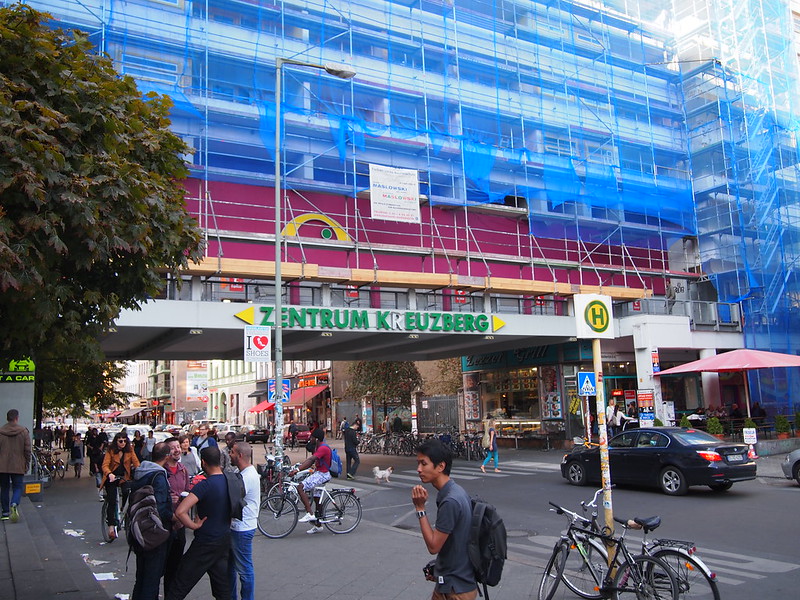
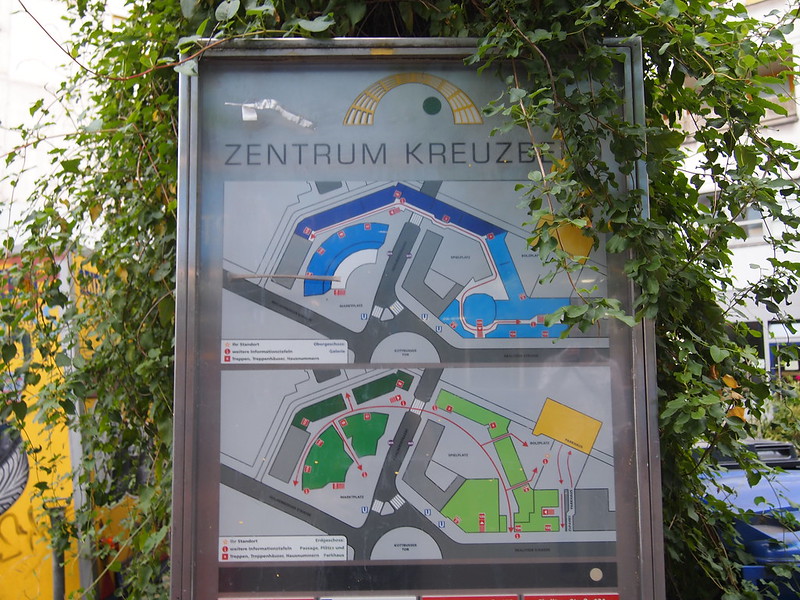
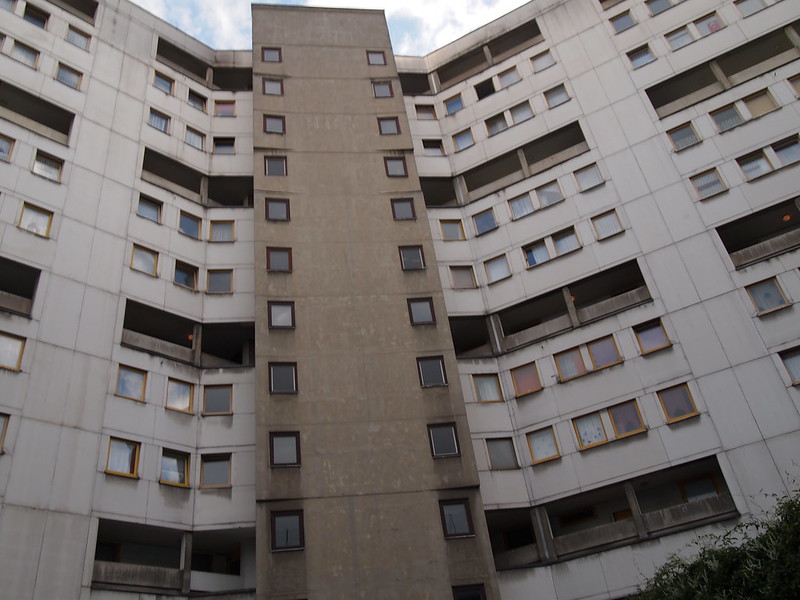
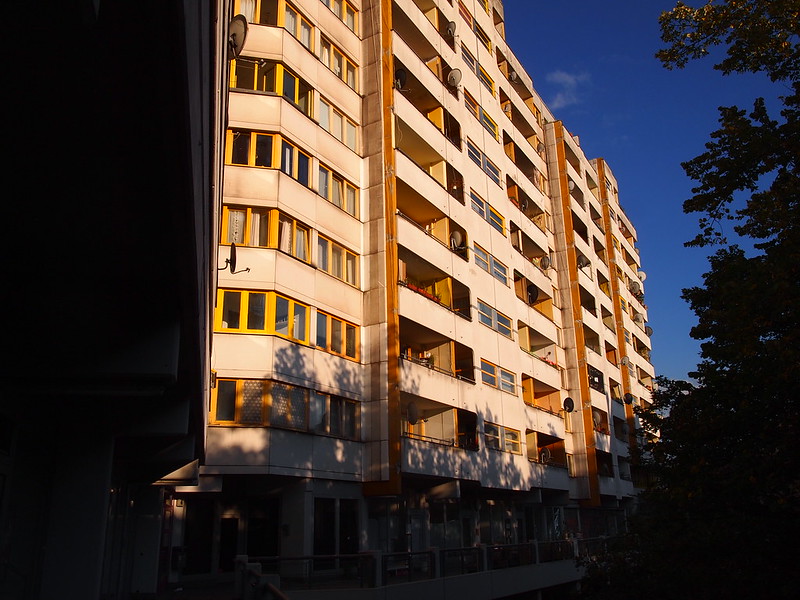
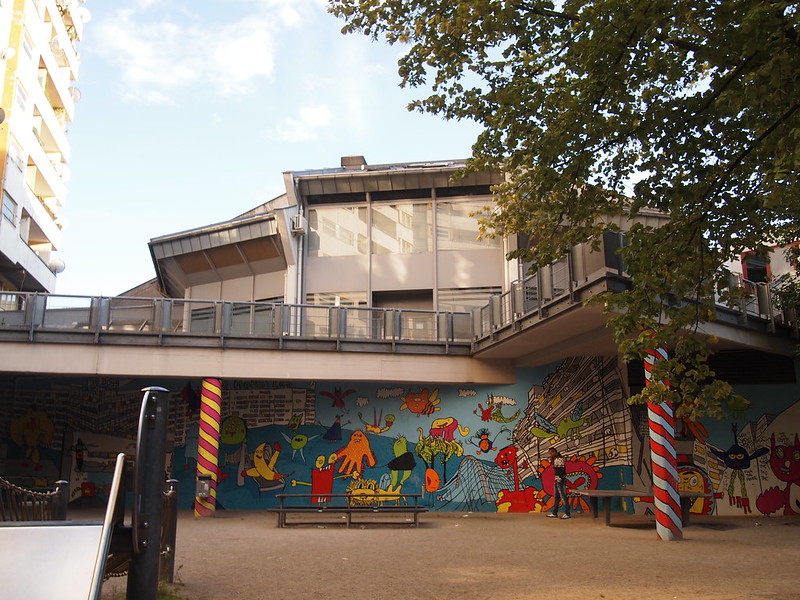
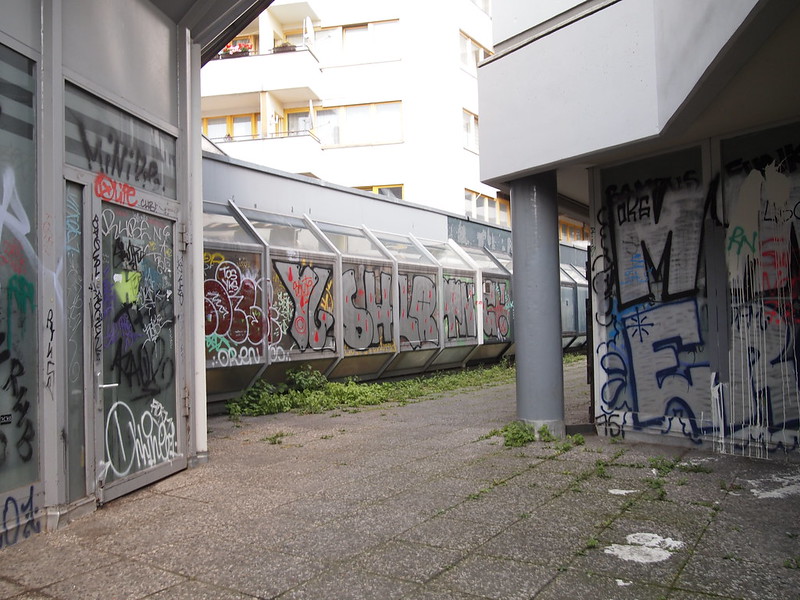
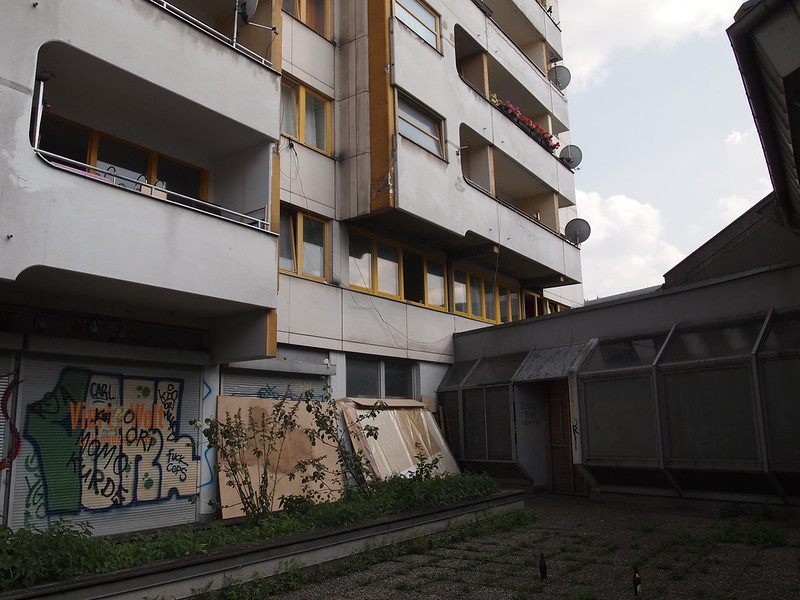
In 1974, some 40 years ago, the Neue Kreuzberger Zentrum (NKZ) was built. A staggering mammoth of a mixed-use tower block, it stands at the centre of the chaotic and noisy Kottbusser Tor traffic junction. Its construction required the complete demolition and rebuilding of the area, and the word “neue” was surely in its name to suggest that it was imagined to be the starting point for a new urban direction in Kreuzberg. Its arch design was meant to compliment the development of the future ring road whilst allowing the building to serve as a wall for the traffic sounds.
P8292505

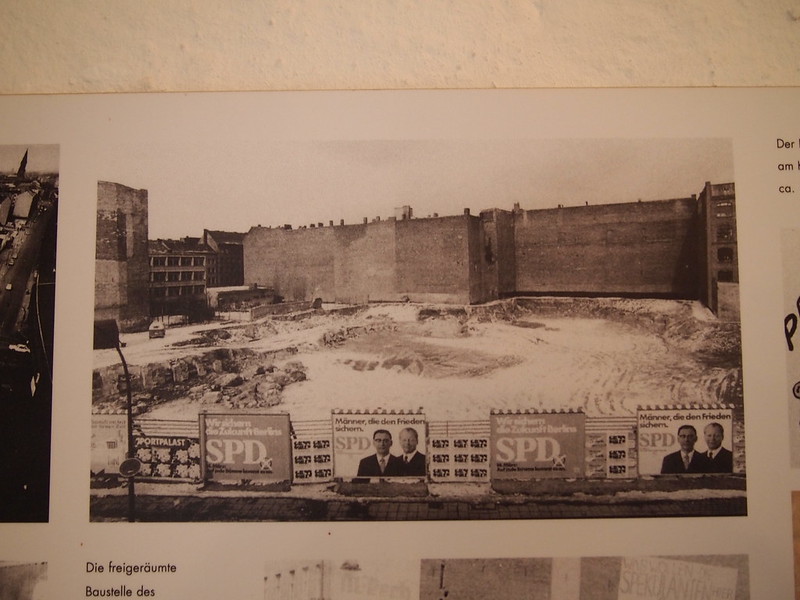
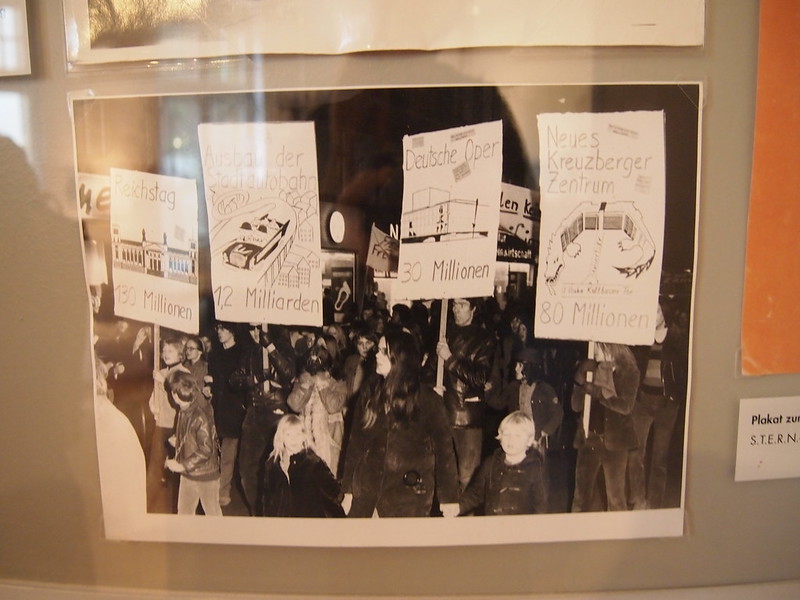
If you go down to the FHXB Museum near the NKZ, they have a permanent exhibit of how the building and area was redeveloped, including a photo of the site upon which the NKZ has been built, in which the outside of the demolished site has huge posters from the Social Democratic Party stating “Wir sichern die Zukunft Berlin” (We ensure/secure the future of Berlin). A dream for the future, to build more social housing in the area which sorely needed it in the post-war era, but blighted by different demands and interests pulling it in all directions and pushing it forward against the will of the people living in the area. The NKZ was criticised for having been built without sufficient public consultation or participation and having used brutal forced evictions to clear the land.
P8292489

P8282360

When I was in Berlin for the summer, I frequented a printer on Dresdener Straße in Kottbusser Tor which was directly behind this mammoth of a building. On exiting the dead-end of Dresdener Straße, I saw a stair leading upwards, which took me to an fantastic upper level that crossed over to the other side. I was instantly attracted to it, although it was hard to explain why.

The main issue was that I couldn’t even recall why it looked familiar to me - did I see this on my last trip to Berlin in 2011? Or was it 'familiar' because I had seen a similar building in the Genting Highlands, or Singapore? Was it a falsely displaced nostalgia for this sort of dated architecture; or was it the pleasure of discovering something that seemed like a fantastic urban playground to me, with its numerous stairs and corners and vantage points?

Today the word “neue” has been removed from its name, and it is simply known as the Kreuzberg Zentrum. But in some ways, the NKZ reminded me of Golden Mile in Singapore, one of my favourite buildings in Singapore. Both the Golden Mile and NKZ were planned as buildings which would be at the centre of a glittering, golden era of modern urban development, although in both cases it did not materialise as such in those locations. Golden Mile has been later described as a vertical slum, but it remains as one of my favourites because of the diversity of spaces within it, and how well used it appeared to be. I suppose I was fascinated that the thai people in the Golden Mile Complex would sit on the stairs and use them as picnic areas. To some it might seem like a unorthodox use of the spaces within the building but in my opinion they had done it all right! The food was tasty, the spaces were welcoming, the music went on and on - in my opinion the building was a success!
P8282357

P8282358

P8282359

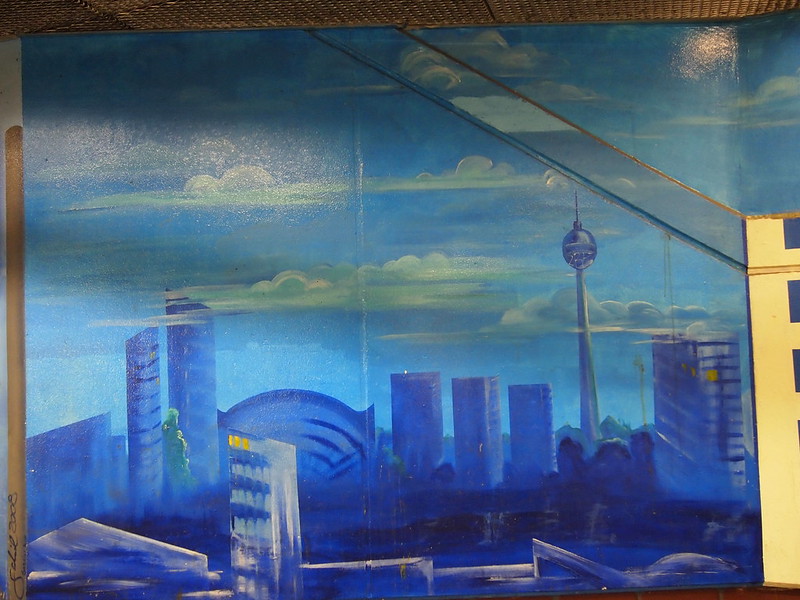
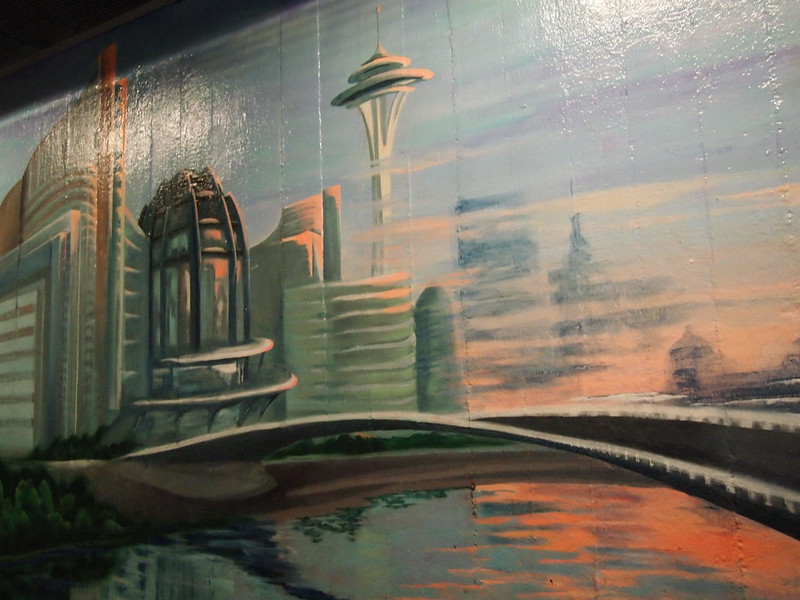
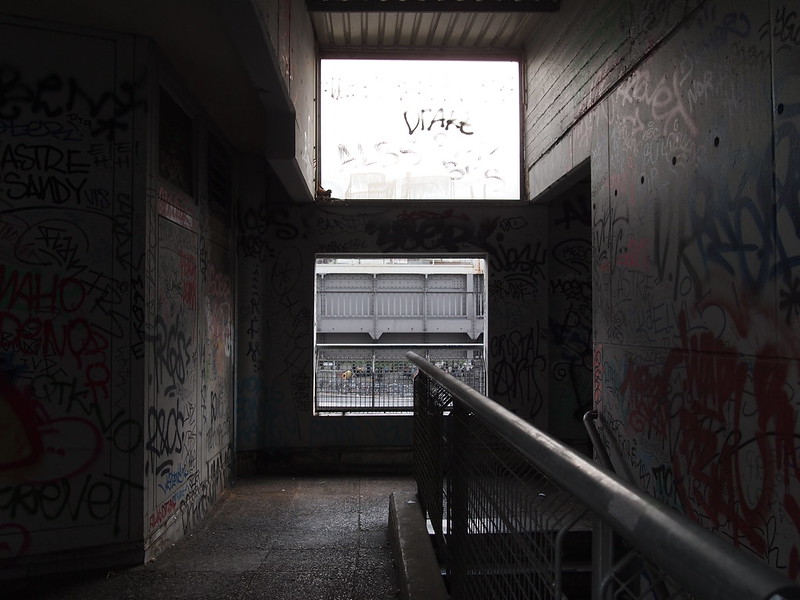
Tucked away in one part of the NKZ is this beautiful covered corridor which has been painted with murals of a futuristic Berlin city. This area in which the murals are located seems less than perfectly maintained and is a well-trafficked public thoroughfare which is littered with rubbish and strongly reeks of urine in one corner. I adore the strange juxtaposition of these odd future visions, placed right smack in a rather grim urban setting.
P8081110

P8081109

Whilst its not to say that I like any old sort of place which is rundown and poorly maintained, I realised that I do like places for the very same reasons which turn it into such an anti-social space: littered throughout the complex are these tiny pockets of empty space - sometimes disused and uncared for, covered in broken glass and graffiti, but on other occasions you may find a hidden dead-end public corner filled with plants and small comforts, places where one can find privacy for a moment within a very public space. They are spaces to be experienced, but which have no real purpose except perhaps to be a walkway between places; a temporary halfway house. And in a huge building like the NKZ there are so many of them.

One may debate that it is these hidden spaces within the building which engender antisocial behaviours because no one can see or police the activities that go on within it, yet perhaps naively I think they are also alternative spaces for dreaming. Strange isolated spaces from which the outside city is not visible for a moment, just as the city cannot see inside it. It is really just... an empty space, and I am attracted to that.
P8081107

Time for the Irresponsible Disposal of Confidential Documents!

20141026_135101_Gracechurch St

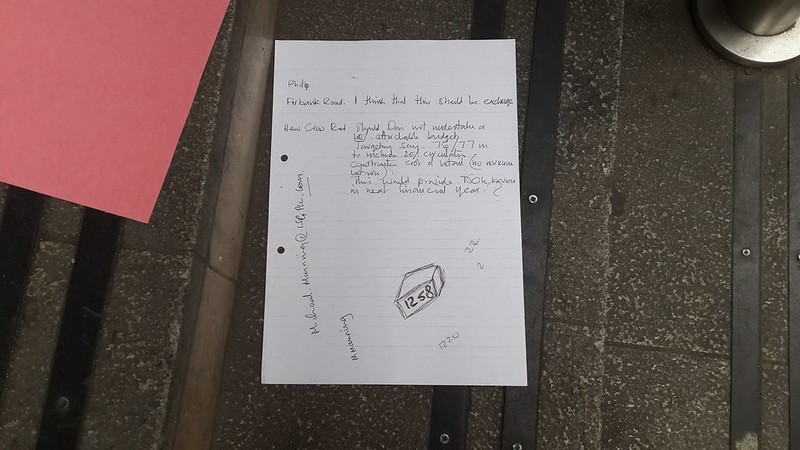
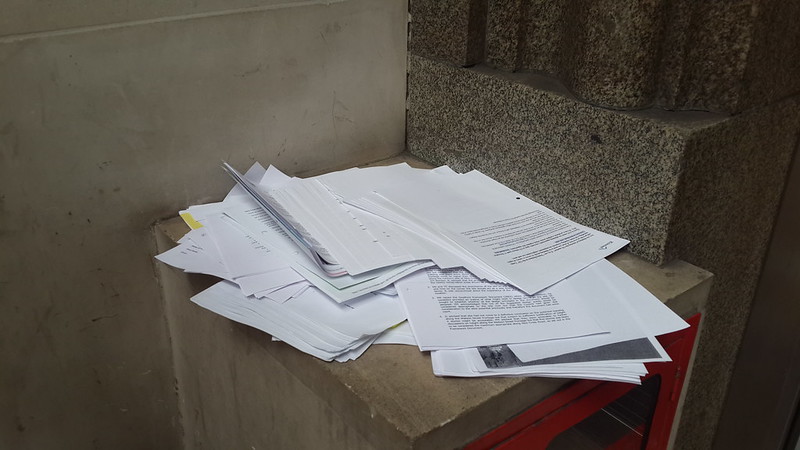
Ah, I do believe it is that time of year for the irresponsible disposal of your sensitive and confidential documents! Step right up, all you two-bit law firms and architectural consultants with reams of unwanted papers and emails that you printed out! In the last week we began to notice lots of these bags of papers in and around town. Perhaps they have always been there. Papers, bursting out of heavy bags which can't go in the normal trash because they are just stacks of solid, heavy paper. We were lured in by the clock drawing on this paper that had naughtily escaped its plastic bag and drifted into Gracechurch Street as we were walking on foot to Bank the other day.

20141026_135814_Gracechurch St

20141026_135816_Gracechurch St

The incorrigible hoarders that we are, we've been collecting them and reading the discarded papers of the city of London. This particular haul involves a documentation of correspondences relating to the design and redevelopment of a property in New Cross, wherein the people corresponding are examining existing (business) tenancy agreements and noting that the worse case scenario is that the current tenants will try to invoke the Landlord and Tenant Act 1954, but which apparently will not longer stand when the developers eventually become the new successor in the title. What happens to all the parties involved? Who knows? I mean, we could google it since we have detailed address and information about the property now, but shall we? The other day on Green Lanes we also had another haul of documents in which legal documents, visa appeals and NHS medical reports had exploded from a bag and strewn across the streets. Again, a puzzling choice to throw out confidential documents on the street. Or do they want to tell us the story? Are they just DYING to share with us these stories, by throwing out these tantalising clues?

Don't worry, people who like to irresponsibly dispose of their documents, your papers won't be flying on the streets, they'll be safe and sound with people like us who will be collecting your sensitive documents as souvenirs, and then uploading them to the internet and blogging about them one by one.

Sunday, 2 November 2014

Ultimaker 2: The Importance of Filament Guide design, and Underextrusion Troubleshooting

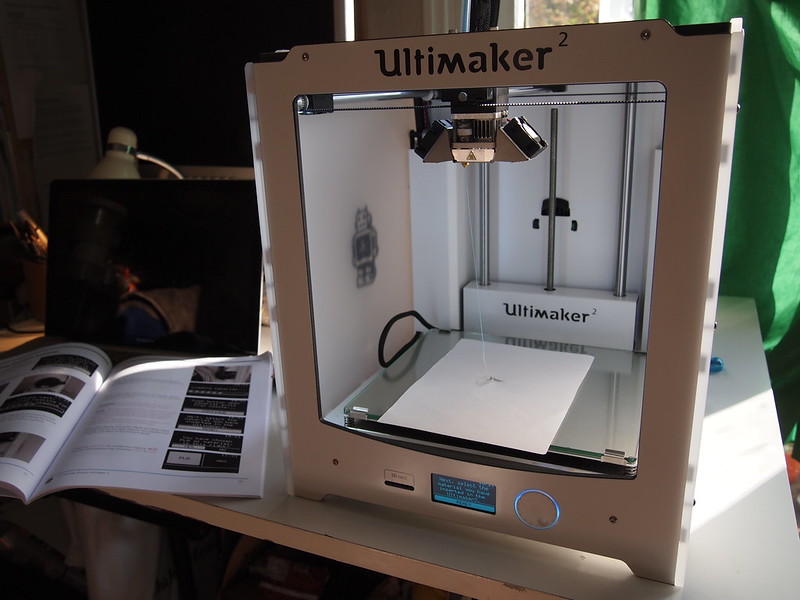
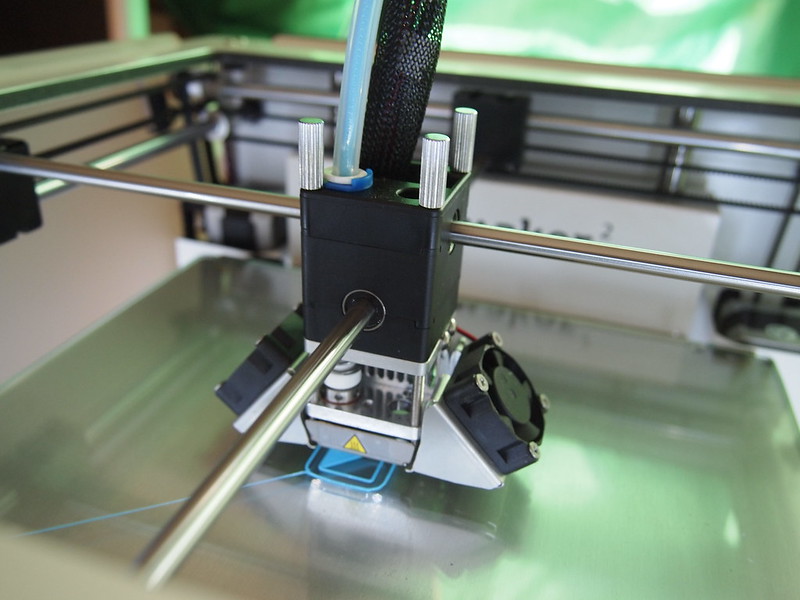
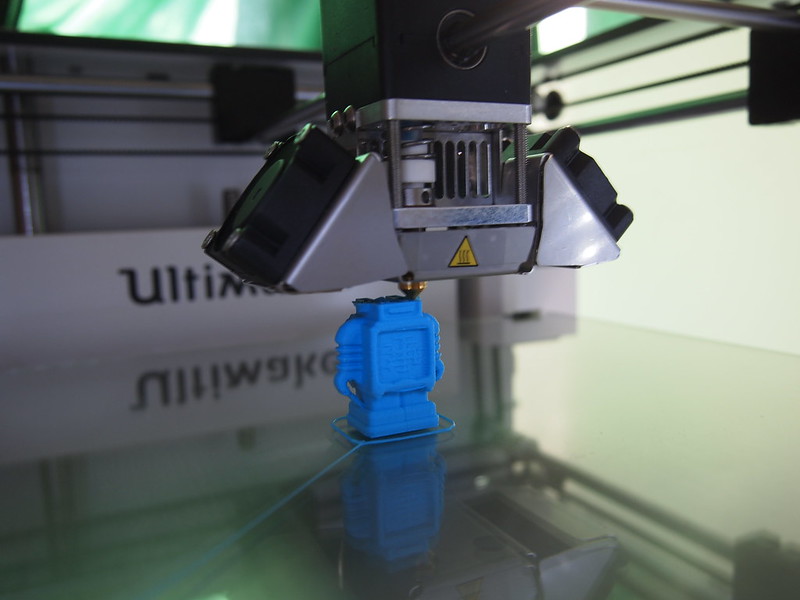
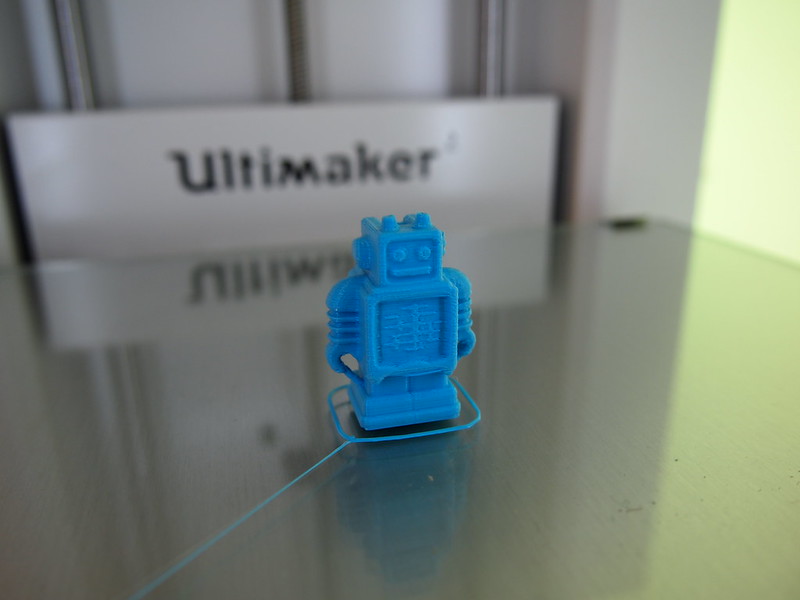
This week I bought an Ultimaker 2 so I could start work on a new project in which I intend to do a fair bit of prototyping and printing with different materials. I want to understand how a 3D printer works instead of handing my file over to someone to make the print for me - the same way a printmaker learns the intricacies of the printmaking process. In my mind, I thought it would be like just having a printer which poops out 3D models. But that was wrong. This is more like having a baby which is lovely when the baby is being lovely, but then you find that it does not have the ability to tell you what is wrong with it, and all you can see is that sometimes stuff might be coming out of it in rather unexpected ways. Horrifying ways. Oh and the sounds! The sounds which might be delightfully high-tech if you're in a good mood, or monstrous if you're in an irritable mood.

Now, if someone were to ask me, "Should I get a 3D printer?", my answer would be "Do you like fixing 3D printers? DO YOU??? DO YOU LIKE STRUGGLING WITH ALLEN KEYS AND PILERS FOR HOURS?" Let's just face it - it appears that maintenance and fixing is going to be a big part of having a 3D printer. I feel like a person who has stupidly moved into the top floor of an apartment block without a lift. "Why yes, I don't mind living on the top floor penthouse with no lift access, I don't mind getting a little more exercise every day or having to hauling up my boxes up and down all these painfully endless flights of stairs!"

PA283038

PA283040

PA283045

PA283047

The first prints were all fine. I thought it was quite noisy though but we took it back to the iMakr engineers to check and they said it was normal. Perhaps this is down to my furniture all being quite hollow. I think we can live with the noise, which is like a whirring melon of sorts. When it returned from the engineers, the first print I did after that had some underextrusion, causing one of my prints to snap into half when I was removing it from the build plate.

PB033058

Again, I'm no engineer, so it has been taking considerable time for me to really understand each part of the printer and fix what seem like minor issues... which then turn into many frustrated hours poking and tinkering with the machine. For example, I thought I had a nozzle problem but found out it was the filament feeder that was the issue and grinding the filament too tightly at the feeder.

PB033060

Knurled wheel had begun to grind the filament...

After some confusion of whether I should try to adjust the tension or to change the temperature or speed, I determined that it might just be a physical blockage and that I had to remove the bowden tube to manually pull out the jammed filament with pliers. The logic behind not upping the speed is that if you have an existing blockage, sending more material down the pipe at a faster rate doesn't necessarily help the jam. I ended up having to go through the assembly manual and trawling the forums, wishing I had some calipers now to measure if my filament was INDEED 2.85mm as claimed or thicker in some parts and causing the jam, and falling into depression and demoralisation when I couldn't exert enough strength to pull the jammed filament out of the Bowden tube (George had to help me with this).

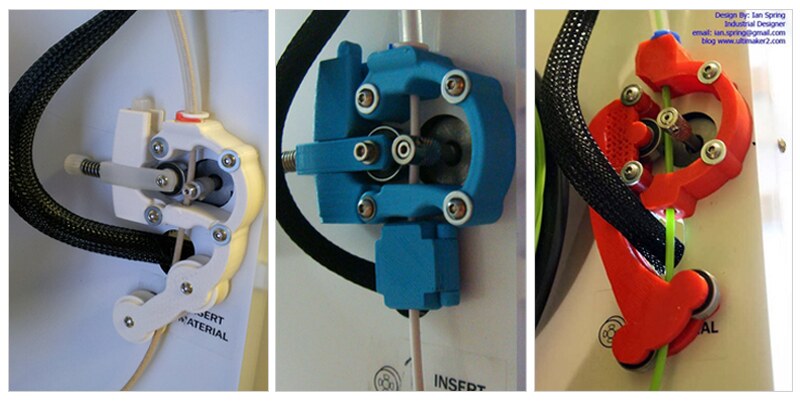
filamentguides

From left to right: “Yet Another Ultimaker 2 Feeder” by sfriedri on YouImagine (combination of |Robert| and Geeks’s Design), Ian Spring's Ultimaker 2 Feeder, |Robert|'s Ultimaker 2 Feeder with filament guide.

From looking around at different people's modified feeder systems and from playing with the Bowden tube, I've determined that the issue is that the filament could benefit from some straightening before entering the bowden tube. Furthermore, if the spring tension was easier to change without the tiny finicky allen key, this would be an improvement.

PB033062

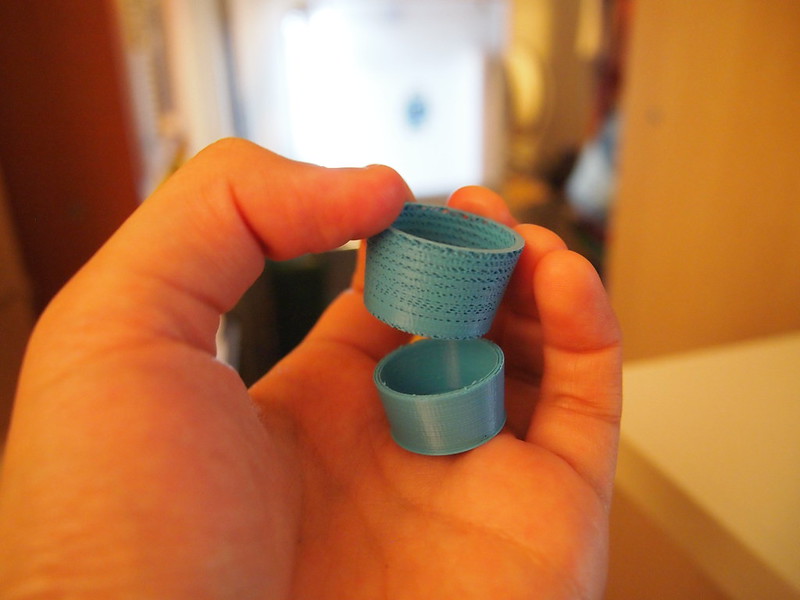
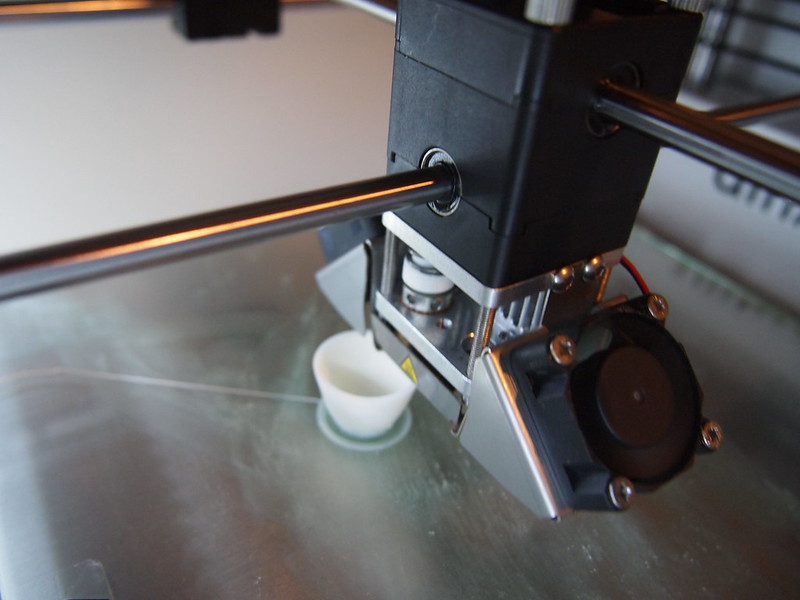
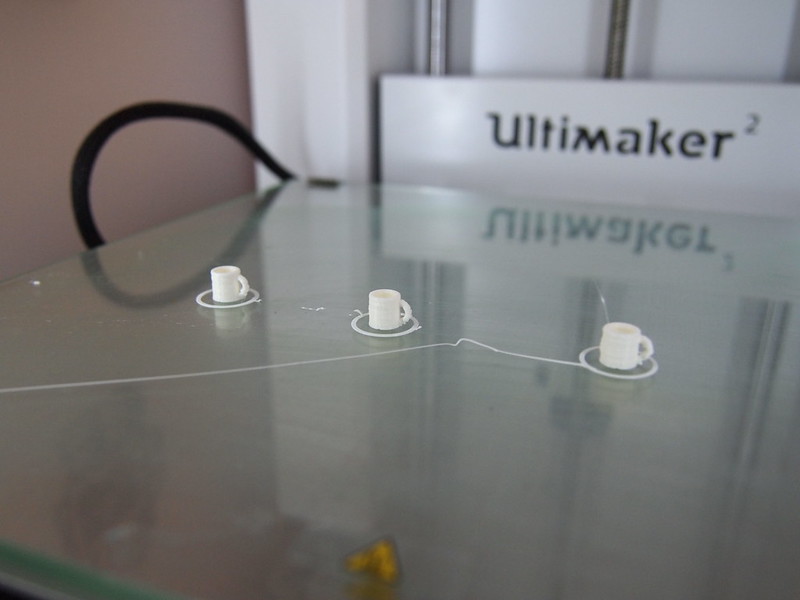
After fixing the jam I switched to white PLA and printing has resumed just fine and I made lots of tiny dollhouse cups as a quick test.

PB033067

One might say that with a 3D printer you would never have to buy as many things again since you could print it in the convenience of your own home. But convenience? Oh yes, just give me a few hours while I print this spoon instead of going outside to a shop to buy one in a heartbeat. It is a slow and hard process of getting to know the machine bit by bit along the way. Well this week I became acquainted with the filament feeder. All I can say is that I was amazed that I managed to fix it all at the end without making anything explode.
LESSONS LEARNT THIS WEEK WITH THE UM2
UNDEREXTRUSION TROUBLESHOOTING:

- Underextrusion - could be either a nozzle jam or filament jam. To confirm if it is a filament jam, check whether the filament can be removed or reversed. If the filament cannot be removed then its a filament jam
- If its a nozzle jam, which might happen if switching between PLA and ABS (which melt at different temperatures), you can clear it using the Atomic method.
- If its a filament jam, remove the jammed filament from the feeder and Bowden tube. Remove Bowden tube by first removing tiny blue horseshoes and pressing down on the white tighteners while pulling bowden tubes out. Do this for both ends. Then remove the misbehaving filament from the tube with a pair of pliers and replace them all back. If warping or deformation of the Bowden tube has occurred (which seems likelier to happen on the feeder end), trim a bit off but with a very flat and straight razor cut across.
Saturday, 1 November 2014

Growing Mushrooms, Moss and Lavender - Part II (1 year later)

About one year ago (See Part I) I attempted to grow some mushrooms, moss, and lavender. Nothing happened to the mushroom spawn or the moss for ages and I completely forgot about the mushroom bog roll under a box for almost a whole year, but the good news is that one year on they are actually still well and alive!

Growing Mushrooms - UNEXPECTED SUCCESS


PB093160

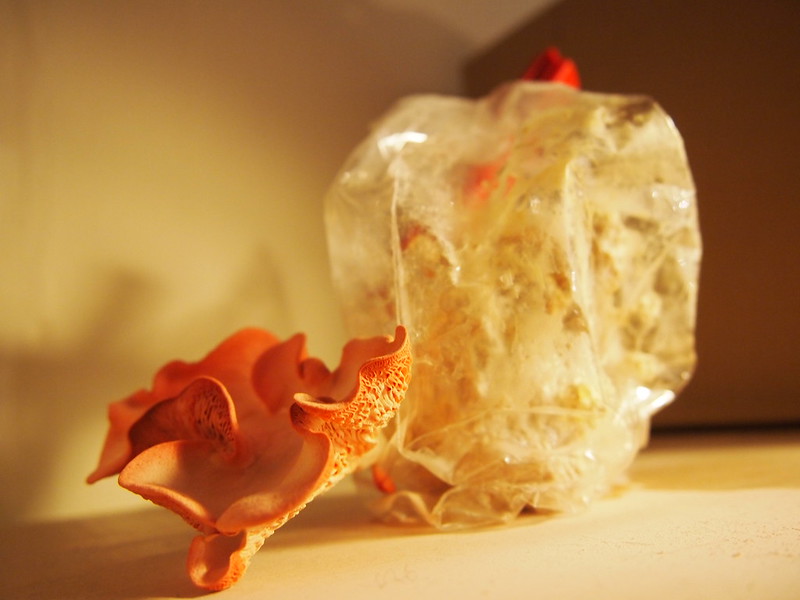
I used a bog roll as the growing media for some oyster mushroom spawn that I had bought online. It was done on the spur of the moment and not in a particularly sterile manner at the time. I hadn't looked under the box for months - this was because absolutely nothing happened for months and I had almost given up on it. Then I went away to Berlin for the summer, and came back 3 months later to SURPRISE OYSTER MUSHROOM. This one that bust out of the bog roll is hard as a shelf. I'm confused about the timeline or life cycle of an oyster mushroom now. I might have another go at this but this time maybe following the, um, growing instructions a bit more closely...

Growing Moss - SUCCESS


PB093162

PB093163

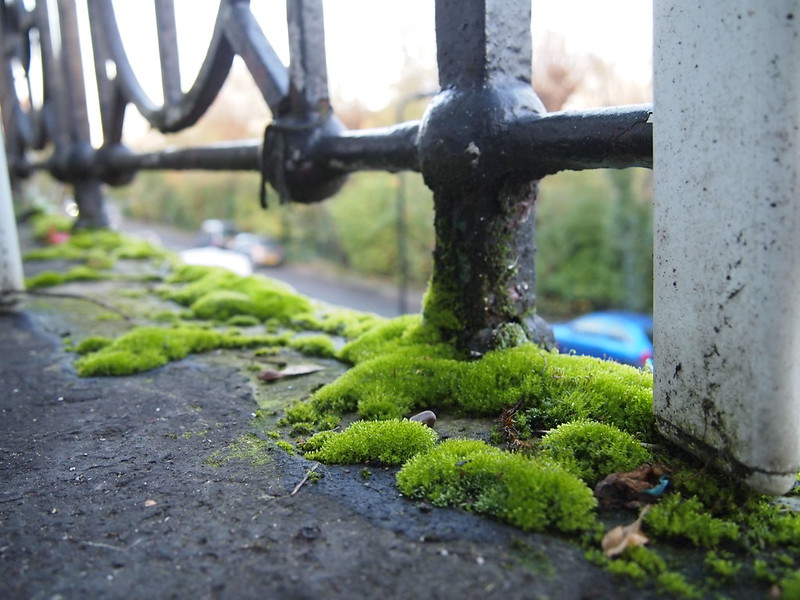
I'm glad to say that the moss population on our balcony has increased significantly over the summer.

Growing Lavender - SUCCESS


PB103166

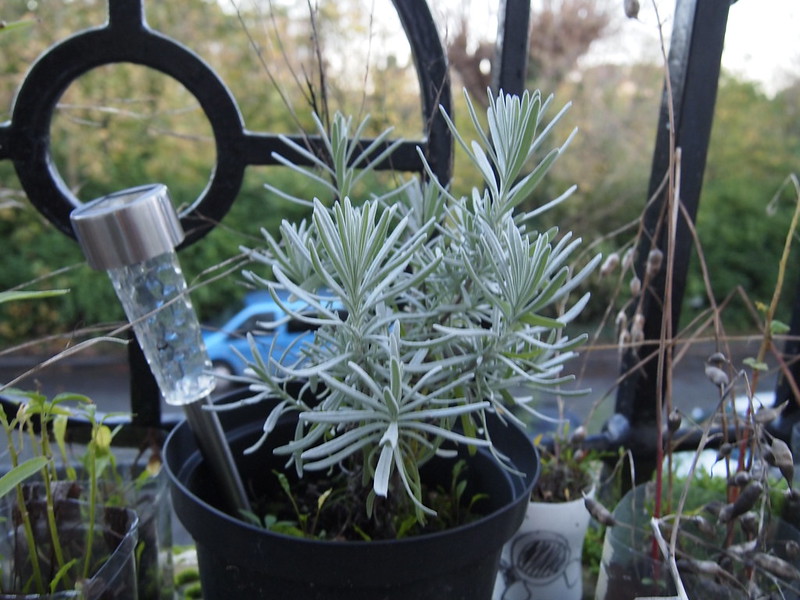
Georges II the Lavender Plant is still alive two years on! The secret has been to NOT GIVE THE PLANT ANY ATTENTION AT ALL. Lavender apparently just needs some rude ignoring and no fussing as overwatering kills lavender plants, which easily drown in too much water. I’m pretty pleased that by carefully ignoring it, it has thrived two years!


See also:

Nov 2013: Growing Mushrooms, Moss and Lavender - Part I

Thursday, 30 October 2014

The Glass Mirror

PA072889

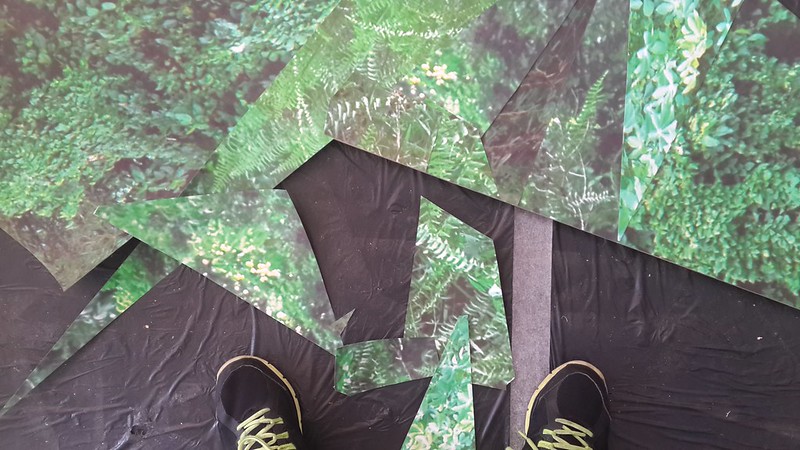
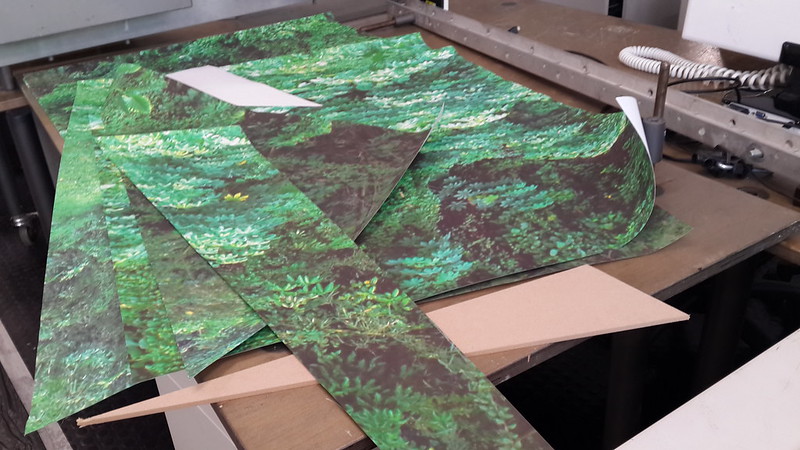
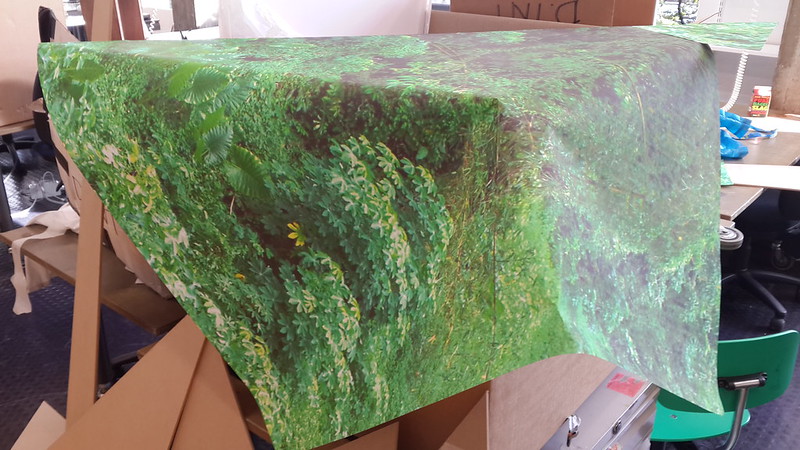
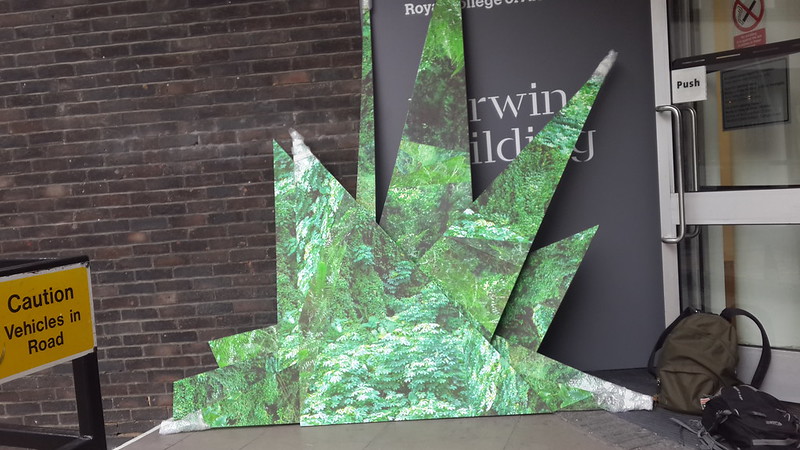
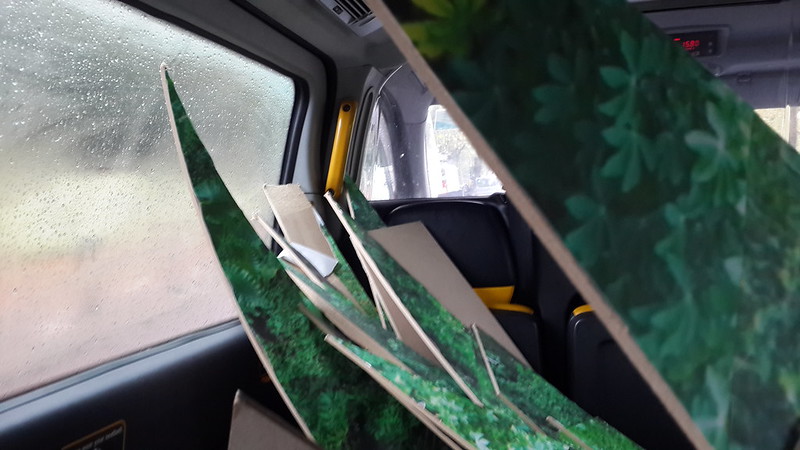
Awkward, big and odd-shaped, jutting into one another, cheaply printed into a temporary space. There are many words that you can use to describe what you see, but all of these words will be imprecise. You could say that the display seems to have shadows, lines, or that the images and colours seem somewhat ghostly, blurry, hazy, tinted, or faded. Wiggle the cable where it connects to the device. Check for any nearby magnetic or electrical devices in the vicinity, which might be producing unexpected electromagnetic interferences.

You may not have realised it yet, but the error does not lie with these delicately engineered and precisely calibrated devices that are reproducing these images and projecting them upon our retinas. The error is actually within us – the human audience trying to imperfectly comprehend what we see in a reproduction of an image. It is human instinct to want to see something recognisable in everything; to discern some meaning even within random matter, to see something recognisable within every picture, no matter how degraded the quality of the image is.

But what does ‘quality’ really mean? How does one begin to quantify the ‘quality’ of an image? How does it affect our appreciation of the image, or original subject of the image? And what does quality mean when we apply it to life itself? What do people mean when they speak of “quality of life”?

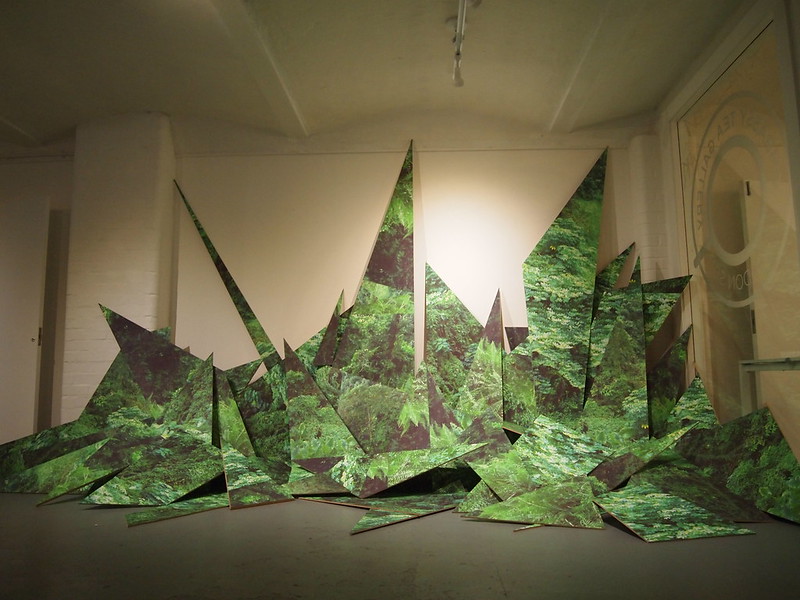
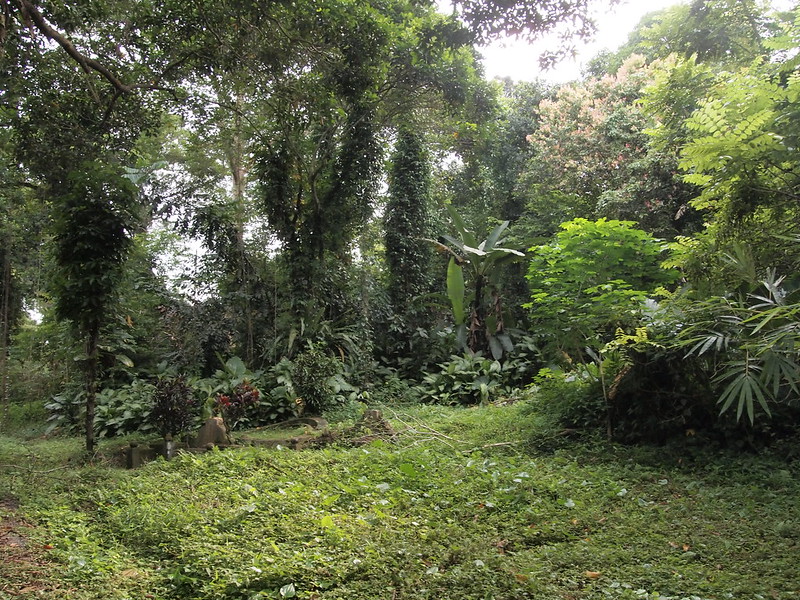
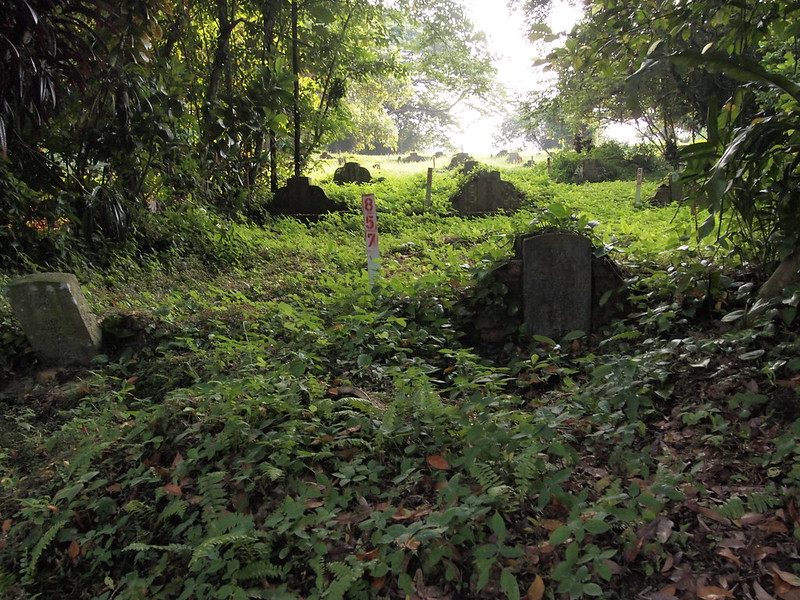
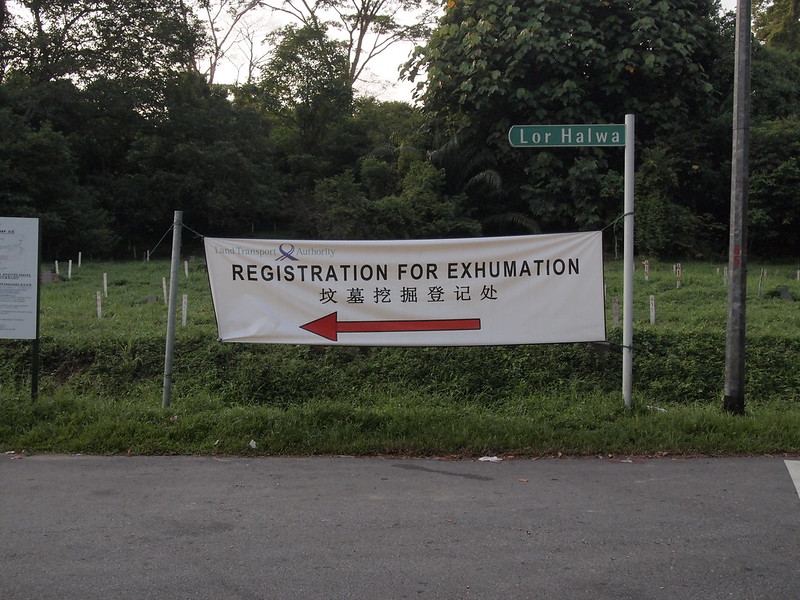
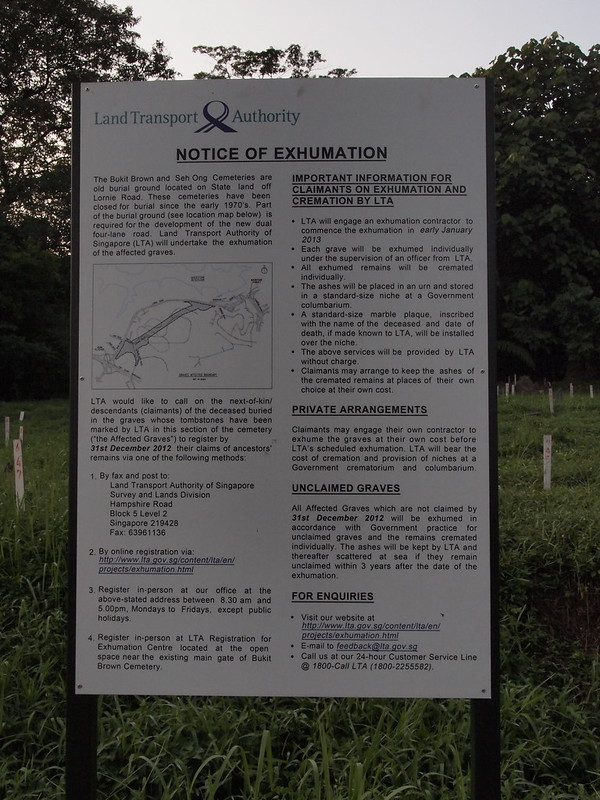
As Lefebvre writes, ‘the most important thing is to multiply the readings of the city’ and it is by observing the detritus of each individual fragment on its own that we may discover something important that we might otherwise not perceive. Here, fragments of Bukit Brown have been blown up and exploded into tiny, incoherent shards. What do you see in it?

P6305919

P6305785

P6305963

P6305778

P6305780

20141005_130637

20141004_162920

20141004_160731_Jay Mews

20141005_172825_Queen's Gate(0)

20141013_113102

20141013_133606


Glass Mirror was shown at "Hold Infinity in the Palm of Your Hand" curated by Annie Jael Kwan (part of SEA ArtsFest 2014) at Embassy Tea Gallery, London, from 7-12 October 2014. Thanks to Patrick Tantra, Philipp Aldrup, Annie Kwan, George South, and all who came down to see the show!

The Parallel Tottenham of the Endless All-Encompassing Everything Football

Last week we went to White Hart Lane, although we had meant to go to Cambridge Heath, but we had missed the train to Liverpool Street, so we took the train to Enfield, and decided to stop at White Hart Lane.

20141023_211401_White Hart Ln

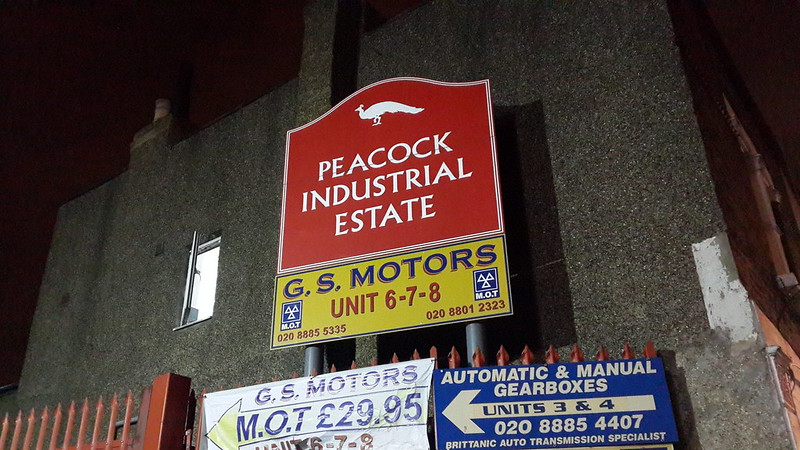
Along the way out there was this lovely signage with a white peacock for a Peacock Industrial Estate.

20141023_211516_White Hart Ln

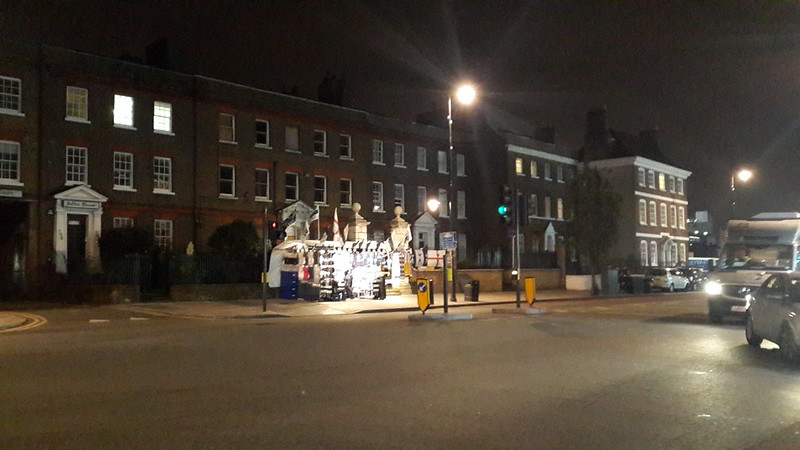
When we first reached Tottenham High Street, we saw this strange makeshift store, blazing with strong lights across the streets, touting a bunch of Spurs and Anti-Arsenal football gear. We suddenly remembered that White Hart Lane was the home of Tottenham Hotspurs.

20141023_212137

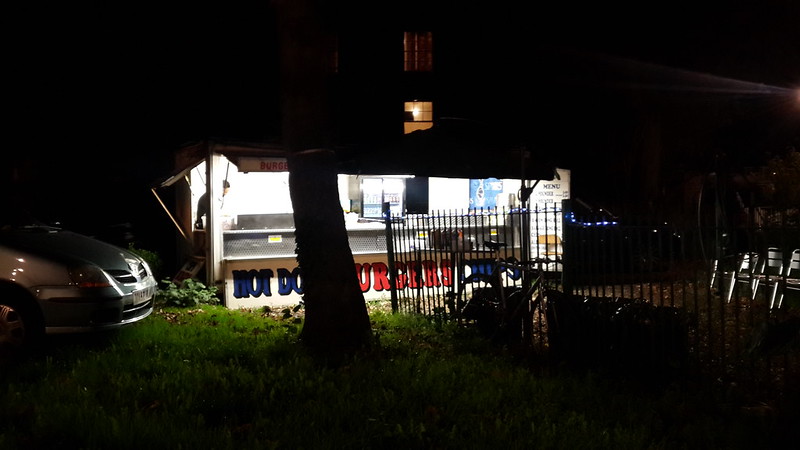
The entire street seemed generally empty as it would be on a regular weekday night… except that there were generators pumped up, lights-a-blazing, a weird kind of anticipation, crackling in the silence. Hotdog vendors waiting by far-too-brightly lit carts, distractedly joking with one another, giving us the feeling that they were still waiting for the main event to occur. Huge crowd control barriers and road closures and men and women dressed in neon high-visibility jackets waiting every few metres. Yet the streets remained disturbingly empty.

20141023_212622_High Rd

We asked one of the men in the neon jackets what was going on. He told us a match was underway and expected to end in half an hour. So we thought we would hit the pub before we were hit by an avalanche of people.

highrd0

highrd1

A few minutes after the game had ended, fans started filing into the pubs for drinks and their fix of greasy foods, the DVD sellers swinging into full gear. Before it reached its peak we decided to leave the pub.

20141023_221822

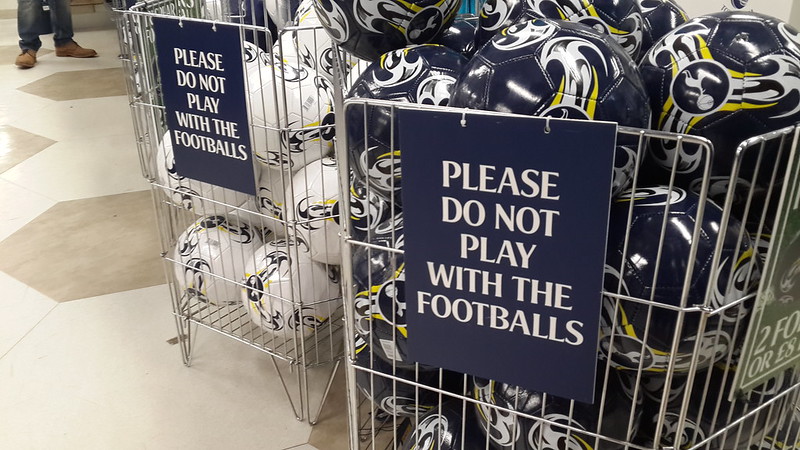
Next to it the pub was a massive, slightly terrifying store full of Tottenham Spurs branded merchandise, encompassing almost every imaginable type of ordinary household object you could imagine - babies' clothing, crockery, toys, lacy garters, speakers, garden gnomes, staplers, furniture, curtains, wallpaper, etc…

20141023_222639

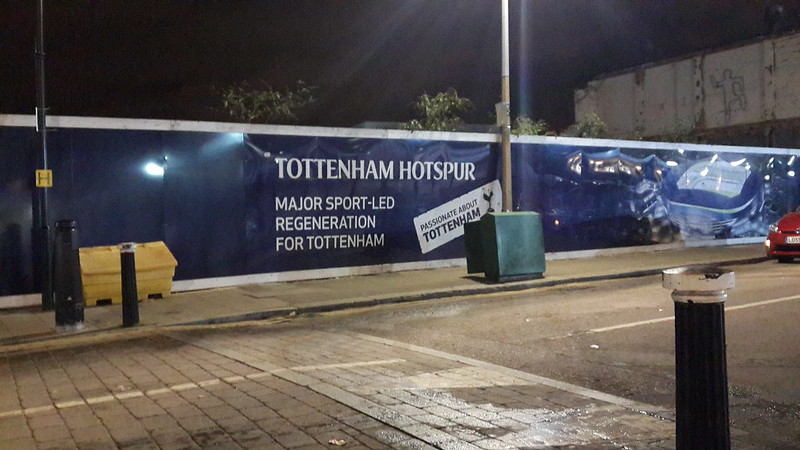
Everywhere outside you could se these strange proclamations of Tottenham’s “Sport-led regeneration”, which strikes me as a bizarre way to describe how one would want to develop or grow an area or a community; in an area which appears to me as a big stadium carpark and hotdog stand for a massive multi-million-dollar valued football club. How does “sport-led” regeneration even work? I'm really not quite sure. What is sport and why is he or she leading it, or who decided he or she should lead the regeneration? The plans for the building of these stadiums and new extensions to sports infrastructure involve demolition of existing buildings and local businesses; the displacement of normal businesses and communities for more and more of the footballs and the footfalls.

So, to those who haven't been to this part of Tottenham, its like a funny alternative sport-centric universe in which all those fancy cafes and gastropubs and pricey restaurants that are usually found in gentrified parts of London are instead replaced by an ubiquitous swath of manly disportments; of chicken and chip shops, sporting merchandise outlets and stands, betting shops, and football bars where all other popular forms of entertainment are replaced by an epiphanic chanting crescendo of FOOTBALL, FOOTBALL, FOOTBALL!

20141023_224958

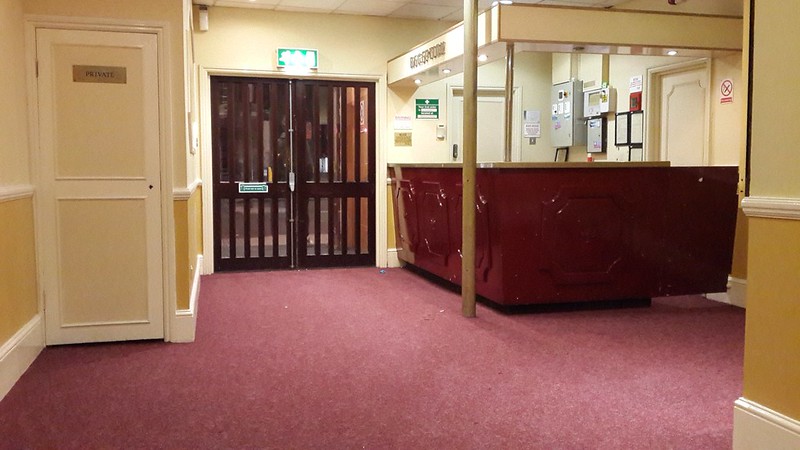
But fear not, not all in Tottenham was so homogeneously football. We ventured into a rental wedding hall with a curiously empty reception desk. At the end of the long hallway there were a few children in party dresses sitting and playing at the foot of a lush red carpeted stairway going up. Children playing on their own is always a sign that it must be a friendly space (either that, or an elaborate trap). When I walked to the end, there was an incredible sound of festive drums and some sort of intense traditional music coming from the hall just beyond...