Wednesday, 9 March 2016

Public Service Notice on Geodes, and Text Complexity

The show opened to what I perceived to be a little confusion from Singaporean audiences. I couldn't understand it at first, but a quick survey amongst friends has just revealed that... geode is apparently not actually a common or well-known word amongst a public/general audience of Singaporeans! ALAMAKKK!

Geode!! A word which I assumed that everyone learnt as a child, because I had already known of geodes when I was very young. I am shocked! Stunned like vegetable! Even amongst my peers who are brilliant and intelligent in their own right and in their respective fields of practice, apparently "geode" is a specialist term that does not enter the common vernacular here!

If you're Singaporean (born and educated here) and reading this, I really want to know if you knew what the word "geode" means without googling it first.


Here is a definition of "geode":

Whilst making the work "Space Geodes", my visual reference board looked like this - a lot of geodes + bismuth ingots. Bismuth is not a geode per se, but an important visual reference for me - i wrote an entry about bismuth on this blog in 2014):


I actually thought a lot about how I wanted the form to be instantly recognisable as a "geode", and made several pencil sketch studies of the ways in which geodes are sliced and presented, especially with regards to specimens from mineral shops that circulate in the hands of amateur collectors. And actually, I called it a "space geode" because I wanted to be cheeky about how it was also about turning a human space into something almost alien or from outer space - for things like fossils and ruins become interesting to us because of a perceived break in human understanding that we need to bridge. However, I hadn't realised that the very concept of "geode" might be TRULY ALIEN and unknown to some!??


As a young child I remember being given a purple coloured booklet about rocks which came with a bubble pack of different semi-precious rocks, which made me aware of the different names of rocks. I remember there being a tiger's eye, banded agate, red jasper, rose quartz, turquoise, hematite, sodalite, and amethyst. Also, this must have been an American book because it also talked a lot about spelunking (cave exploring). (As an adult I learnt that the term "spelunking" was only used in the US, whereas it was called "potholing" in the UK).

UPDATE!!!: My mother found the book in the house! I wrote the paragraph above before I went to bed, and in the morning my mother fished the book out and I was vindicated to find that my memory did not fail me with regards to the rock names! The DingParents bought it from Toys R Us and gave it to me when I was 6, meaning this book is over 25 years old! It also contains a little section about GEODES, so I'm guessing this is where I first learnt the word "geode".


However... despite giving me such amazing access to books and information from an early stage of my life (yay to the Parents on their excellent strategy!), my parents did not actually read this book themselves, and therefore they themselves did not know what a geode is...

I showed them these following pictures which I took last week at Fu Lu Shou Complex, home of mystical antiquities, mysterious amulets, and religious relics (a shopping centre tellingly named 福禄寿 after the Daoist idea of fu/fortune - lu/status - shou/prosperity), but my parents looked at my pictures and identified these as "fengshui stones". I wonder what others call these? I'm guessing other people might also just identify them as "fengshui objects" or "crystals"?


Thinking about how one learns about geological terms in one's life - I also learnt words like magma and pyroclastic cloud from simply watching movies like "Dante's Peak", which I probably first saw aged 13 in 1997. I remember that I liked the movie so much that I even printed out random film reviews of the movie which I had found from the internet and kept it in a file, as a weird way of preserving a memento from the film! (Because I felt at the time that it would be unlikely for me to encounter a volcano or a geological feature like that) Please don't tell me I was the only weird geeky child here who learnt all these terms by accident??

I was told that some people also know of the word "geodes" via POKEMON because of Geodude (geode+dude?), a boulder pokemon who... erm.... rolls around. So people know geode might be a stone. But then, in Pokemon, the Geodude is never really officially pictured cracked open to show his presumably crystalline insides...


Geodude (pokemon)

I suppose there have been very few opportunities or means for people to learn about geology or geosciences in Singapore - it is something I've talked about for some time. I mean, I was very surprised to learn that in the UK some schools offered Geology as an A level subject, because it does not seem to figure in our curriculum. (Can any teachers confirm this?) Geology is part of Earth Sciences, but I'm guessing that the closest you might get to learning about geology in schools might be via geography. But Geography in Singapore is classed as a humanities subject, and not the most popular one at that, as I remember an article very recently about it:

Straits Times 22Feb 2016 - Updated JC geography curriculum worries some:


Google Trends on the interest in the word "Geode" shows a declining number of people searching for the word in the last few years:


But this is people "searching" for the word. It may mean that either (1) they don't know it and are searching, or that (2) they knew it but wanted to look for more information about geodes. The "trend" numbers do not make this distinction, of there being possible different intentions behind the search for information.

So, how do we determine text complexity? Whilst writing this I realised that a function that used to be in Google search last year has disappeared! To be honest, I never really used it much whilst it was available, but for some time there used to be a reading level function for Google search, and it used to be listed on this official google search filter list. Now the reading level filter is gone from the list as well. A quick look online reveals some discussion about how it was quietly removed in May 2015 without any announcement on any google blog.

See:
Google Drops Another Search Filter: Reading Level
Google Removes Reading Level Filter

Reading Level allowed users to search for texts which were in one of 3 levels - basic, intermediate, and advanced. This allowed children or readers with difficulties to look for basic texts which would be more suitable for their reading level, and on the other end of the spectrum it allowed advanced users to look for more complex, or technically-oriented articles.

In principle I don't really like the idea of dividing knowledge up into levels because I think that my current knowledge about the world was gained by ignoring what constitutes "specialist" knowledge vs what is "amateur knowledge". I just read everything and I think it would be great if more people were unafraid of complexity. But this is just my individual view. And on the negative side, it may also explain why some of my work and the mode in which I present my own work so far may seem a little too complex/wordy for many people.

But still, I think it would be interesting to try to see how one might develop one's own metric for what constitutes "text simplicity" or "text complexity". Current tests for it (eg: Flesch–Kincaid readability tests, Coleman-Liau Index, Gunning fog index, SMOG index, and Automated Readability Index) appear to use word length, sentence length and syllable count, and sometimes checks a text against a list of difficult words.

I really have to get on with other urgent work now so I must end here for now, but the text complexity issue seems worth further investigation when I have more time to sit down and experiment with it....


Space Geodes is currently being shown at SingaPlural 2016, on the second floor of block C where it will be on show until 13 March 2016.

99 Beach Road
7-13 March 2016
11am-10pm daily


More about SingaPlural 2016: http://singaplural.com
More info on "Space Geodes": http://openurbanism.blogspot.sg/2016/03/space-geodes-digital-archaeology-and-3d.html

Sunday, 6 March 2016

Space Geodes: Digital Archaeology and 3D prototyping, from Fossils to Plastic
From 7 March until 13 March 2016, I'll have a new work showing at Singaplural, a design festival which is the anchor event of Singapore Design Week. (Or rather, shall we say, it is a prototype for a new work...)


Space Geodes imagines the 3D printed prototype as a fossil in reverse and explores one possible way of materialising this notion of digital archaeology. The project originally began from a thought that it was funny that gcode looks so much like the word geode - g-code being the numerical control programming language used in most computer-aided manufacturing, and the name for the format for files which are used to give instructions to 3D printers and CNC mills.

As 3d scanners and 3d scanning apps become more easily accessible to consumers and amateurs, I noticed that one of the common types of scans that is always being shared by users online is that of the room they happen to be in - a living room, a bedroom, a working room, etc. But as with the uptake of any new technology, human error, technical problems and misuse of tool comes into play, compromising the quality of the scans.


Hundreds of poorly scanned domestic interiors have been semi-anonymously converted into incomplete surfaces, afflicted with too little information or impossible geometries that prevent them from being properly understood by machines and rendered into real objects that can exist and be manufactured into the physical world.


Unable to dig for material remains for clues of the recent human past in my highly urbanised environment, as digital archaeologist I have instead remixed the 3D models of rooms found on creative commons with an icosahedron and then plane-cut them into new forms, like how a lapidarist might cut open a geode.

The "geodes" are produced using a Selective Laser Sintering (SLS) process, which involves using a high powered laser to fuse plastic powders - synthetic polymers of petrochemical origin, which completes its process of becoming a digital fossil in reverse.


I excavate the remains of these human spaces, fix the holes in the models, and prepare the 3D data to be sliced for 3D printing. The precisely structured layers within the resulting gcode/geode reveal the split-second shifts in perspective within the domestic space; the fluctuations in data capture which resulted in the imperfect transfer of physical reality into machine-readable 3D data.

This digital fossil forms an inversion of interior into exterior, fossilising a moment in space and time.

Notes on MeshMixer / Process


Meshmixer is undoubtedly one of the easiest and most handy application for fixing 3d models (plus it is free!). There's probably no easier or more dummyproof way to hollow out an object, add escape holes for draining excess material, and fixing/filling holes in models.

Meshmixer utilises a contextual menu - that means that you must have selected a specific type of part in order to see the available options for it. Therefore if you only select one mesh, you will not see the join/boolean menu. That different kind of editing menu is only available once you select two meshes or more.


To some extent, you can use Inspector to fill most holes. But it can't do all the guesswork for you if the file is too convoluted. Sometimes you'll need to use a combination of Fill (F to fill - A to accept, Esc to cancel) and Bridges (⌘B). I found that if you have learnt the shortcuts you can just open a file and type all the shortcuts in order and then leave it to run that sequence of edits that you want (it might take a while). It is useful to clean up the file by pressing S and selecting on the main object (in orange) and then pressing EIX - E to expand selection to anything connected to the same mesh, I to invert selection to select stray bits and pieces in the file which are not connected to the main mesh model, and X to delete those tiny glitches.

"Reduce" function: Reducing the complexity of the models at every stage really brings the STL file size down drastically, which helps as many commercial printing services have a file size limit. You can reduce the total number of vertices without losing too much quality, but like with any kind of compression, if you just wildly press the reduce button then some details may get unexpectedly smoothed out, so you need to do a visual check from time to time.

"Plane cut": you literally just "cut" with your mouse by drawing a line which indicates the angle and location of the plane on which the model should be sliced up. So natural.

As for improvements I wish it would have are - firstly, I think Meshmixer would benefit from having some sort of timer which indicates how much time will be required for each process. Most 3d software gives some sort of indication of how long each process takes (eg: Blender also will create an alert to tell you when it has finished sampling whilst you are in another window). Sometimes Meshmixer takes so long and my computer sounds like an aeroplane and I worry it will simply crash because I've made the mistake of running a process on a mesh with too many vertices. If I see that the estimated processing time is too long, it indicates that perhaps there are problems with my model that I should be fixing before making it more complex. Being able to see the process time and then abort a time-wasting process accordingly would be useful...

Secondly, Meshmixer does crash a whole lot and at least it does restore my work most of the time, but it can be quite temperamental... I really wish Meshmixer didn't crash on my mac so often. Perhaps my 4 year old Macbook does not have the power to do the job. But I guess Meshmixer does the job!

Responding to the site


When I saw the site at 99 Beach Road for the first time on Friday, I saw that the window opened up to a view of the Rochor Flyover, which slopes downwards. There is the constant movement of cars at an angle, which contrasts curiously with the hard straight lines of the Gateway Towers in the background - two perfectly trapezoidal shaped knives of steel and glass.


View from the Window

I wanted to introduce a gridded pattern to the space which would play on the view from the window and also suggest a confusion of depth, which is the error which the machine introduces into the 3d scan of domestic interiors. A few years ago I worked on a installation with Jeong Hee Woo which involved making a live-sized outline of a HDB flat and South Korean flat in black tape. So I thought of introducing a warped grid into this space using black tape again - ah! The good old fashioned all-synthetic polyester+acetate+nylon tape.


Exhibition Design which I drew up whilst sitting at the coffeeshop (VIRTUAL IMAGE)


Exhibition on site (ACTUAL REALITY)


See also:
The Library of Pulau Saigon

Wednesday, 2 March 2016

Yangtze Strangers

Untitled

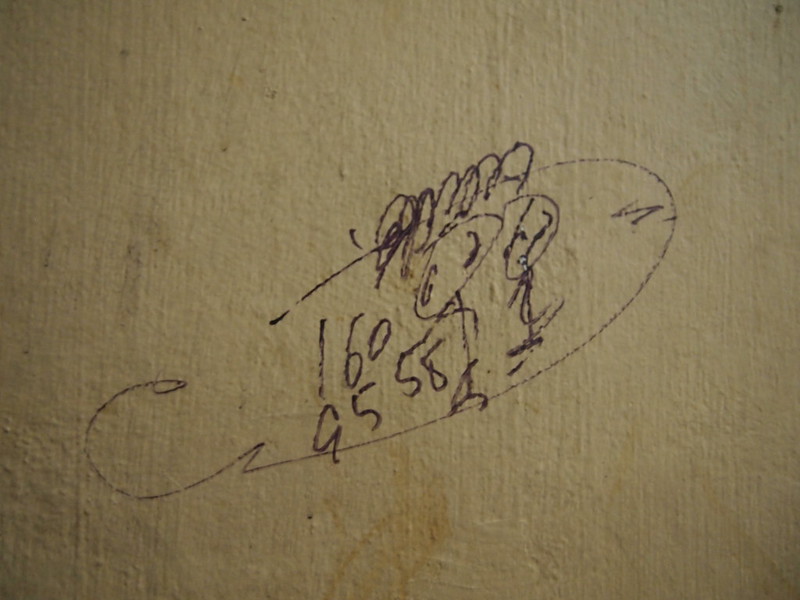
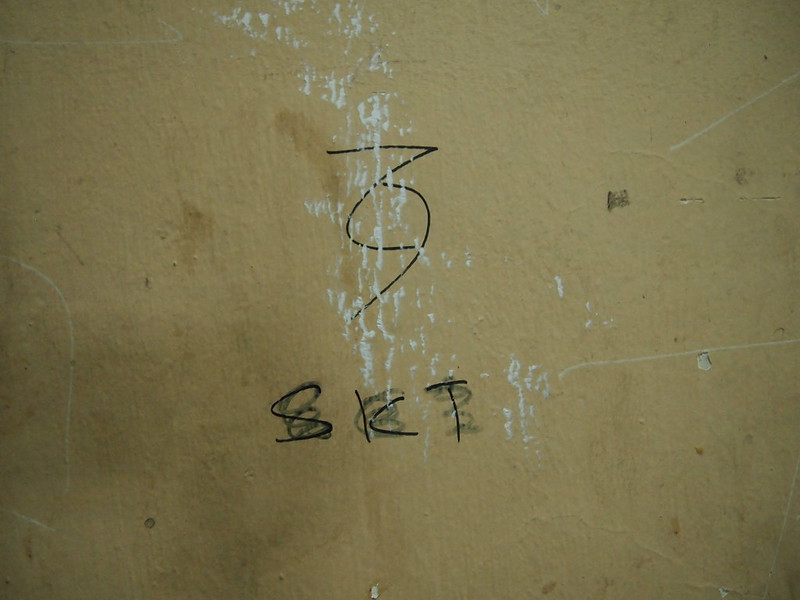
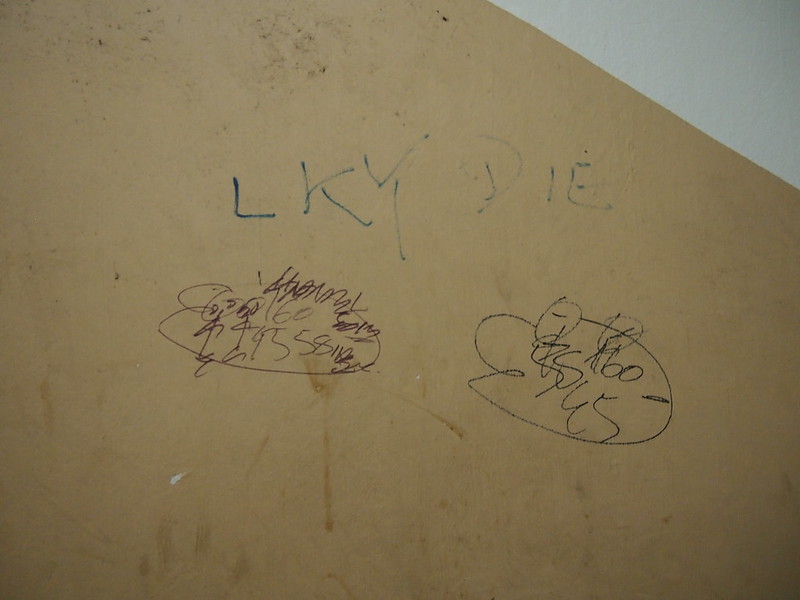
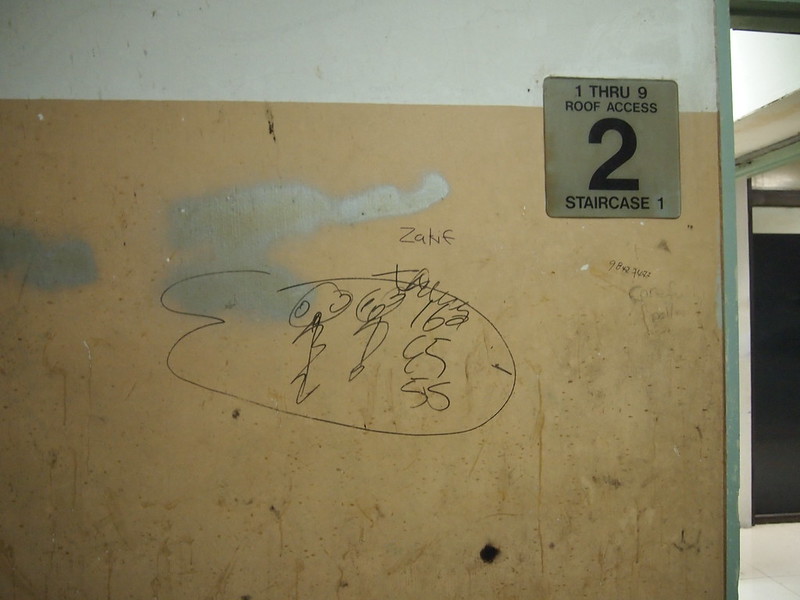
Yangtze Scribbler, I still haven't found you! Soon there won't even be a reason to call you the "Yangtze Scribbler", once the Yangtze Cinema is gone from memory. The reference that I used to refer you by will have ceased to exist.

Untitled

Untitled

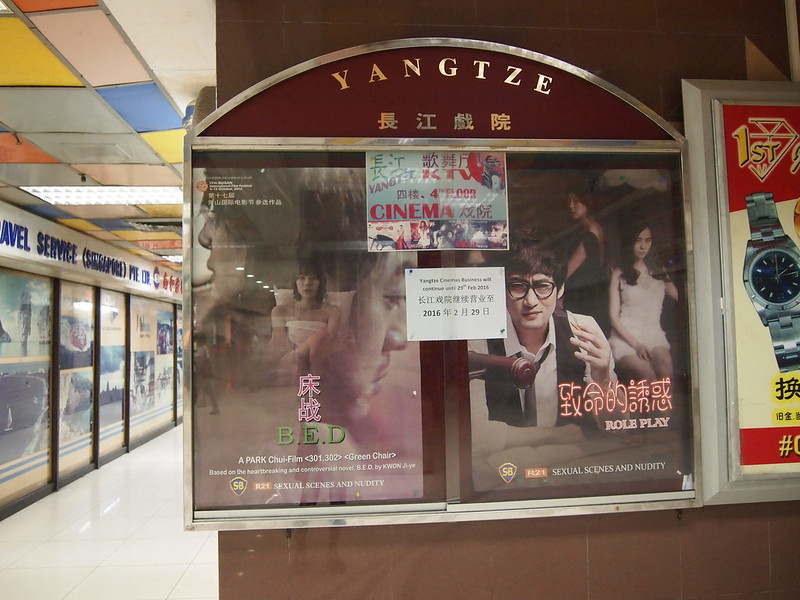
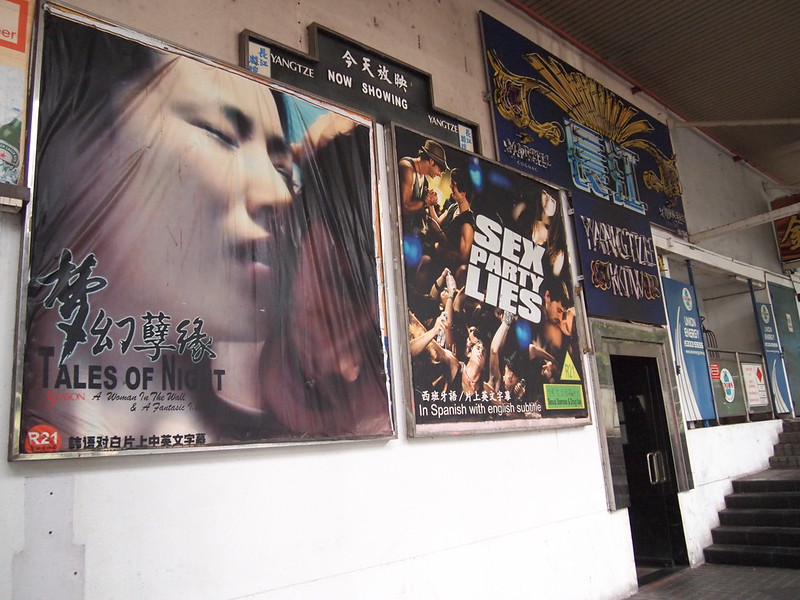
Yesterday my mother and I saw the Yangtze Cinema appear on the 6.30PM Chinese news in Singapore. We only saw the second half of the report, but due to the stunted state of our Chinese we couldn't agree on whether they were reporting that it was about to reopen, or about to close for good, my mother was unfoundedly optimistic that she had heard that it would be reopening, but I knew that even if the dilapidated Yangtze suddenly rose from the ashes, it wasn't quite something that would be celebrated with a spot on the prime time news.

Untitled

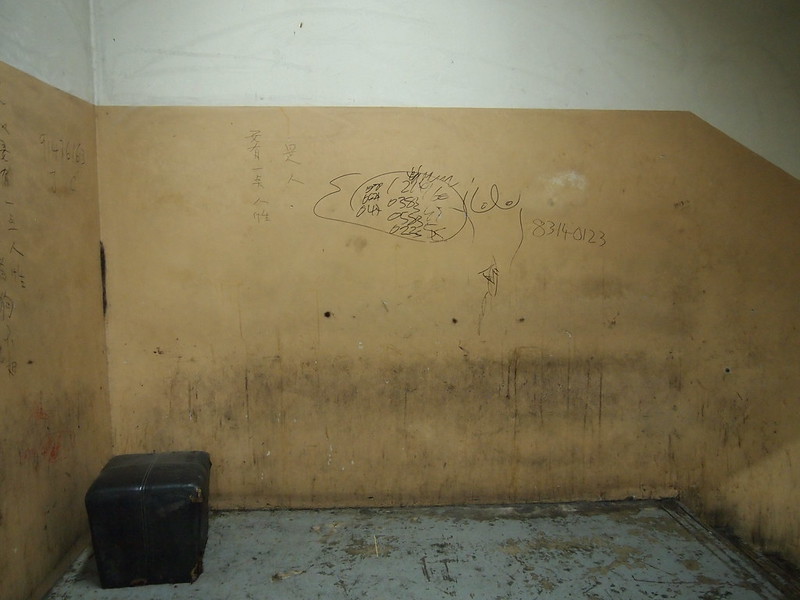
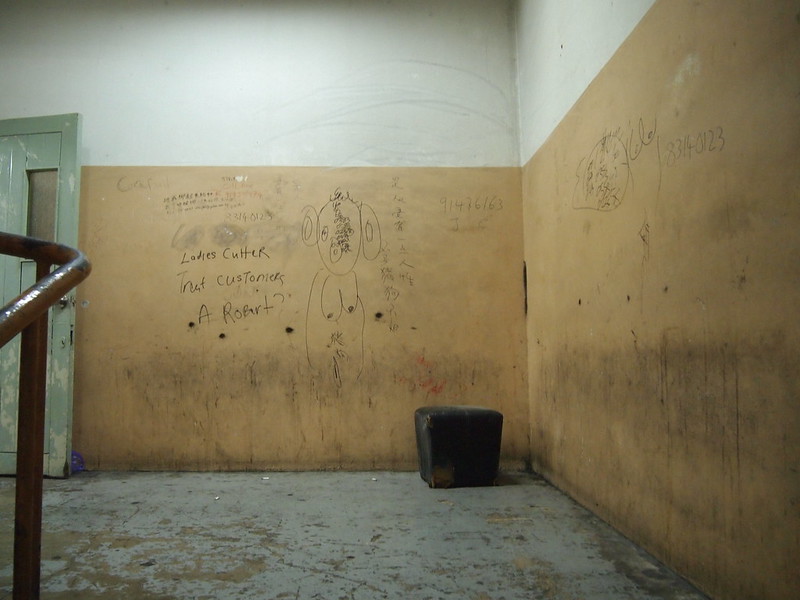
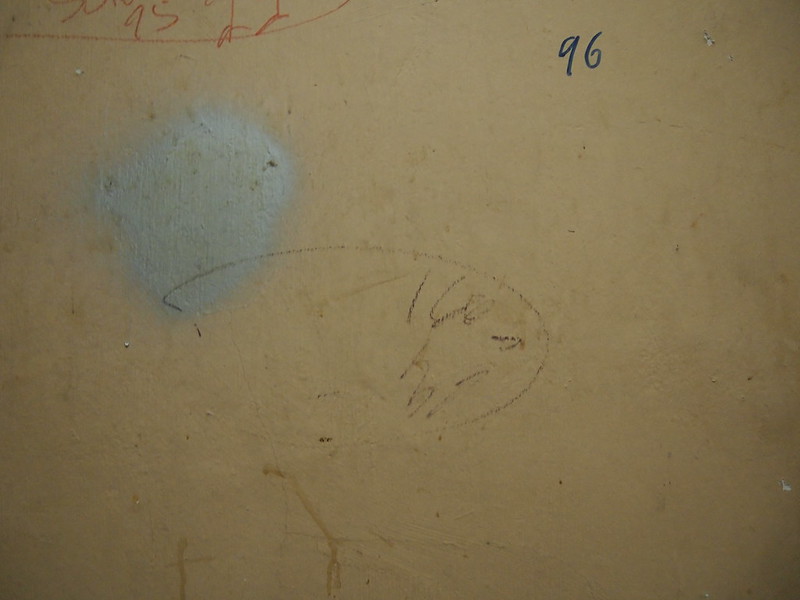
And so indeed, the Yangtze finally closed its doors on 29 Feb 2016. For me, the search for the "scribbler" started from nothing more than a chance discovery of the strange scribbles on the stairwell of the Yangtze - that somehow continued for years like a game or hide and seek in other parts of Singapore, when the same scribbles started appearing on the routes I frequented near Queen Street and the Muslim Cemetery where I would catch the bus. I have always been terribly grateful for Pin Pin's foresight for documenting the story of my search for the mysterious writer of symbols which I had childishly named the "scribbler" at the time...

See: Tan Pin Pin's film for the Singapore Memory Project - Yangtze Scribbler (2012)

I'm not always in Singapore these days. Sometimes I am, and sometimes I'm not. But last August, whilst walking from Outram to Chinatown, I ended up being trapped in Pearl Centre during an extremely heavy downpour, the relentless tropical kind of rain which demolishes umbrellas and forces you to wade through ankle deep water in order to get to your next appointment. So I soon realised that the rain meant that I would be stuck at Pearl Centre for quite some time...

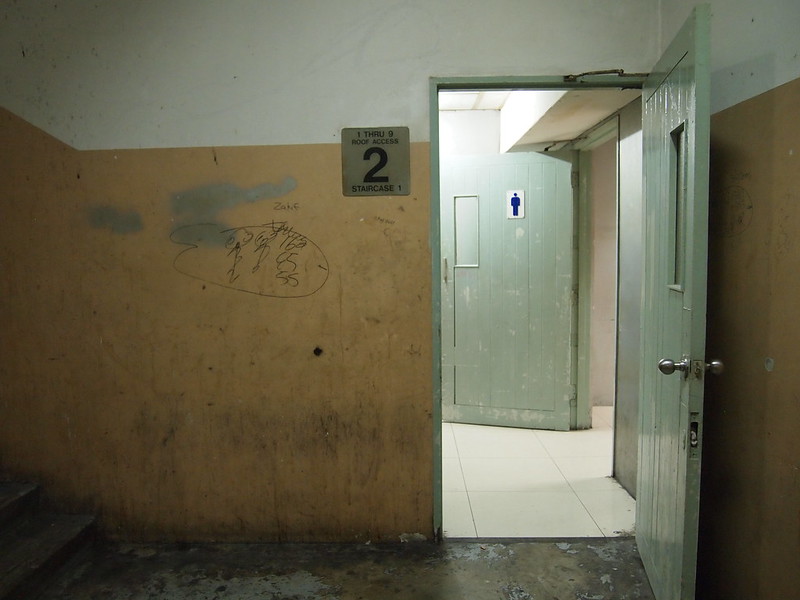
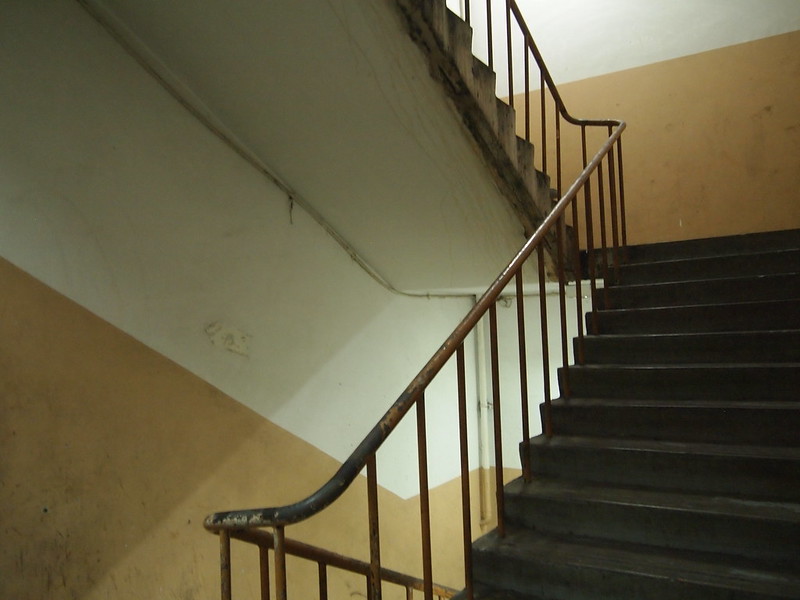
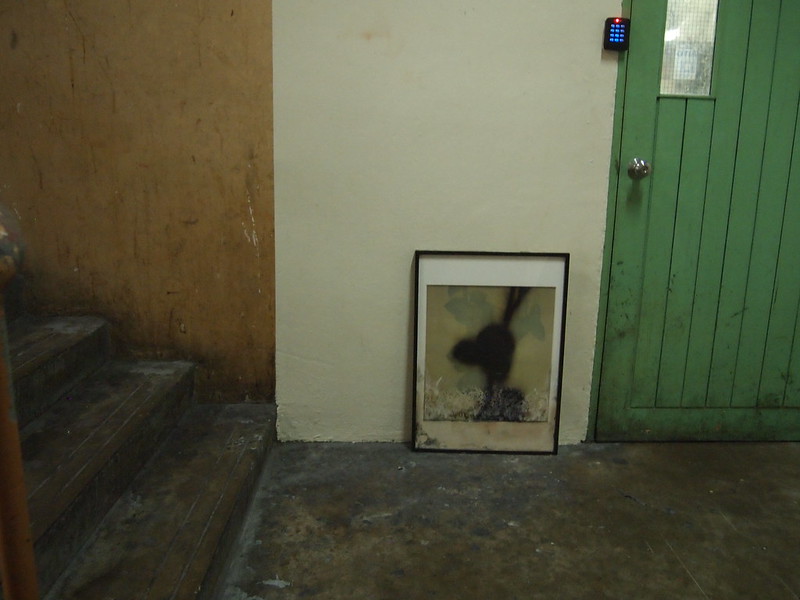
If we talk about ambiances, there are actually very few places in Singapore where I feel a sense of being physically repelled. The stairwell leading up to the Yangtze Cinema is certainly one of those places. I have always supposed it is because in real life I am awkward and have been thoroughly socialised by society's norms to respect people's "private space". I don't like accidentally brushing against strangers on public transport and I would never really feel totally at ease in someone else's house. The stairwell makes me feel like I am intruding into a space which someone has already claimed as their own; the walls engraved with scribbles, handprints and furniture for one to sit on.

Paradoxically, like the extreme vertigo I often experience when walking on large rocks or steep natural terrains, this inexplicable sensation of being physically repelled is what excites me and attracts me to return to and look closer at the place.

Untitled

Untitled

Untitled

Untitled

Untitled

Untitled

Untitled

Untitled

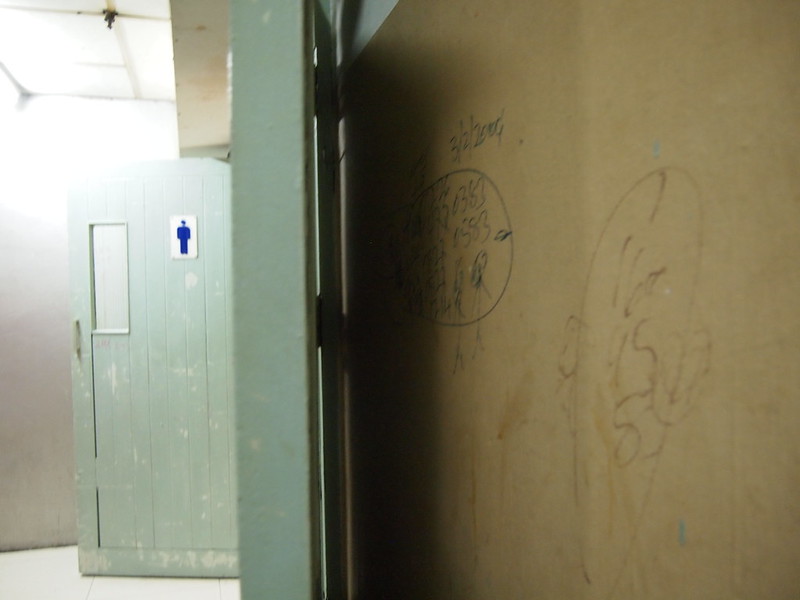
Could it have always just been a product of the hypnotic flicker of artificial light, or the effect of some low-frequency extractor fan infrasound that induces a vertiginous sensation of there being some other presence within the enclosed space? And what of the other doors with the MALE TOILET signs next to it? Is there something significant about how all the Male toilets are next to this passageway that is trying to send me some subliminal messages about how this is some Male space that I'm not supposed to be intruding on?

Untitled

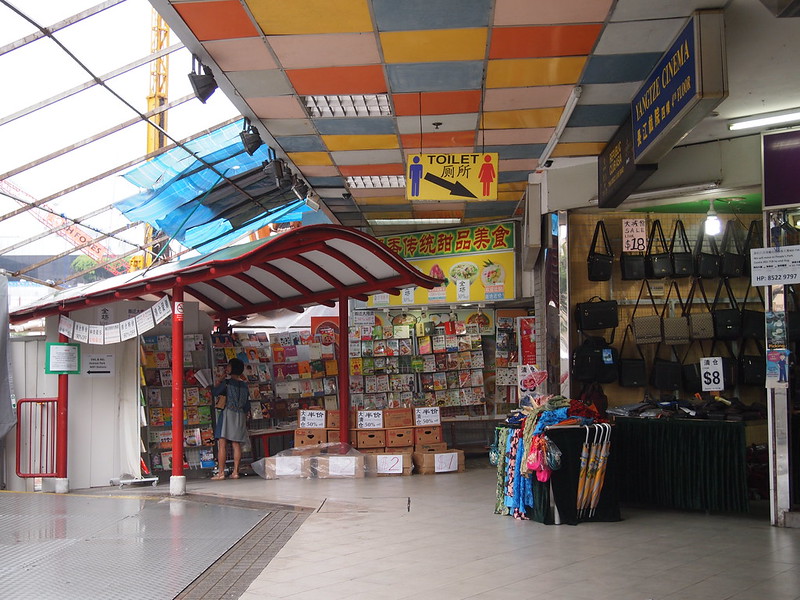
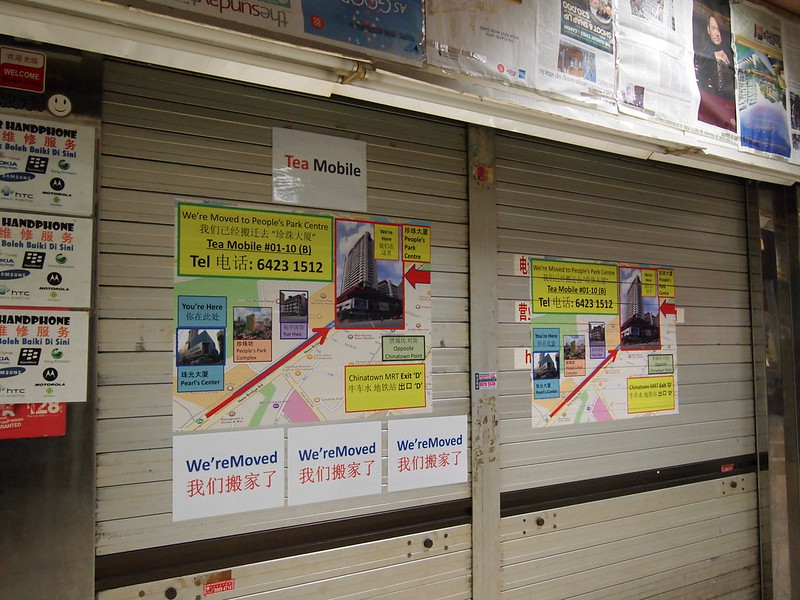
On that afternoon in 2015, the sense of having intruded was also quite frankly literal. Poking around the stairwell on one of the higher floors, I set off some kind of alarm within the building (that I had never encountered or triggered on previous trips here). So I bumbled through one of the other doors on the stairwell, and was surprised to find a middle aged man in plain white shirt, long trousers and flipflops, sitting on the floor in the corner, reading a newspaper. Mumbling an apology for suddenly disrupting his peaceful afternoon in the corner, I walked through the corridors between closed shutters and glass windows decorated with MOVED signs - only to accidentally disturb another man hiding in another concealed corner of this empty shopping centre. Looking through the glass of another vacated shop, I could see another man in another corner, not doing anything at all. With the shops gone, they were free to use the building in any way they pleased. And they decided it was a good place to sit. They were all seemingly waiting for something... perhaps the next showtime at the Yangtze?

Untitled

The old men sat apart and alone, occupying the unused corners in this emptied shell of an old shopping centre that still remained lit and airconditioned for nearly the last few who remained. Did they ever speak to one another, or did they know each other? I don't know. Perhaps they remained complete strangers to each other till the very end, just as I may never really know if I inadvertently crossed paths with the Yangtze Scribbler that afternoon. After I finally left Pearl Centre, I realised that somehow it hadn't occurred to me to speak to the men to ask them if they had known who had made the scribbles on the stairwell.

Somehow united by this strange space, the strangers passed the time together and waited for the last show of the day...

Untitled

Goodbye, Yangtze.


See also:

May 2013 - Yangtze Scribbler on Victoria Street
June 2012 - Yangtze Scribbler on Queen Street
April 2012 - Looking for the Yangtze Scribbler
Mar 2012 - Yangtze Scribbler on Victoria Lane
Flickr Set: More images of the Yangtze Scribbler
Singapore Memory Project Showcase - Tan Pin Pin's short on the Yangtze Scribbler

Sunday, 21 February 2016

365 Days of 3D - Blender

At the start of 2016, I decided I should brush up on my 3D skills by doing a 3D render a day for practice purposes (365 DAYS OF 3D!). All the 3D things I've made in the past were mainly designed in Openscad and then 3D printed/photographed/digitally painted the image by hand in Photoshop and Illustrator. In the past I've used anything from openscad, Sketchup, Blender, Modo, Solidworks and Meshmixer to produce and edit 3D models - but oddly without having had the proper finesse or experience of knowing how to light and render scenes properly (since I was producing models for the purpose of 3D fabrication/printing - rather than for for 3D rendering). For the last few years, in a weird roundabout way I found other ways to achieve an artificial/plastic 3D rendered look without doing actual 3D rendering thus far. So the next step seems to be: what about becoming more skilled at 3D lighting/rendering so I can maybe find new ways to experiment with realism?

I decided to focus on the free tools like Blender and Meshmixer to see what would come of it (now I have also gotten into Unity). But real life and work has intervened so I didn't quite finish a model a day. However, a roundup for my Blender experiment for the first 50 or so days seems in order here...

See also:
3653d.tumblr.com - the best of my generic renders
3653d wiki - annotated notes on my Blender process and shortcuts

Blender

It took me a week of daily use to properly internalise the foundations of Blender, after which it became a joy!... or to be very frank, almost an addiction!?? A kind of twisted, warped game where I had to make replicas of everything I saw in reality; I'd take notes on where the objects and light sources were located and how the light was bouncing off things; I walked down the streets at night and unrealistically declared to George "LOOK AT HOW MANY POINT LIGHTS THERE ARE IN THIS SCENE!"; and railed against how reality and the building standards in real life are pretty shitty - in the sense that things don't snap onto a grid and the average space/house has so many messy joints. (Realism in 3D modelling/rendering is composed of carefully calculated mistakes...)

For the first few days of working intensively with Blender, I couldn't understand why nothing happened when you did a left-click, and all the shortcuts I hoped to find seemed mapped to completely different things than I expected, which made it incredibly frustrating to use at first. The options are Mode dependent, meaning you must understand exactly which Mode the function you are looking for is under. (eg: you can edit and see a modifier such as boolean or subdivision surface in Edit Mode, but you cannot Apply it unless you go back into Object Mode. or if you are viewing in perspective instead of ortho, you cannot see the background image for reference). And you'll also need a mouse for Blender to make life worth living. But when you have finally internalised all the shortcuts, Blender works like a charm and Cycles Render is surprisingly decent.

One of the best features about Blender as an open source tool is that it used to have a screencast key plugin which displayed which key you had pressed so it was ideal for making screencasts and teaching other people how to use it. Every complex application should have a function like this - it makes learning and teaching the application a lot easier! Everything I learnt about Blender came from watching people's videos at 1.5x speed and looking at the little letters appearing in the corner of the screencast.

Sadly screencast keys was removed in 2.7 but I found a way to activate it again - and then I made my first Blender screencast!! (Complete with blandly aspirational royalty free background music!)


This had a lot of messy hidden geometry in this one but I don't care since we're not going to send a hairy bear to a 3D printer. And my main goal here was to capture the little finger indentations which are often left on the short velveteen fur of the bear.

George (as 3d layman) said that the visuals coming from Blender looked impressive to him considering the time taken to make them, but to be honest I haven't become more impressed by Blender after using it - conversely I have become less impressed by the 3D modelling I have seen everywhere else, after I realised that clean geometric designs are sometimes face-slappingly simple to replicate. It wasn't that the technology had become more awesome, it was simply that I needed to get to the point where I realised how easy it would have been to access the technology all along if I just put myself to it. I don't know - why do I always have this idea that if it is "too easy" to learn, then it is not really true technical expertise? Or am i just being pedantic, or have I been insidiously conditioned into thinking that technical skill must be beyond me?

As an exercise, I tried to find images to replicate in 3D to test my ability to replicate a model (together with camera position and lighting) within a short time. I decided the reference images also had to be photos. Since these were meant to be quick exercises I chose simple images that I could render within a reasonable amount of time. But the point was that it was necessary to have some fixed goal in mind - to see whether or not I could achieve a specific look rather than settling for another effect when I actually wanted to attain another.

Here are the outcomes of a few of the other experiments:

#realLove


My Blender Render

A delightfully simple lighting and metal shading exercise based on a the set design for the new PC music track featuring Chinese singer Chris Lee (李宇春) (track produced by A. G. Cook)


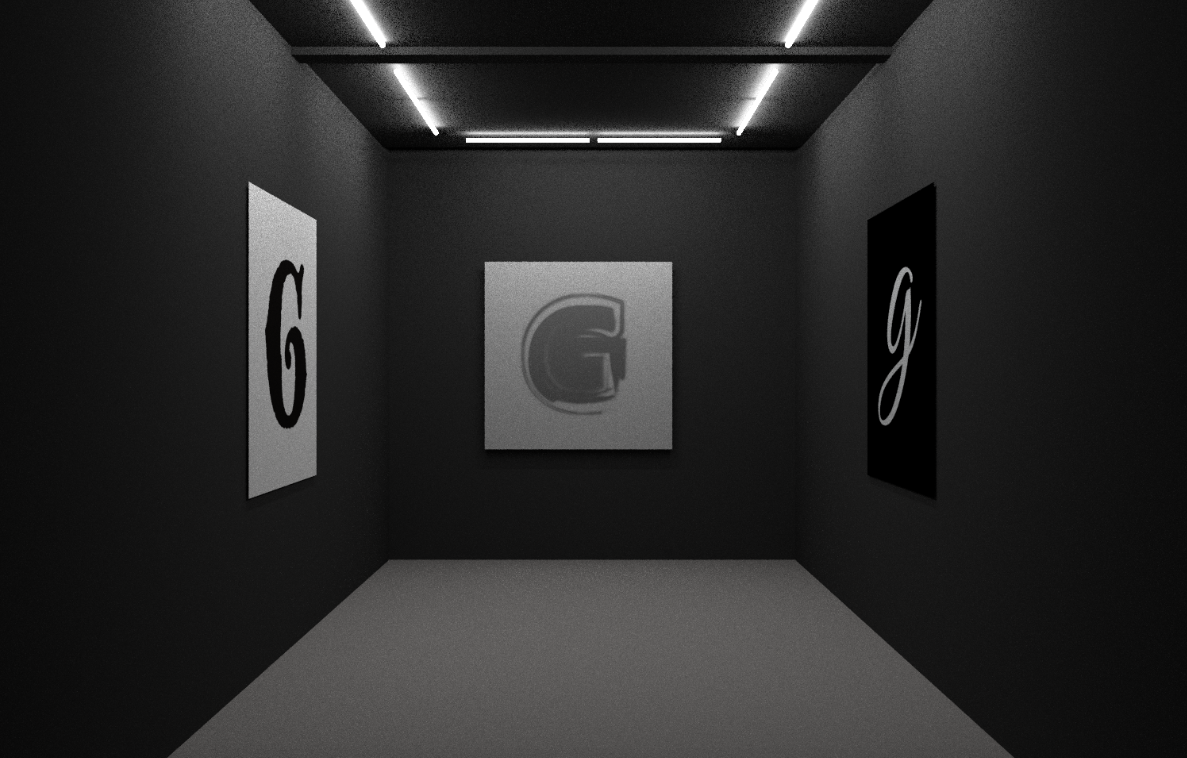
#miamiArtFairBlackBox


Ended up on some hyperallergic "Concise guide to the 2015 Miami Art Fair", an event I have never cared for or desired to attend in the past or future, and did not know why I had ended up on this page after reading something art or design related - but it doesn't even matter anyway. Nothing matters anyway.

The image was titled "Shannon Ebner at ICA Miami (via icamiami.org)". I have not googled it but I'll assume it was the artist whose typographic work is being shown in that black room.


My Blender Render
Woo and yay, I've replicated this crushingly boring typographic exhibition space in Blender.

#drivenToAbstraction


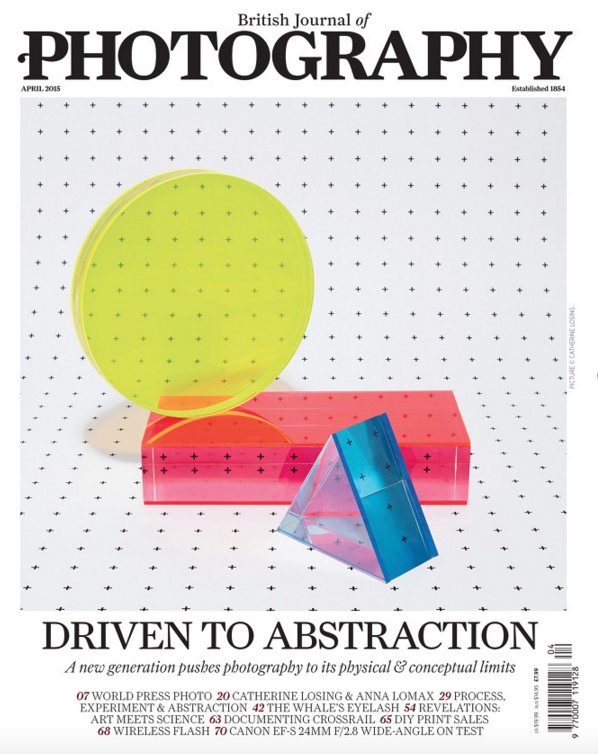
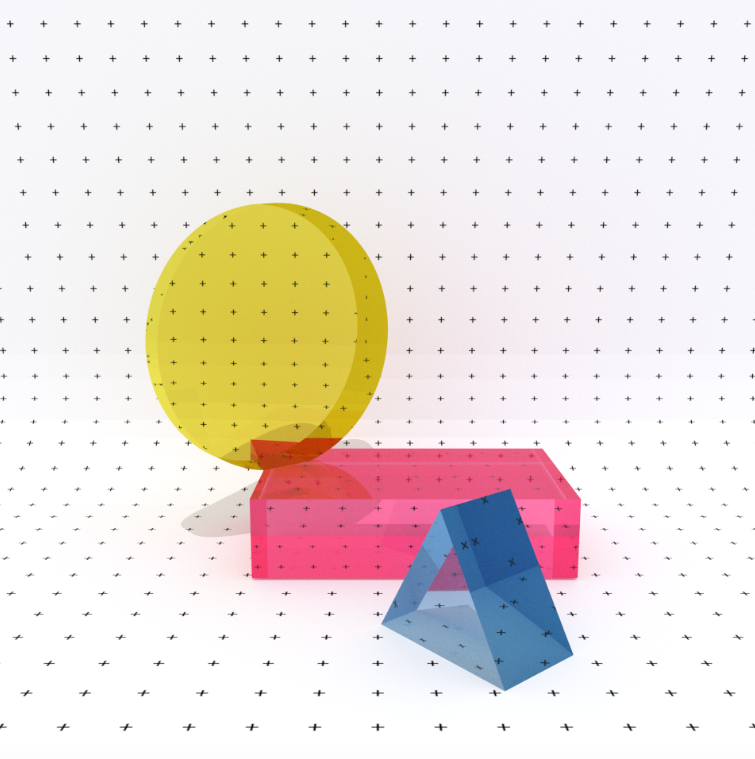
I saw this clean image and had just spent some time reading about Index of Refraction, which is how transparent materials such as glass and acrylic/plastic bend light. A good list can be found here IOR Values, and plastic tends to be about 1.46 to 1.5. So I thought I'd just see how long it would take to reproduce this image.


A further closeup was found of it, which I had reverse Google Image searched for and then traced back to a Catherine Lossing as the photographer.


My Half Hour Blender Render

And yes it turns out it took just half an hour to make this. From scratch. Almost depressing, isn't it? This almost feels like taking the piss. I could easily improve the lighting reflection/refraction (which you can see in the original photo) as well if I spent more time on lighting but a rough proof-of-concept is sufficient for this exercise.

#whiteCubeGate


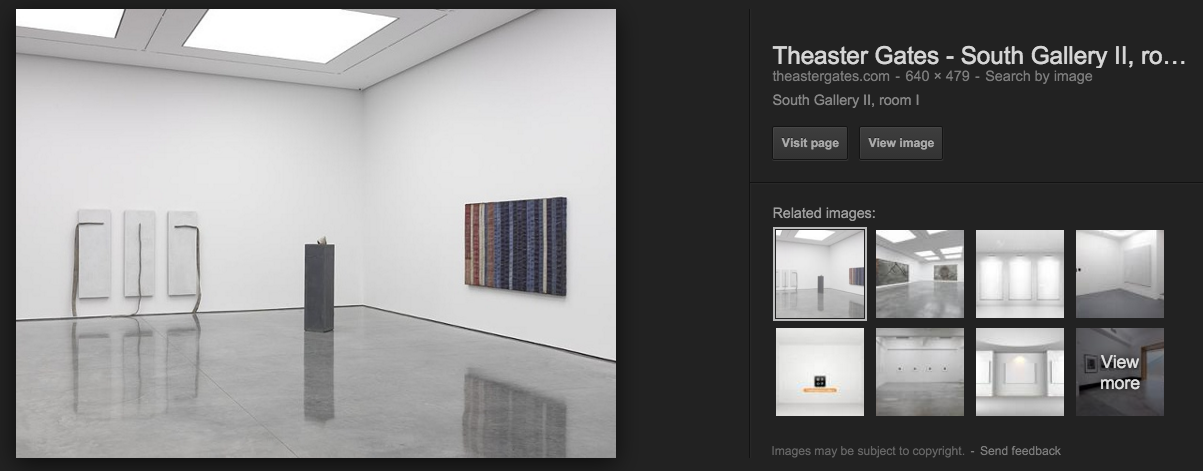
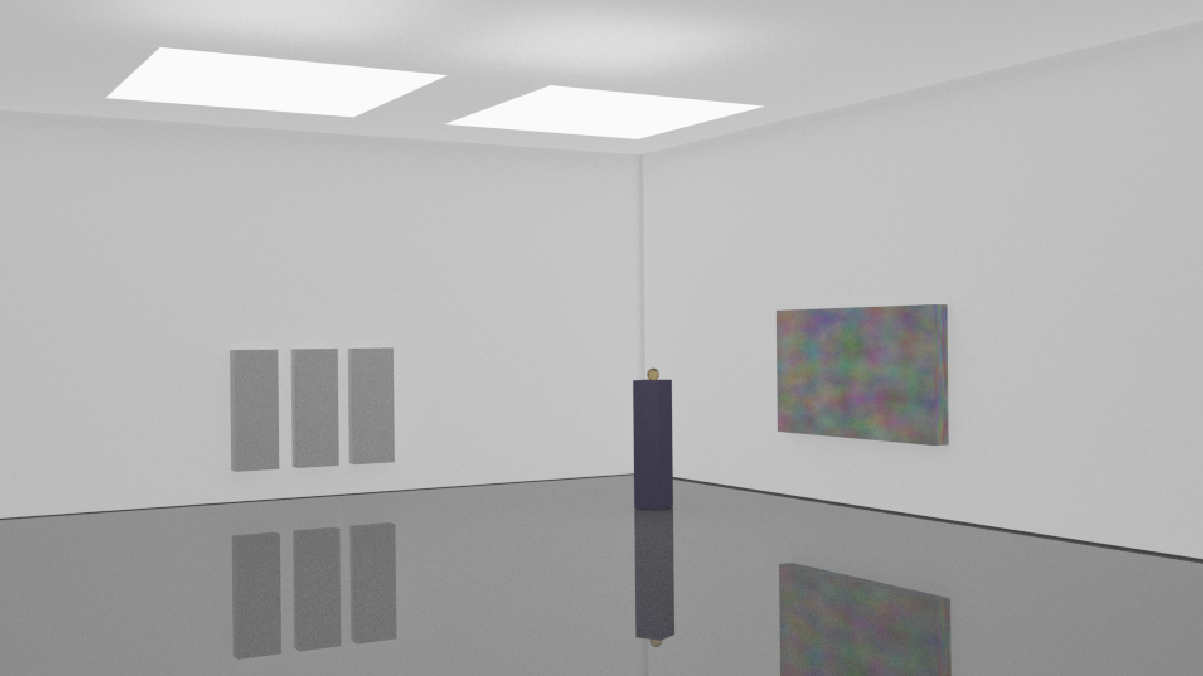
Reference taken from a random image I saw on Google Images whilst searching for something else entirely. I decided to just focus on the space and lighting, so I didn't really care for reproducing the artwork beyond simple monogrammatic blocks stuck to the wall.

To be honest, I didn't even know Theaster Gates was the name of the artist when I did this. Instead, whilst making this, I thought to myself, "hmm why does this weird "Theaster Gates" gallery look like the White Cube in Bermondsey?...." After which I googled it and yes it is White Cube... What can I say - I don't follow the London art ting so closely and I was not in London in 2011 when the gallery first opened and this exhibition was on. Sorry if it sounds ignorant (but actually, I'm not even really sorry, so...)


My Blender Render

WHO NEEDS TO GO TO REAL GALLERIES ANYMORE
WHEN ANYONE CAN GENERATE AND DISTRIBUTE IMAGES
OF 3D RENDERED TUMBLR ART GALLERIES ON INSTAGRAM??


In next week's update on 365 Days of 3D: Meshmixer and Non-manifold Nightmares...

VATMESS: The Mini One-Stop Stupidity Shop

It seems appropriate to begin the first post breaking my long hiatus with a post about virtual entities being in Singapore whilst not being in Singapore. Hello! I'm still here! But where is here? I'm not in Singapore, but soon I will be. At times my location almost seems arbitrary; I am neither here nor there, but I'm online, which may as well be everywhere.

After a grueling 2015 and returning to London, I shrank away from the relentless public exhortations of social media, grew unreasonably incensed at the constant burden of interactivity, and even began a series of (incomplete) writing on my hatred for infinite scroll and other modern scourges of online interactivity. The benefit of withdrawing myself from the clatter of social media was that I found time to teach myself how to use tools like Unity, three.js, Blender and Meshmixer... so there'll be more on those in upcoming posts...


But now! I recently read this page by Ghost Foundation moving to Singapore. The article sounds like it must be related to Singapore, but it is really not about Singapore. Singapore may as well not exist, except on paper as some almost-mythical stable benevolent friendly-tax offshore island. Ghost makes no real impact on Singapore by having been incorporated in Singapore, for it is merely a virtual marriage-of-convenience. I found it funny to see it was even reported as news by Channel News Asia (what passes muster for "news" in these parts... zzzz), and a little funny to read comments from Singaporeans getting excited and "welcoming" them to Singapore, when they have clearly stated on their post that they won't be in Singapore (and therefore their virtual presence does not contribute directly to the tech startup scene in Singapore). They say they're not doing it for tax avoidance but it basically sounds like tax obfuscation to me!

VAT rules however do seem completely obscure and confusing to consumers and small businesses owners/startups. I briefly entertained the thought of incorporating myself as a business in the UK the same way DBBD is registered as a company in Singapore (as a designer and builder of various curious interactive things). But after reading up on the VAT MOSS situation, it makes absolutely no sense to do so. I'm not even sure how many small business owners know about this.

VAT MOSS (Mini One-Stop Shop) was rolled out on 1 Jan 2015. This means now if a small/micro-business wants to sell an electronically supplied service (eg: electronic download, software update) to a consumer (non-business customer) within the EU, it needs to charge VAT at the rate applicable in the consumer's location and remit this on quarterly returns via MOSS.

Yes, MOSS is the real name, so cue the GATHERING NO MOSS jokes and #VATMESS. They've named it MINI ONE STOP SHOP. With such a ridiculous name, it makes me feel as if the person who named it probably thinks the internet is a series of tubes and that you just press a button to turn on the tubes.

The implication is that small companies which may not have reached the taxable threshold are going to go from not paying VAT to filing for VAT MOSS 4 TIMES A YEAR all of a sudden, and are expected to collect a host of personal information from all its customers in order to determine which ones are from one of the 28 countries in the EU, and then they need to magically manage to apply the correct VAT rate to the purchase (there are apparently 81 different VAT rates??). And if that is not confusing enough, the proof of customer location (personally identifiable information) and must be securely (??) stored for 10 years by the company which is also required to register as a data controller (£35/year). (Additionally, not registered as a data controller when required to is a criminal offence... a provisionary glance I took at the ICO site suggests that the fine could be up to 5000 euros)

(For more facts see: EU VAT ACTION)

The key term here seems to be ‘electronically supplied’ as opposed to having "human intervention". The European Commission's explanatory notes (Annex on Page 86) writes:

‘Electronically supplied services’ as referred to in Directive 2006/112/EC shall include services which are delivered over the Internet or an electronic network and the nature of which renders their supply essentially automated and involving minimal human intervention, and impossible to ensure in the absence of information technology.


From HMRC: VAT MOSS - So apparently if you "manually" attach a PDF, it is not covered under VAT MOSS. But if you "manually email" an upload link, it's covered under VAT MOSS?? Looks like these people have never attached a document and found it too big so you have to upload it elsewhere and send someone a link.

The directive which the definition is taken from is from 2006. How seriously outdated is that? In the last 8 years, a lot has changed about the internet, and the range of electronic products and services offered. To put things into context, I first started learning programming 7 years ago and in those 7 years in my role as an interactive designer/developer all the technologies have changed, the modes of distributing information have completely changed, internet selling/services have totally changed.

VAT MOSS rules currently lack a nuanced understanding of how quickly the internet changes and grows, and this is causing senseless confusion because there is no logical line on what constitutes sufficient human intervention in a lot of new scenarios that are emerging.

To me this sounds a lot like this:


Who wrote the rules for VAT MOSS? What are their credentials, or interests, and do they know anything about how the internet works today??? Human intervention is a stupid criteria in small digital businesses where people ought to be working smart and automating processes even at the smallest level. Were the views of online businesses represented in the discussion, or at least to provide the commission with an adequate understanding of the likely future of electronic businesses? And how on earth do you draw the line on what constitutes sufficient human intervention? There is really no difference if I do it or I script up something which automatically sends that email on my behalf. Is my human intervention as author of the automated script not counted?? I still wrote the script, letter by letter, intervening with the letters on my keyboard.

Another question that came to mind was - HOW MANY PEOPLE ARE PAYING THROUGH VAT MOSS? Surely all the companies worth taxing are already taxed normally for being over the threshold. I'd like to find out, what amount of VAT MOSS is actually being paid from the small/micro businesses who are now newly affected from the 1 Jan 2015 ruling for the first time?

The Internet has many stories of people paying ridiculously exorbitant amounts in accounting software and services only to find out they have to pay insultingly low VAT on their digital business.


So if the VAT being collected is so insultingly miniscule for many individuals and incurring so much unnecessary administrative problems and additional business expenditure, the question is - was it really worth implementing? If the goal was to target big companies like Amazon, why is the fallout affecting small businesses and forcing them out of business (and correspondingly, pushing customers towards the big companies). If this is all a matter of proving success of a scheme by numbers, then how much VAT in total is actually being paid between UK and EU countries on digital business under VATMOSS since 2015?

This is where UK's FOIA sounds like some black voodoo magic to a Singaporean like me - almost unbelievably it is a land where you can ask for information and public authorities are legally required to give a proper reply! (How sad that I have to be so excited about this...) A quick gander on whatdotheyknow.com brings up user john_117's fascinating FOI correspondences with HMRC. It reveals that since it is collected quarterly, in john_117 first correspondence in March they didn't have the data yet, but then in July they make a turnaround by mentioning that "Under section 22(1) of the FOIA, we are not required to provide information in response to a request if we intend to publish the information in the future" and that they won't be providing a country-by-country breakdown so as not to "prejudice relations between the UK and other Member States" by "disclosing tax revenues of other Member States".

It is now 2016 and searching the gov.uk site does not turn up any publication of statistics. A little disappointing. Perhaps I just don't know where to search.

More disturbingly, I tried to find what panel or commission was responsible for making decisions on VAT MOSS, but so far haven't figured it out. The question I wonder is: in the process of making these decisions, did they include anyone or any groups representing the interests of small digital businesses which will be affected by VAT MOSS?

The only way out of VAT MOSS seems to be to block all EU buyers or (virtually) move out of EU. Or use VAT MOSS and raise all your prices by 20% or more to include VAT (or allow it to cut significantly into your own profits), collect at least two of the following information from each your customers and securely store it for 10 years:


GOOD LUCK WITH HARVESTING ALL THIS DATA FROM EVERY SINGLE CUSTOMERS AND KEEPING IT SECURE
EVEN THOUGH ACTUALLY ALL YOU WANT TO DO IS SELL ONE TINY KNITTING PATTERN ONLINE

Don't even get me started about the potential complications when you have to deal with people with foreign billing addresses who spend equal parts of time in more than one country. I realised recently that I wasn't charged VAT for an digital service which I use in both Singapore and London - a scenario that seems to be in a grey area. I paid for the digital service with a credit card registered to a Singaporean bank with a Singapore billing address and the printed matter was to be mailed to my Singapore billing address - but I physically reside in London and my order would have come from a IP address in UK - and I use only a +44 UK phone number. The unnamed supplier in this case obviously had to made a blanket presumption on my location based on billing address and bank address, rather than IP address or SIM address. But this really shouldn't be made into a confusing guessing game for business owners.

In 2016 they released some half-baked simplification, citing that business owners are allowed to exercise their best judgement. How on earth can one exercise their best judgement on what appears to be a poorly thought out scheme?

From HMRC: "There is no registration threshold on cross border supplies of services and businesses of all sizes fall within the scope of the changes. However, this only applies where supplies are made in the course or furtherance of a business. If activity is carried out as a hobby (ie only on a minimal and occasional basis), HMRC does not normally see this as a business activity for VAT purposes. HMRC’s analysis of the VAT MOSS returns submitted by UK businesses so far indicate that some of those registered for VAT MOSS may not be in business for VAT purposes.

HMRC will contact those already registered for VAT MOSS whose returns suggest they may not be in business."

OH NO, IS MY BUSINESS A LIE? IS MY ENTIRE PRACTICE ACTUALLY ONE BIG NON-TAXABLE HOBBY?? And by extension, are they saying that online sales doesn't need to be declared as income tax? Or not? Or what? What a confusing message to send to small self-employed business owners.


Unfortunately, what seems direly shortsighted is that VAT MOSS doesn't take into account the complexity of international online transactions today. A more updated and intelligently written VAT system is needed to nurture the growth of small and micro digital businesses so that business can be more decentralised and diverse - rather than unfairly taxing even the smallest digital businesses with wildly unrealistic administrative and financial burdens.


But back to the Ghost in Singapore. It is funny that the poorly devised VAT MOSS (which is effectively an injunction against transactions that are virtually mediated) has driven companies to make their operations even more virtual by virtually incorporating in another country.

I wondered where Ghost's virtual address was, as its not uncommon to see a host of virtual companies sharing the same address in town - you even see the 'prestigious' addresses even being advertised at times. It got me thinking how many companies in Singapore use a virtual address - could we find an actual number for how many virtual/ghost companies there are within Singapore, or in Singapore's CBD?

So I wanted to find a directory of public companies, which led me to ACRA. I also cross checked with data.gov.sg - but it only has a table on taxable companies and which sectors they were in. Global OpenData Index (a great resource) also confirms that ACRA doesn't make this information available. ACRA mainly allows you to "buy information" rather than to obtain it from them for free. Perhaps I can only access a directory of public companies (and their addresses) if I pay for the data? But looking at it so far, they only allow you to buy individual business profiles for $5.50 (£2.70) a pop, and if I remember it right from when I had to get a copy of my business profile, they just generate a flat page of information trapped inside ancient HTML tables - rather than providing you with data in a format that is actually usable.

My circumlocutory search for data ends here for the night, but I'll continue another time...

Monday, 19 October 2015

Nowhere Else, and Sheffield Elsewhere

All I wanted to do was to look for a nice little b&b in Sheffield for the next weekend, but the Internet had other plans...

Screen Shot 2015-10-20 at 1.39.54 am

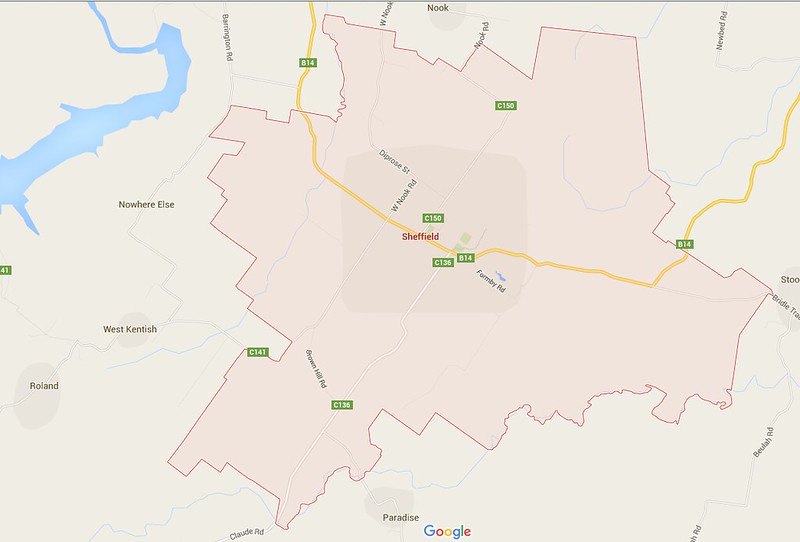
What do you mean, this isn't your hometown Sheffield?

Screen Shot 2015-10-20 at 1.40.58 am

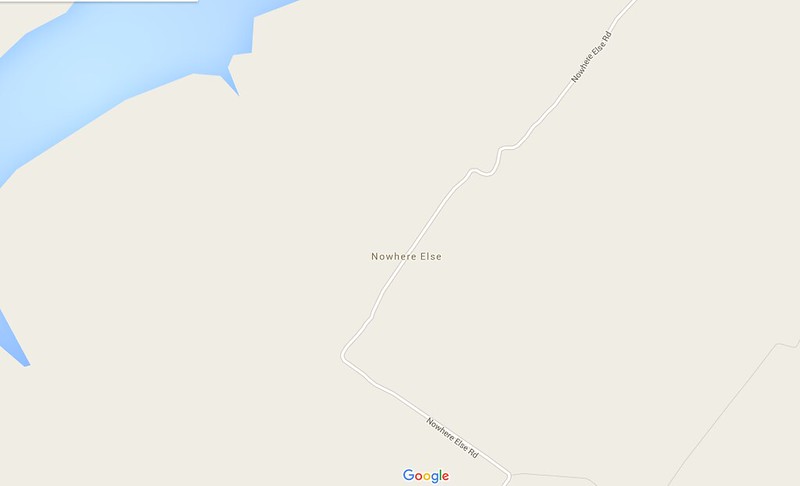
First we'll stop over at the Sheffield Motor Inn. Next stop, Nowhere Else.

The Tasmanians sure do have a sense of humour where place names are concerned. Also, I'm not quite convinced that I should stay 17301 km from the Sheffield City Centre. Anyway, in a week's time, going to Sheffield to present something at the Contemporary and Historical Archaeology in Theory conference.

See also: Sheffield, South Yorkshire vs Sheffield, Tasmania, Australia

Thursday, 8 October 2015

The University, in jeopardy

20150421_110307_Kensington Gore

It seems necessary to respond and make a note on the whole situation at Royal College of Art. (But if you haven't heard, I've put a list of some news/blog articles at the bottom of this post)

For most of my adult life I've been self-guiding most of my learning, of various things, from design to programming. But partly motivated by my desire to be closer to George in London - and also to make the most of what I saw as more progressive educational opportunities in the UK (compared to Singapore), I started applying for my masters, which turned into a bizarre exercise in narrativising the process of how I turned into a person or artist who wanted to return to an academic institution - a story which I would have to tell over and over again to college admission and scholarship boards. I was forced to think desperately about this: why return to university if you could teach yourself?

It is easy to forget that in the debate regarding the state of universities, that people don't always go to a university because they want to go to that university, but rather that they want to go to a very specific programme, or there are specific people that they want to study under - who happen to be working within the university, but aren't "the university". And sometimes these aren't skills we are seeking, but exposure to different perspectives on working. I thought of it like visiting a big library of people with a wider range of life experiences. For the student, the university may as well be some strange hollow plastic shell enveloping the course that they have decided to take, the workings of which they only become more aware of as they actually enter the institution.

In an ideal world, the university would indeed be a protective shell, a place which protects and nurtures its staff and students. But in the real world, it is a place full of contradictions.

Even well-meaning policies like tenure - which are meant to ensure that staff have the right not to have their positions terminated without good cause (ensuring that there is no institutional censorship to fear) - even this process of tenure can potentially be turned into an instrument which still reduces academic freedom: if the criteria for tenure is opaque, or turned into a complicated review process, then you end up with the fear that tenure is used as a filter to only hire certain people with similar political views or approaches. Or valuing research over teaching standards - dropping professors who might be great teachers but are less productive in churning out research papers - this runs the risk of turning departments into nothing more than over-glorified self-congratulatory echo chambers of archaic practices and entrenched thinking.

In a way, even before I went back to to do my masters, universities in the UK were facing brutal funding cuts - especially with regards to the arts. And these cuts were affecting the way universities were run, changing their orientations and their ability to be flexible, and affecting the overall accessibility of higher education.

Besides the university, there are many places where people can learn without having to attend classes in a specific city, a specific campus, and where people don't have to pay inflated tuition fees. An example: Several years ago, I worked in a flash design job. It wasn't a university education or polytechnic education that directly equipped me (or many of my colleagues) with the skills to do that job, but it was years spent fooling around online on forums like newgrounds and flash/javascript/php forums, making crazy websites and learning new things in my free time. Who would have known that all that time spent playing on the internet and experimenting with things online for the fun of it would become a kind of work itself? Once I saw a company hire a freelancer at a completely overrated freelance rate for a one-off project, and this apparently qualified person with some formal degree in interactive design could not even make a simple animation within the timeline, let alone make a scripted animation - so I ended up having to do it for them. In this area, people became good/great at what they were doing if they were personally interested in exploring and building new things, and not because someone told them at school that they had to learn it.

The main thing was that you had to be flexible, and there was always more learning and experimenting to be done. That Flash job which I did once upon a time does not exist in its same form today, as technologies and platforms have moved on quickly; for years Flash has been on the decline, and now Flash doesn't even automatically run in browsers like Chrome anymore. If one had to write up an adequate curriculum to teach people about something regarding digital arts or digital design, it would be a lesson plan that would need to change and be reassessed from year to year. And one thing I've always been suspicious about - was whether universities and huge institutions on the other hand could be flexible enough to accomplish a truly honest review of itself from time to time.

In my opinion, there are few programmes today which are flexible. But Design Interactions was one of the few good ones - worth me relocating and spending two years at at considerable cost. I didn't even apply to another school or department, there was no second choice in my mind. But even the generous scholarship I had received from NAC could only cover the eye-wateringly exorbitant international student tuition fee, so I had to find my own means to support my living costs there (and Countless thanks must go to my parents and George for all their help and understanding).

I was interested in Tony and Fiona's approach to it as a kind of pedagogic exercise. (See their School of Constructed Realities). The core of what we did was not learning skills or technologies, but exploring aesthetics and form and how we represented a complicated idea or scenario, or at least that was how I perceived it. Possibly the most interesting part of being there was all the headbutting with people who expressed bafflement at my approach, and people who didn't understand what I was making. As a writer, I admit I was at times more concerned with the words we used to describe things, more so than the things themselves at times, which I know is probably a bit of a weird way to approach what is still at heart a design programme.

In fact, if we had to add a word of caution: at times it verged on becoming too flexible, which allowed design projects to mutate into monsters of unrealistically ambitious scale and scope. Some of the work also tended to be clustered around certain recurring themes as students took cues from one another or sprung forth from the tightly managed briefs issued by the tutors. Some also were self-aware of the problems of making work which might look too "DI", as if the department could be summed up in a certain visual style. But if you saw our graduation show this year, this was as far from the case as you could get. Some visitors walked in to our show in the basement grotto of RCA and did double-takes - "Are you guys IED? IDE? DI? Where is the Interaction??? Where am I? What is happening? And what is that unearthly sound?" I loved it when as a whole the room produced confusion in people, toeing the line between what the world might perceive as confused, naive blitheness... or being a complete troll.

There have been articles on design blogs online and newspapers, parroting at first the Rector's newsletter which was worded in a way that ended up insinuating that it was the departure of Design Interactions staff which caused the college to be "in jeopardy" - something which Paul Thompson has now retracted and apologised for after media attention on it has intensified. Clearly, he must have become aware that sounding like he is blaming staff for leaving doesn't quite inspire confidence or help in the now highly publicised search for replacements for the department; no intelligent academic needs the damocles sword of "in the future we might consider legal action if you tender early but decide you cannot serve six months notice!" hanging over their heads.

On the wider level of the college, there seemed to be a failure to produce an environment in which students felt that their views would be adequately heard. I remember attending one of the Student Union meetings with Channing and being struck by how dismissive the Rector was towards even the simple questions I wanted to ask on behalf of a course mate. A great anxiety had built up within School of Design over issues of workshop access, as the workshops were plainly oversubscribed in terms of numbers of students. We also saw how other departments experienced their studio spaces becoming smaller and smaller as intakes got bigger and bigger, which no doubt affected the studio environment - how big could you dream and build if you constantly had to look over your shoulder to make sure you weren't getting in the way of others (or... getting in the way of fire regulations)? Very close to our exams graduation we also received emails that workshops would be closed a week before the final show and that the spray booth was permanently broken for the rest of the year and might not be fixed any time soon.

Even if things were resolved eventually, and even if somewhere in all this there had been some logical plan which would be implemented, the seed of fear had long been planted within students. The overall feeling was that the university would be willing to dilute the educational experience if this would bring in the money it needed. And at what cost? The morale of staff and students? The reputation of the institution? Whilst I'm sure that the remaining Design Interactions students have the strength and courage to shape their final year into something awesome out of all these unexpected events, the fact is that no enrolled student wants to have to worry for the future of the institution they are in, nor should they have to!

Yesterday when I went to a talk/reunion of SPUR (Singapore Planning Urban Research Group), a group of young architects and planners from Singapore who came together in the mid-60s to independently discuss, research, and convince people about alternative strategies that could improve and modernise Singapore. Years ago, when I first found out about their work and writings, I felt so incredibly heartened to realise that Singapore had so many thoughtful intellectuals who were trying to examine and make proposals for Singapore's planning at such a crucial juncture of Singapore's formation, and with such a can-do spirit. It was an honour to see many of them in person gathered in one room.

Perhaps it was because we were seated within the National University of Singapore (also my alma mater), perhaps that is why William Lim kept reiterating the importance of the role the university needs to play in facilitating the creation of alternative ideas and in nurturing independent research groups.

If a university is constantly thought of to be in and out of "jeopardy" by students and staff, then how can it become that nurturing space which we wish for it to be?


And on next week’s imaginary reality tv live blog episode:
Tired of becoming constantly entangled with various institutions in crisis(es), Debbie runs away to live in a small shed and attempts to establish a non-conventional school on a temporary island in the sky, floating through the metaverse...


See also:
2 March 2015: Wired.co.uk - Royal College of Art design legends step down
10 March 2015: Dezeen - "Changing of the guard" as more senior staff step down at Royal College of Art

11 May 2015: #silentRCARCA Student Union: Protest at the RCA" - Press Release: This morning at 8.45am students of the Royal College of Art staged a protest to manifest their disagreement with the way the College is being run. Students pay tuition fees of £9,500 and £28,900 per year for home/EU and international students respectively. The Senior Management of the College is perceived by students to make decisions based on operational considerations rather than academic requirements, while excessively complicated administrative procedures dictate the day-to-day agenda of the College.

28 September 2015: Dezeen - RCA in "state of jeopardy" after Design Interactions staff departures
29 September 2015: Channing Ritter - In response to Dezeen Magazine: RCA in “state of jeopardy”
1 October 2015: The Independent: Royal College of Art ‘in a state of jeopardy’ as staff quit and students protest
2 October 2015: Dezeen - Royal College of Art rector apologises for statements about staff

Saturday, 5 September 2015

Ring 1.0

I recently went to a couple of jewellers to get sized and enquire about rings. It should be noted that I currently don't really own much jewellery, and am embarrassingly remiss in the Decorations department. But it has become necessary to procure a set of rings, for it is stated that if you want to have state recognition of your legal, economic and romantic partnership with a special other person, then you might want to prepare rings for... actually, I don't know, exchanging???

WHAT IS A RING? What is in the ring? Why do people have wedding rings? Why is it that this is the only vestige of a wedding convention that is retained by most people today? And why do I myself somehow desire to have a symbolic ring or object to exchange on that day, although it is optional? How did this seed of an idea get planted into my head? Is the wedding ring a part of a big advertising scam by the jewellery industry? To be honest, I no longer know. The ring is a bit like a word which seems completely nonsensical after you have stared at it or obsessed about it for too long. In the middle, the ring is visibly hollow. As hollow as your soul after you accidentally stare too long into the dark depressing abyss of a wedding fair in a shopping mall...

RINGS IN SINGAPORE


Screen Shot 2015-08-30 at 4.56.27 pm

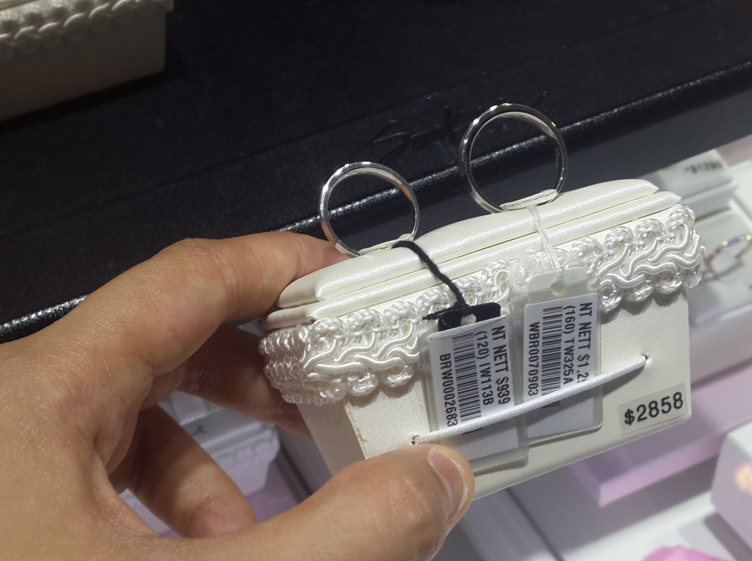
I found out that if you go to a conventional high street jeweller, a set of the most basic of bands would still cost almost or more than S$1000 (around £460) - EACH!!! In fact, it seems most people in Singapore can expect to spend around S$2000-5000. WHAT PEOPLE. WHAT ARE YOU ALL DOING? ITS JUST A GODDAMNED METAL RING! The average size of rings in Singapore is apparently around SG Size 12 (which is my size), but I was also told that George's ring size was too big in Singapore terms and would require a custom resizing which could take over TWO MONTHS.

Fortunately it had never been my plan to purchase an off-the-shelf ring, because I have to do everything the hard way. NO!!! I had already decided much earlier that I would figure out a way to design it by myself.

But unfortunately, after faffing about in Rhino, I can tell you that it is certifiably impossible for an average human being to hope to have learnt how to make a complicated ring after merely watching a couple tutorials on Youtube. I just... can't even... I... its simply impossible to do in a weekend. Ideally, I'd need a few months to be proficient enough to model something like my dream ring full of organic shapes and other wildly impractical features...

PROTOTYPING AND GETTING A WEDDING RING 3D PRINTED/CAST WITHIN 21 DAYS


After an abortive weekend of banging my head against my mac, trying to get up to speed to modelling a t-splined ring, I gave up and decided I would make a really simple ring in Openscad. Because, who said this ring had to be forever? Why can't we make a new wedding ring every year? How about iterative wedding rings? Maybe next year George can design it - after all, he is probably better at Rhino than me. We could take turns designing rings and finding different ways of fabricating them ourselves each year. Maybe next year I'll have even finally built a home metal foundry....

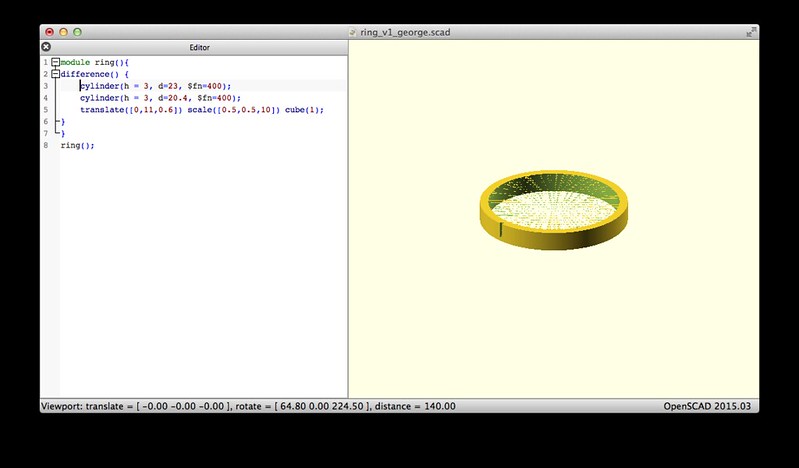
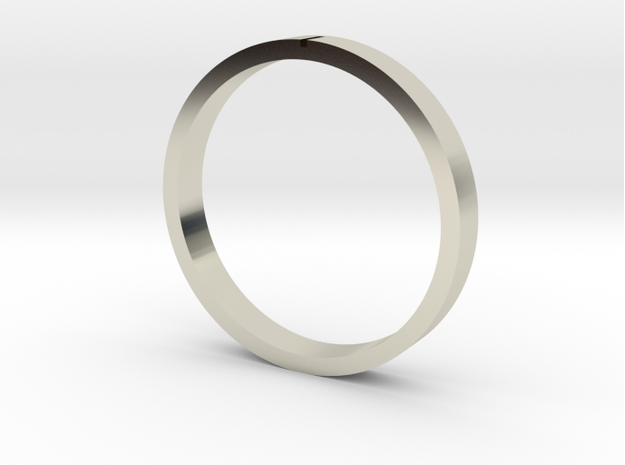
So I made a ridiculously simple ring in openscad. Because... like they always say in design, less is more.

Screen Shot 2015-09-06 at 12.30.47 am

I emailed the gcode of an engagement ring to George to print a prototype in PLA on the UM2 at home.

Screen Shot 2015-08-30 at 11.20.14 pm
I like it, so I put a ring on it*
* By which I mean I emailed over the gcode of a ring for him to print and test out

I then sent the file to be printed and casted in 14k White Gold. 14K is sufficient, because 18k is too soft for everyday wear. Shapeways is priced by volume, so you are incentivised to design smaller or more hollow objects. My total bill was below S$550 (£240) for a pair of basic customised wedding rings.

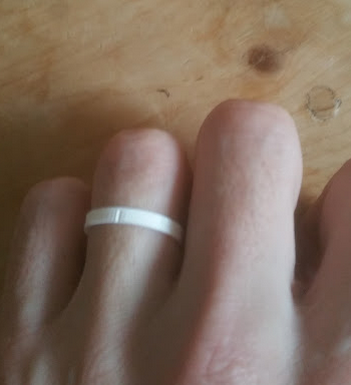
RING
Ring 1.0

It remains to be seen whether it will arrive in time and be exactly as I measured, but in the meantime we could print a backup prototype in Brassfill or some other metal-like filament. Its fine, I mean, its just Ring 1.0 right now. But I mean Ring 25.0 had better be more epic than this...


Other interesting facts about solemnisations in Singapore:

Can solemnization be conducted in a ship or aircraft?
It is possible but it is your responsibility to ensure, with documentary proof, that the ship or aircraft is not foreign-owned/registered. If it is, it is regarded as foreign territory and the marriage cannot be solemnized overseas.

WHY THEN, LET'S ALL GET SOLEMNISED ON A SINGAPORE-OWNED SPACESHIP IN OUTER SPACE