Thursday, 30 October 2014

The Glass Mirror

PA072889

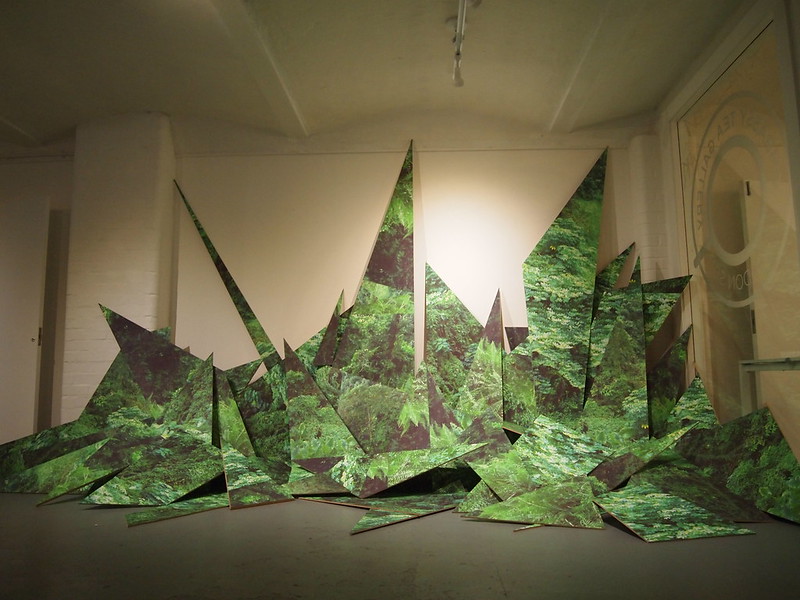
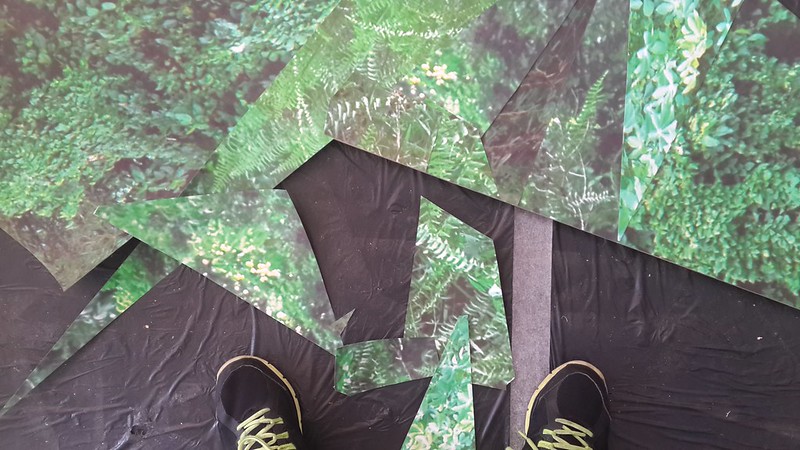
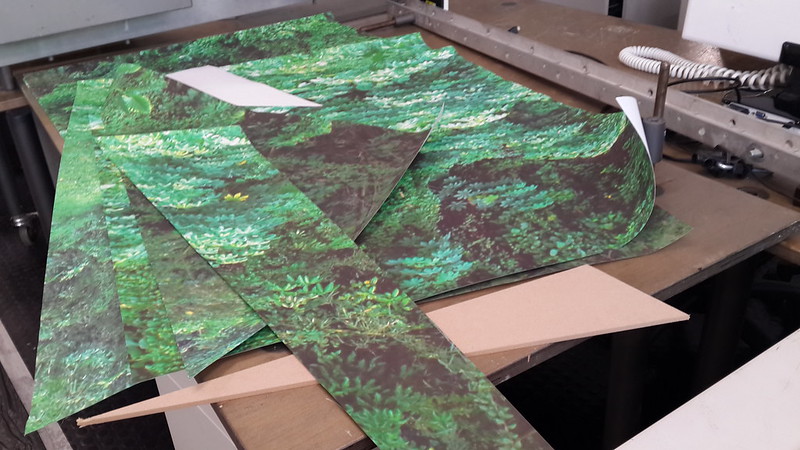
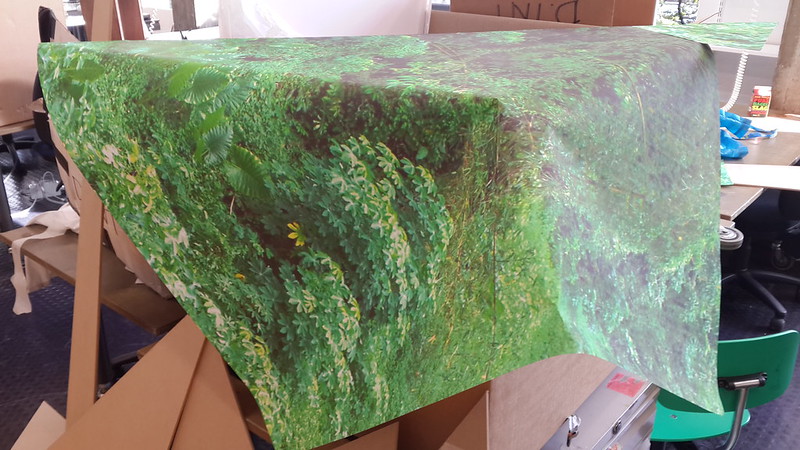
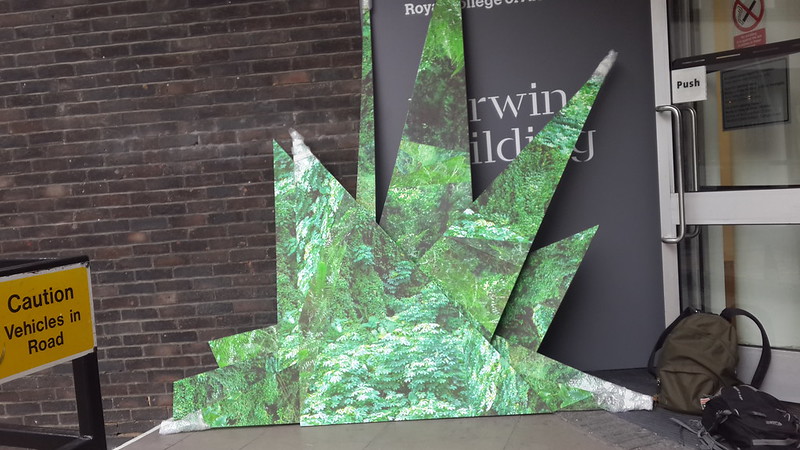
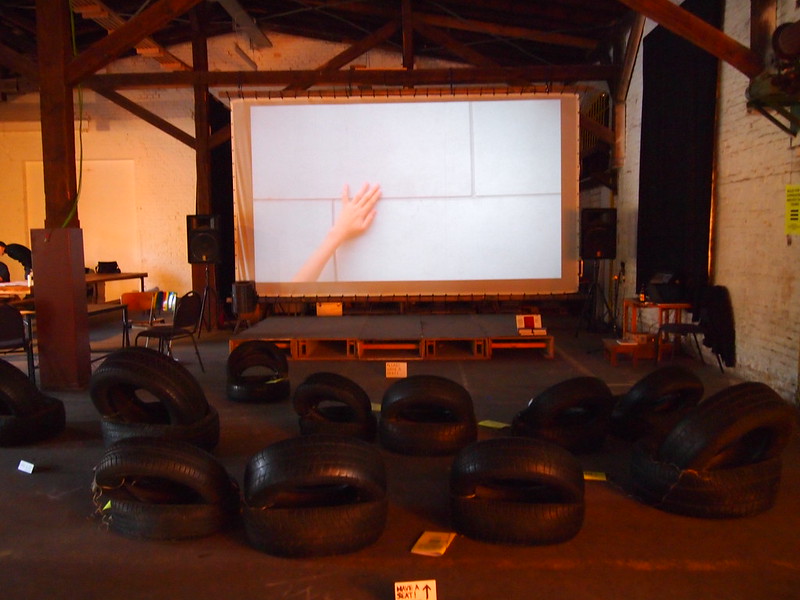
Awkward, big and odd-shaped, jutting into one another, cheaply printed into a temporary space. There are many words that you can use to describe what you see, but all of these words will be imprecise. You could say that the display seems to have shadows, lines, or that the images and colours seem somewhat ghostly, blurry, hazy, tinted, or faded. Wiggle the cable where it connects to the device. Check for any nearby magnetic or electrical devices in the vicinity, which might be producing unexpected electromagnetic interferences.

You may not have realised it yet, but the error does not lie with these delicately engineered and precisely calibrated devices that are reproducing these images and projecting them upon our retinas. The error is actually within us – the human audience trying to imperfectly comprehend what we see in a reproduction of an image. It is human instinct to want to see something recognisable in everything; to discern some meaning even within random matter, to see something recognisable within every picture, no matter how degraded the quality of the image is.

But what does ‘quality’ really mean? How does one begin to quantify the ‘quality’ of an image? How does it affect our appreciation of the image, or original subject of the image? And what does quality mean when we apply it to life itself? What do people mean when they speak of “quality of life”?

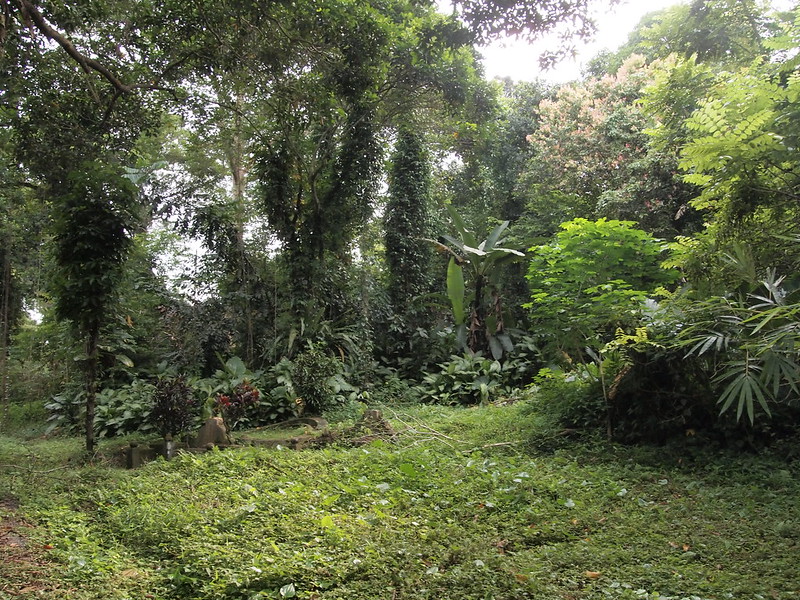
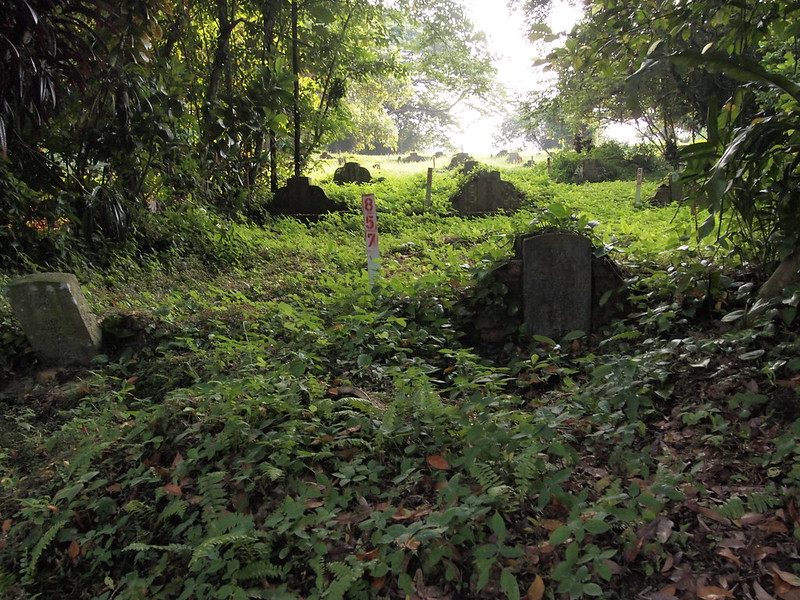
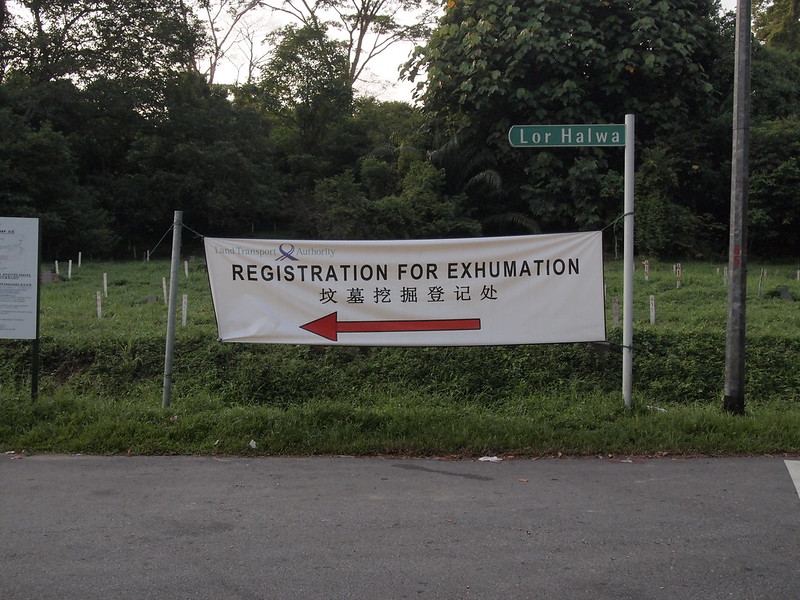
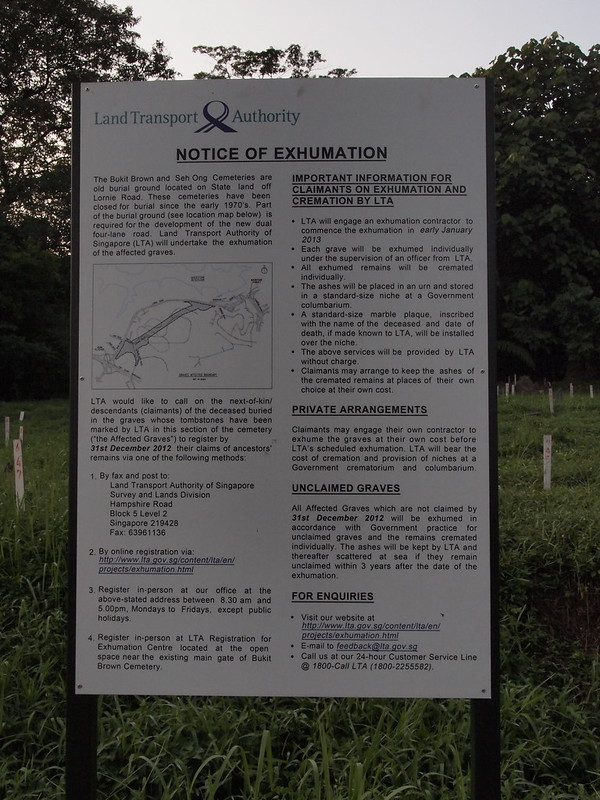
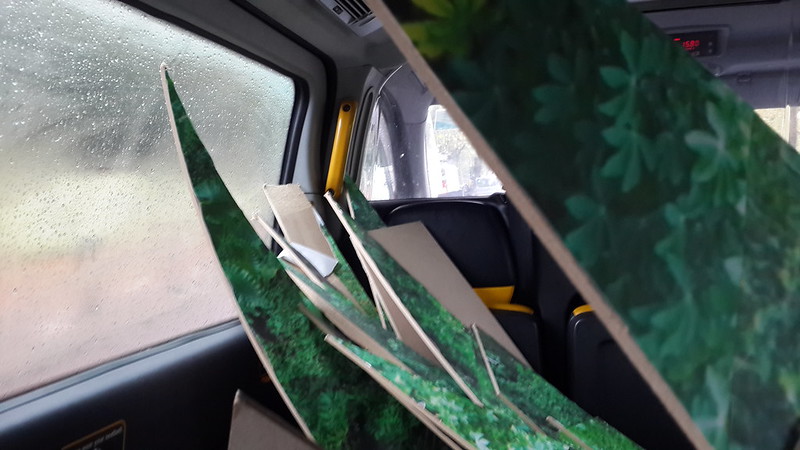
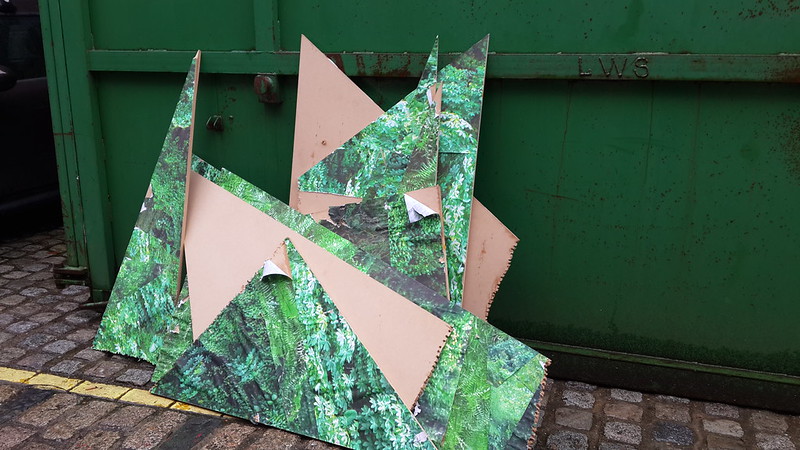
As Lefebvre writes, ‘the most important thing is to multiply the readings of the city’ and it is by observing the detritus of each individual fragment on its own that we may discover something important that we might otherwise not perceive. Here, fragments of Bukit Brown have been blown up and exploded into tiny, incoherent shards. What do you see in it?

P6305919

P6305785

P6305963

P6305778

P6305780

20141005_130637

20141004_162920

20141004_160731_Jay Mews

20141005_172825_Queen's Gate(0)

20141013_113102

20141013_133606


Glass Mirror was shown at "Hold Infinity in the Palm of Your Hand" curated by Annie Jael Kwan (part of SEA ArtsFest 2014) at Embassy Tea Gallery, London, from 7-12 October 2014. Thanks to Patrick Tantra, Philipp Aldrup, Annie Kwan, George South, and all who came down to see the show!

The Parallel Tottenham of the Endless All-Encompassing Everything Football

Last week we went to White Hart Lane, although we had meant to go to Cambridge Heath, but we had missed the train to Liverpool Street, so we took the train to Enfield, and decided to stop at White Hart Lane.

20141023_211401_White Hart Ln

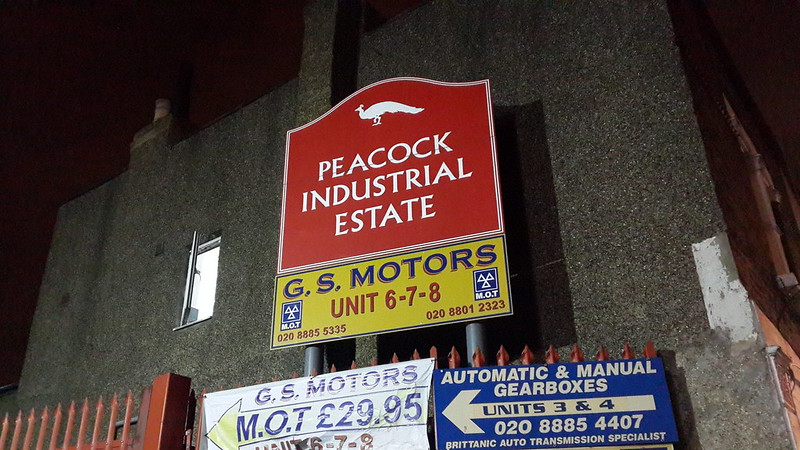
Along the way out there was this lovely signage with a white peacock for a Peacock Industrial Estate.

20141023_211516_White Hart Ln

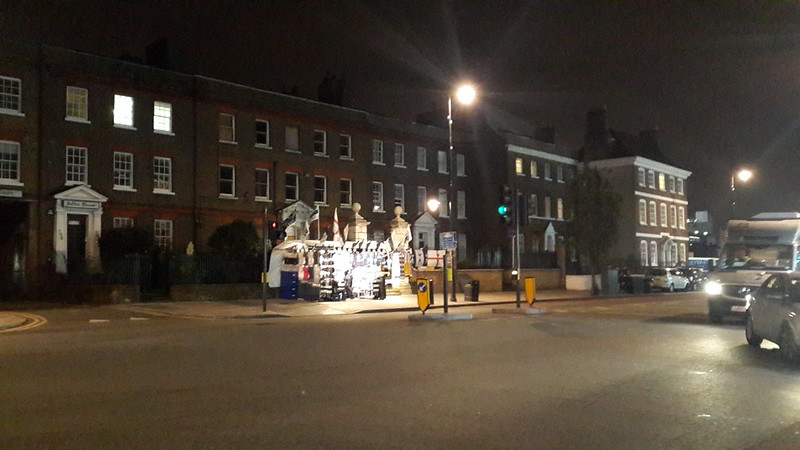
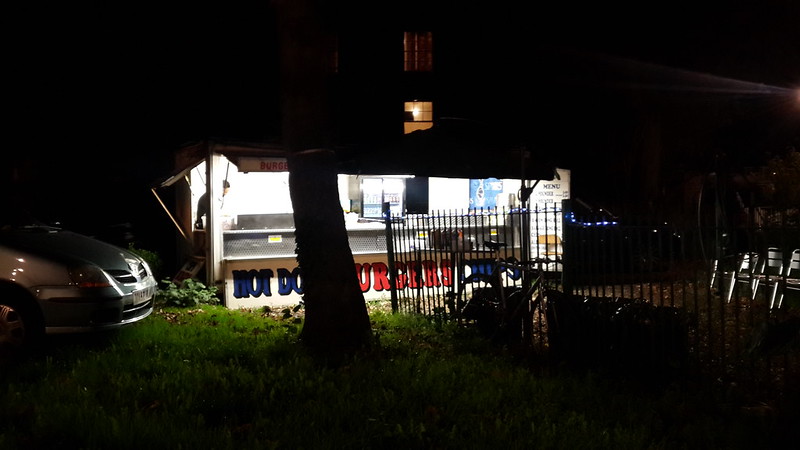
When we first reached Tottenham High Street, we saw this strange makeshift store, blazing with strong lights across the streets, touting a bunch of Spurs and Anti-Arsenal football gear. We suddenly remembered that White Hart Lane was the home of Tottenham Hotspurs.

20141023_212137

The entire street seemed generally empty as it would be on a regular weekday night… except that there were generators pumped up, lights-a-blazing, a weird kind of anticipation, crackling in the silence. Hotdog vendors waiting by far-too-brightly lit carts, distractedly joking with one another, giving us the feeling that they were still waiting for the main event to occur. Huge crowd control barriers and road closures and men and women dressed in neon high-visibility jackets waiting every few metres. Yet the streets remained disturbingly empty.

20141023_212622_High Rd

We asked one of the men in the neon jackets what was going on. He told us a match was underway and expected to end in half an hour. So we thought we would hit the pub before we were hit by an avalanche of people.

highrd0

highrd1

A few minutes after the game had ended, fans started filing into the pubs for drinks and their fix of greasy foods, the DVD sellers swinging into full gear. Before it reached its peak we decided to leave the pub.

20141023_221822

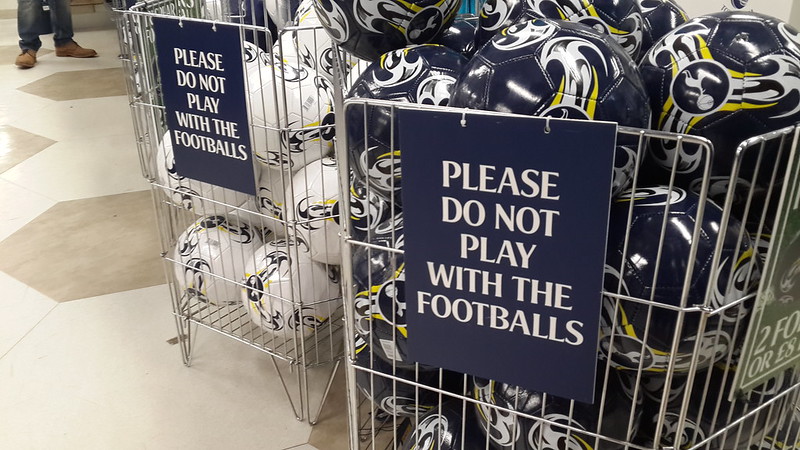
Next to it the pub was a massive, slightly terrifying store full of Tottenham Spurs branded merchandise, encompassing almost every imaginable type of ordinary household object you could imagine - babies' clothing, crockery, toys, lacy garters, speakers, garden gnomes, staplers, furniture, curtains, wallpaper, etc…

20141023_222639

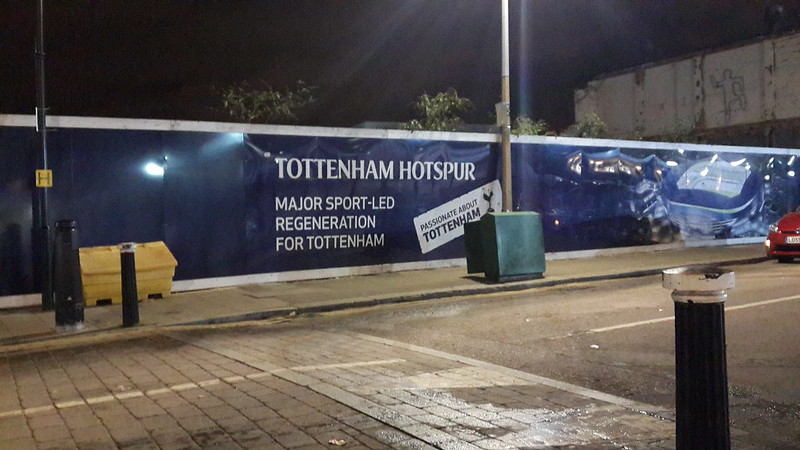
Everywhere outside you could se these strange proclamations of Tottenham’s “Sport-led regeneration”, which strikes me as a bizarre way to describe how one would want to develop or grow an area or a community; in an area which appears to me as a big stadium carpark and hotdog stand for a massive multi-million-dollar valued football club. How does “sport-led” regeneration even work? I'm really not quite sure. What is sport and why is he or she leading it, or who decided he or she should lead the regeneration? The plans for the building of these stadiums and new extensions to sports infrastructure involve demolition of existing buildings and local businesses; the displacement of normal businesses and communities for more and more of the footballs and the footfalls.

So, to those who haven't been to this part of Tottenham, its like a funny alternative sport-centric universe in which all those fancy cafes and gastropubs and pricey restaurants that are usually found in gentrified parts of London are instead replaced by an ubiquitous swath of manly disportments; of chicken and chip shops, sporting merchandise outlets and stands, betting shops, and football bars where all other popular forms of entertainment are replaced by an epiphanic chanting crescendo of FOOTBALL, FOOTBALL, FOOTBALL!

20141023_224958

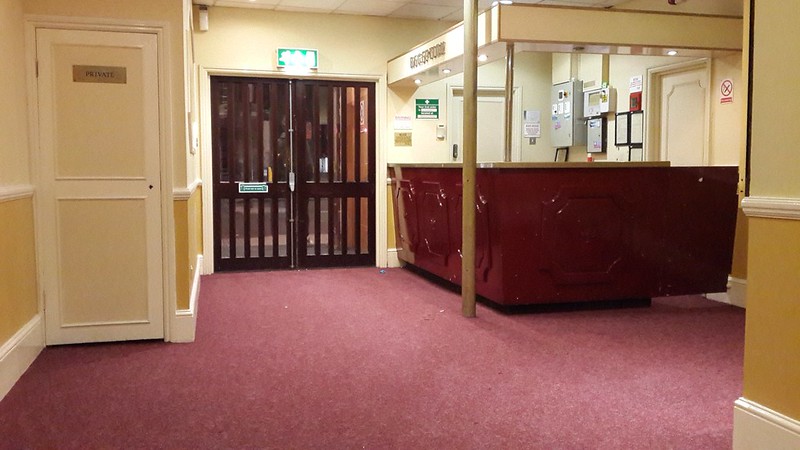
But fear not, not all in Tottenham was so homogeneously football. We ventured into a rental wedding hall with a curiously empty reception desk. At the end of the long hallway there were a few children in party dresses sitting and playing at the foot of a lush red carpeted stairway going up. Children playing on their own is always a sign that it must be a friendly space (either that, or an elaborate trap). When I walked to the end, there was an incredible sound of festive drums and some sort of intense traditional music coming from the hall just beyond...

Thursday, 11 September 2014

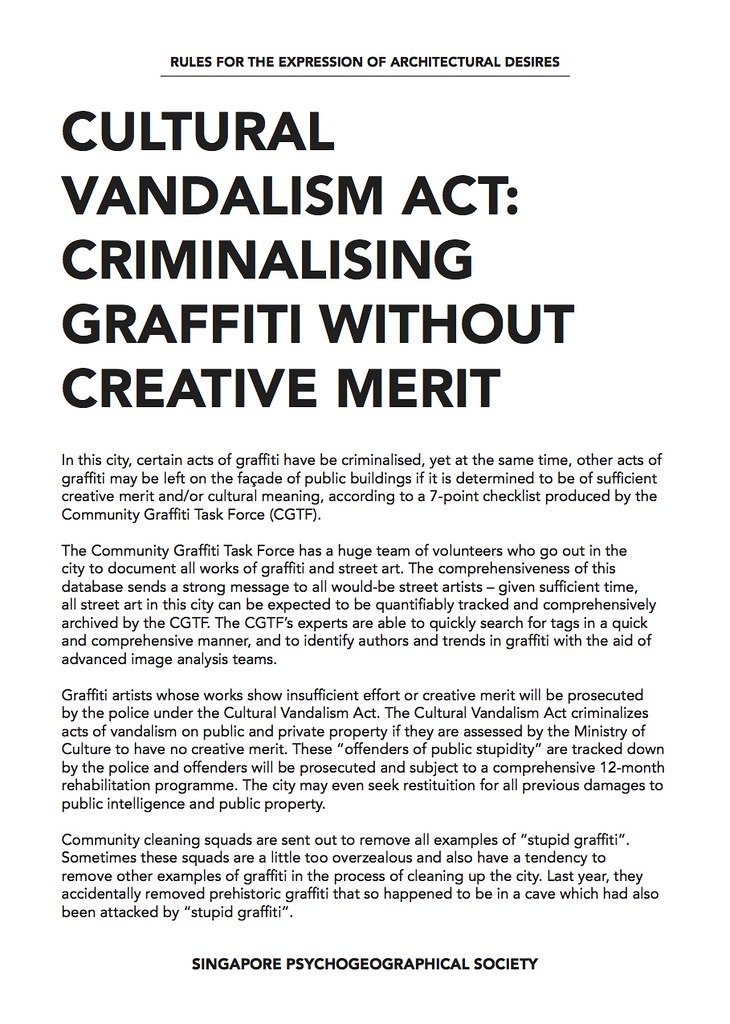
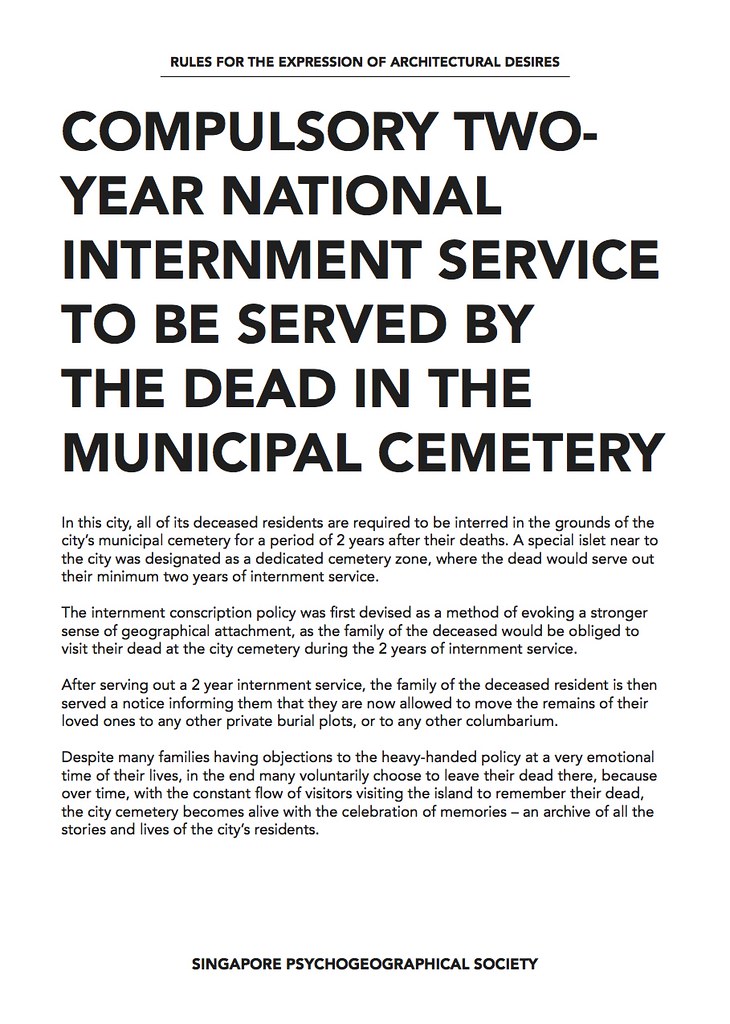
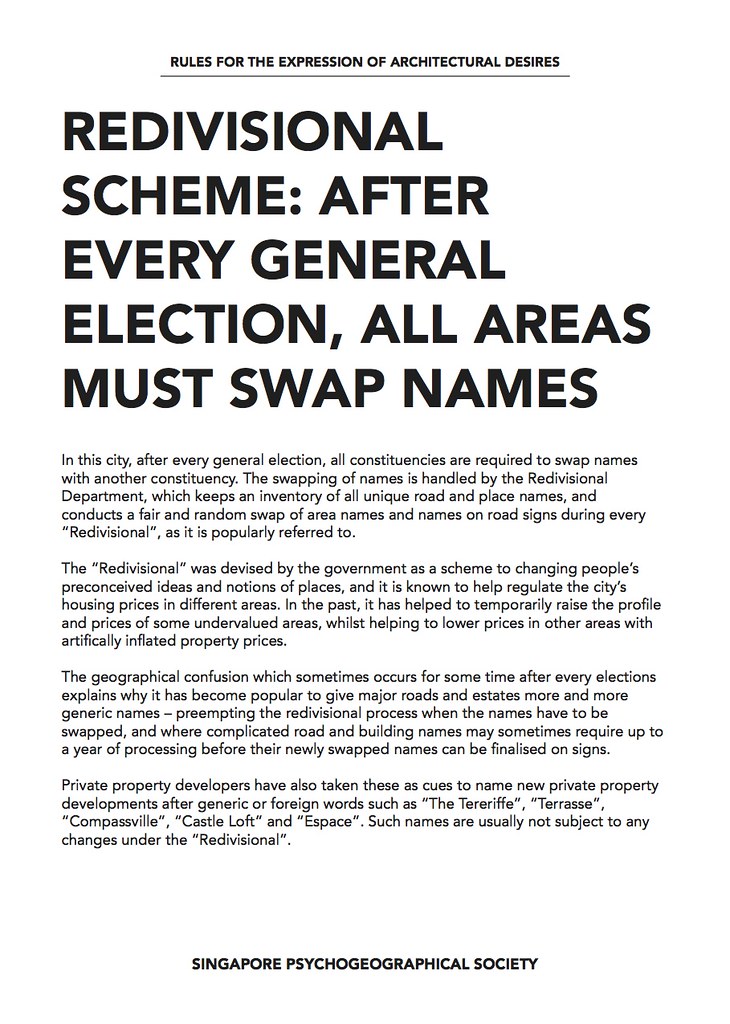
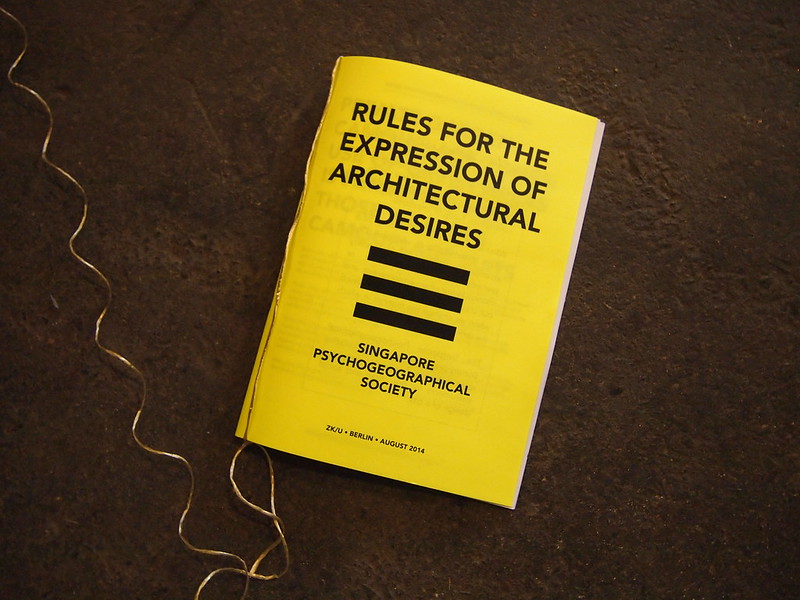
Rules for the Expression of Architectural Desires

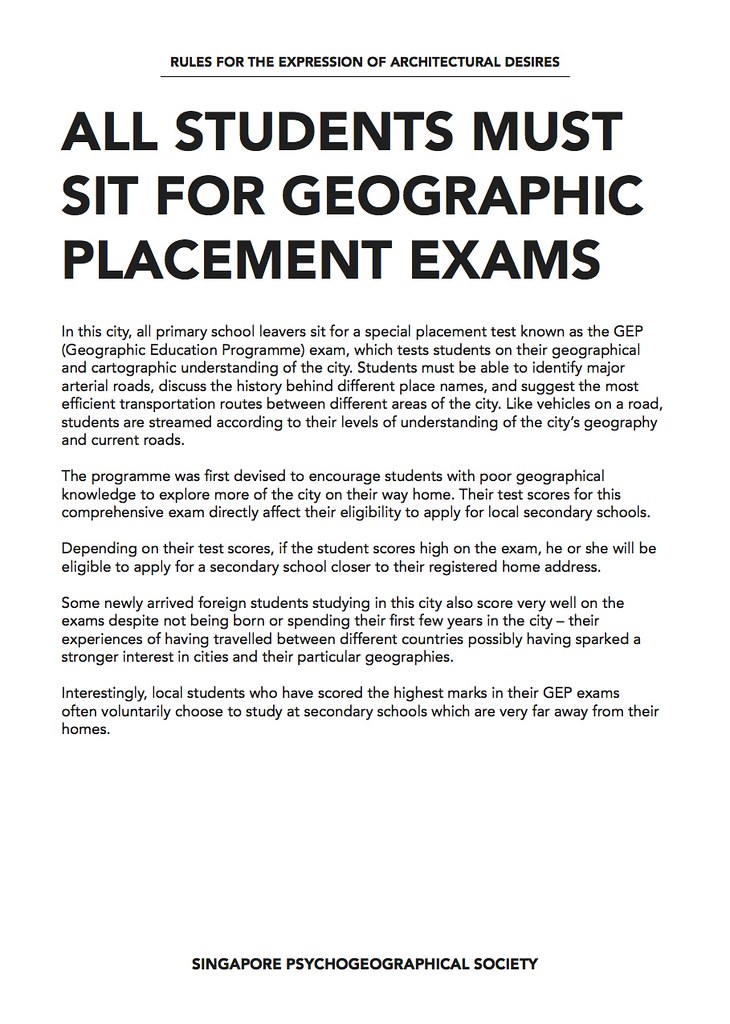
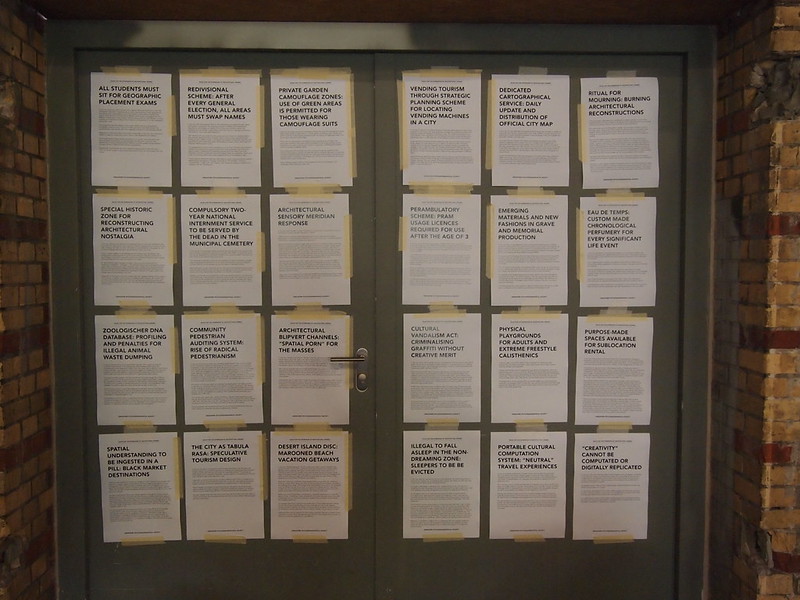
Whilst in residency at ZK/U Berlin, the Singapore Psychogeographical Society has been working on a new body of writing, "Rules for the Expression of Architectural Desires".


The time is neither future nor past. The place is neither East nor West. The design of our built environments begin with ideas, and these ideas are articulated in ways which may be conceptual, fuzzy, or imprecise. What we find is that the material of a city is actually immaterial at its very core. Our attempts to define rules for society precede every action, motion, or change in our urban environment, and our urban experiences can be altered when we change the manner in which we define a city.

The Singapore Psychogeographical Society presents a set of 24 speculative rules, schemes, methods, tools and instruments for the urban and social design of a city.


A few of the rules are as follows:

Rules-InnerPages-24pp-01

Rules-InnerPages-24pp-02

Rules-InnerPages-24pp-05

Rules-InnerPages-24pp-04

An expanded version of this set of rules will be worked on, published, and distributed later in 2014.


P8211740

P8211738

P8221761

Wednesday, 10 September 2014

The Plaster holding together a Reconstruction of a late Qing-dynasty Brick Gate House

P7220578

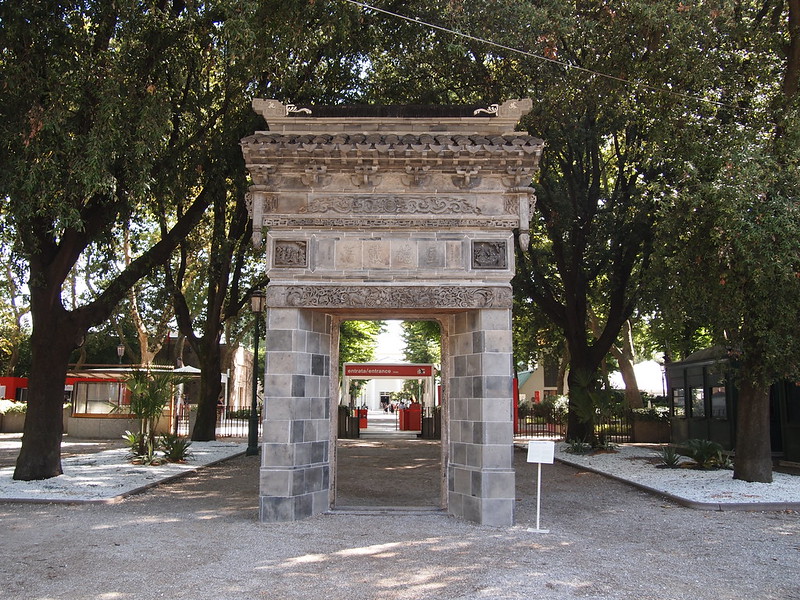
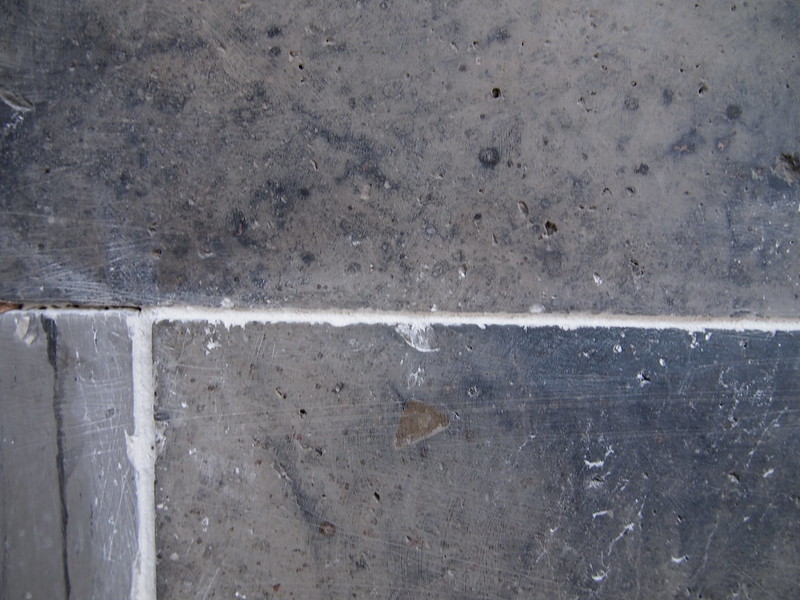
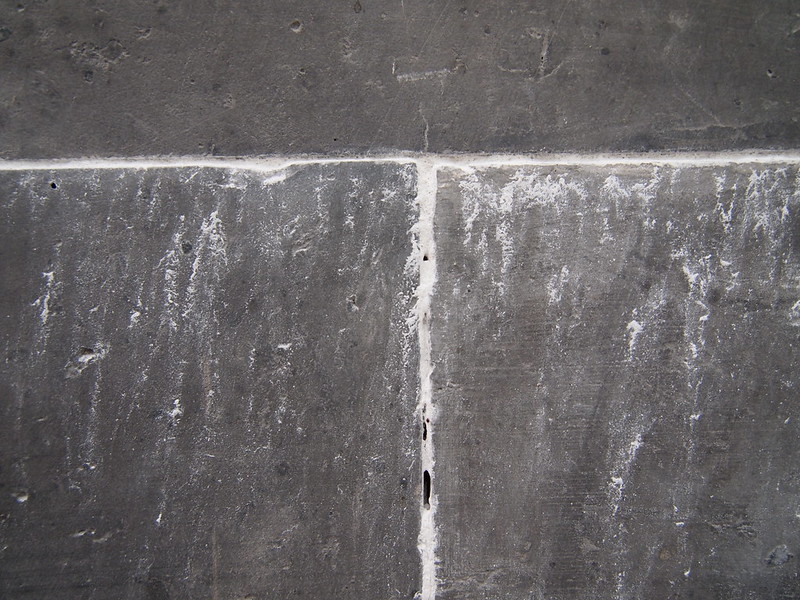
In July when I went to the Venice Biennale, one of the things I was most fascinated by was the reconstruction of the granite and grey brick gate house from Suzhou that was placed in the front of the Giardini - not so much because of its exquisite carvings and the apparent restoration work by Xiegu’s craftsmen, but because of the strikingly bright white building plaster which holds it together in place, which also spills over on its edges, perhaps as a result of weathering.

P7180559

P7180566

What is so special about things-holding-together-other-things? As the glue or mortar which keeps these bricks together, the white plaster in between these ancient Suzhou bricks is what physically makes this into a gate house, as opposed to a pile of discrete, separate brick elements. Yet it is also presumably the weak point of the structure. Where you have more than one material directly in contact with another, the different physical materials react to sun and heat and cold and dryness in different ways, producing cracks and weaknesses in the structure. I wonder what was the original mortar used in China, and if it were to be very different from the mortar used in this contemporary reconstruction in Venice. Lime? Gypsum? But surely Gypsum is not used in historical reconstructions? Or is this some other special temporary mortar, used in order to facilitate its eventual removal and dismantling at the end of the biennale?

On its own, the plaster begins to disintegrate and fall away in the rain. The gate house returns to a pile of bricks. The bricks begin to disintegrate, and the bricks return to a pile of rubble and sand. The sand is blown away, and is mixed with the unidentifiable, incomprehensible dust of the world.

Schlachtensee Caterpillar Wake

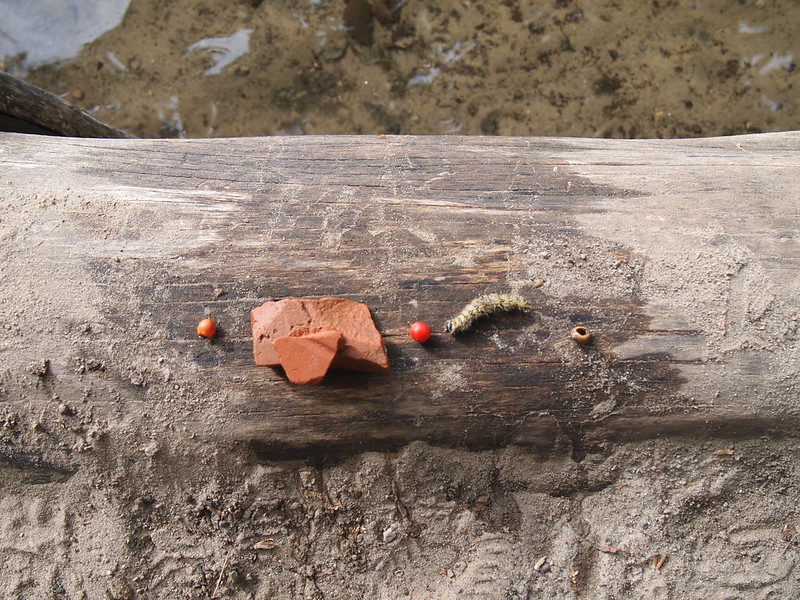
On one of my last afternoons in Berlin, we went to Schlachtensee to wade around the lake. There, in one of its shady shallows, I found a bright yellow caterpillar in the water; a small Buff-tip (Phalera bucephala) that looked like it had already tragically drowned and sunk to the bottom of the lake. I didn't know how long it had been submerged under water.

P8302541

In any case, after thinking about it for a while, I fished the caterpillar out of the water and made a little shrine for it on the edge of the lake. A small german child came over to look at it, and poured a little of the grainy (and highly absorbent) sand over it. Later when Lecky and Chris came back from their swim I was going to show them the caterpillar shrine, and it was then that I realised the caterpillar had moved away from its original position where I had laid it down to rest. I poked it with a stick and it squirmed! The caterpillar had revived!

P8302542

Here it is after I had replaced it back on a leaf on a nearby bush.

Next time you're caterpillar-sitting your friend's pet caterpillar and it has accidentally fallen into a moat for an undetermined period of time, don't panic. Just take it out, let it dry out and maybe it will wriggle back to life.

Thursday, 31 July 2014

The Palazzo F.- : lost in time and space? (Venice Architecture Biennale, Swiss Pavilion, 2014)

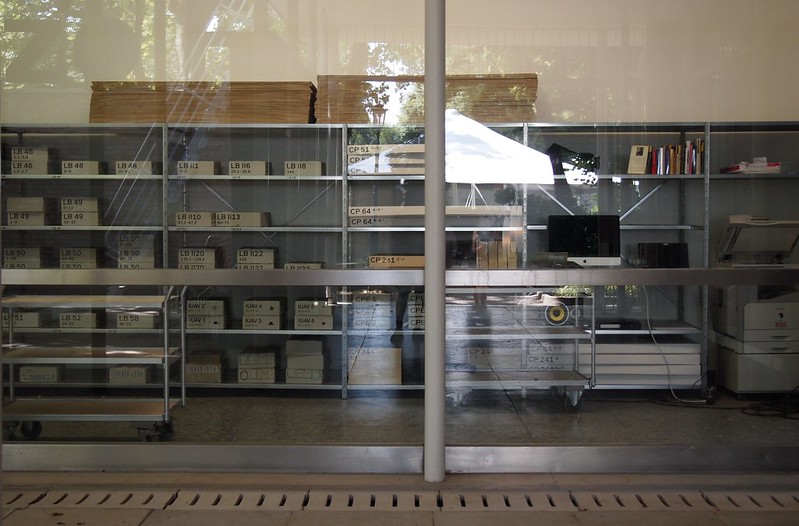
Recently I went to work at the Venice Architecture Biennale along with a dozen other Design Interactions students from the Royal College of Art. We were there to produce a project on the future of labour at the “summer school” as part of the larger Swiss Pavilion. At the end of our week at the Swiss Pavilion, our projects went into a small grey box which went into a larger archive.

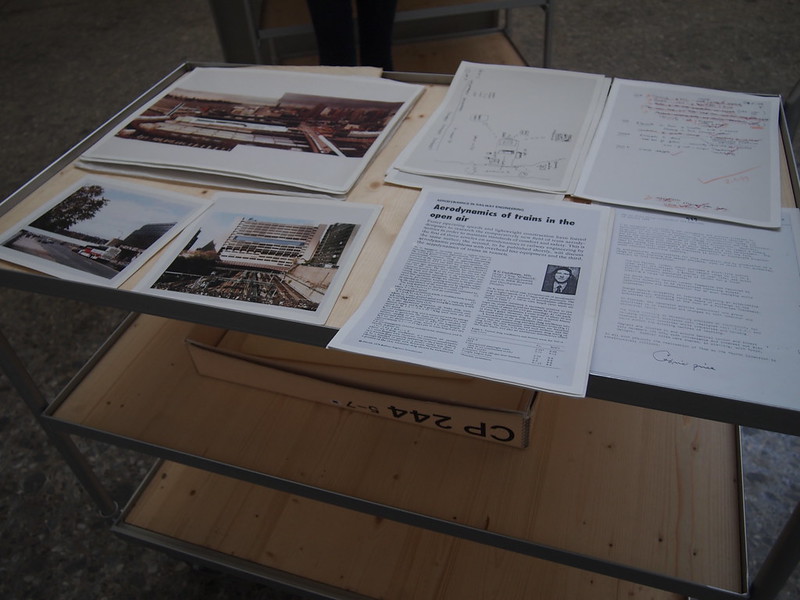
“Following Burckhardt’s and Price’s critique of the traditional university system, Lucius Burckhardt and Cedric Price – A stroll through a fun palace will function as an architectural school under the leadership of Italian architect Stefano Boeri with Lorenza Baroncelli. It will welcome and connect students in a worldwide network of thinkers, schools and researchers, enabling them to reflect on how the contemporary landscape is changing.”

P7220596

Hans Ulrich Obrist, February 2014: “At the centre of the project will be the archives of drawings of Cedric and Lucius, of which different aspects will be revealed throughout the Biennale. ‘A stroll through a fun palace’ in collaboration with architects and artists will present a laboratory where the ideas of Cedric and Lucius can be toolboxes to invent the future.’

P7220595

As an “archive”, the materials in the Swiss Pavilion meant to be “programmed according to a time-based dramaturgy, creating a changing mise-en-scène and an exhibition in constant motion.” Models, materials and other archival objects were wheeled out periodically, moved around, shifted on to chairs, taken out at different intervals. The projector came on, songs were sung, sounds were sometimes played, boxes rearranged by curators. And in the middle of the open space, the slightly confused visitors on a mild summer’s day in Venice wandered through these fragments and tentatively, hesitantly sifted through a few at random.

Whilst I was extremely grateful to have had the opportunity to spend a week inside the Biennale, “absorbing” the Biennale, as it were - I had some issues with the actual execution of the pavilion itself, perhaps because I had imagined something quite different from having read the texts which described it.

While you can indeed aim to curate an exhibition which consists of multiple points of view where it is forever impossible for the viewer to have a complete overview or to see the entire story in full, whether by physically or by time durations, the question for me is whether such an approach can be aesthetically compelling, or able to hold together when executed? Will it show enough of the narrative to pique the interest, to encourage one to open up this “toolbox” and to unpack its ideas and engage with it, especially for one who might be encountering all of this for the first time? Or will the toolbox remain nothing more than a conceptual toolbox out of reach, a pretty idea without immediate action or application?

This is not to say that I don’t think that there are many useful lessons to be learnt from Cedric Price and Lucius Burckhardt; the Fun Palace is indeed a great if unfinished idea - a place where the building remains flexible and changing with its users having to complete it by making use of it. But in its execution, the exhibition seemed to induce or reinforce the audience’s meandering behaviour of floating around like a confused, constantly distracted, itinerant museum goer, “sampling” archive materials at random like how a shopper might taste a few proffered food samples at a supermarket - but so noncommittally. In my opinion, the Swiss Pavilion turned out to be a space in which I saw the spectacle of the “confused and lost gallery-goer” - the everyday camera/smartphone-clutching mobile spectator, instagramming the scene before understanding it, itching to flick to the next page, unable to focus on something with any concerted engagement - lost and floating in space. I began to wonder, with my limited understanding of the forces that had produced this situation, how I came to be sitting here in the pavilion - who was the intended audience at an architecture biennale? A random venice traveler? Architects or architecture students working on some other portion of the biennale? Seriously, who were all these people? What force had produced this massive architectural extravaganza, and for whom? And who were we really hoping to engage with this "toolbox of ideas"?

So often “participatory” shows which involve introducing people to the ideas of “great visionaries” approach it from the viewpoint of somewhat didactically showing the audience how their lives could potentially be enriched through these great amazing ideas. I have no issue with something educational, but I think that if it is done without truly getting people to go through it thoroughly - and without demanding that they should fully give these ideas completely new forms on their own at the end of these interactions - then it is clearly more a pedagogic exercise rather than a true reciprocal exchange of ideas. I suppose my problem with it is mainly that I find that the moments at which true interaction can occur here seem so facile and fleeting.

The archive trolleys used to move and rearrange materials reminded me of the gravestone trolleys I saw in the Cimetere in Venice’s Isola di San Michele - inert gravestones inscribed with distant names, shuttled from place to place by its caretakers - large mute memorials exiled to a floating isle that was to be their grand funerary palace... I guess it is another kind of Palazzo F.- ...?

Maybe I say this because I am now beyond "toolboxes". They are useful, and even a review of the "fundamentals" of architecture like the bigger Giardini show is also worth going through, but I no longer want to play with toolboxes and dictionaries, its almost like just stalling time; I think we ought to be spending that the time writing and making completely wild and new things.

Sunday, 27 July 2014

Second Life Adventures: A Lonely Dinosaur on the Dancefloor, Deconstructed Architecture in the Metaverse, and Hopper's Diner in Space

I've been having internet issues the last few weeks - being in a flat in Venice with no internet and no mobile data, having intermittently poor internet here in Berlin. Once every few months I recall that I have a Second Life account. Last few nights I found that - shock! surprise! - I could actually clamber online after hours late at night, and what do I do online? The really important work I need to do online?... No, instead, I found myself wasting time on Second Life once again.

People unfamiliar with Second Life often ask me, "What can you do in Second Life?", "Aren't all these virtual worlds dead already?". So here is a list of things you can do right now in SL - or rather some of things I've done this week:

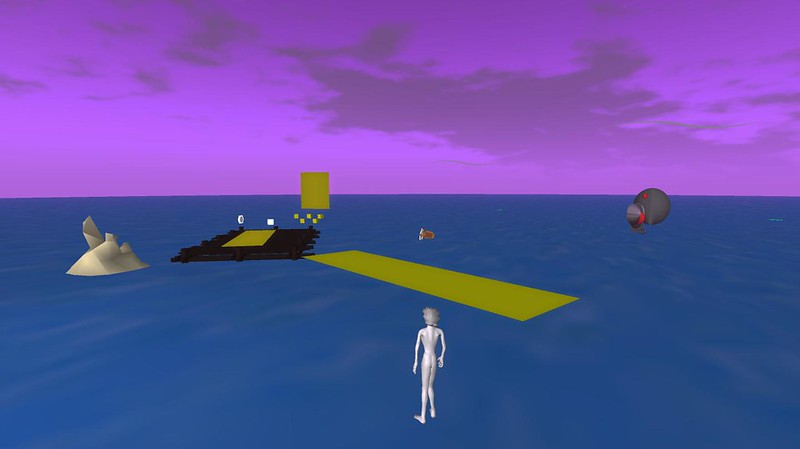
1. Walk through some abstract wastelands
Snapshot_015

Lots of half-built places with strange lighting that look like a cross between a glitchy p-model music video from the 80s, a seapunk animated gif, and someone's incomplete rhino 3d project. But don't get me wrong, most of them are less interesting than what I've just described. A lot of them are very mundane as well, like reproductions of grassy hills and boring houses with boring normal furniture inside them.

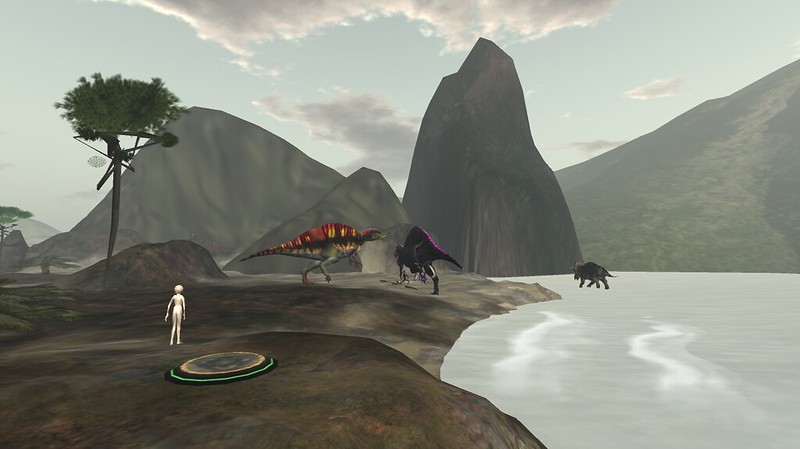
2. Walk around in the prehistoric world of dinosaurs
Snapshot_002

Went to Prehistorica, the Dawn Kingdoms, where they also have a collection of very convincing dinosaur avatars for sale!

3. Become a dinosaur

I decided to become an apatosaurus (also known as brontosaurus), largely because it was just about the BIGGEST.

Screen Shot 2014-07-25 at 9.43.30 pm

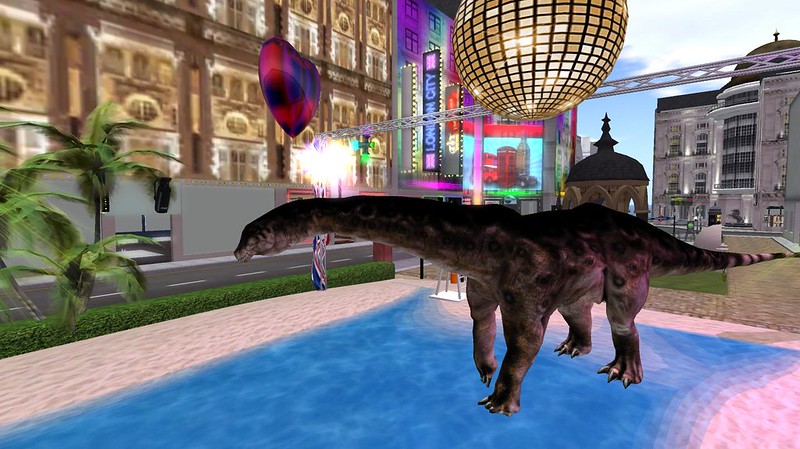
4. Become a Dinosaur and and walk around "London City"

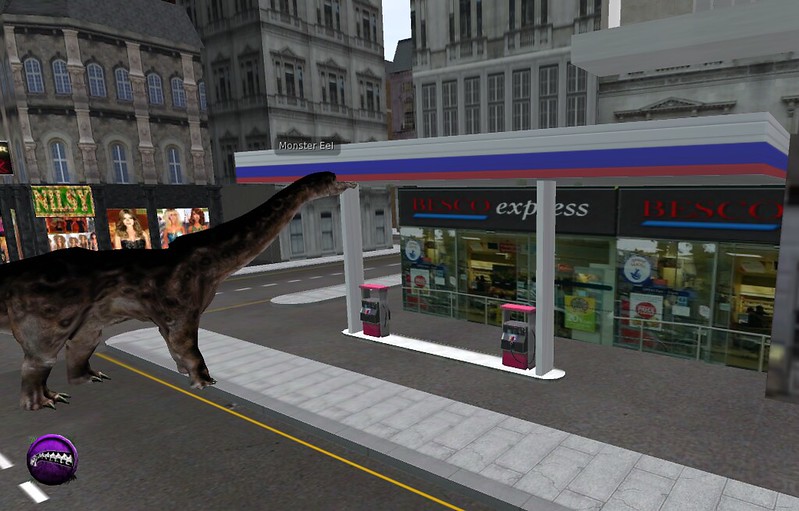
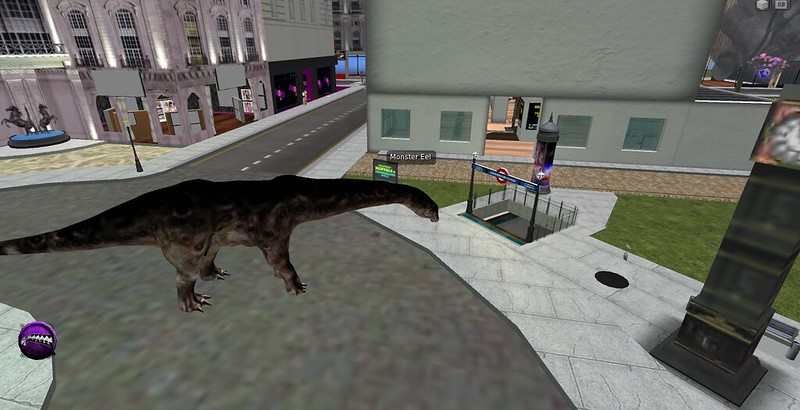
"London City" is a sim which looks like London but is set by the seaside, merging some of the elements from London with a seaside town. I tried walking around making loud roaring noises and growls and stamping sounds but no one seemed to take notice. Some other avatars skittered around underfoot, trying to figure out how to operate the free go-karts in this parcel...

Screen Shot 2014-07-25 at 11.00.43 pm

Snapshot_011

Screen Shot 2014-07-25 at 11.02.08 pm

Screen Shot 2014-07-25 at 11.04.39 pm

Sadly, as I was still a gigantic Dinosaur, I was too big to go inside the Tesco and Tube equivalents in "London City Pier". Its hard being a dinosaur.

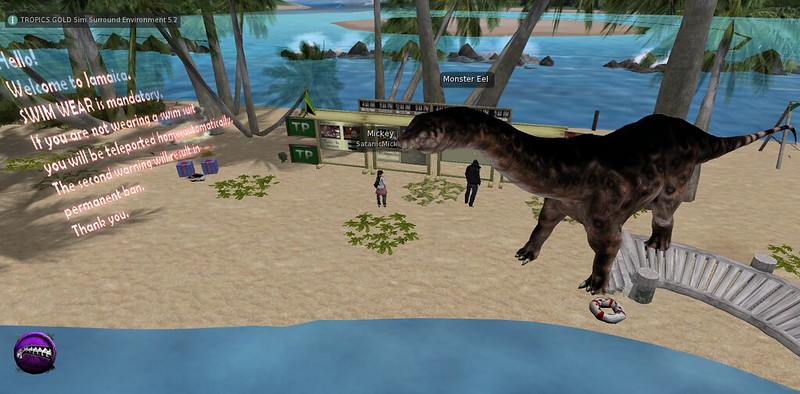
5. Become a Dinosaur and walk around a beach - almost
Screen Shot 2014-07-25 at 10.44.01 pm

I also wanted to go to the beach in Jamaica but they had a compulsory swimsuit policy. That meant that I couldn't go to the beach because I didn't have any dinosaur-sized swimsuits to wear there. Again, its hard being a dinosaur.

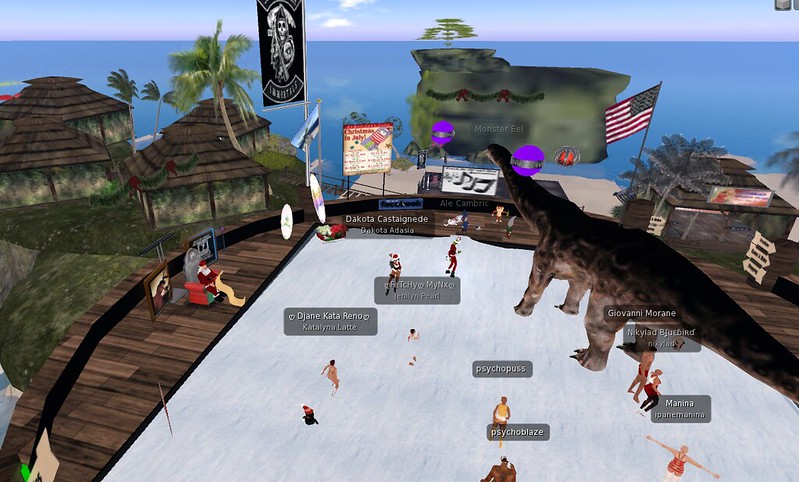
6. Go to a party as a Dinosaur
Screen Shot 2014-07-25 at 10.57.13 pm

It's lonely up there, being a big dinosaur, and dinosaurs can't dance because all the other people are too tiny and its impolite to step on them...

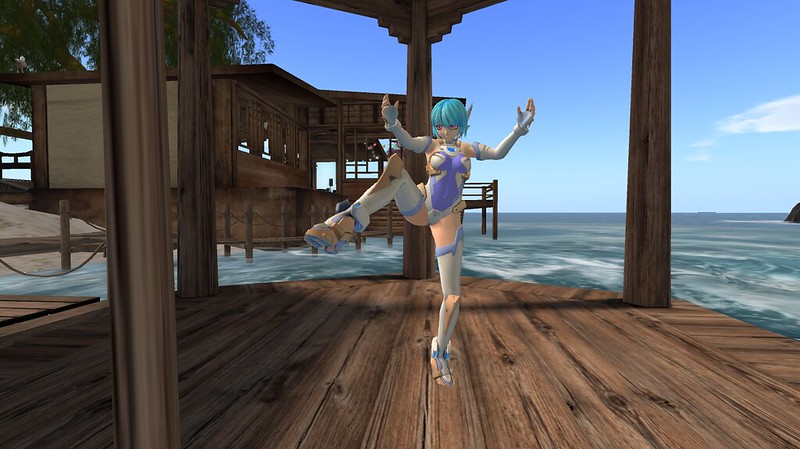
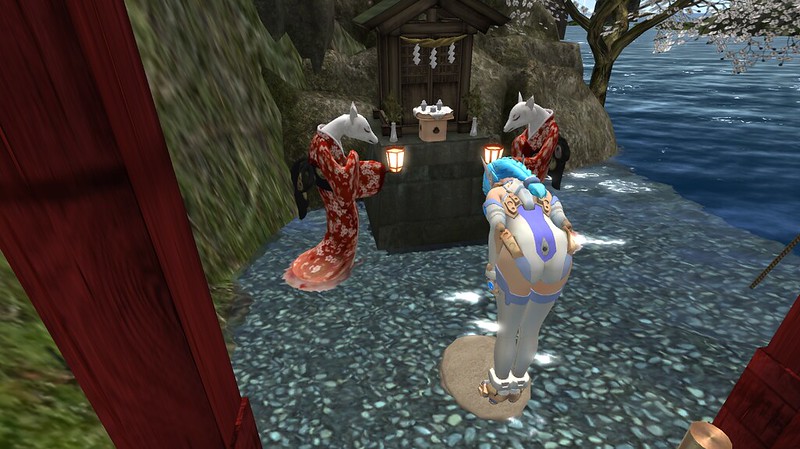
7. Become an Android and do taiji in a japanese pavilion by the seaside

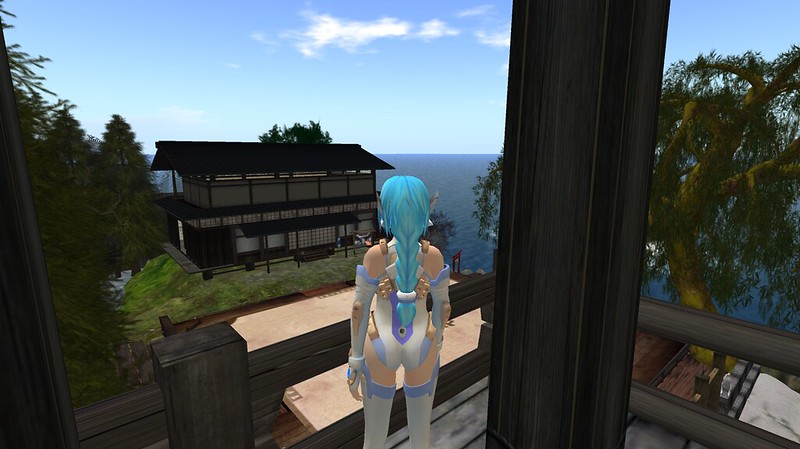
I was bored of being a dinosaur by this point, so I switched to being an anime style android. Utilizator makes really excellent full mesh avatars. This is the Rikugou A; Utilizator also makes the popular Kemono avatar, of which there are endless mods it seems, all very professionally constructed (except that I don't really want to be a furry...)
Snapshot2_004

Snapshot2_006

Snapshot2_005

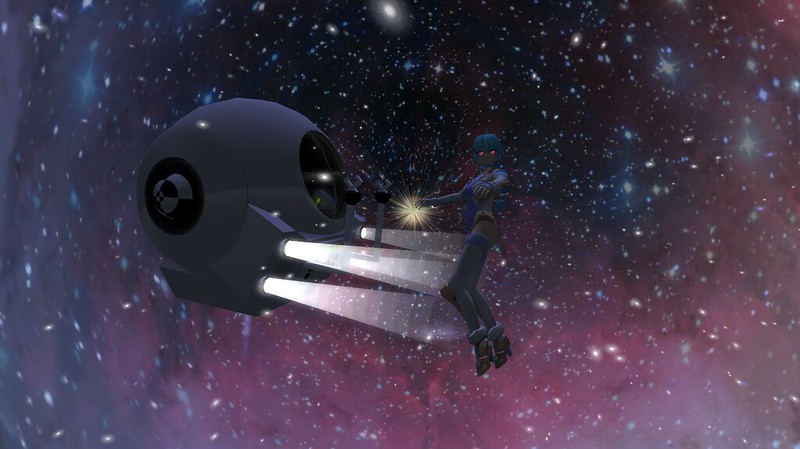
8. Fly through outer space

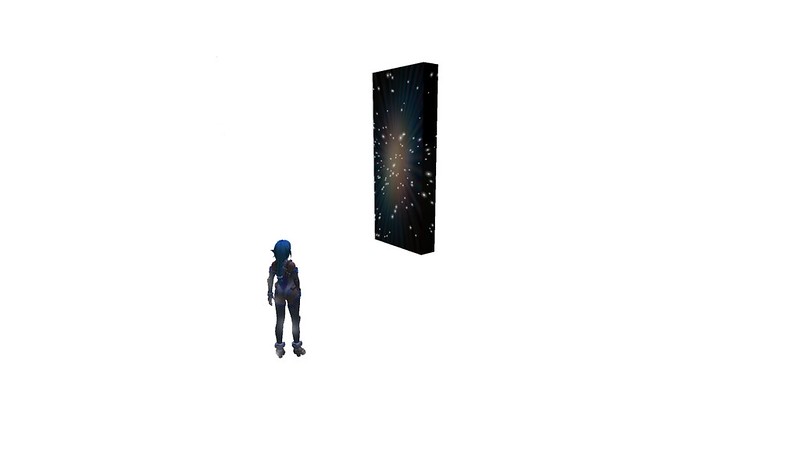
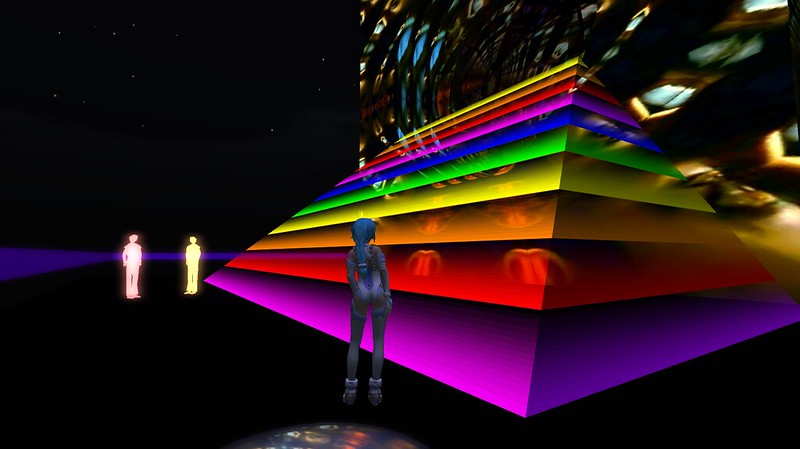
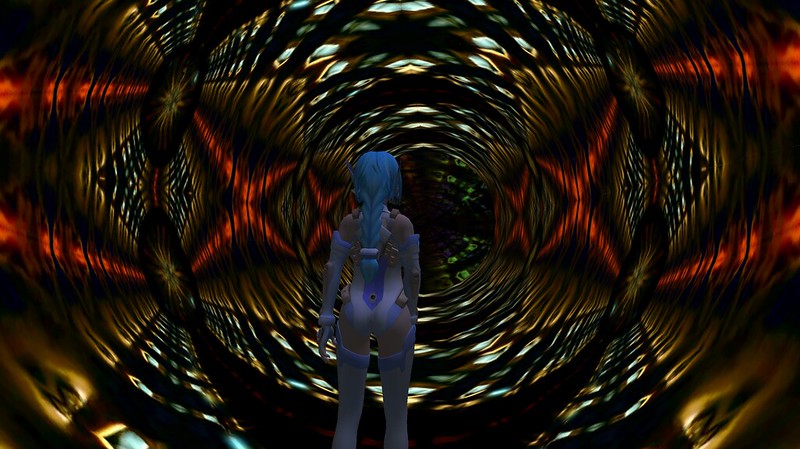
I visited Ars Simulacra: NMC's SL Artist Showcase Island, which can always be counted on for a good experience. All of the following images are from Ars Simulacra's MediaMorphosis.
Snapshot3_002

9. Wander around immersive landscapes
Snapshot3_001

Snapshot4_002

Snapshot4_010

Snapshot3_004

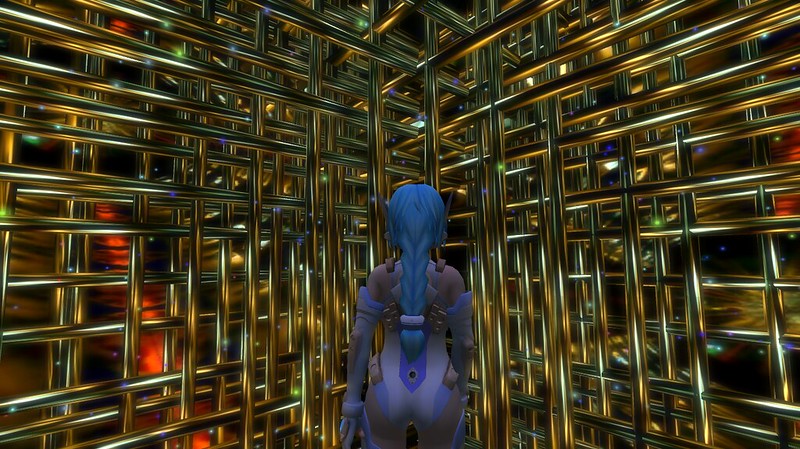
I should like to rent a large plot to build something on this scale one day just so I can experiment with it slowly! How much of these effects are "accidental" or intentional designs? I believe that a lot of what looks impressive is sometimes very simple in its underlying construction. And looking back, I'm surprised to realise so much time has passed since I first saw these kind of spaces. I've already been on SL as nothing more than a casual user for over 7 years now. It has almost been 3 years since I stepped into Kuru Kuru World. This type of floating, deconstructed space has been in the metaverse for so long; its nothing new but I still wonder if we can learn anything from it and apply it back to architecture in the real world.

These sort of spaces still remain as some of my favourite kinds of spaces in SL to walk around in. I realised the image I had in my head for a proposal I had written recently (to be built in real life) comes a lot from my fondness for such spaces in SL.

What's interesting for me is the use of video on the 2d planes which are used to create structures. In such a world, "light" or more correctly "colour" also operates completely differently. A media "texture" with glowing white elements appears as a bright light that reflects off the faces of the avatars, and the shifting transparency in these moving image layers also produces unexpected diaphanous and complex-looking waves, especially when you cam around them. Much of these are housed inside huge megaprim domes with "infinite" seamless interior textures, which only reveal their underlying structure when you fly about and cam out as far as you can.

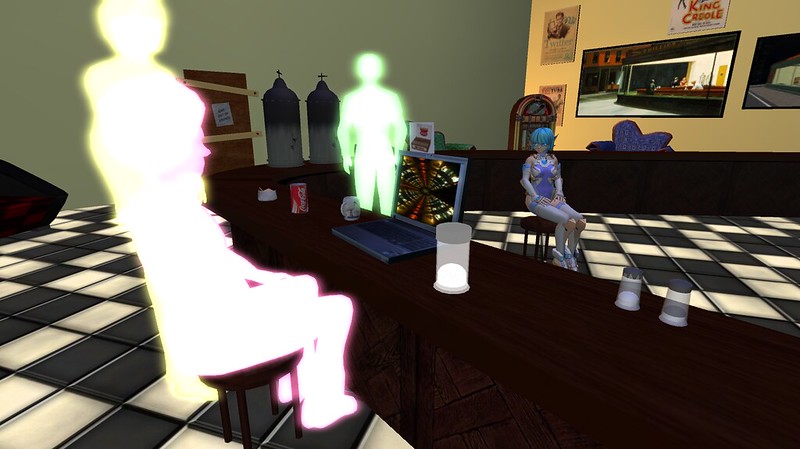
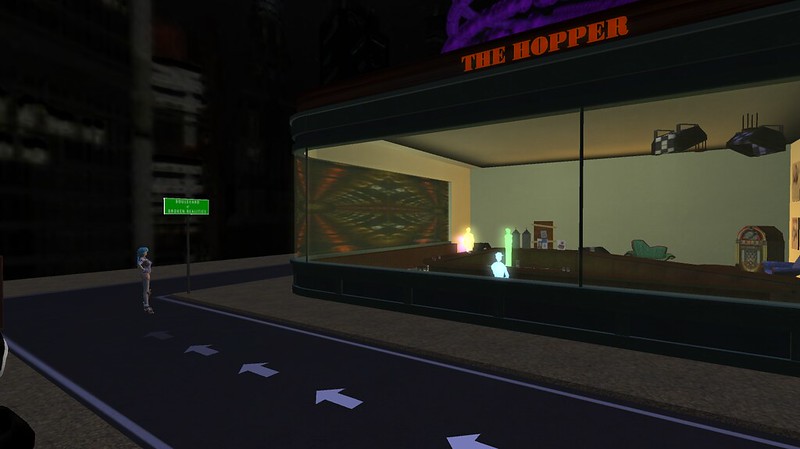
10. Visit a replica of Hopper's Diner
Snapshot4_017

Snapshot4_014

An obvious landmark to reconstruct in a virtual world, and famous for having been used as a visual reference for the "future noir" style of Ridley Scott's Blade Runner. Where Blade Runner faithfully reproduces the colour tones of Edward Hopper's "Nighthawks", here the lonely diner itself is faithfully reproduced as a physical 3D space to wander in and around. I feel a bit strange walking around it, standing outside looking in, sitting inside looking out - I wonder, by spending more time in the virtual Hopper diner, will the diner eventually appear in the maps of my dreams...?