Tuesday, 12 May 2015

The Ridiculous Handrail and other oblique functions

Several events conspired to keep me from writing here in the last few months; first, we found a beautiful new flat and moved to a hill on Haringey, where I ended up without internet for some weeks before travelling to Singapore and France, meaning that I was forced to tether to the slowest mobile internet in the world in order to send massive files to various printers and people, meaning that there was no bandwidth for uploading photographs and no time for my frivolous warblings on this blog.

ANYWAY! I’ve got a big backlog of writing to push out here, but I wanted to start off with a story of a curious handrail I saw at the National University of Singapore (my alma mater) when I was back there in March...
P3254584

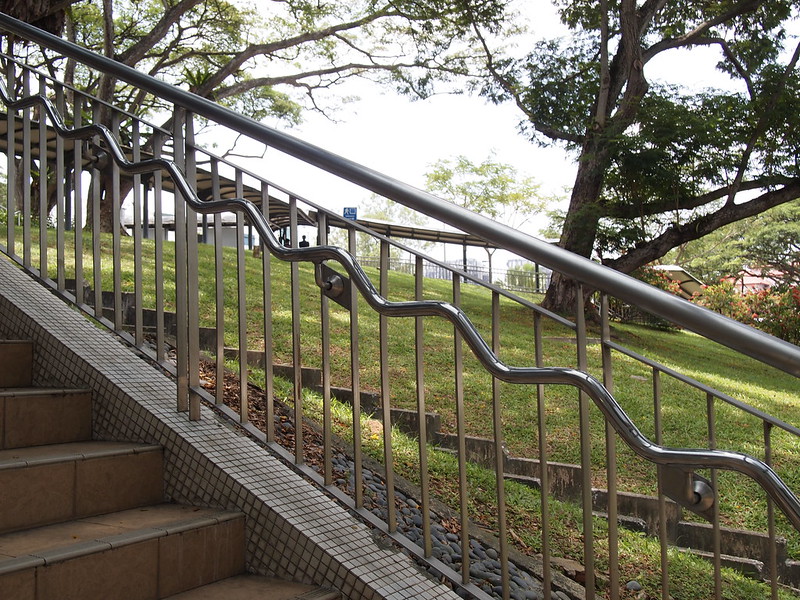
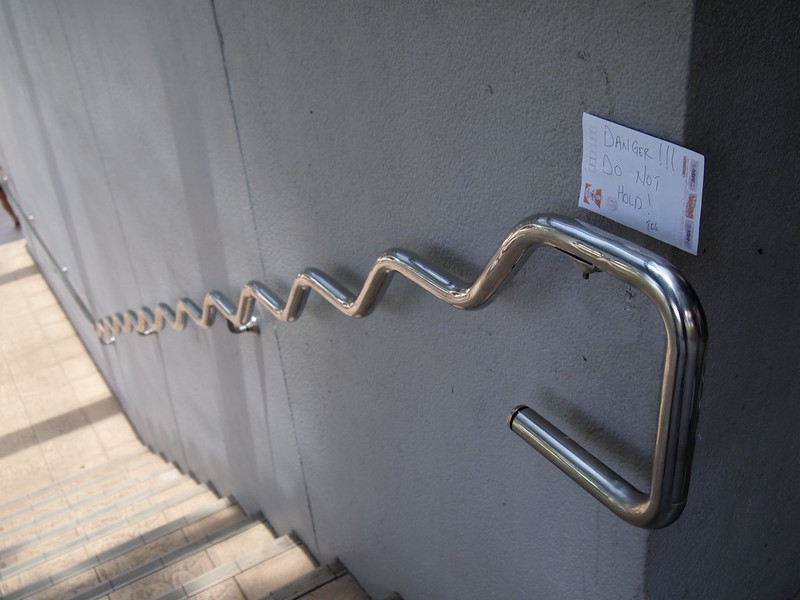
I was very amused by this redundant handrail design at Yusof Ishak House. When I saw it for the first time, I was not even sure if this was some practical joke or art installation of a handrail - for it was an awkward design for a handrail, and it wasn't even properly secured to the wall. If its in the same shape as the step below it, then how does one expect to run one's hands up it for support as one walks along? Who on earth made this handrail, or ordered its installation here?

Today all stairs of a certain rise are required to be constructed with a handrail. Although the handrail is defined within part of the building code itself in Singapore, which means that most stairs will require a handrail, it is more common to see the handrail designed separately from the stair, or considered separately from it.
P3254588

Someone had taken the initiative to warn users of its dangers - but only at the top of the stairs! (Too bad for the people at the bottom of the stairs)

I have always thought it apt that both National University of Singapore and Nanyang Technological University are constructed on hills and sloped land; I've spent significant time in both in the past and associated the stairs and slopes with a kind of semi-leisurely pursuit of knowledge - procrastinating on school work by obstinately lying down on the slug and ant infested slopes of NUS's AS3 for a picnic, scaling the turfed roof of NTU ADM and peering over for a laugh, conducting midnight walks to test out the urban myth of the "yellow line" which runs from Arts to Science; conveniently idle explorations of each universities' geographies as momentary distraction from one's studies.

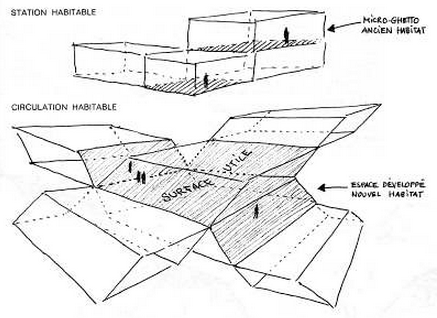
I’ve been reading the writing of Claude Parent and Paul Virilio on the notion of the Fonction Oblique (Oblique Function), in which they eschewed the verticality of cities for slopes and oblique planes. They propose an architecture of disequilibrium, using these oblique angles to express a kind of dynamism in the space - by changing our relationship with the horizontal. The idea would be that you would no longer need to find a chair, you only had to lie down on the slope; the stairs would be redundant if everything was constructed in angles, where we would be challenged to scale these ramps on our own. The conventional notion of the door, wall or pillar and so many other things would potentially be transformed if we thought of it as a "domestic landscape" and designed everything in an oblique fashion.
slope2

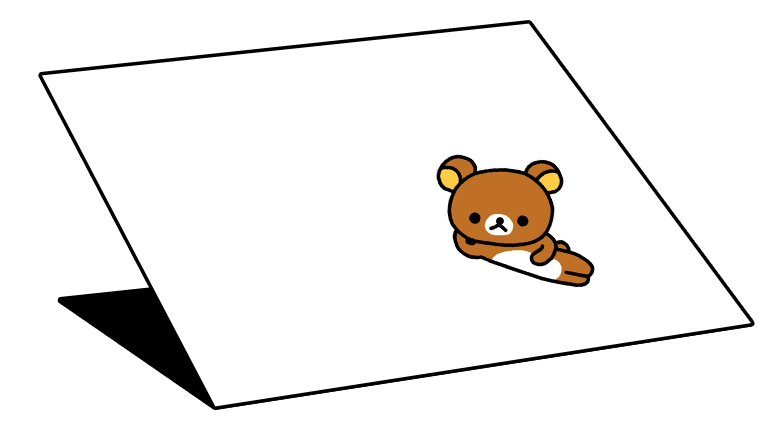
On an aside, it explains why I like the Rilakkuma bear so much. It is never pictured with furniture, yet it is always at rest, lounging in abstract space. It doesn't need a chair or sofa because it can just lounge on some imaginary sloping surface. As a consciously designed toy character, it was made to convert any surface into "a napping space" with its body.
Screen Shot 2015-05-12 at 11.18.33 am

I suppose I am attracted to the idea (or reading about it) partly because for me the slope cannot be separated from the sensation of vertigo. I suspect that I experience more vertigo than the average person - it is something I've developed only in adulthood and for me it is a complete mystery where it came from! I feel a lurching sense of vertigo in moving lifts, on swings, whilst standing on breakwaters or on piers, and am consistently reduced to crawling on all fours on anything that is a little more steep than usual.

In recent years I have developed more and more vertigo, to the point where if my feet are completely concealed from my view, then I cannot balance or even ascend or descend a flight of stairs. Normally I have zero problem with stairs, but if I am carrying a big box that hides my feet from my view then I am suddenly unable to use the stairs! I don't know where this came from. I got stuck in the tube recently with a heavy big box with the prospect of taking a few more connections home, and after googling ahead to see if the stations had disabled ramp or lift access, I saw there was none so I gave up and took a cab. There is no physical reason why I cannot go up and down stairs if my feet are concealed from view, yet for some reason, I find it really difficult!

Vertigo seems to present itself as a physiological sensation that is caused directly by my experience of space itself, and I can either read it as something which is there to warn me or dissuade me from going further (if this is part of my primitive fight-or-flight response to mistakenly perceived danger), or it can be read something which excites me by being physically challenging. I think I prefer the latter reading, unless I get stuck in one place for too long and end up requiring rescuing, like a cat stuck on a tree.
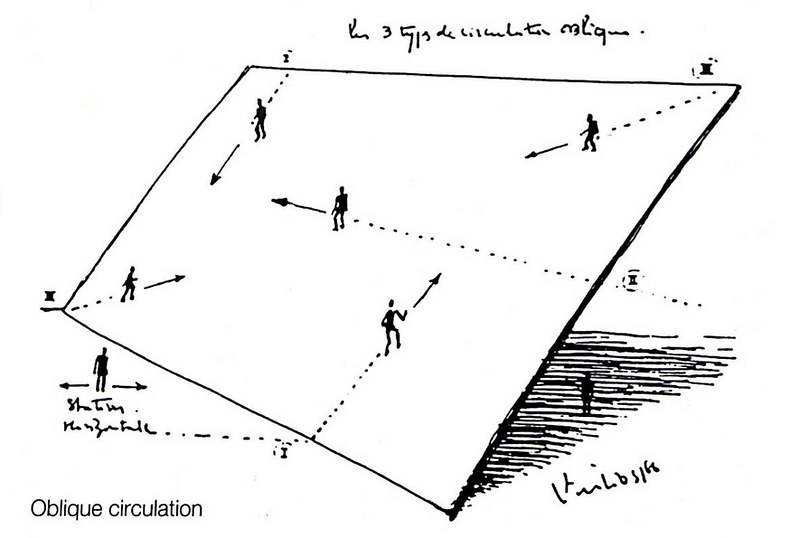
slope

For me, it reminds us that the surface that we stand upon doesn't have to be a calm, generic flat plane which is there to reassure us of the rationality and stability of the world we live in. Perversely, I suppose that maybe the idea of installing a ridiculous handrail is a bit like that...

Tuesday, 17 February 2015

The Spherification of Edible Liquids for Impatient People

P2174381

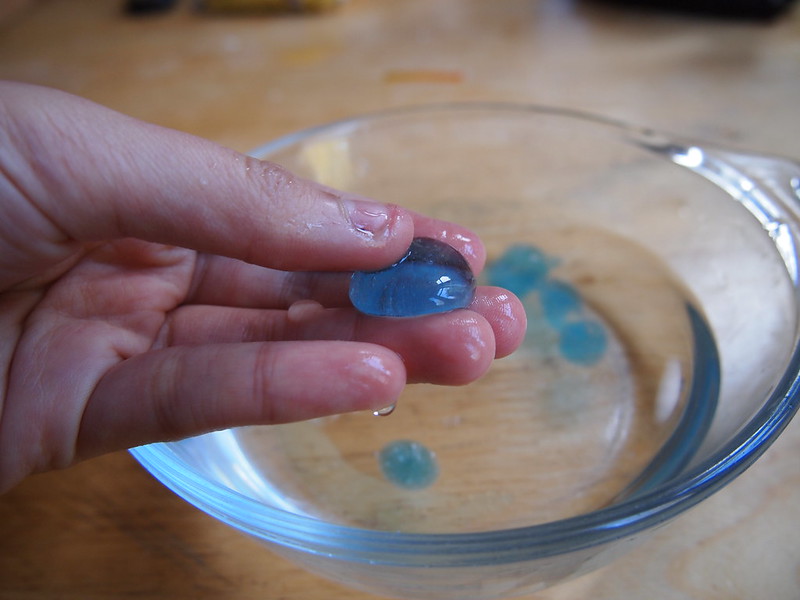
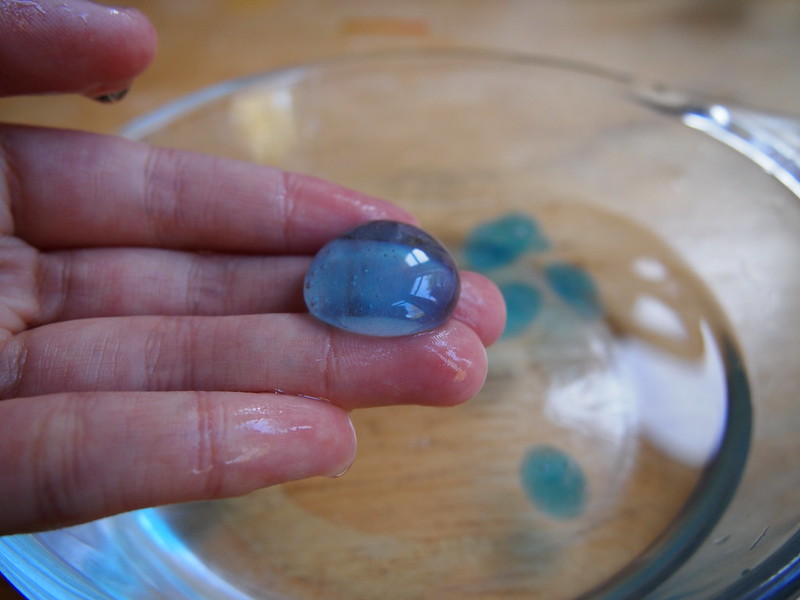
After a few hits and misses doing spherification experiments over the last few years for fun, here is a collation of some personal observations or lessons learnt about spherification that people don't generally seem to explain properly in all the other recipes or online posts about spherification.

Basic Spherification
1% Calcium Lactate Bath (1g to 100g mixture)
0.5% Sodium Alginate Mixture (0.5g to 100g mixture)

Reverse Spherification
0.5% Sodium Alginate Bath (1g to 100g mixture)
1% Calcium Lactate Mixture (1g to 100g mixture)
[better for milky/alcoholic mixtures]

Why do some people use Calcium Lactate instead of Calcium Chloride?

I noticed a lot of people online have suggested that people can use Calcium Chloride. The problem is that I don't like Calcium Chloride because it has a salty/bitter taste, where as Calcium Lactate doesn't really have a taste. You can "wash" off the salty taste in water, but the fact is that I don't really like Calcium Chloride, after I learnt that Calcium Chloride reacts strongly to humidity. I brought a bag of it from London to Singapore, and my double-plastic-wrapped bag of Calcium Chloride must have gotten a tiny hole in it, which allowed the humid air in, and next thing I knew I had a mysterious chemical spill on my wooden floor which was near impossible to remove. Turns out that if Calcium Chloride is exposed to humid air, it will absorb a few times of its own weight in water. I have never heard of such a ludicrous thing happening with Calcium Lactate. And since I really don't want to worry that one day my food chemicals will be reduced into a big puddle of water in my toolbox, I'm steering clear of Calcium Chloride from now onwards just to be safe.

Do I really need to use distilled water?

Yes, this is very important because many cities have very hard tap water, even if you use boiled water or water filters. This means that all your alginate mixtures will become very goopy instantly if you don't use distilled water. London tap water causes the sodium alginate to start its gelling reaction almost immediately. Even the utensils should also be washed in distilled water before and during use, otherwise gelling will occur on them as well when preparing the bath or mixture.

Do I really have to wait 24 hours for the bubbles to leave the Alginate bath/mixture?

The bubbles can be really huge. If you don't care about the bubbles like me, then don't bother leaving it overnight. I find it still works the same, just not as pretty and perhaps disrupting the illusion of it being a perfect sphere of liquid. Also if you used tap water (eg London) then you will already have huge bubbles whilst stirring because the gelling will have started by now and you will have stirred bubbles into the goopy alginate bath.

Do I really need an immersion blender?

It would be ideal and it really makes a difference. But it will work even if you don't use an immersion blender or hand blender to mix it up. You can also use just a spoon, if you're all DIY or lazy like me. But remember, that for some reason all of these chemicals HATE to be dissolved into water and you will spend what seems like hours grinding a spoon into a big bowl of water and powder and screaming at the bowl of water.

Is it really necessary to pre-freeze the mixture into half-spheres for Reverse Spherification?

You will have seen the half-sphere silicone moulds, seemingly sold on every other molecular gastronomy webstore. The reason why people do this is that it does truly takes skill to make the shapes spherical with the Reverse Spherification process. You can't just "drip" it into the bath, half-heartedly, (as you might do with Basic Spherification, and get away with it). You have to throw or plop it down bravely, but yet not too much otherwise it will hit the bottom of the bowl and become flat, which I find to be quite difficult to do. Basic Spherification seems to be more forgiving in terms of technique, you'll probably end up with something roundish even if you have poor hand-eye coordination. So in order to give their spheres a better chance of having a better shape when doing Reverse Spherification, people pre-freeze their mixtures into half sphere shapes.

What if I "guess-timated" the amounts and it doesn't work? How can I fix this confusing gloopy mess?

After several "guess-timation" failures on my part, I've learnt that this is a matter of understanding the ratio/texture that the mixes ought to reach - it mainly means that the concentration for either the alginate or the calcium is inaccurate, and usually it means it was too little. So as a possible way of fixing things, for basic spherification, add slightly more alginate to the mixture, and for reverse spherification add slightly more calcium to the mixture. For the alginate, the goal is to reach 0.5%. For the calcium, the goal is to get to 0.18% calcium, which is usually 0.5% Calcium Chloride, 1% Calcium Lactate, and 2% Calcium Lactate Gluconate.

P2174382

P2174383

And finally, yes, if you squeeze your spheres, they can and they will explode.

I'd love to hear from other people who have been playing with their foods like I have. Are there other tips or suggestions for impatient people who want to do some spherification of their edible liquids?

Tuesday, 10 February 2015

RiTA Toolkit: Markov and other text experiments for the Masses

This week I became aware of Markov generators for the masses! Yes! Now anyone can have instant word glossolalia! And now up to 200% more easy to use! Because the future is already here! The future came and then left the building some time ago! I think it came around last tuesday, did you miss it? Did you not already hear?? Aw man.

TO DEMONSTRATE THIS I WILL PROCEED TO WRITE THIS POST IN UNDER 5 MINUTES!!!

The challenge was to find the easiest way to do a markov generator mashup of two texts. A friend who was unfamiliar with programming asked me what was the easiest way to make a text mashup. Recently I saw Pete's Unpredictive Text installation at the WIP show and I found out he was using a library called RiTA so I downloaded it and realised it was oh so so so simple to play with...
First you need to install Processing, and then you have to install the RiTA library into Processing. I had almost forgotten how to install libraries actually, due to not using Processing in some months, but the long and short of it is that you just need to find the "Processing" folder which will have been automatically created in your Documents folder when you installed Processing.

On a mac it will probably be
MacHD/Users/Username/Documents/Processing

On a windows it will probably be
C:/My Documents/Processing

In this folder you create the folder "libraries" and copy in the "library" folder which will be inside the RiTA zip package you downloaded. The library should now be here like this:

/Processing/libraries/rita/library/rita.jar

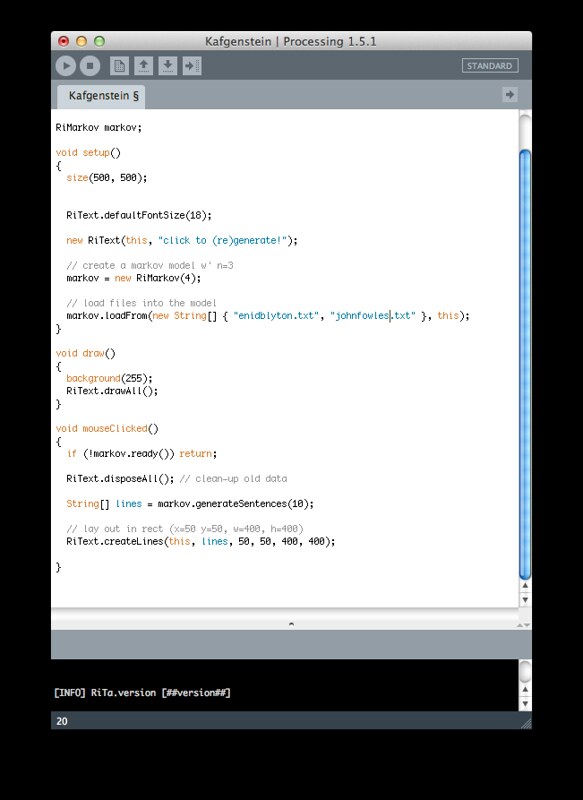
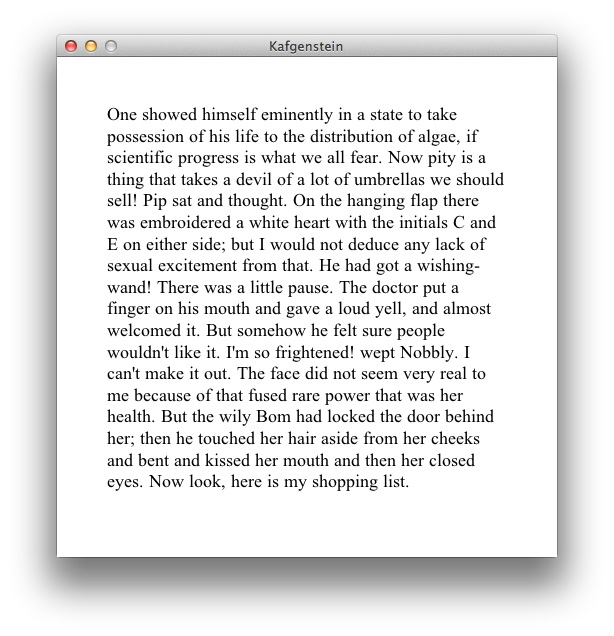
Look in the examples folder for Kafgenstein.pde. That's the kafka+wittgenstein mashup. The text files are in the folder /data. Make your own text files, substitute them in the markov.loadFrom line.

Screen Shot 2015-02-10 at 1.01.16 pm

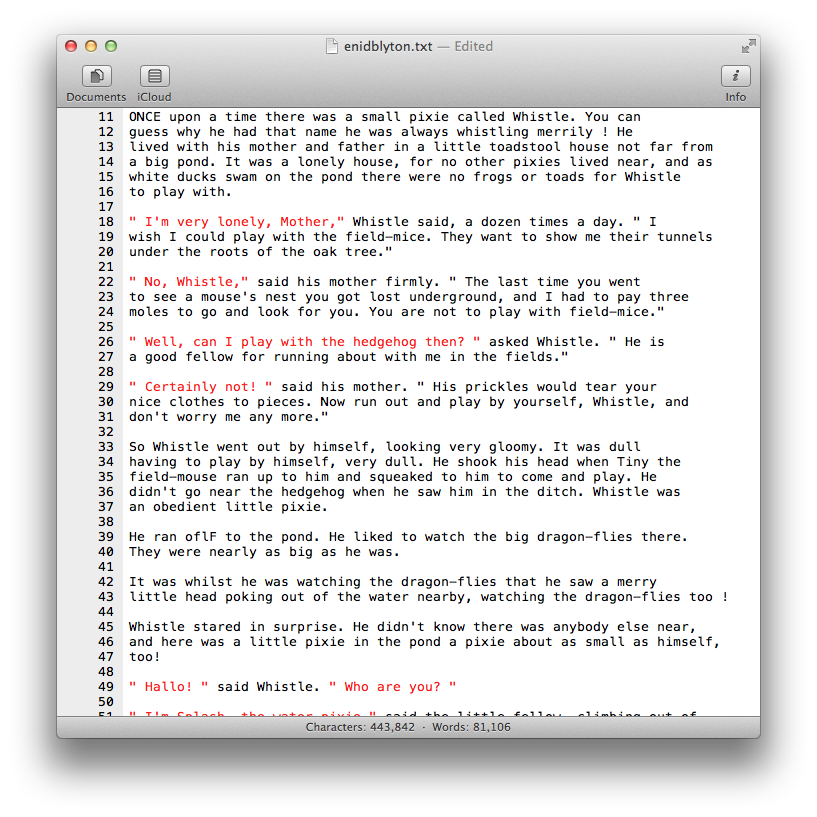
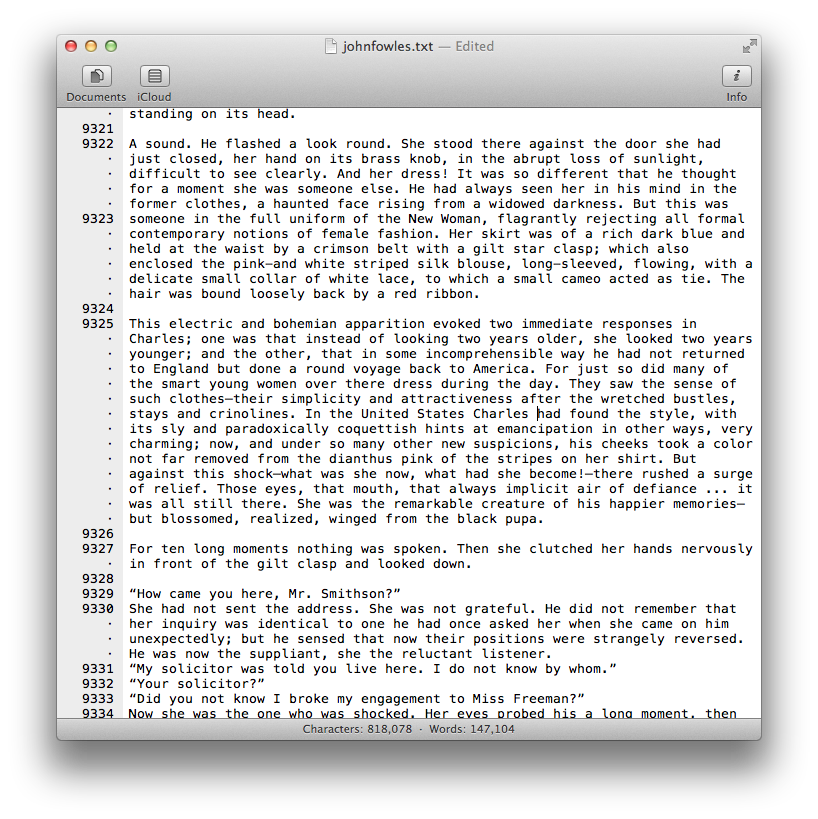
Here is Enid Blyton's Holiday Book meets John Fowles' The French Lieutenant's Woman.

Screen Shot 2015-02-10 at 1.08.05 pm

+

Screen Shot 2015-02-10 at 1.08.03 pm

=

Screen Shot 2015-02-10 at 1.01.09 pm

The other examples are equally interesting to play with.

No need to thank me. All thanks to RiTA.


Actually I lied, this post took 15 min to write cos, y'know, it takes time to make screenshots and upload them.

More of my previous markov experiments here:
Ghost Trap - Markov Text Generator
A Dream Generated from Other Dreams

Google Street View Vanishing Point

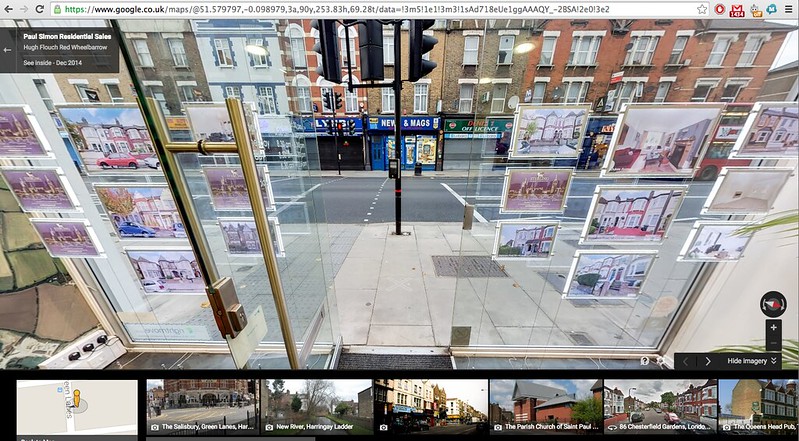
Drowned in a dozen different digressions at once! The news in my side of the woods is that me and G are moving house to Green Lanes next month, to a lovely place with a conceptual shed on the Haringey Ladder, one minute from Haringey Station. We began snooping around in Street View and discovered oddly that many businesses in Green Lanes have got INTERIOR STREET VIEW. You can look inside individual businesses….

Screen Shot 2015-02-04 at 10.28.16 pm

I’m on the inside... looking outside...
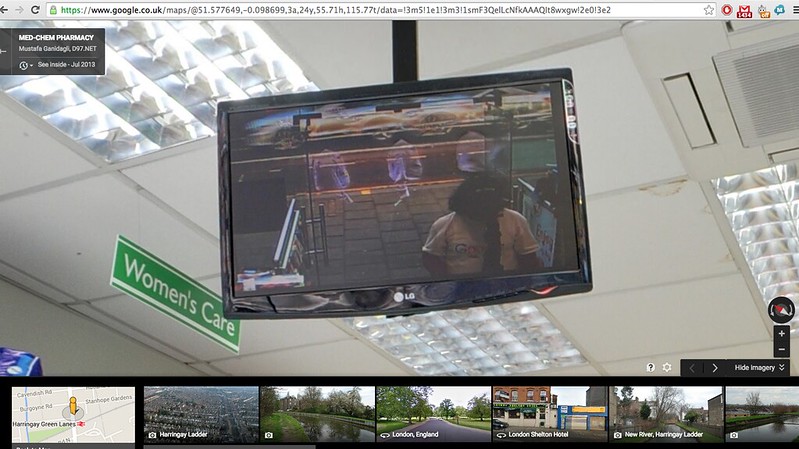
And you can see the different street view operators themselves in CCTV cameras at times if you zoom in…

Screen Shot 2015-02-04 at 10.17.05 pm

Why hello there...

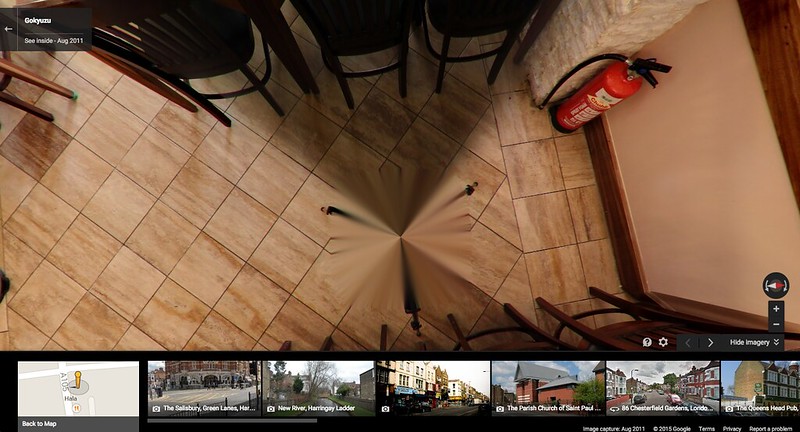
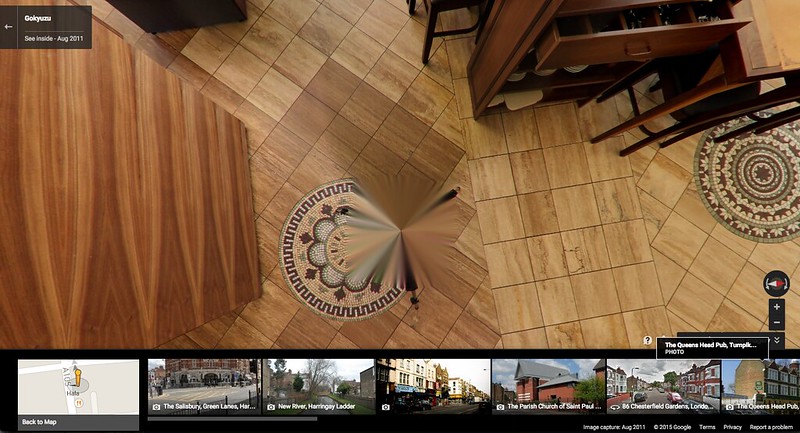
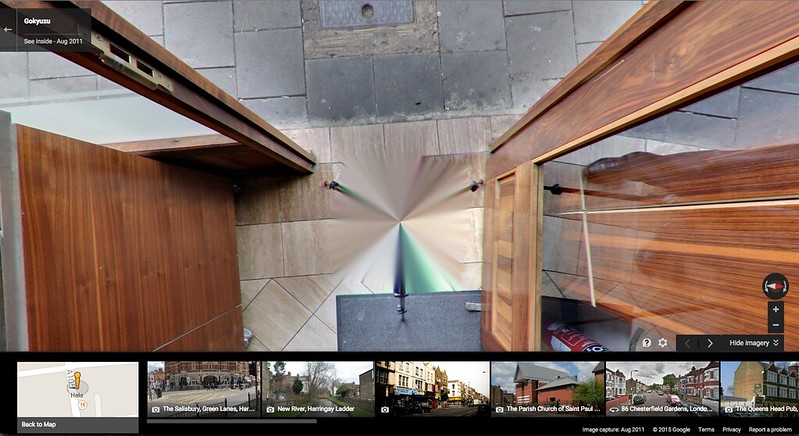
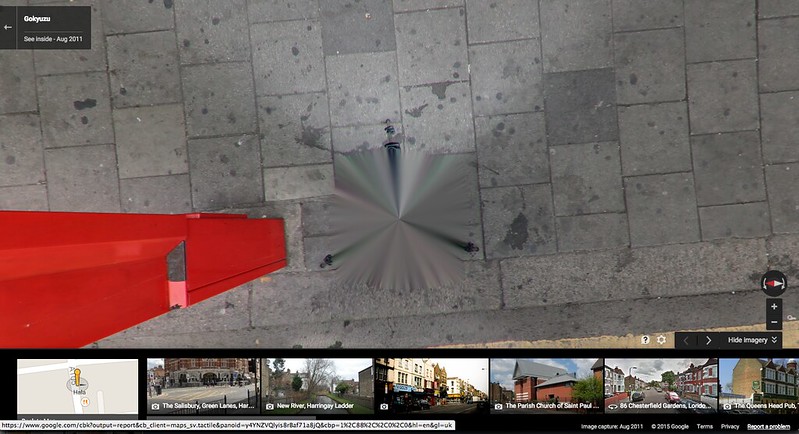
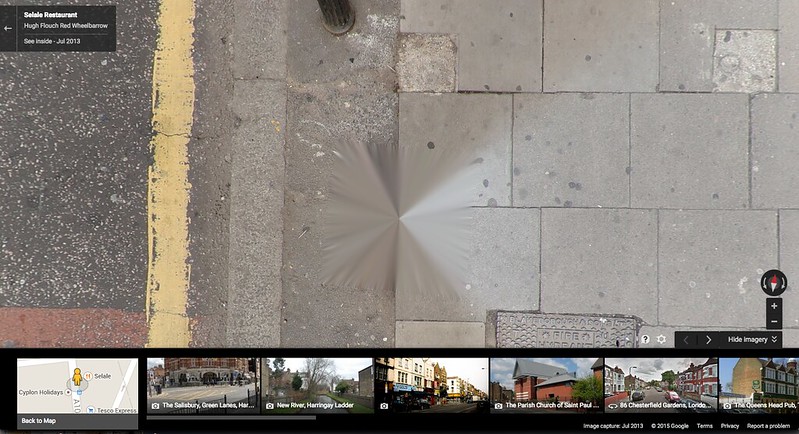
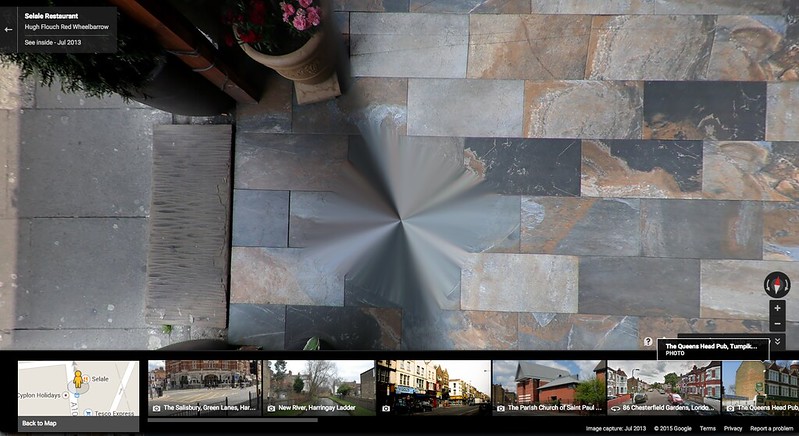
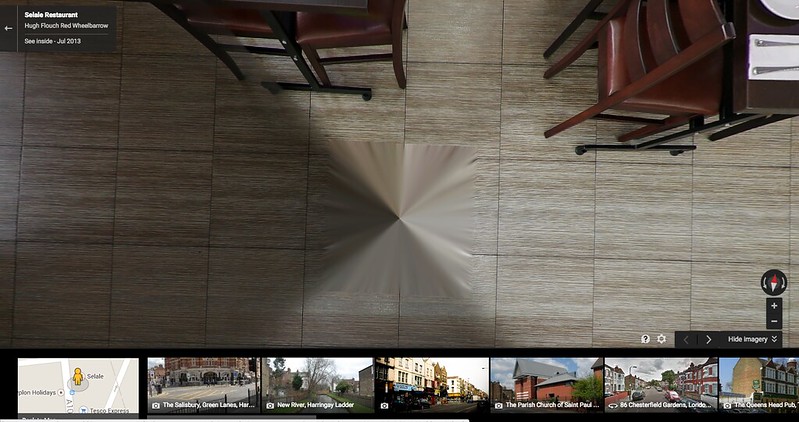
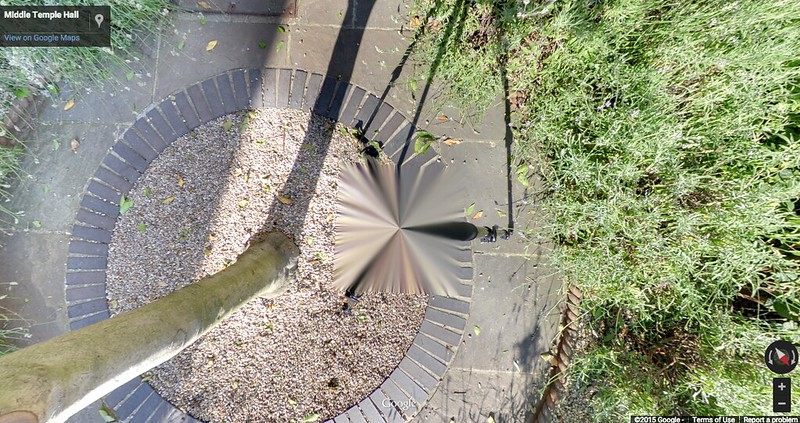
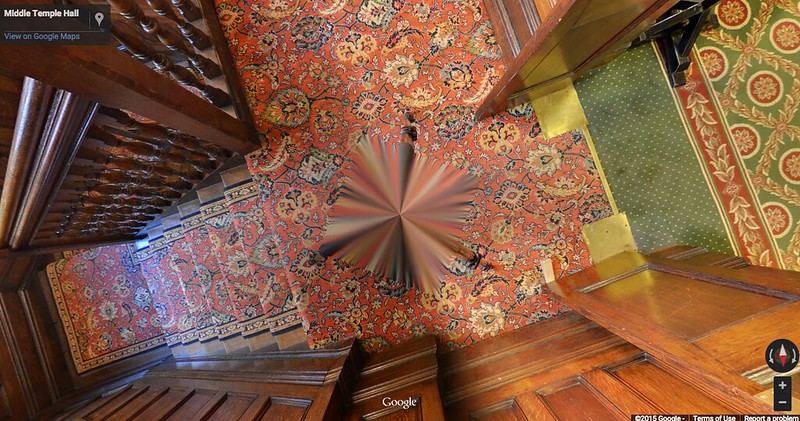
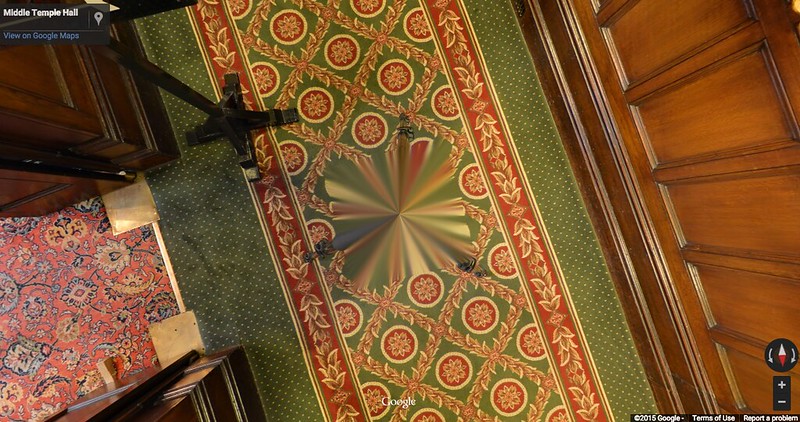
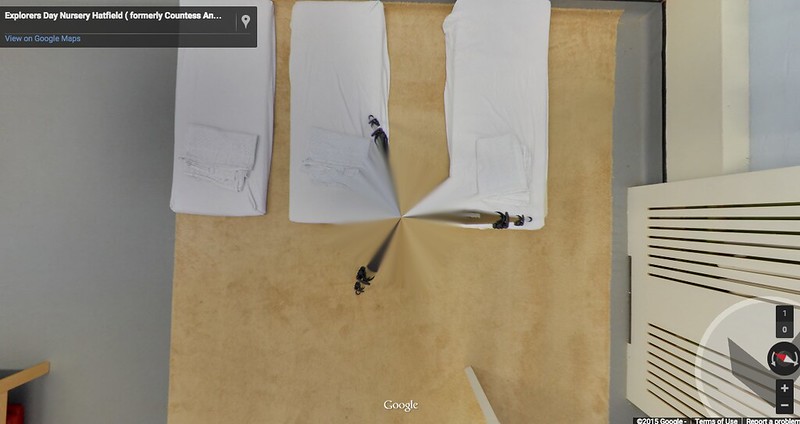
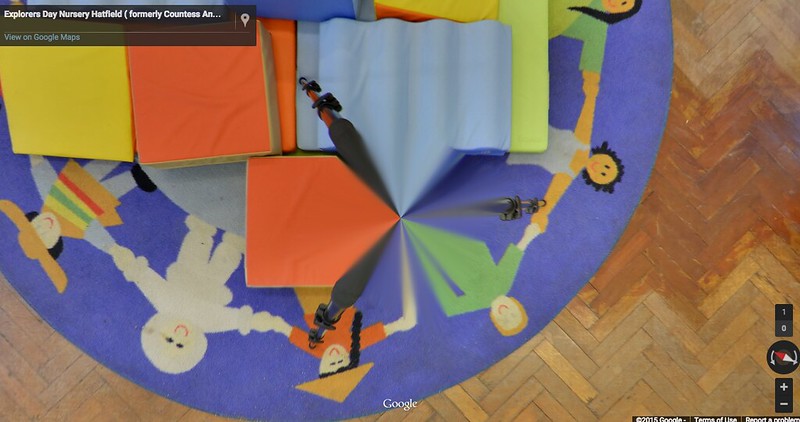
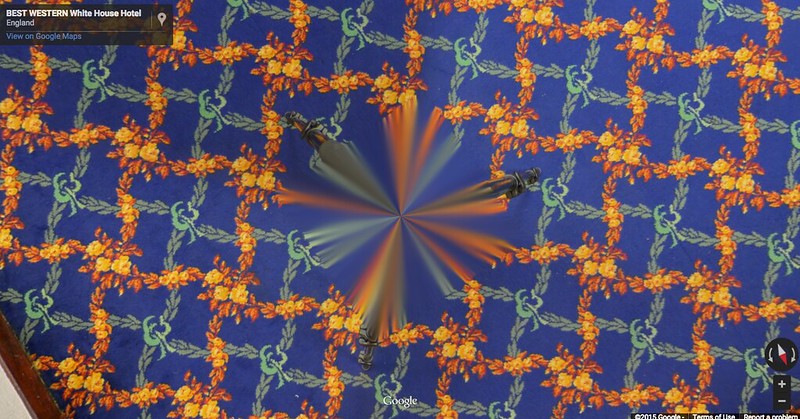
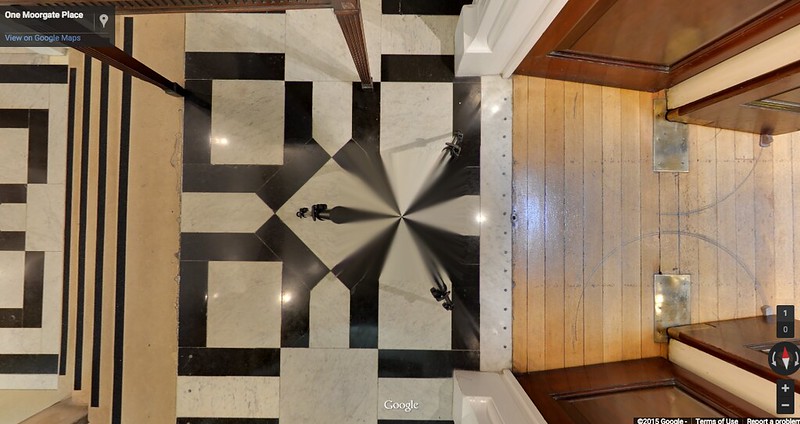
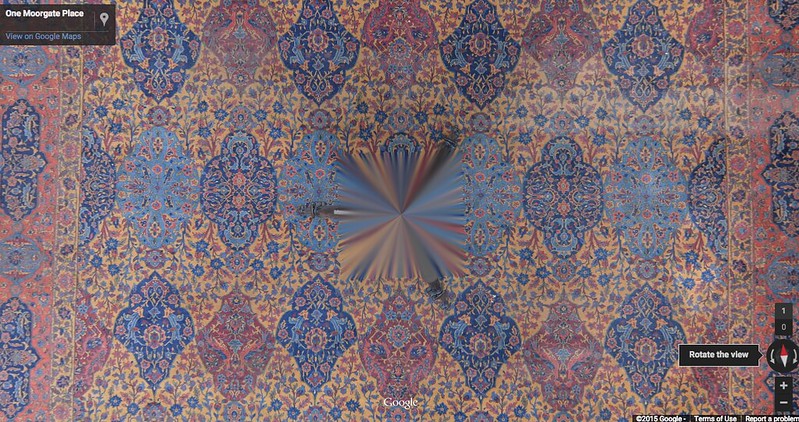
In fact these interiors open up a whole world of exciting opportunities, full of mirrors and reflections and cctv cameras feedings back into a loop of street view. But one of the things I noticed was that interior street views often have a “vanishing point” if you look at the ground….

Screen Shot 2015-02-04 at 10.38.56 pm

Screen Shot 2015-02-04 at 10.38.36 pm

Screen Shot 2015-02-04 at 10.38.11 pm

Screen Shot 2015-02-04 at 10.38.01 pm

Screen Shot 2015-02-04 at 10.35.54 pm

Screen Shot 2015-02-04 at 10.35.38 pm

Screen Shot 2015-02-04 at 10.35.46 pm

Screen Shot 2015-02-04 at 10.35.02 pm

I went to google and it seems these interior street views are now an independent thing where approved photographers can do it on behalf of street view, so a photographer must have gone around and done it for the businesses up and down Green Lanes in particular. Browsing through a list of approved photographers for street view in London, you can look at some of the general galleries of interiors they have shot in London, for example:

http://www.biztour.co.uk/portfolio/
http://weeks360.com/gallery.php
http://idealinsight.co.uk/360-google-virtual-tour-portfolio/

Screen Shot 2015-02-10 at 12.12.47 pm

Screen Shot 2015-02-10 at 12.12.20 pm

Screen Shot 2015-02-10 at 12.12.12 pm

Screen Shot 2015-02-10 at 12.11.02 pm

Screen Shot 2015-02-10 at 12.10.42 pm

Screen Shot 2015-02-10 at 12.09.36 pm

Screen Shot 2015-02-10 at 12.10.02 pm

Screen Shot 2015-02-10 at 12.10.08 pm

See more:

"Google Street View: Capturing the World at Street Level" (Dragomir Anguelov, Carole Dulong, Daniel Filip, Christian Frueh, Stéphane Lafon, Richard Lyon, Abhijit Ogale, Luc Vincent, Josh Weaver. Computer, vol.43, no. 6, pp. 32-38, June 2010, doi:10.1109/MC.2010.170)
Google Business View

Tuesday, 20 January 2015

Singapore Discovery Centre: Feedback loops and desired outcomes

P1083801

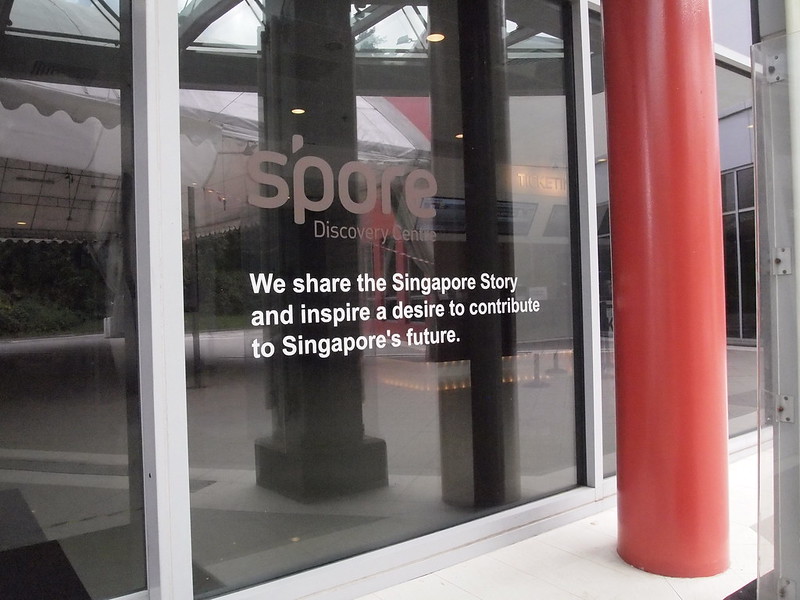
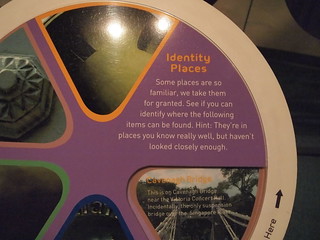
Ah, the Singapore Discovery Centre, that mind-melty goosepimple-inducing centre of national propaganda story! One marvels that its architects have exercised restraint in not making it a giant merlion shaped building. Once upon a time it might have become a historical-oriented military museum, but it was eventually turned into more open-ended museum of "Singaporean-ness", and perhaps that is why it seems to employ an unusual way of describing itself.

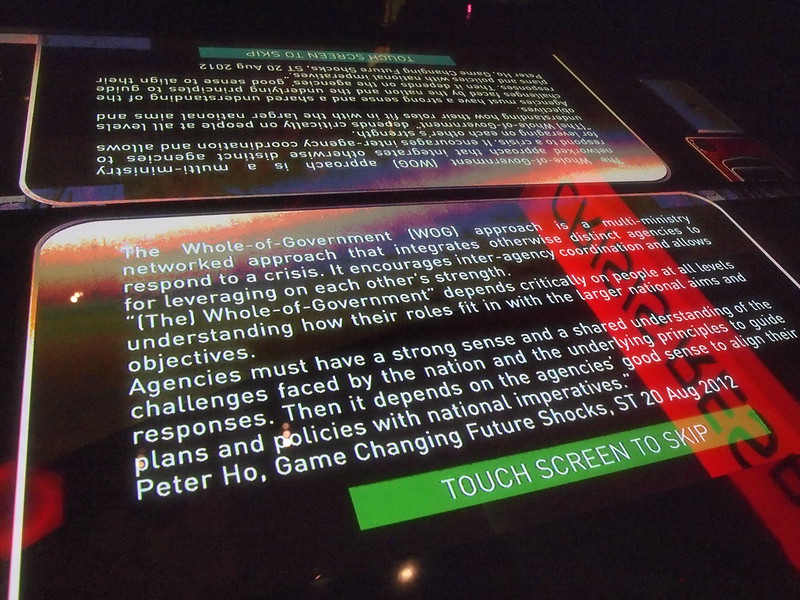
A military force always has a clear common purpose, as set out by its commander, binding all of its forces together. So when attempting to describe an army or civil defence force, you would not describe what it is or who it is, but instead you would describe its desired outcome and how it will manage to achieve this outcome, which is a very peculiar sort of self-description. Being a fan of cultural mistranslations, I actually think the charm of SDC for me is that it is not very nuanced in how it attempts to be didactic, as its rhetoric is so overwhelmingly goal-centric as to be somewhat blithely transparent.

P1083819

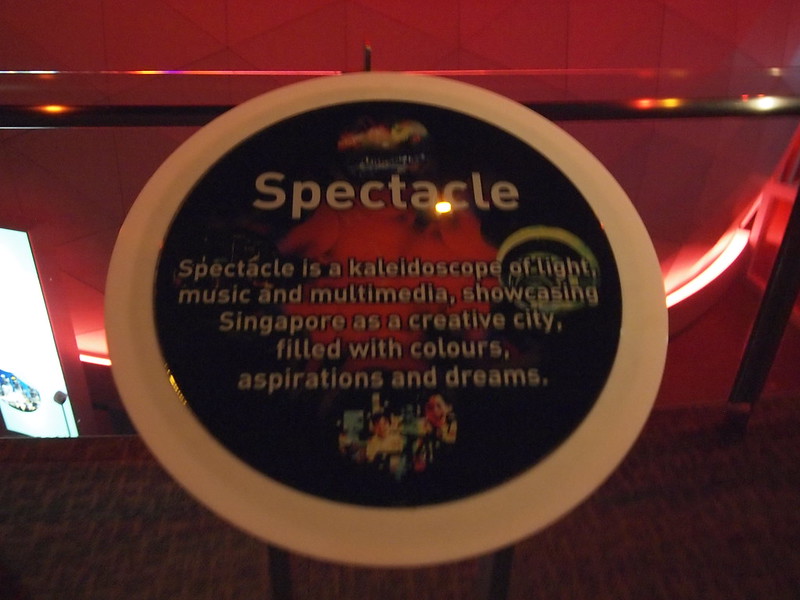
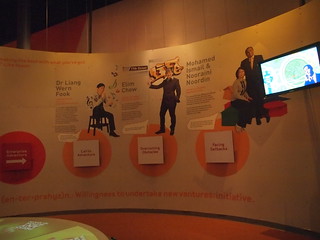
This is an exhibit description best kept inside the brief for the exhibition design, but NO WORRIES WE CAN JUST REPRINT IT HERE just in case you needed to know what was the aim of this exhibit. Singaporeans will be used to this. (If we describe it as a showcase of Singapore as a creative city, will the showcase become even more successful at being a showcase of Singapore as a creative city - OR WILL SINGAPORE EVEN BECOME MORE CREATIVE? Who knows where it ends??)

P1083812

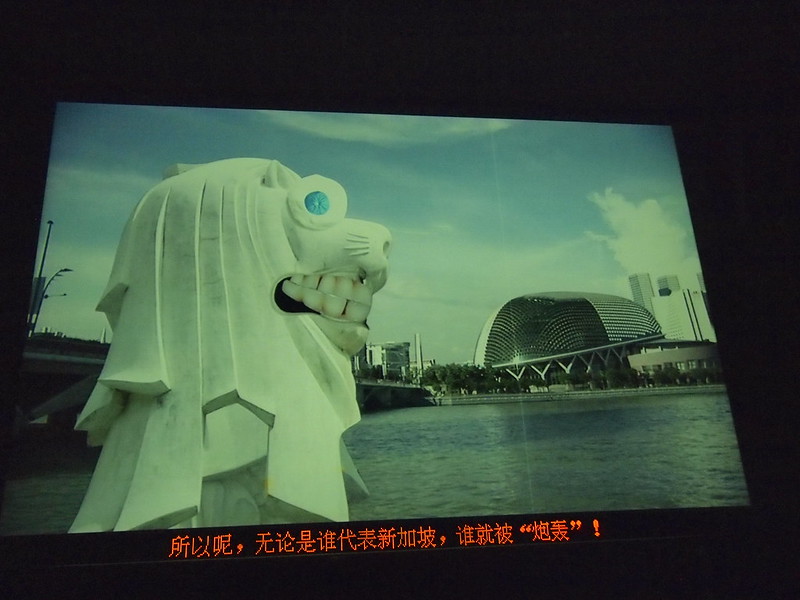
Merlion with knowingly askew glance, gritted teeth in embarrassment for not being sure if its authentic or not. The poor thing, a whole song and dance routine dedicated to its cautious ambivalence for existing.

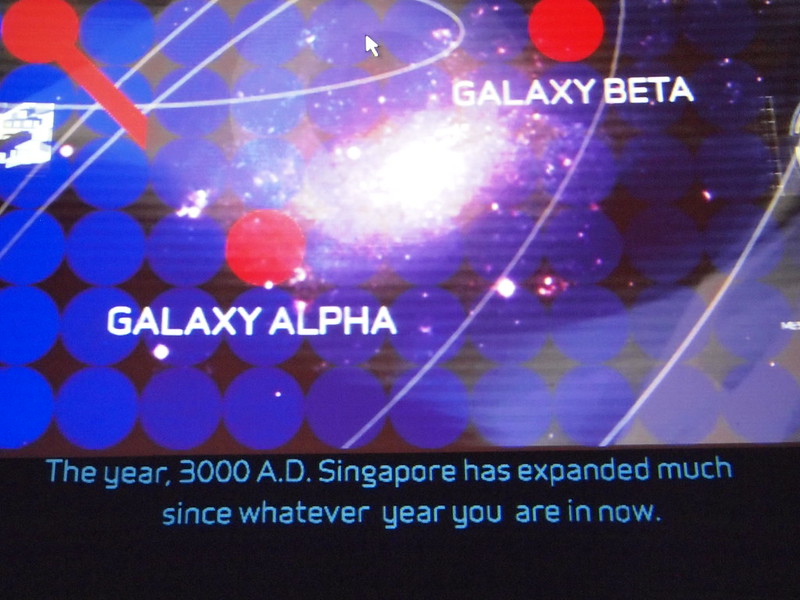
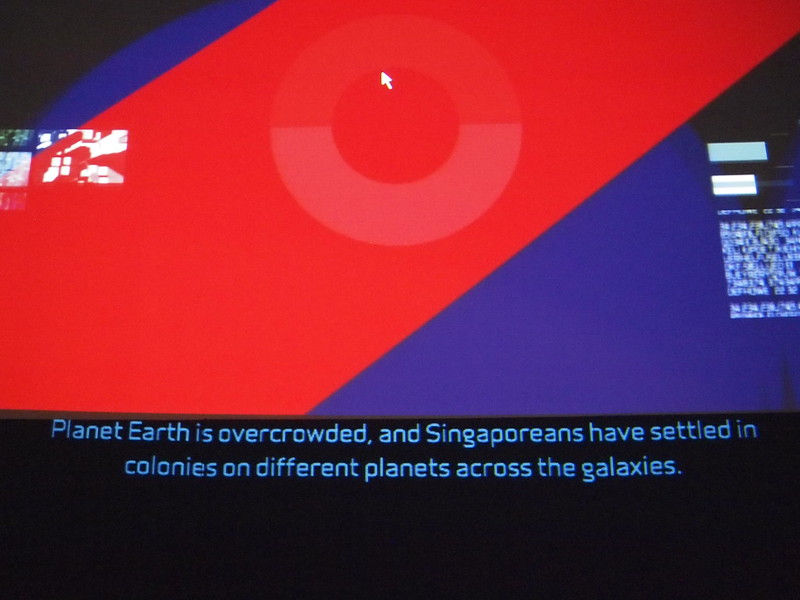
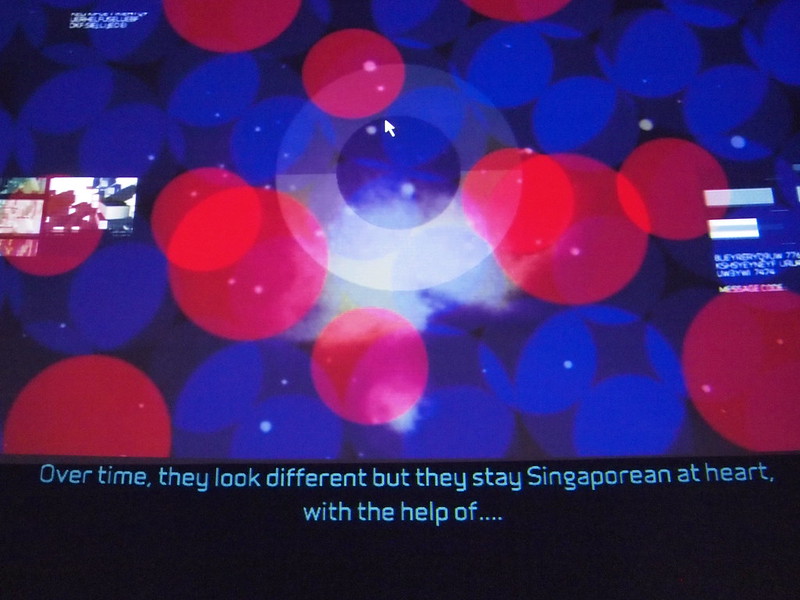
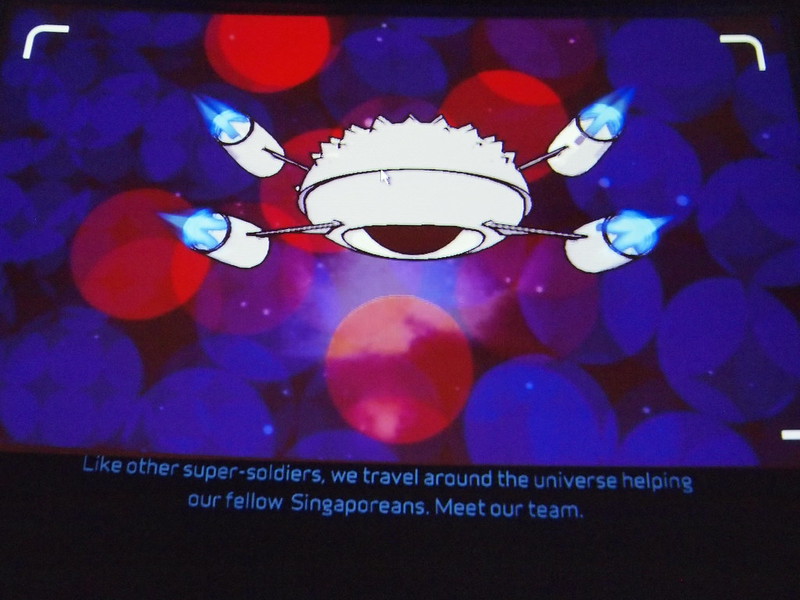
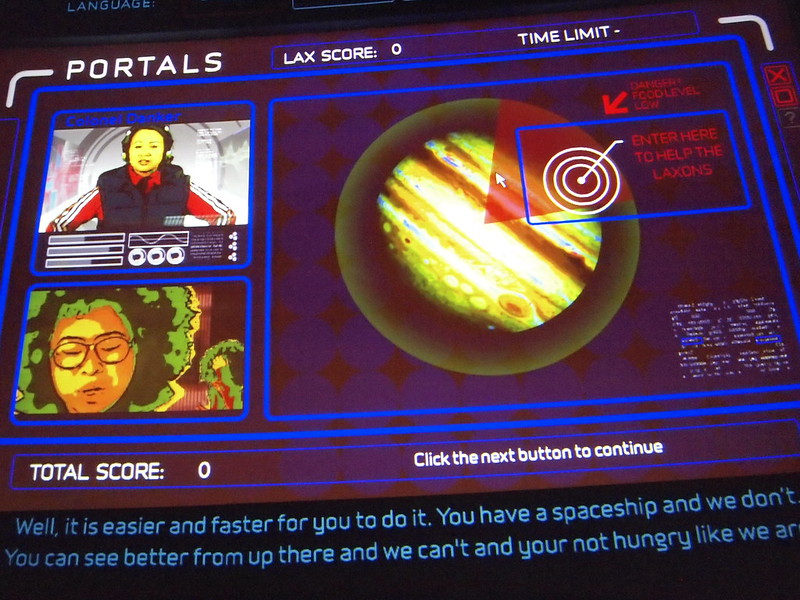
Here follow a couple screencaps of an interactive describing a fantastical future scenario:

P1083820

Children, we're now in the future.

P1083821

P1083822

P1083823

P1083824

P1083825

P1083826

Problem: this bunch of Singaporeans have run out of food. They want you to get them some.

P1083827

Uh-oh! If you don't solve the maze puzzle, everyone will starve! Well then, they should have been more resourceful and not depended on other people to bring them food! Now what other story does this sound like? Hmm...

P1083829

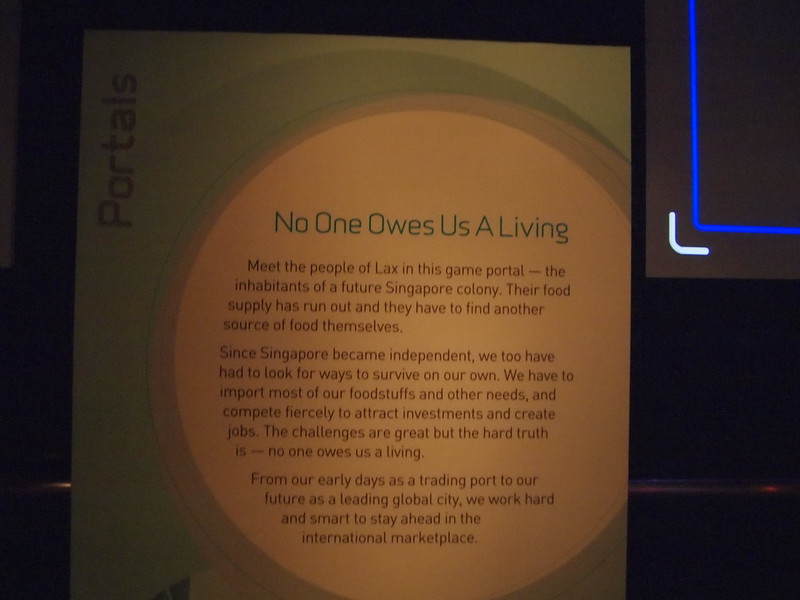
"NO ONE OWES US A LIVING"
Sounds like something your parents might say to you, instead of the tagline of a museum exhibit. The beauty of this place is that it was not made for tourists. It was just made for Singaporeans. By the way, it costs 10 buckaroos for the tourists to come in whereas its free for Singaporeans (Sorry George). Just sayin'.

P1083834

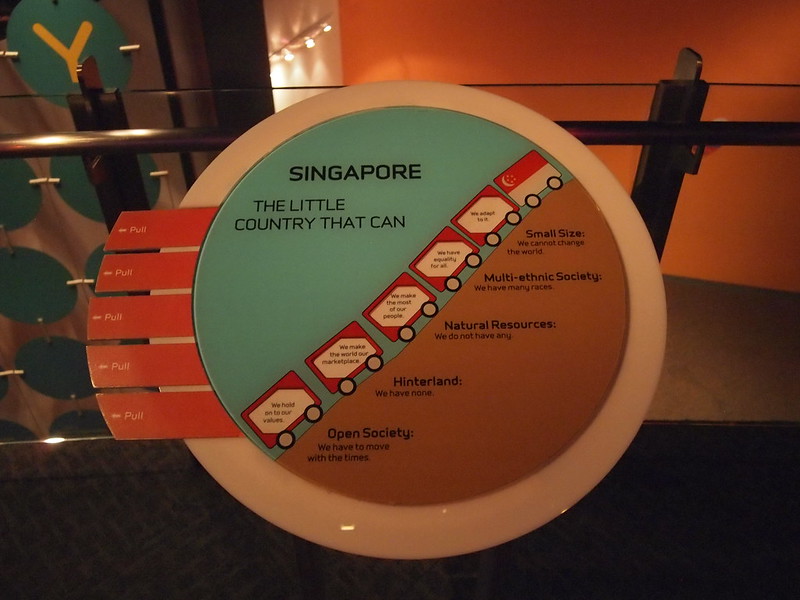
"THE LITTLE COUNTRY THAT CAN"

P1083837

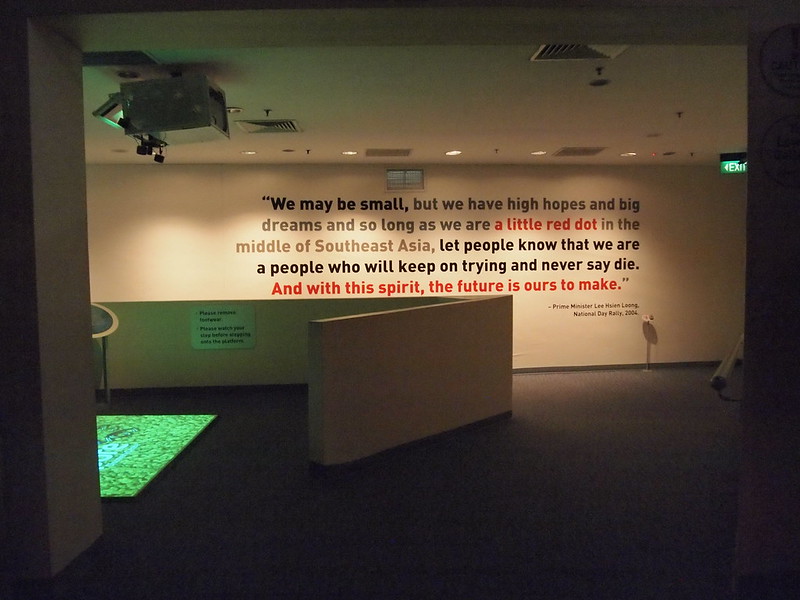
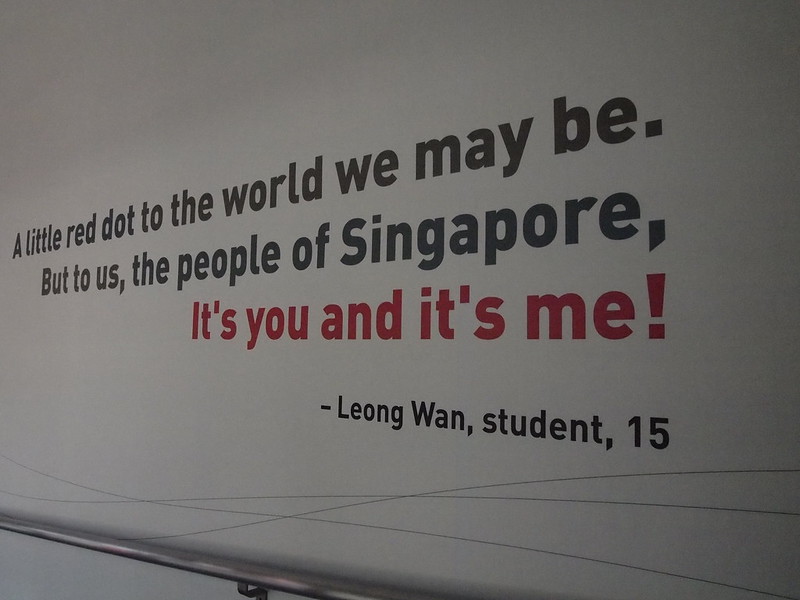
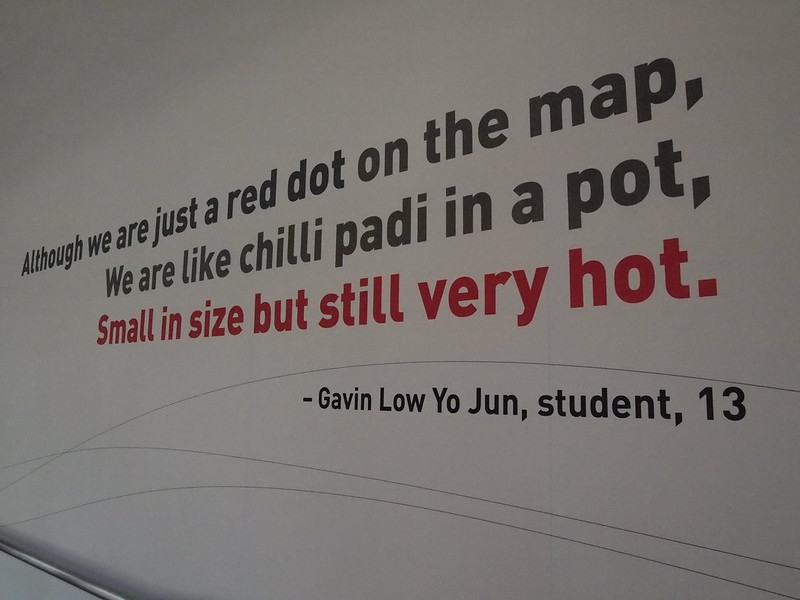
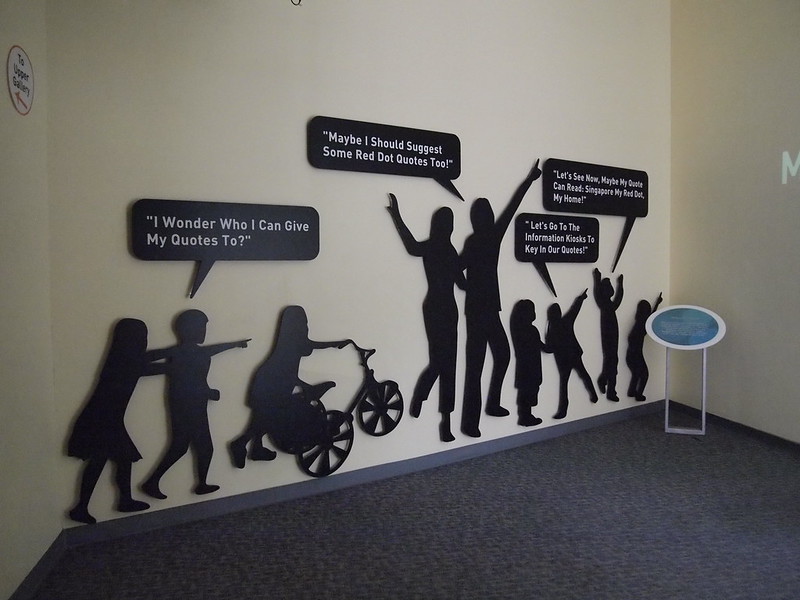
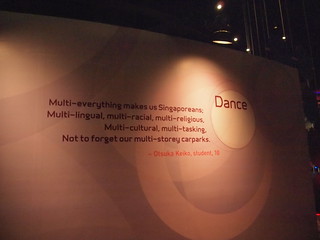
Here begins an endless barrage of little red dot quotes, first inspired by Habibie's denigrating description of Singapore as nothing more than a "little red dot" (as it is commonly depicted on maps, as it is too small to be perceived at some scales), a description which has since been co-opted by many Singaporeans as a point of pride - that a little red dot can do so much. It seems fine at first, but by the time you get downstairs and see all of the quotes of so many little children writing terrifyingly trite well-wishing things about little red dots that all sound like they're about to go into some end-of-year autograph book to Singapore, you'll be running for dear life through the corridors.

P1083842

P1083843

P1083840

Ugh ugh ugh nooooooooooooooo

P1083850

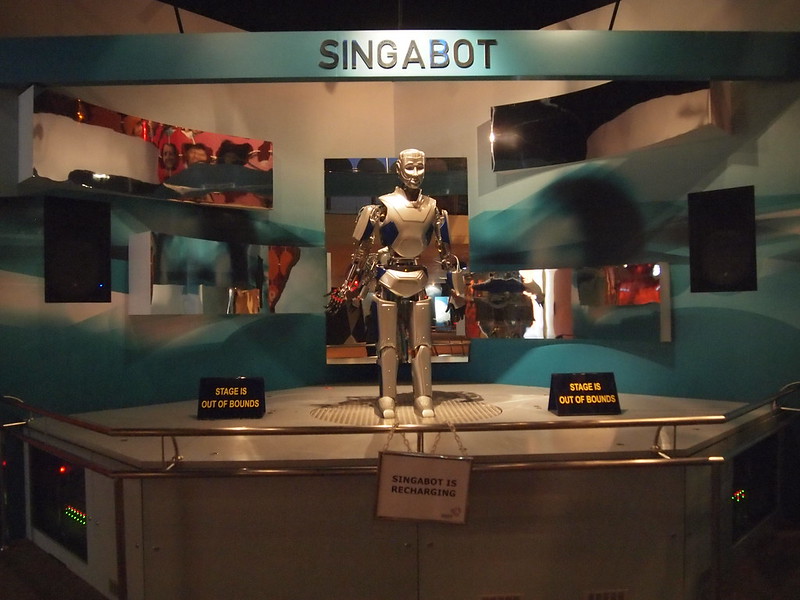
ALAMAK? Recharging? I'm afraid that now we won't ever know what the Singabot was for...

P1083855

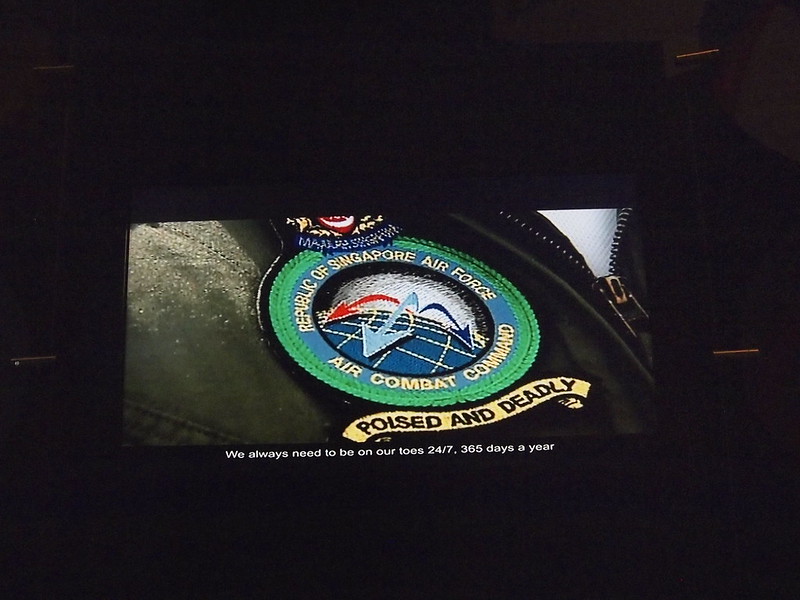
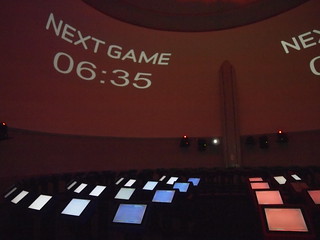
Naturally, in such a place, there must be a section dedicated to military simulation games. I think these games probably would be good if there were more people, but at the time of our visit we were probably the only two visitors present in the entire centre, so....

P1083861

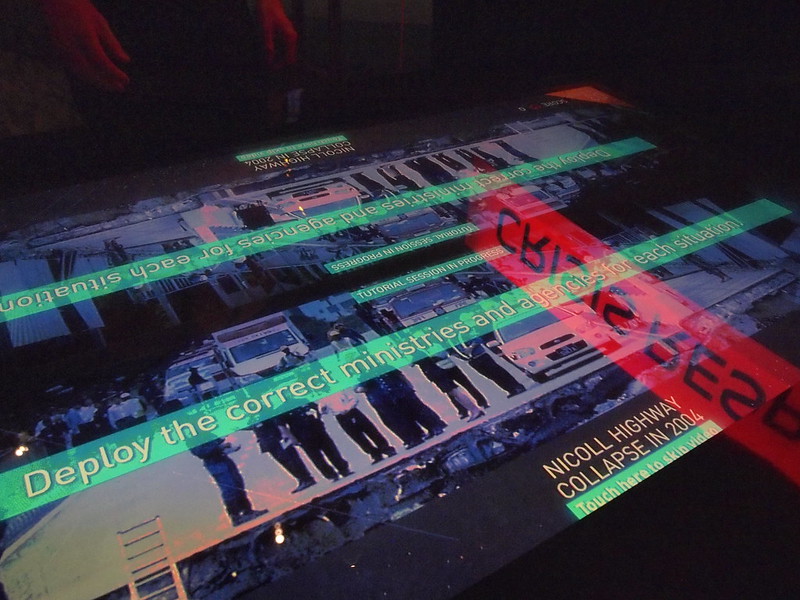
This is another game in which you figure how out to deploy the right ministry for the right task. I know, its total fun for the whole family.

P1083862

Choose your own disaster and all...

P1083863

SO MANY WORDS HELP TL;DR. There is some seriously outdated exhibit design going on here.

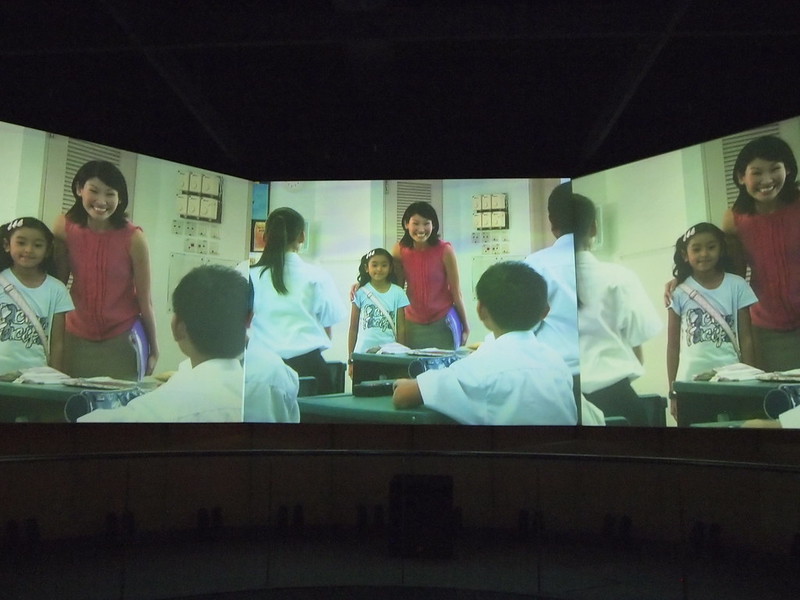
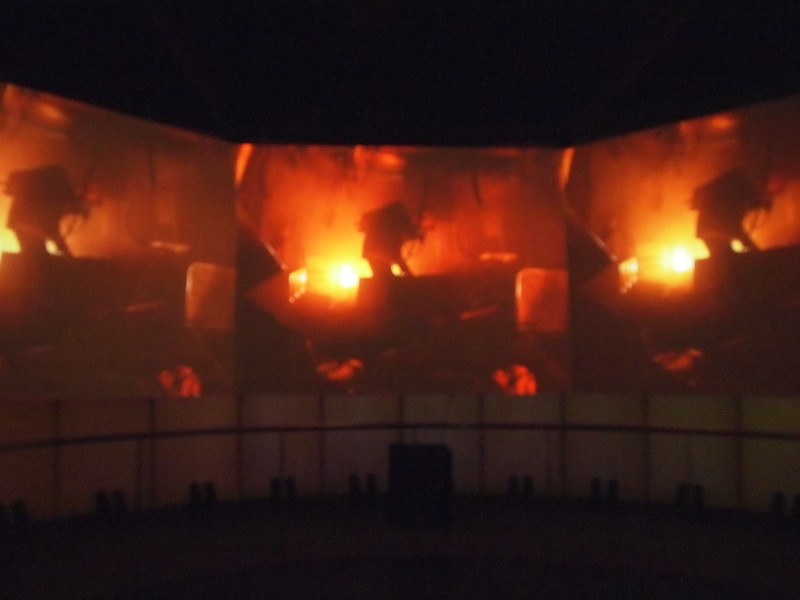
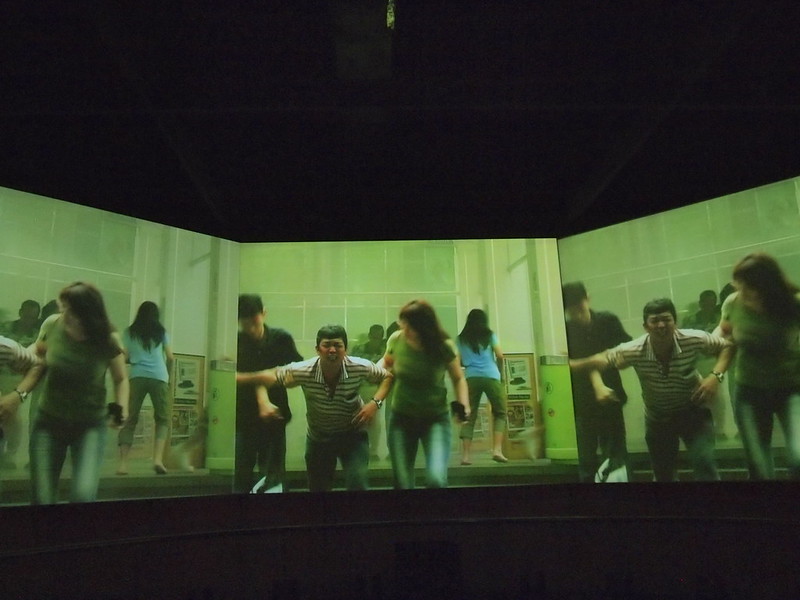
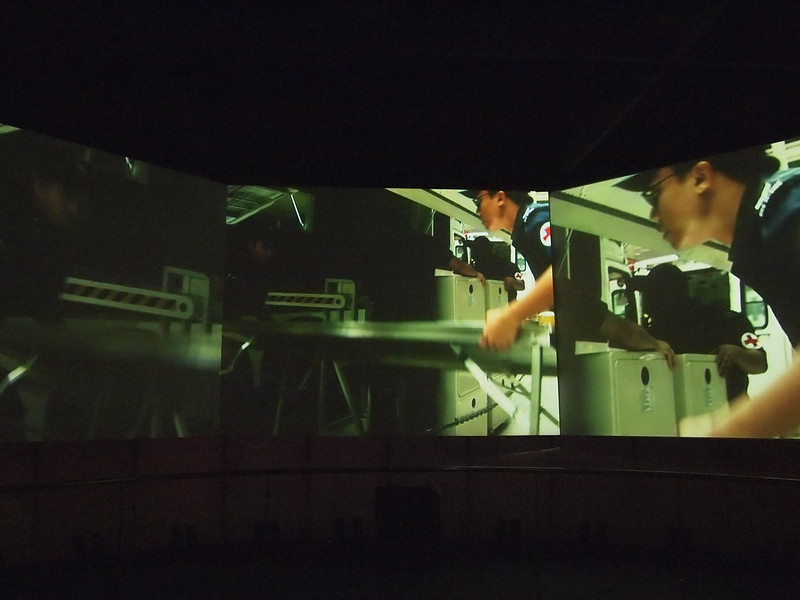
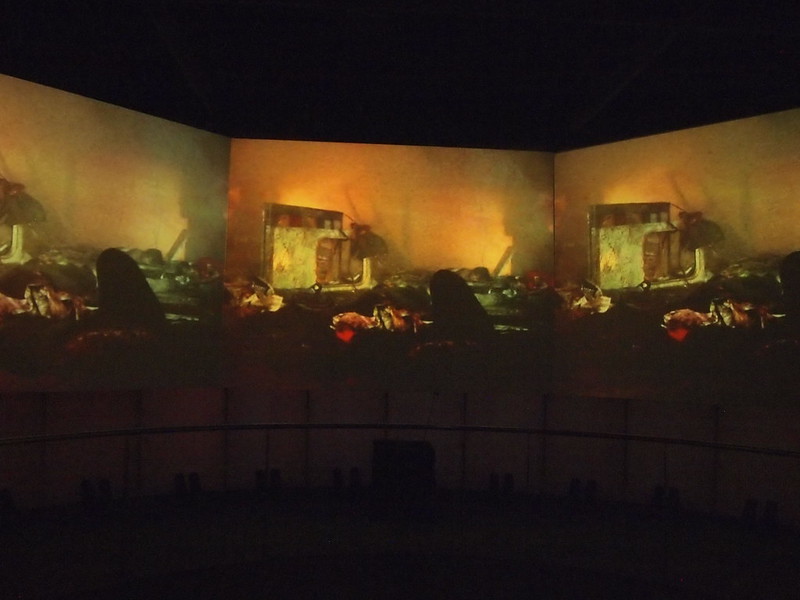
Finally there's a great crisis simulation theatre where they run a couple of films about a fictional MRT bomb attack. Cue the innocent (and strategically racially diverse) children's plaintive cries of "but why do they bomb us?" Well, you tell me. Oh wait too busy tugging at the heartstrings bllppppbbbpp

P1083866

"Oh, Happy Days..."

P1083880

But no! A wild bomb attack in the MRT!

P1083871

People escaping the MRT...

P1083877

The Civil defence response...

P1083881

Everything is terrible...

P1083882

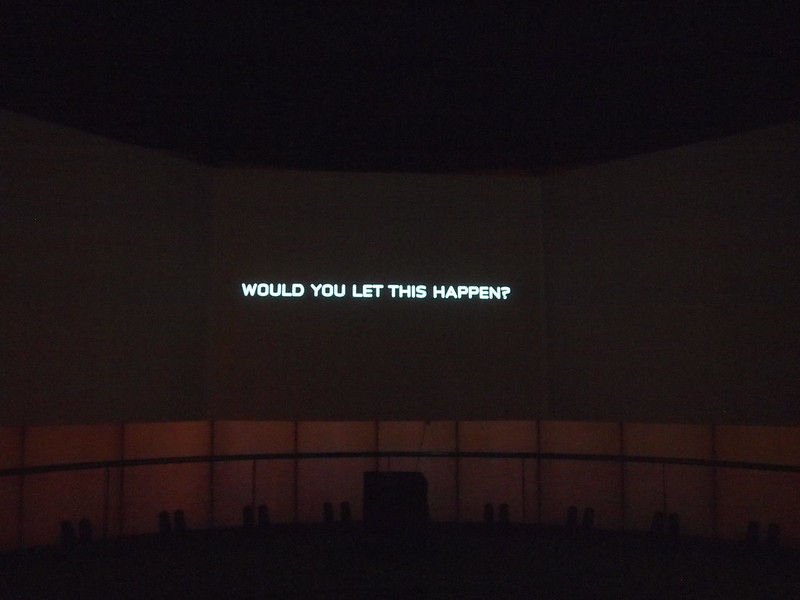
And finally on that bombshell:
WOULD YOU LET THIS HAPPEN?

P1083900 P1083890

P1083888 P1083909

P1083901 P1083883

I want to tell you more about the other exhibits but I'm now too tired to explain any further. Also, at the end of our trip a very kindly old man came to ask the Singaporean (ie. me) for feedback on how to improve the SDC, and I told the man it was fine as it is. (Note: do not use a kindly old man as your feedback officer if you want to collect any honestly brutal feedback). As we left George asked me why I hadn't told him how I honestly feel about the SDC.

But I think this strange feedback loop is part of Singapore's infuriatingly goal-oriented culture. The thing is that it isn't the visitor's role to improve the SDC - I want to see it as it is, and I've come to see what they say about Singapore, and I want no part of this terrifying feedback loop of messages, and this heavy-handed approach to shaping and attaining the "desired outcomes" for this exhibit. I think that the day when we can finally elevate ourselves beyond this looped form of describing our Singaporeanness, then Singapore will truly come into its own.


Singapore Discovery Centre is at 510 Upper Jurong Rd, Singapore 638365, and is open from 9am to 6pm from Tuesday to Sunday. Free admission for Singaporeans and PRs.