Sunday, 30 April 2017

The Exotic Mushrooms and Trees of Canberra: Fly Agaric, Death Cap, and London Plane

On my first week in Canberra, as I was running to the National Gallery of Australia to get to the first guided tour of the day, I was greeted by the most astounding sight of several Fly Agarics (Amanita muscaria) growing right on King Edward Terrace, magically lit in a spot of sun. Alas I only took one picture of this classic fairytale toadstool as I was running late...

Untitled

I used to be in Brownies when I was in primary school, which had all of its patrols named after fantastical (and decidedly Victorian/European) fairytale creatures such as PIXIES and ELVES (with all of these after-school activities naturally being european/british imports). Naturally everyone wanted to be a goddamned fairy, but when it came to the draw, I was designated to be in the GNOME PATROL. A wizened, landbound, garden gnome. Me and the rest of GNOME PATROL met every week to decide what 'Fun Thing' we would learn that week, like how to do ironing, how to sew a button, how to tie a round-turn-and-two-half-hitches, or recite the national anthem in Malay or something like that. For some reason my memory holds that we even sat around an actual model of a fairy toadstool that was plonked in the middle of our circle, although NO SUCH MUSHROOMS EVER EXIST IN SINGAPORE (CAN YOU UNDERSTAND HOW EXCITED I AM TO SEE ONE IN REAL LIFE).

As a young child unimpressed by the mundaneness of garden gnomes, on one of the first meetings after being assigned as GNOME I asked, "WHAT DO GNOMES DO? WHAT FANTASTICAL MAGIC POWERS DO GNOMES HAVE?". I was given the answer that "Gnomes come in and happily clean the house whilst you're not in". Ignoring the part where the poor gnome is mysteriously compelled to perform hard domestic labour for no remuneration, I remember then asking "But where do the Gnomes live if they don't live inside the house?" The teacher clearly struggled to invent an answer and eventually gestured towards the mushroom in front of us. "The gnomes live under the fairy toadstool?..." (Ah the fairytale origins of the English notion of the "mushroom hall"...)

Source: Forest Mushroom Woodgnome (Public Domain image)

Its worth noting that this predominantly northern hemisphere toadstool was actually first introduced to Australia together with the pine trees which had been imported over from Europe, so they always grow alongside the pine trees which are technically exotic to Australia.

Later, I returned to the same spot in hopes of sighting more of these delightful mushrooms in a less harried fashion, but I strangely could not find them despite combing the stretch for at least 20 minutes. Instead I found a load of boring mushrooms which resembled shiny, slightly greenish potatoes.

Untitled
PICTURE DOES NOT REFLECT ACTUAL COLOUR, which was very distinctly greenish yellow and shiny

Not to be deterred by the boringness of the mushrooms, when I got back home I fired up the ol' Google machine to try to identify these mushrooms and to my horror...


...which explains all the overbearing DON'T EAT WILD MUSHROOM flyers found at tourist information points, as it appears some foragers with a passion for fresh food have even died... IN THIS SAME AREA IN CANBERRA!!! When viewed in person, the mushrooms in the picture above totally match the images in this article about death caps.

Royal Botanic Gardens Victoria notes that the Death Caps (Amanita phalloides) are "always under exotic trees, especially Oak (Quercus), including broad-leaved and cut-leaved oaks. There are reports of Amanita phalloides growing under Eucalyptus in Algeria and Tanzania, but there are no confirmed sightings of the Death Cap away from exotic trees in Australia."

How curious to describe the oaks that basically dominate many of the streets of Canberra civic as 'exotic' - but I guess likewise despite years of living in London and getting to know oak trees, the oak is possibly always going to be exciting and FOREVER EXOTIC to me, since I never grew up with oak trees.

And speaking of "exotic" trees, I noticed some of the seed balls of what I thought to be London Plane Trees were so big (exceeding 3cm) that I couldn't imagine they could be the same as the London Planes I had seen in London. So I had to read up on the whole Plane tree family...

Untitled

It turns out that the humble London Plane is doubly exotic to Australia! A hybrid tree produced by the combination of oriental plane (P. orientalis) and American Sycamore (P. occidentalis) being brought together in the same place in the 17th century (location disputed: spain? london?) and reciprocal pollination occurred when the trees were next to each other... and then this hybrid being spread all over the world since it was found to be efficient in filtering out small particulate pollutants. Today it has surely become one of the most ubiquitous trees in many parts of London, and I've been observing it all over Canberra, Sydney, and Melbourne...

Sunday, 16 April 2017

The Difficulties of Walking

Untitled

Mysterious Fevers

It is funny that once upon a time I complained that it was the cold that stopped me from walking in London. Now that I've managed to get over the cold of the UK, it is the heat and other environmental factors that are stopping me from walking in Singapore!

The first problem is the weather in Singapore. The unbearable heat! The sweat running into one's eyes! The tissues one must carry to stop one's glasses from fogging up during a walk. The sudden rain, or even passing thunderstorm that is sure to follow after a spell of intense hot weather. But the heat and unpredictable weather, to be honest, is but a trifling matter. The second and more pressing issue is... unexplained fever!

Upon my return to Singapore I had heartily jumped back into walking all over the place, poking around for snails and termites, observing waterfowl and early morning joggers, encircling all of Bedok Reservoir and merrily trotting all up and around Fort Canning. And then I was unexpectedly felled by a high fever that lasted for a ridiculous seven days...

The primary symptoms were debilitating joint and body pains and a high fever that kept returning even after panadol or ibuprofen. The body aches reminded me of the time I had contracted dengue around 2005 (wherein there was a dengue cluster at the block of the uni hall I was staying at), and I really didn't want to jump to conclusions just because I was misdiagnosed repeatedly the last time I had dengue - BUT THEN DATA.GOV.SG SAID WE LIVED IN BEDOK NORTH #1 DENGUE HOTSPOT OF SINGAPORE, and then all manner of wild conclusions were instantly jumped to.

"But I had only been in Singapore for 5 DAYS!" I whined, looking at my mildly bug-bitten legs. "How could I have contracted dengue so quickly??"

Fortunately as it turned out, after a trip to the A&E it was confirmed I did not have any of the three particular strains of dengue which are currently trending on this island. Which was great but still very mysterious. My final diagnosis was suspected 'tonsillitis', but I could not see any reason to begin a protracted 7-day course of antibiotics for an extremely mild (and basically non-existent) sore throat. As mysteriously as the high fever had come, it slipped away quietly a week later...

Well. And there went an entire week of my life. Without any reason or explanation...


The "Obscure Disease", Beri Beri

See: British India and the “Beriberi Problem”, 1798–1942

Whilst holed up in bed it seemed apt to begin reading up on the disease of beri-beri, the vitamin B1 (thiamine) deficiency which has retained its oddly exotic name through the ages. Every account of life in the early 1900s as well as WWII and the Battle of Singapore will invariably mention the problem of beri-beri, a disease which had great socio-economic and political impact, incapacitating and killing citizens, soldiers, workers, everyone alike in the rice-eating countries throughout Southeast Asia.

Most narratives of diseases in the early 20th century tend to read as a narrative of man's discovery and victory over disease - but arguably the story of beri-beri in these parts reads more as a story of a disease introduced by colonial technologies - unnecessarily prolonged by complex commercial interests and colonial shortsightedness. Somehow what annoys me is that to retain the exotic sounding name seems to suggest that the tropics or far east was the dangerous place or climate manufacturing the 'beri-beri', justifying the intervention of western medicine.

Its frustrating to read that the affliction of beri-beri was necessarily prolonged by complex commercial interests (rice exports!) and such shortsightedness, as seen through the continued misconceptions of beri-beri being a 'tropical disease' or 'place disease' and refusal to believe it was nutritional, exacerbated by logistical problems during the war years. What seems tragic is that by 1911 the cause of beri-beri is already established as a diet of overmilled white rice, yet helplessly little is done to dissuade or stop people from subsisting entirely on overmilled white rice and other foods which are deficient in vit B1 or worse, thiaminases that leech thiamine from one's diet...


Opisthotonic death pose / Star-gazing

Studies on beri-beri were often done on birds and I realised that pictures of the symptom of beri beri in animals were... rather alarming. As a human, you'll be glad to know that humans don't exhibit this symptom, but as for my pigeon and avian readers, the following pictures may be quite disturbing. In certain animals like birds especially, thiamine deficiency tends to produce a star gazing effect - a retraction of the head known as opisthotonus.


Source: David A Bender's page notes that in Peters RA's Biochemical lesions and lethal synthesis (Pergamon Press, Oxford, 1963), pigeons "show a characteristic head retraction when they are fed on a high carbohydrate diet with no thiamin, and restoration of the vitamin leads to rapid normalisation."

The internet also has no lack of stargazing chickens, pigeons, and other unfortunate poultry:


The opisthotonus caused by thiamine deficiency extends also to other livestocks. The following book on animal nutrition has a table listing the different symptoms of thiamine deficiency in different animals.


"Sheep with thiamin deficiency. characteristics of condition are head bent backwards (opisthotonos), cramp-like muscular contractions, disturbance of balance, and aggressiveness." Source: Vitamins in Animal Nutrition: Comparative Aspects to Human Nutrition By Lee Russell McDowell

Interestingly, you'll notice this 'star-gazing' pose is quite like the pose in which most dinosaurs are found. An article in NewScientist ("Watery secret of the dinosaur death pose") mentions studies in which a lot of quails and dead birds were dipped in cold water to see if they too would adopt the dramatic dinosaur death pose. Results were mixed but it was believed it was the water that did it...
Either way, a head pointed perpetually skywards would make movement and walking very difficult...


Casadastraphobia / fear of falling into the sky

...which brings me to a new bizarre symptom that has been mildly impeding my enjoyment of long distance walking, which also has something to do with looking up into the sky...
Ever since I can remember, I've always been unable to lie down on the ground outdoors and look up into the sky for the fear of falling into the sky. As irrational as it might sound, I always refused to do situps during PE class because the teacher would ask us to do it in the school field (such that we would be forced to face the sky!) and god forbid the gravity should turn off and we'd all fall into the sky! Even the school hall was no better. School camps in the school hall and having to sleep facing the high ceiling? Forget about it!

Untitled

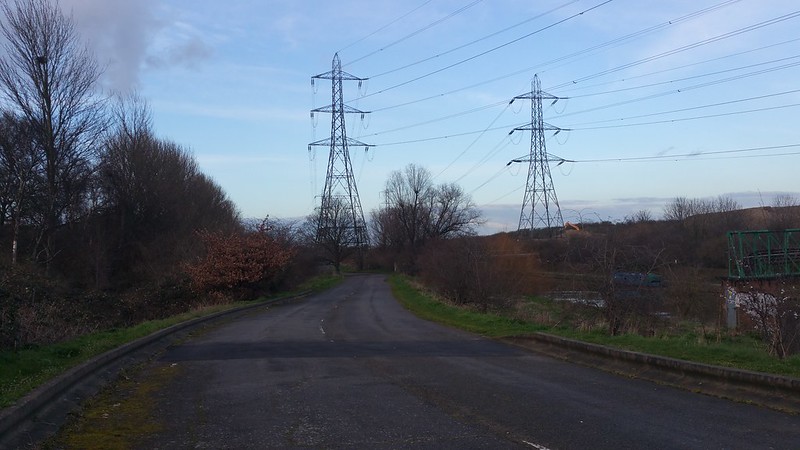
A new troubling symptom emerged as I was warming up for my Capital Ring walk. Whilst walking alone on a disused, empty path near the Angel Road Superstores, hearing the distant roar of the North Circular, I was genuinely enjoying a delightful walk in what felt almost like wilderness when I suddenly realised I was in a big open area with nothing else to hold on to! I blame the pylons for leading me to look upwards into the sky, alerting me to the desertedness of the spot, a true attack of the triffids horror moment!

Struck by sudden and urgent panic, I felt like taking off my shoes and even looked for any grass to hold on to but was forced to run back and take cover under a nearby bridge. Unfortunately, the rest of my walk home involved walking several miles along the River Lea towpath completely exposed without any cover, which felt quite traumatising at the time. Now, snug and safe in a house with a solid roof, we can sit back clutching the solid furniture laughing about it. But it is almost the definition of madness I tell you! Even a momentary glance skywards that lasts a moment too long is enough to provoke terror, although I know it's physically impossible to fall into the sky! AH!

Fortunately (or unfortunately), most of urban London and Singapore do not have open landscapes which trigger this irrational fear so I have rarely had to deal with it before...

Tuesday, 4 April 2017

Back in the Loop


I'm alive!

This blog is alive!!

I've quite enjoyed being completely out of the loop for the last few months, but I've finally come back into orbit now. Over the next few weeks I'm going to try to push out a huge backlog of old notes and documentation of various journeys in London and Singapore - the first draft of my working notes for what I hope will develop into a more cohesive documentation of my long-distance walking adventures. As I write them, I will link them up to this 'catch-up' page...

Capital Ring

I decided to walk the supposedly 78 mile Capital Ring over 6 consecutive days. I say "supposedly", for Debbie does not go "as the crow flies" but rather haphazardly in a squiggly line all over the map, and according to other mapping devices it seems I may have walked more than 150 miles in total. Rather than starting with the traditional route as listed in TFL's maps and David Sharp's guide book to the Capital Ring, I decided to start and end my journey at Stoke Newington's Rochester Castle.

Day 1: Stoke Newington to Hackney Wick
Day 1: Hackney Wick to Beckton District Park
Day 1: Beckton District Park to Woolwich Foot Tunnel
Day 2: Woolwich Foot Tunnel to Falconwood
Day 2: Falconwood to Grove Park
Day 3: Grove Park to Crystal Palace
Day 3: Crystal Palace to Streatham Common
Day 4: Streatham Common to Wimbledon Park
Day 4: Wimbledon Park to Richmond
Day 5: Richmond to Osterley Lock
Day 5: Osterley Lock to Greenford
Day 5: Greenford to South Kenton
Day 6: South Kenton to Hendon Park
Day 6: Hendon Park to Highgate
Day 6: Highgate to Stoke Newington

Hertford Loop

I've been living next to one of the Hertford Loop Line stations which run from Moorgate to Stevenage and other parts of Hertfordshire. Having been used to sitting on so many new trains in Singapore (where a new train line with completely brand new trains seem to roll out every other year) I was initially shocked by the advanced and worn state of the Herts Loop trains. The windows are warped with age, the cabins are stained with mud, and there are no additional passenger facilities or station announcements on board this train - so at night, you end up fitfully peering out of the dirt streaked and heavily scratched windows to see if you can see any signs on the deserted platform. In fact, the trains used on this line (British Rail Class 313) are supposed to be some of the very oldest still in regular use in Britain and would have been built somewhere between 1976 and 1977 (over 40 years old!).

Finsbury Park, Gillespie, and Highbury Fields
Arnos Grove, Groveland Park, and Winchmore Hill
Enfield Town, Enfield Chase, World's End, Cockfosters
Gordon Hill, Lavender Hill Cemetery, Strayfield Road Cemetery, Hillyfields Park
Pymmes Brook, Oakleigh Park, Oak Hill Park, Brunswick Park, New Southgate
Hadley Wood, Salmon Brook, Stagg Hill
New Southgate, Hidden River, Alexandra Palace
Welwyn Garden City
Letchworth Garden City
A Special Note about Drayton Park

Assorted London Journeys

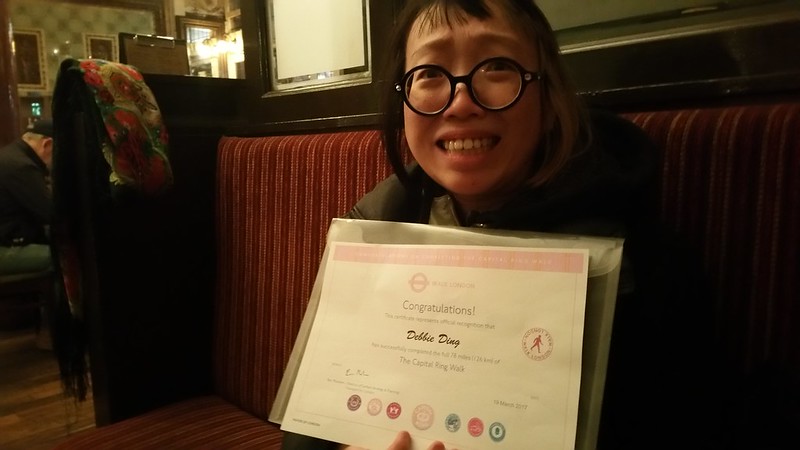
I devised a foolhardy plan to visit many historical Wetherspoons in one day, visited the "doppelganger" of my North London street (N4) in South London (SE25), re-discovered that I actually have a devastating phobia of falling into the sky when in an open field (which I must confess is quite bizarre), and found the plaque which marks where Raffles is buried. And other walks...

An All Day Spoons Tour!!!
Burgoyne Road (North London) to Burgoyne Road (South London)
Angel Road Superstores, Lea Valley, Tottenham Marshes, Blackhorse Lane
Dollis Valley during Storm Doris, St Mary Hendon and Raffles' Burial site
Gospel Oak, Lismore Circus, Primrose Hill, Regent's Park
Willesden Junction, Camden, Primrose Hill
Wanstead Flats and Epping Forest
Woodberry Wetlands, New River Path
Pubs in Harringay
Hampstead's Hill Garden and Pergola
Notes on footwear, footcare, and sun protection for long-distance walking

Outside of London

Margate to Ramsgate
Eastbourne to Beachy Head
Sicily


AND MORE CURRENT SINGAPORE NOTES COMING UP WHEN I AM DONE WITH THE ABOVE LOT...??

Long overdue documentation of work process in 2016

Shelter at Singapore Biennale
Emotional Departure
soft/wall/shroom
Here the River lies 2.0
A Blender workshop I conducted at Fabcafe
A computational poetry workshop I conducted at Sch of Uncommon Knowledge

WWII Sites in Singapore

Changi Museum
Former Ford Factory
Fort Canning Battlebox
Reflections at Bukit Chandu
National Museum Singapore - Surviving Syonan
National Gallery Singapore - Supreme Court Wing

Canberra, Sydney, Melbourne

Australian War Memorial - Last Post
National Museum of Australia
National Capital Exhibition
Questacon, Powerhouse, Scienceworks, CSIRO Discovery, Mt Stromlo Observatory
Changi Chapel in Duntroon
Remembrance Driveway

Writing out this list alone took so long that I'm going to have to take a rest before I embark on all of this...

Friday, 17 March 2017

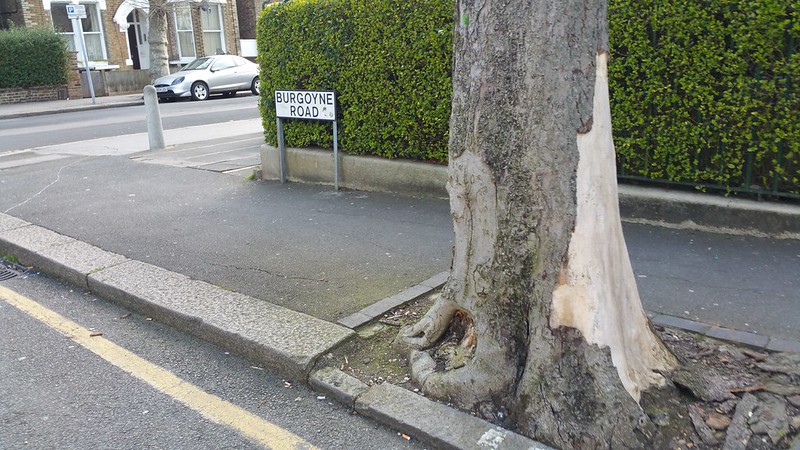
Visiting my Geographical "Googleganger": From Burgoyne Road N4 to Burgoyne Road SE25

Untitled

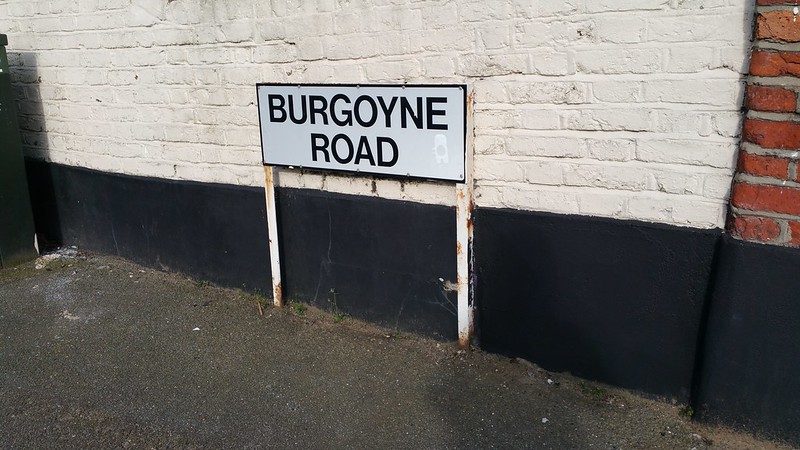
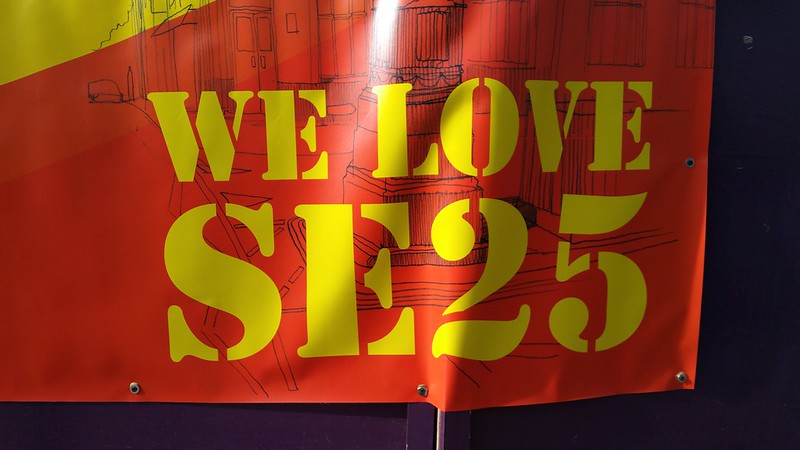
I lived on Burgoyne Road for some years but although I specifically set my home address to "Burgoyne Road N4", whenever I tried to use Google Maps to plot a route back home, Google would occasionally send me the directions to "Burgoyne Road SE25" instead of "Burgoyne Road N4". No matter what I did - such as entering in my entire postcode, unit number, landmarks, etc - Google still kept trying to send me to SE25.

Untitled

So a few months ago I decided to visit the OTHER Burgoyne Road, the "Googleganger" of my road that I kept being directed to - since I was already passing through Norwood on my Capital Ring walk.

Untitled

Untitled

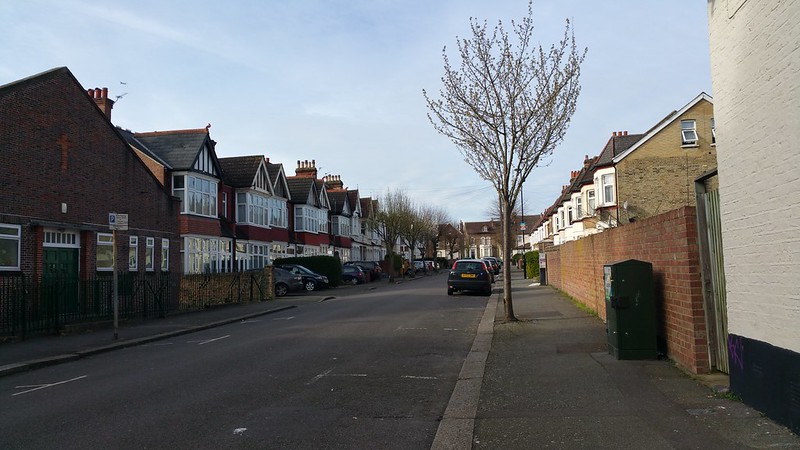
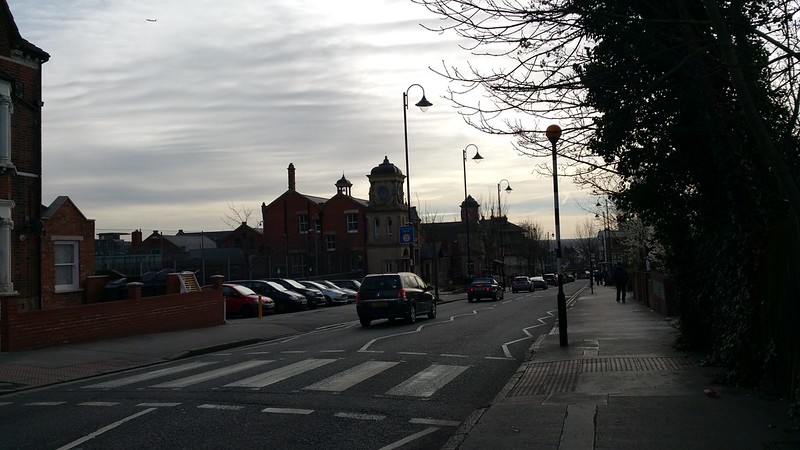
The other Burgoyne Road in South Norwood was a short walk from Norwood Junction, peppered with churches, payday loan shops, chicken shops, and the very average fly-tip strewn suburbia of South London.

Untitled

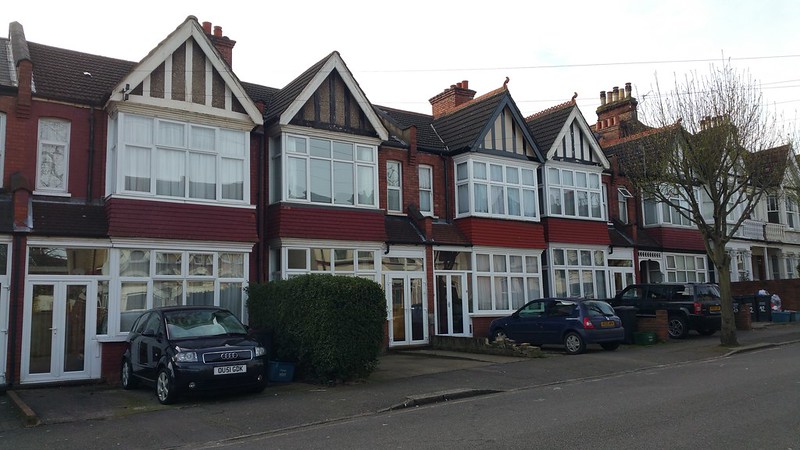
Unlike the very long and dramatically inclined Burgoyne Road in North London, which was situated off the very lively Green Lanes and on the Harringay Ladder itself, the Burgoyne Road in South London here was very short and flat.

Untitled

One of these very ordinary houses is the geographical googleganger of my flat in North London.

Untitled

It was all together very ordinary, but as I stood there for some time on this totally empty road, a woman came out of nowhere. All of my naive youthful excitement must have attracted this strange gypsy lady who then asked me what I was doing standing there. She started what seemed to be a rather normal conversation with me. "I'm from Burgoyne Road in North London!" I told her, "and you're from Burgoyne Road in South London!" "Yes... Yes... very nice." She smiled... following which things took a surreal turn and she suddenly turned a bit nasty and refused to let me leave unless I gave her money immediately. IMMEDIATELY! IMMEDIATELY! "But why?" "Because I have a baby." "Ok, but that doesn't answer why?" Even when I said I had no cash on me, she said she would take to me to the cash machine where I could draw money and give it to her a la daylight robbery! Very strange. But why would I give her all my money just because she was holding my arm and verbally insisting that I do so? I found myself running away from this Burgoyne Road...

Untitled

The neighbourhood didn't seem so friendly after the weird experience. As I ran further down this claustrophobic road, a cyclist zoomed past a pedestrian in the vicinity too quickly and I heard a woman yell "WATCH WHERE YOU'RE GOING, WANKER!!!" - followed by another very demonstrative shout "SORRY!!!!?!?!!"

Untitled

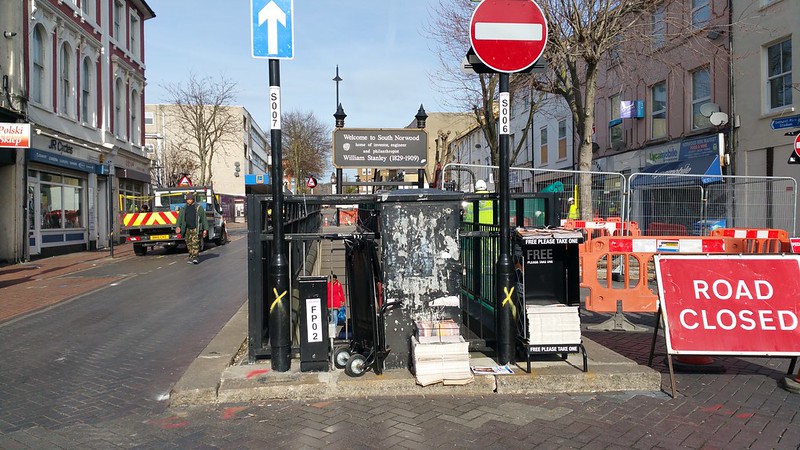
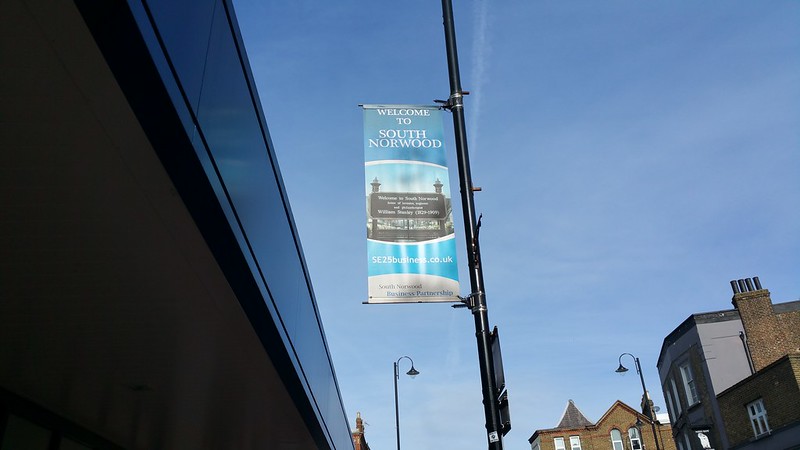
UH, WELCOME TO SOUTH NORWOOD, I GUESS...?

Tuesday, 14 March 2017

Capital Ring #1: Stoke Newington to Hackney Wick

Stoke Newington to Hackney Wick
Distance: 4 miles / 6.4 km
Feels like: a breeze through the marshes
Date: 14 March 2017


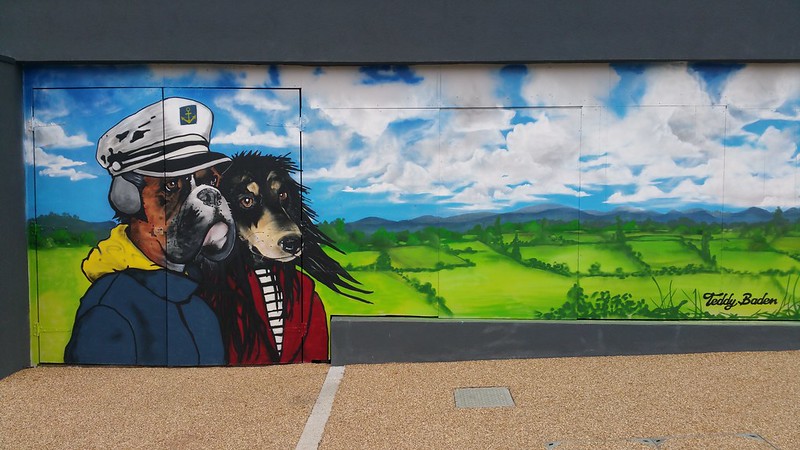
A Return to the Rochester Castle - Springfield Park - Wilsons Hill - Avroplane crash landing site - Hackney Henge - Wick Woodland - Giant dogs with headphones and hoodies - Approaching Olympic territory

This is the start of 15 posts about how I did the Capital Ring in 6 days...

THIS IS HOW IT ENDED:

Untitled

AND THIS IS HOW IT BEGAN:


The walk usually begins in Woolwich, but I decided to start my loop in Stoke Newington. The first time that I came to the UK, the first area that I landed in happened to be Stoke Newington, and the first establishment I went to was also the splendid Rochester Castle which has the distinct honour of being the oldest Spoon, with its skylights, carpets, strange paintings, and wooden box seating. The familiar red-wine-and-pepper stained carpets of the humble Spoon! The extremely reasonable prices! So it seemed only fitting to begin my walk here with a hearty hot (kid-sized!) breakfast...

Untitled
THE START! THE START! Why do I always make this unfortunate face on camera.

Most of Stoke Newington and Stamford Hill is already intimately familiar to me, having lived around those parts over the years. These parts of Hackney are scattered with these large rocks embedded into the pavement at junctions, and lots of community scribblings engraved into the pavement. At certain hours one also sees a lot of the Hasidic Jews with their distinctive hats (and secretive lives) quietly crossing from building to building.

Untitled

Untitled
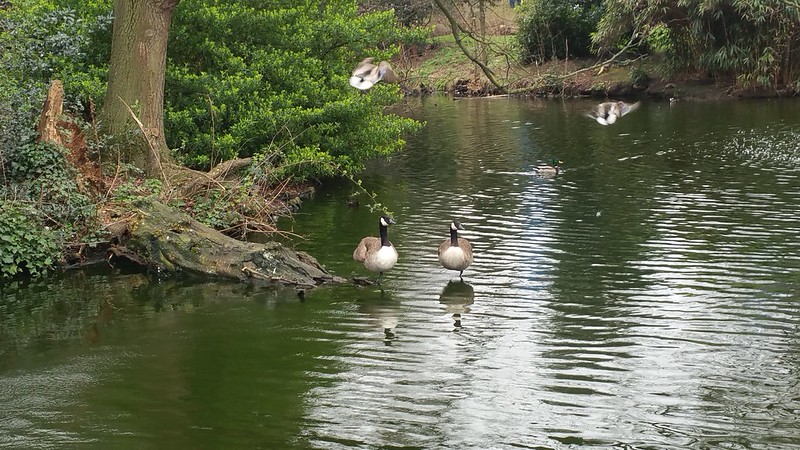
Ducks of Springfield Park

Untitled

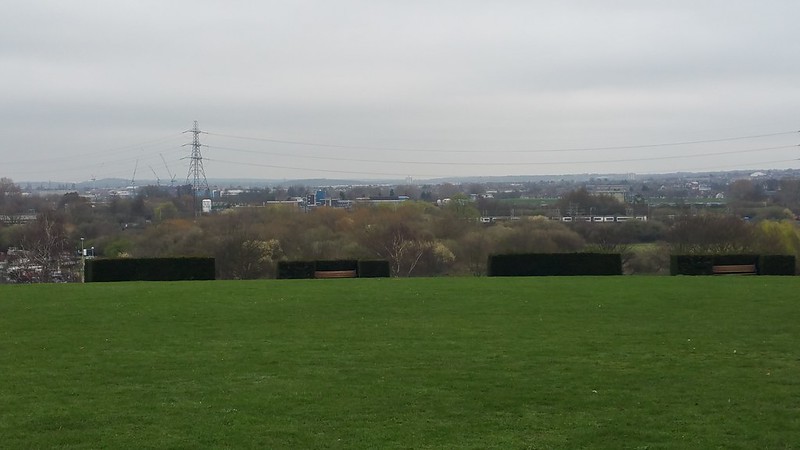
The first significant stop on this walk is Springfield Park, which I personally always seem to forget the name of, until I am there, because its name sounds so generic. Springfield is one of those words like Sunnyvale (SEE ALSO: TRAILER PARK BOYS, HOUSOS). I'm not sure if the name Stamford Hill refers to any particular hill really, but if it were to be a hill this is the point at which Upper Clapton riseth-upper to a peak, thus it involves what some would say is an open slope down into the valley of River Lea. But of course in Debbie's world this hill is a potentially vertiginous tumble that reminds me of that one time I got on a bike in this park, instantly almost fell off it, and concluded that combination of said bicycle and hill was most certainly a DEATH TRAP.

Untitled

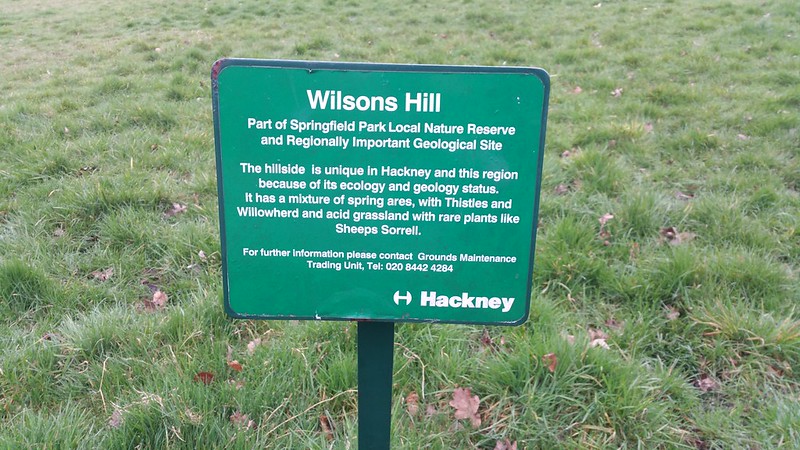
The most prominent part of the hill, also known as Wilsons Hill, has existed here for at least 200 years in this singularly sloped form.

Untitled

Untitled

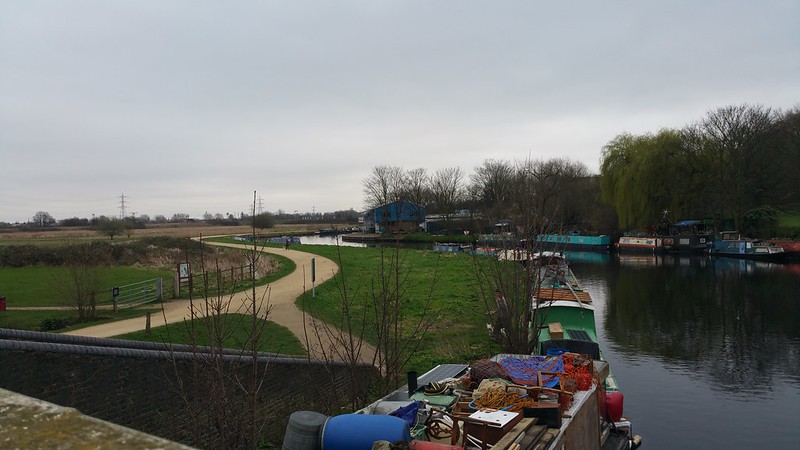
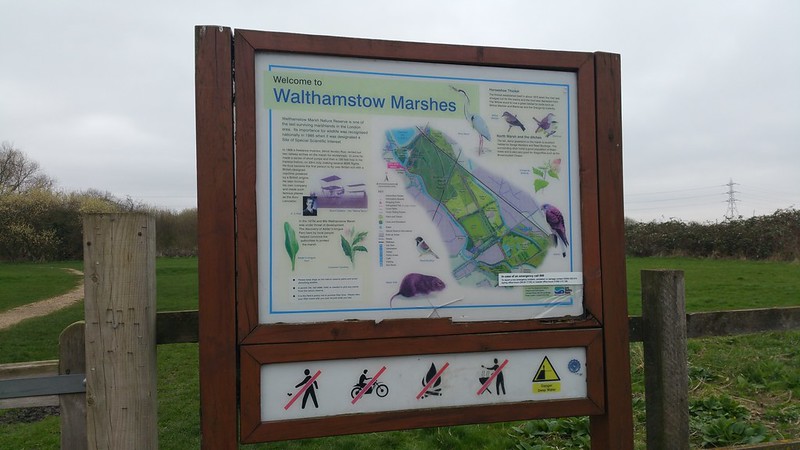
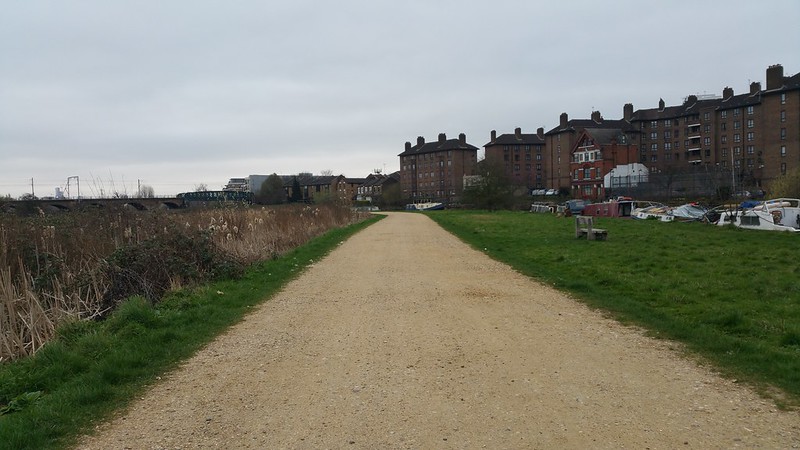
From the northern end of Springfield Park, there's a gate and footbridge leads out into the Lea Valley's Walthamstow Marshes. Variously spelt LEY, LEE and LEA, its original name was Ley, but it was more commonly written as Lea on maps, whilst Acts of Parliament referred to it as Lee. Ultimately it was decided that natural elements of the river would be spelt as LEA and man-made features would be spelt as LEE. As the natural river winds through here, it is spelt as LEA.

As there is very little to hold on to, this part of the Lea Valley, as with other parts of the Lea Valley I've walked along is vertigo territory for me. But I'll get back to that later.

Untitled

Untitled

Untitled

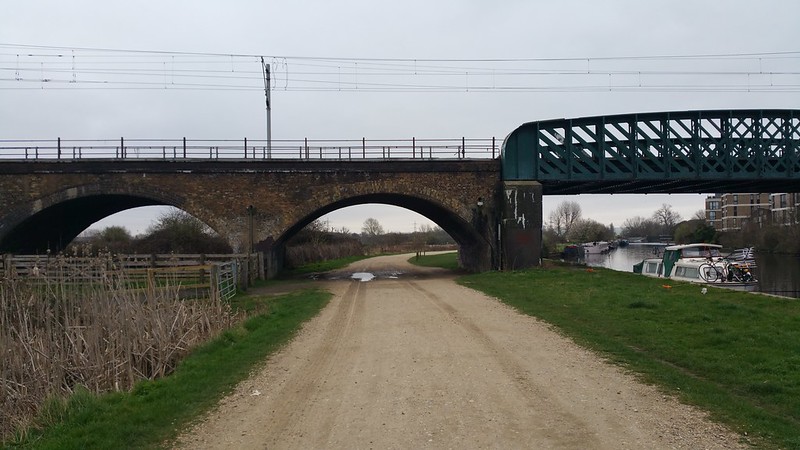
The open sandy track goes under a railway arch under which Aliot Verdon-Roe rented in 1909 to build his "Avroplane", the first all-british tri-plane. He used the soft marshes of Walthamstow for his flight and crash landings. If you've ever seen one of these early experimental airplanes up close, it consists of wooden sticks and control cables and flaps and its one of my favourite eras of airplane building since it was so much so a prototype in progress and its an absolute marvel these precarious contraptions ever flew...

Untitled
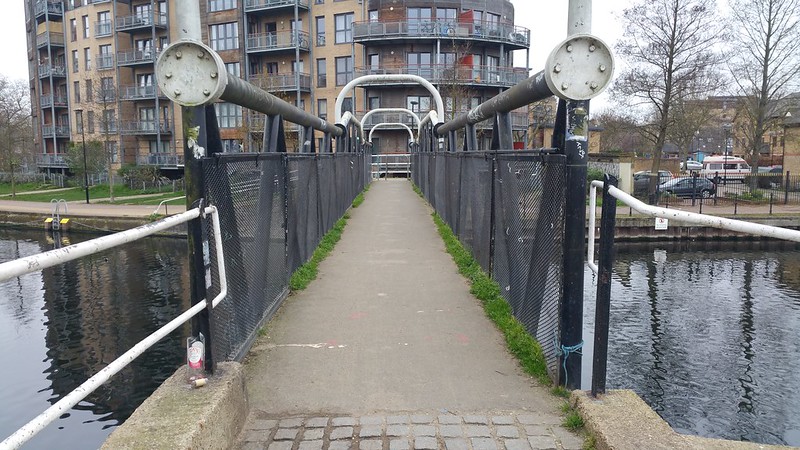
Kings Head bridge

Untitled

Untitled

Untitled
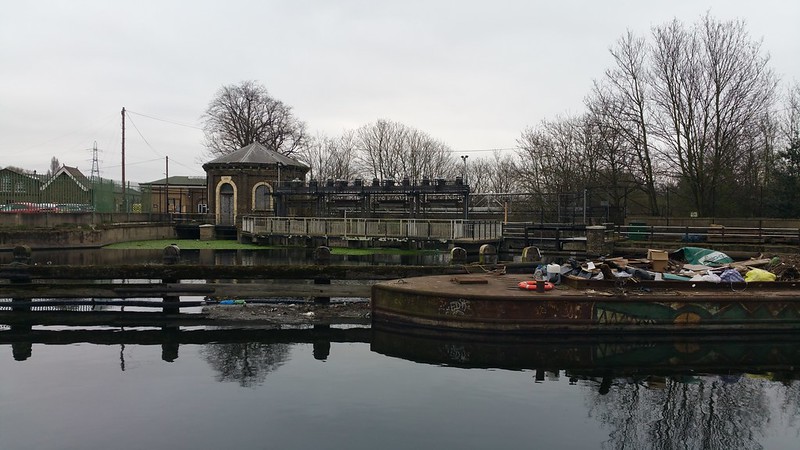
Middlesex Filter Beds

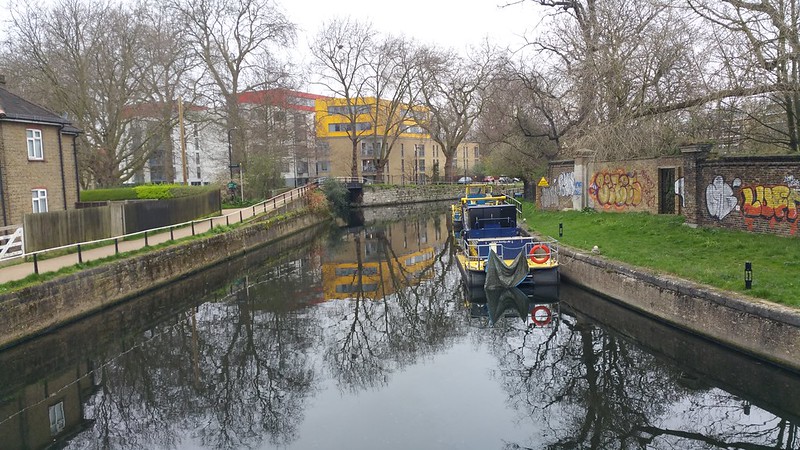
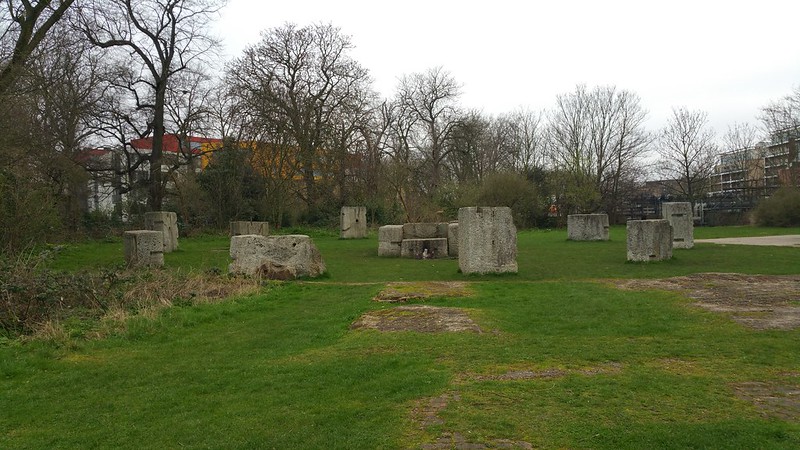
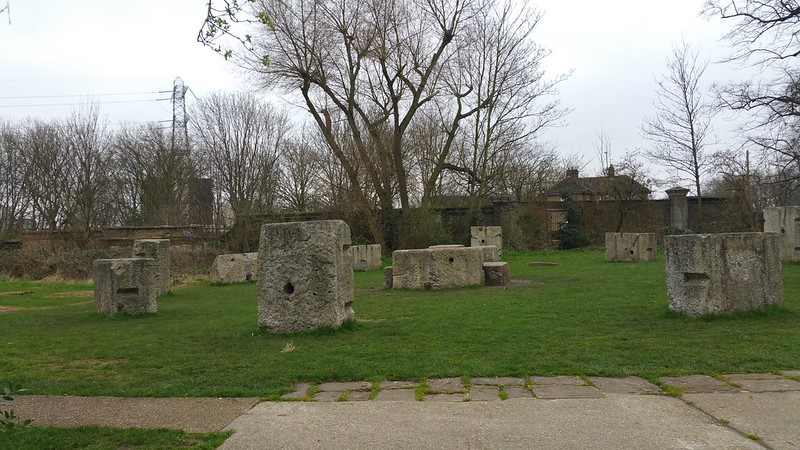
Continuing on via the heavy black "Kings Head" footbridge to the canalised section of the Lee Navigation, one eventually passes the Middlesex Filter Beds on the left, more commonly known as the Hackneyhenge because huge blocks of granite formerly used as the foundations of the engine house have been converted into a mini Stonehenge.

Untitled

Untitled

Untitled

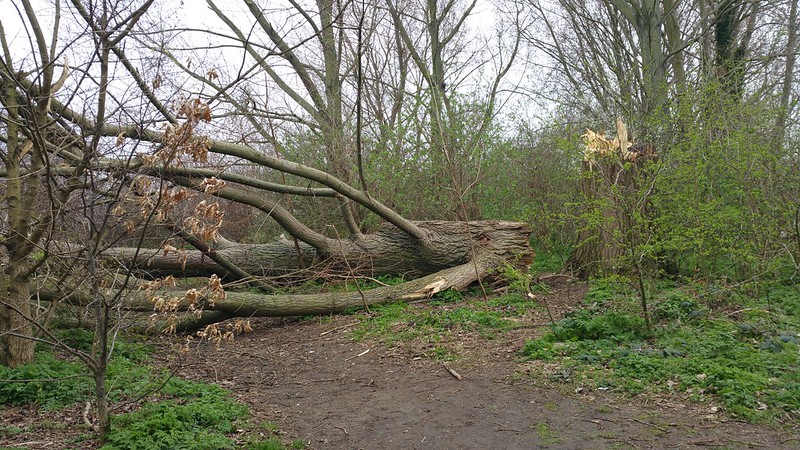
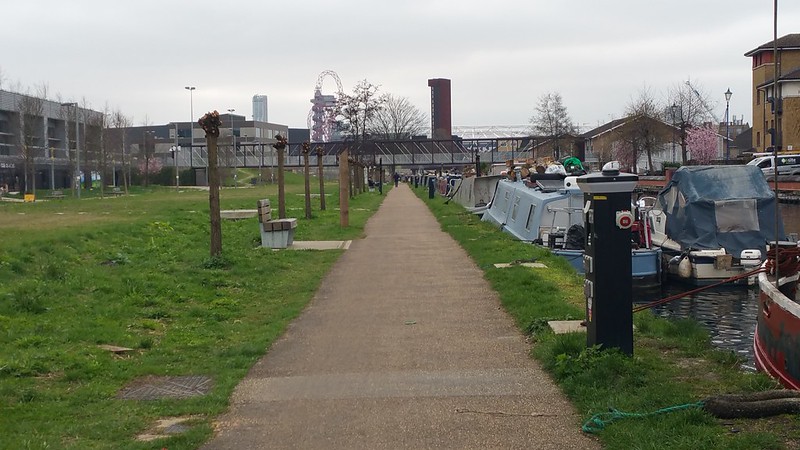
The canalway follows on for quite some distance, passing quite a lot of plane trees (including a giant dead plane tree cracked into two).

Untitled

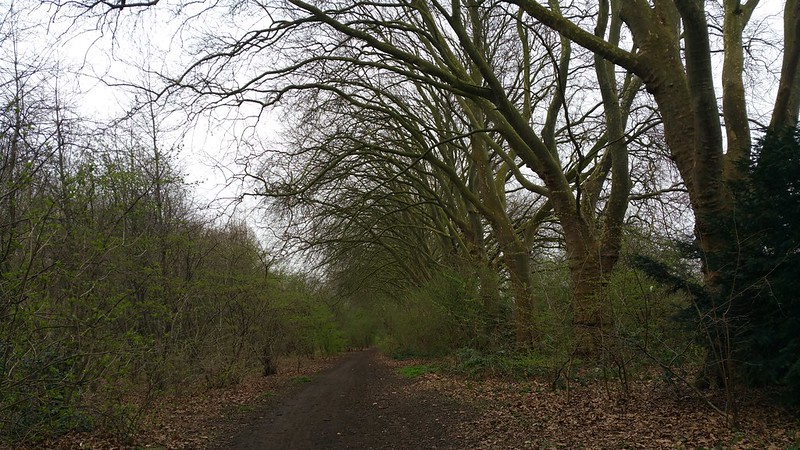
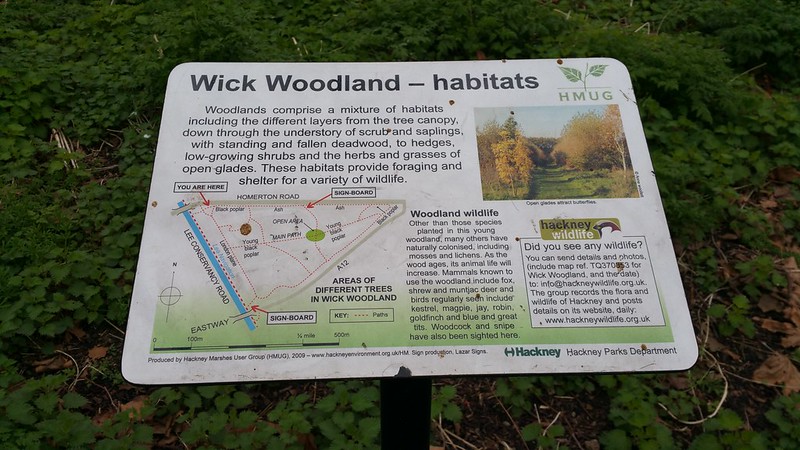
As recent as 1995 all of these woodlands did not exist; beyond the trees, the Hackney Marsh once were the site of WWII gun emplacements and bunkers. After the war its vast open space were used as football pitches, until the 90s when it was decided that part of the space would be converted back to woodland. The success of the woodland has been due to planting programmes as well an episode of accidental flooding in 1997 (water mains burst!) which attracted ducks and other waterfowl to move in on their own accord.

Untitled
Wick Woodland

Untitled

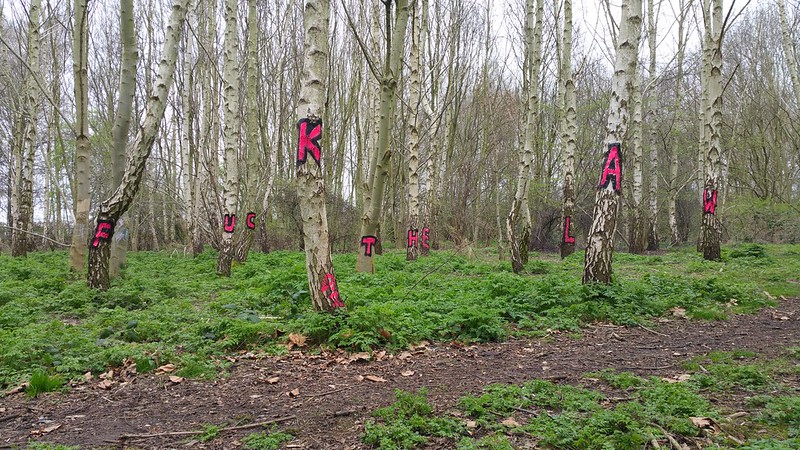
Further down there is Wick Woodland - from a distance I saw some splotches of bright pink and could not resist walking towards it until I found the magic spot where one could see the message...

Untitled

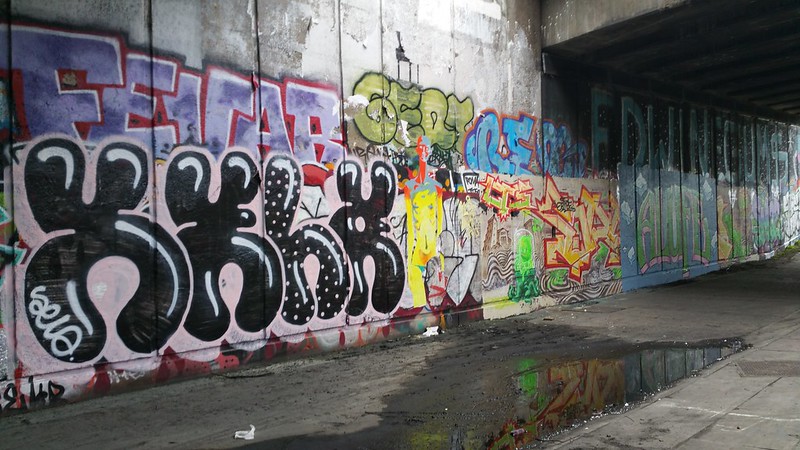
This segment of the walk ends at White Post Lane, just after a well-graffitied bridge and several giant murals of urban dogs, and we're entering into Stratford Olympic territory proper...

Untitled

Untitled

Untitled

Untitled
The visible change in the landscape says we're entering Stratford!

Wednesday, 8 March 2017

Parks of New Barnet and East Barnet: A Walk along Pymmes Brook

Untitled

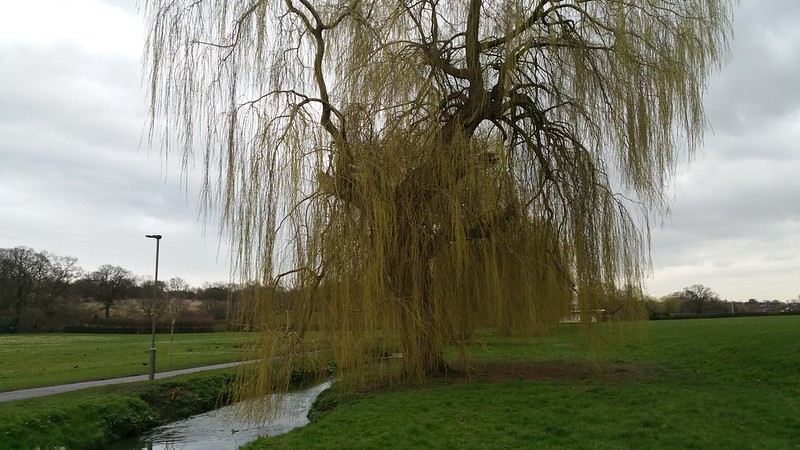
Ah, you there, bucolic stream of silver that trickles through the rolling hills of old...

Untitled

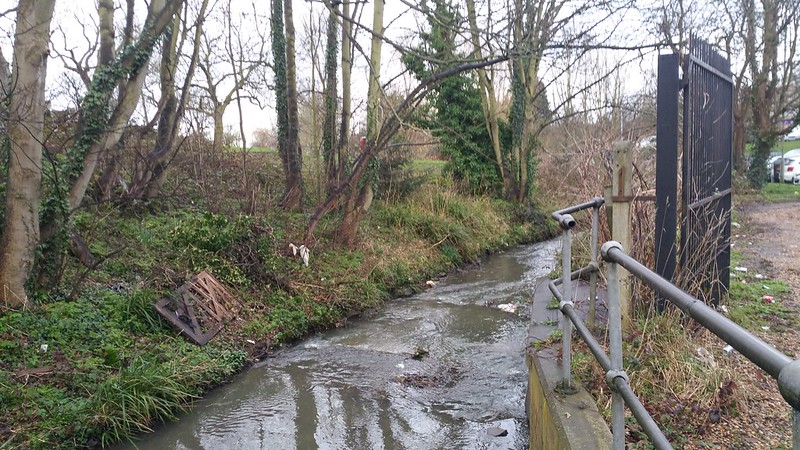
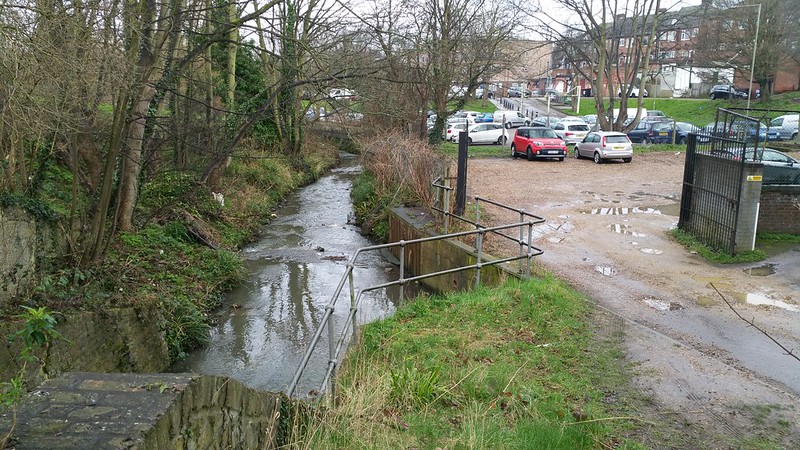
Well actually... here we are by the Pymmes Brook, which runs next to a carpark. A big sandy functional carpark, which I have to admit sort of breaks up a walk that one might have along Pymmes Brook, which is a modest brook (a small minor tributary of the River Lea) that is more famous for being troublesome and being the source of floods, rather than for its natural beauty.

Untitled

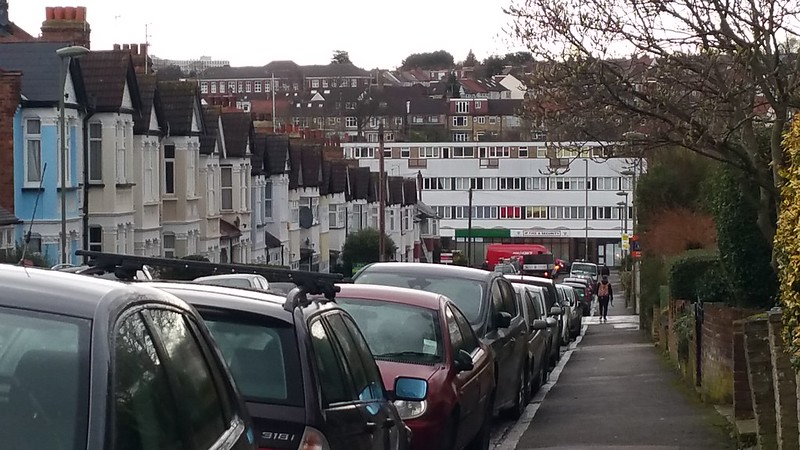
Here is a documentation of a walk through the rolling hills of New Barnet. You might ask, in what way is New Barnet new? Well its just a mile away from the so-called original High Barnet, so named because of the High street being located there, although High Barnet is also supposed to be one of the highest settlements in London itself. This is the approach to New Barnet from Oakleigh Park. Rolling downwards towards the lowlands of Tottenham, as it were.

Untitled

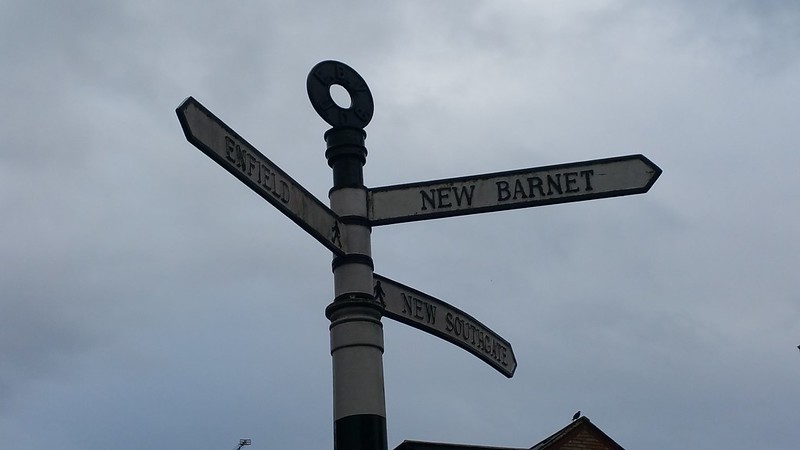
An old sign of New Barnet

Untitled

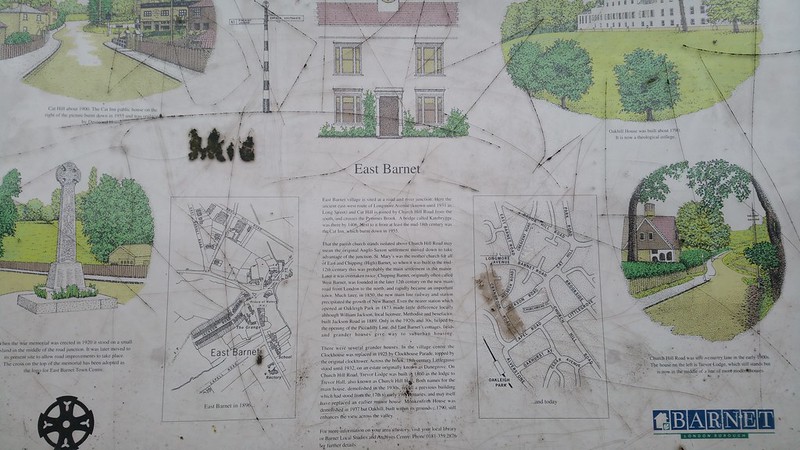
Another sign about the history and heritage - fighting the good fight to remain legible before being scratched off with graffiti...

Untitled

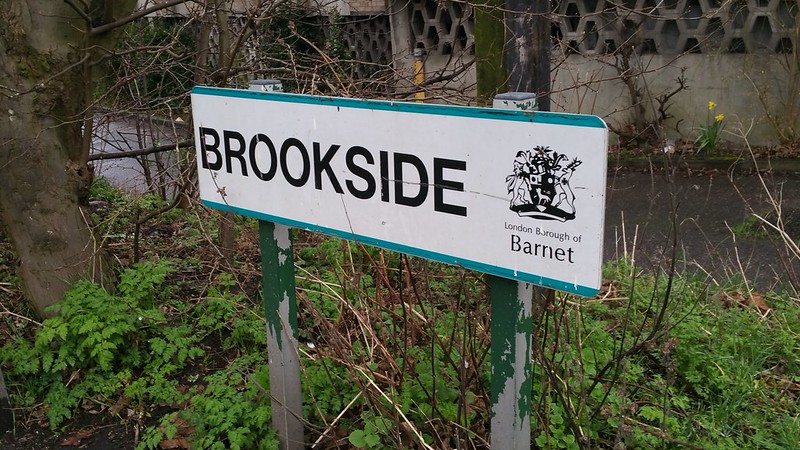
I love that this sign is in caps. Its like someone unreasonably shouting BROOKSIDE at you.

Untitled

Something draws me to this place. It could be the quaint little public toilet in the middle of this scene, next to all the bins stacked higgledy-piggledy together.

Untitled

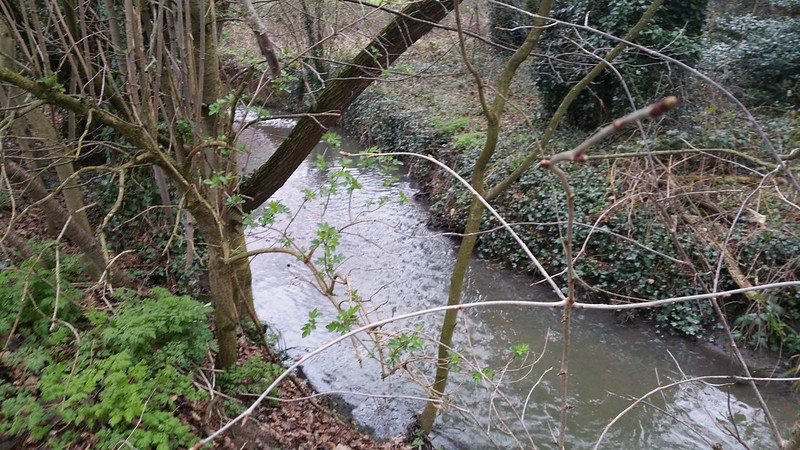
Although this is in an extremely residential and dense area of Barnet, the Pymmes Brook offers some escape...

Untitled

You can, for a moment, pretend that you're in some wooded forest.

Untitled

Untitled

Untitled

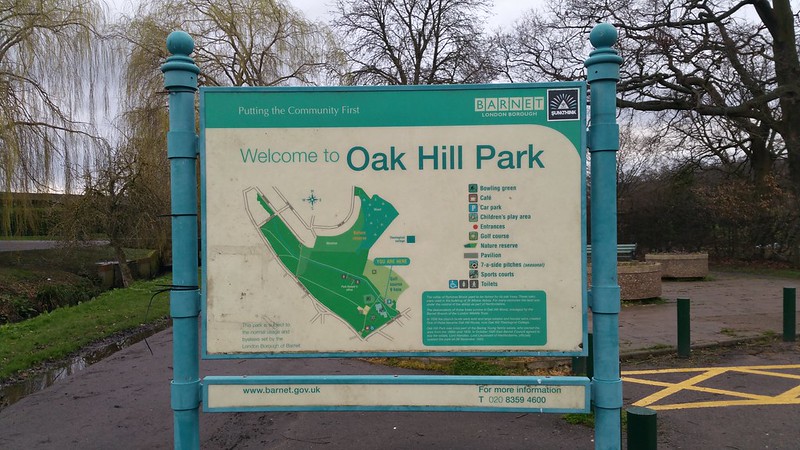
If you follow the river southwards you'll get to Oak Hill Park.

Untitled

Untitled

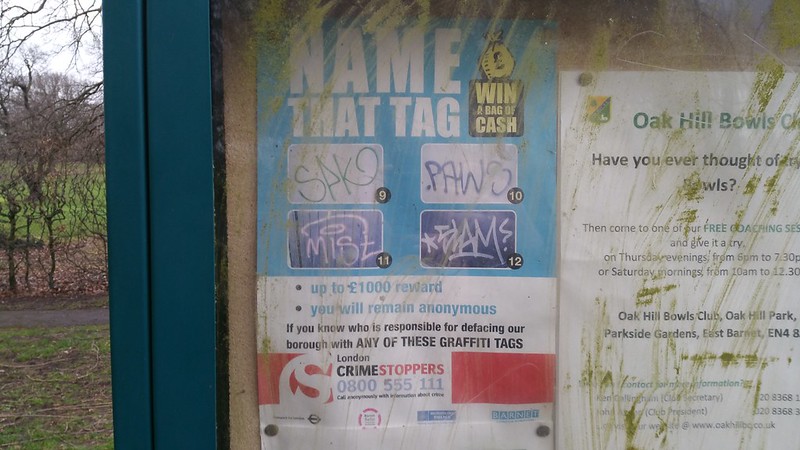
No jokes, they're asking for people to identify graffiti tags here.

Untitled

Going further south it enters more endless residential suburbia.

Untitled

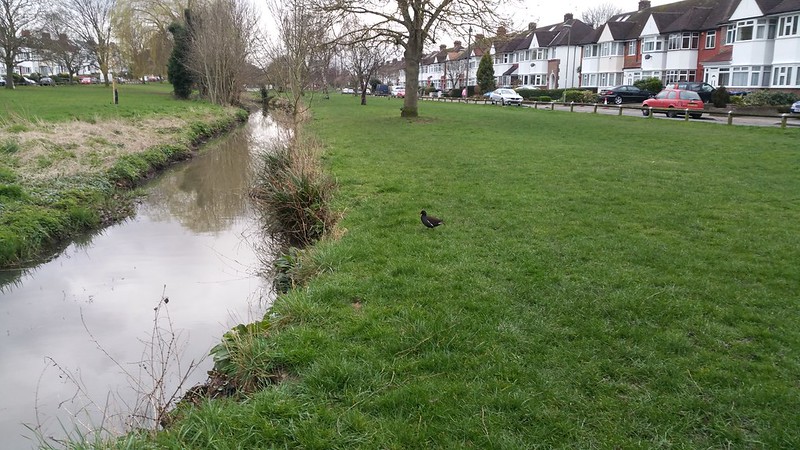
As I trod noisely along the banks of Pymmes Brook, I alarmed a wee little moorhen. Also known as 'skitty coot' because they are the most nervous of waterfowl that churps and twitches its tail nonstop whilst fleeing when it sees huuuumans.

Untitled

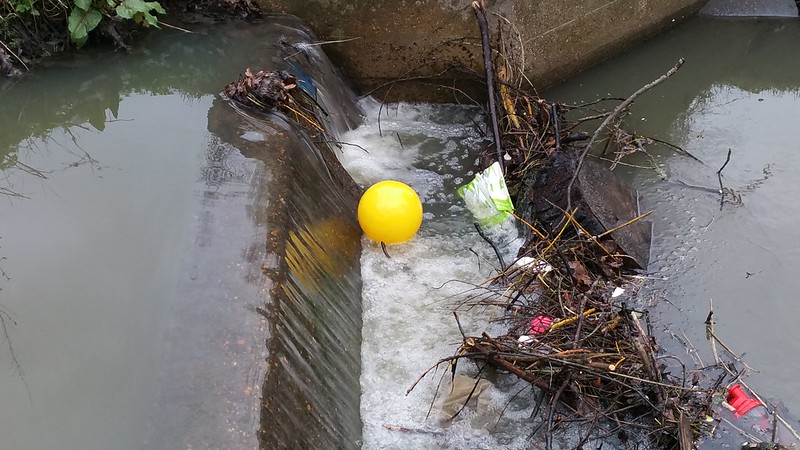
Naturally, there were balls to be found in Pymmes Brook. It seems that on every single walk I seem to find a lost ball.

Untitled

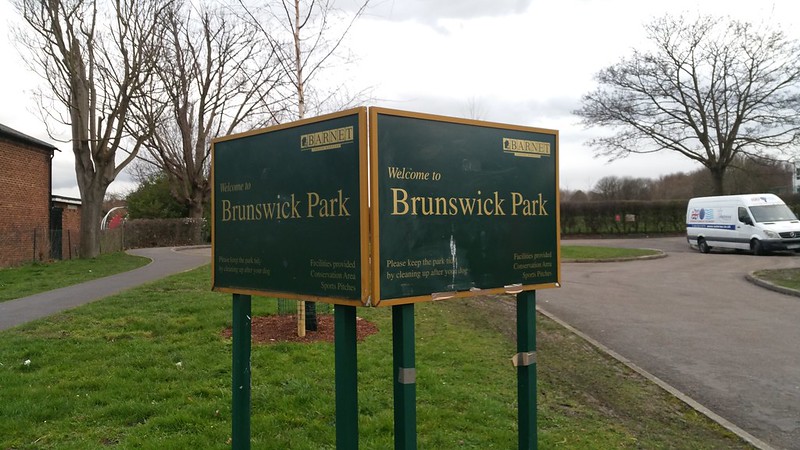
Pymmes Brook leads me into Brunswick Park.

Untitled

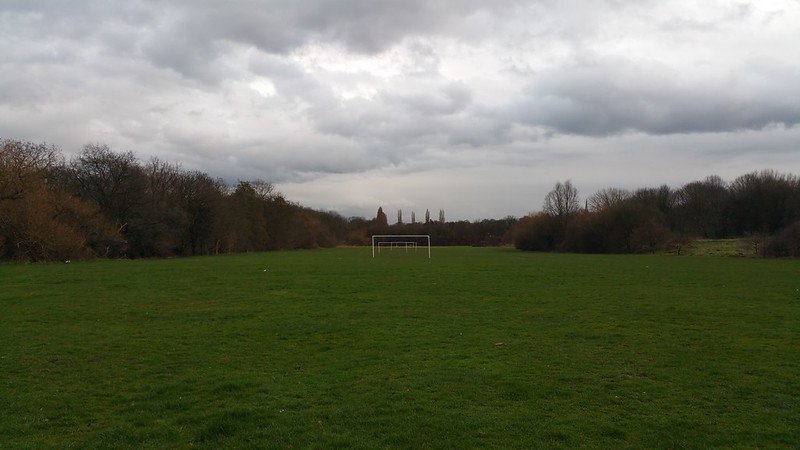
It is a genuinely lovely park with an expansive field and lots of beautiful grand trees to the right. Pymmes Brook still runs to the left.

Untitled

And scenes like this.

Untitled

There were many open pathways in this park and it had the ability to make you feel like you were in a huger park than just somewhere in Barnet.

Untitled

Problem is that I still wanted to follow Pymmes Brook, but for some reason if you follow Pymmes Brook into Brunswick Park, it just stops with a huge hill in its way. There was no way around this hill it seemed. So... I had to go up this hill.

Untitled

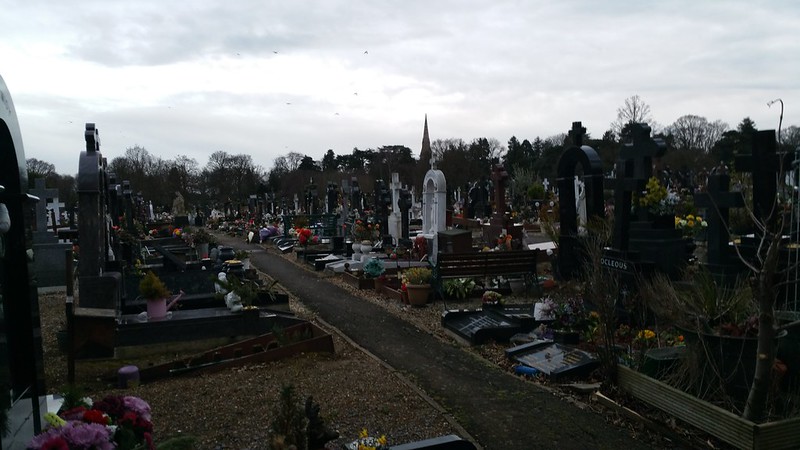
After crawling up some muddy hill (also because I am very bad at climbing and ascending slopes) I found myself mysteriously inside a cemetery!!! Was there a better way to go about going from Brunswick Park into the cemetery? I don't know but I also hadn't expected that it would be such a vast cemetery.

Untitled

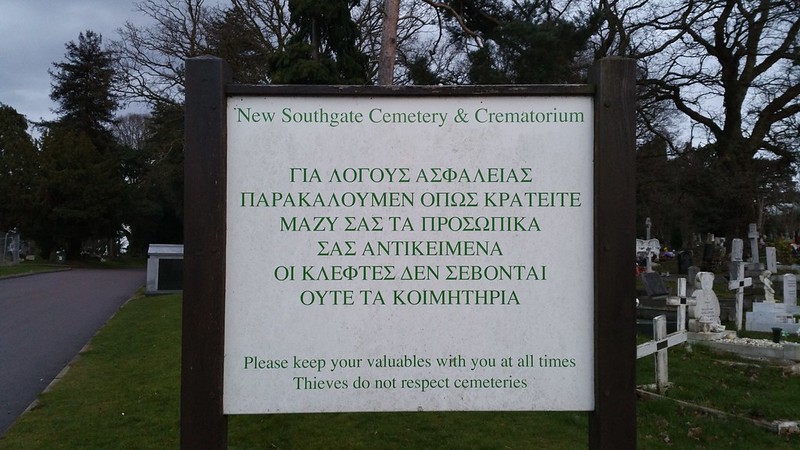
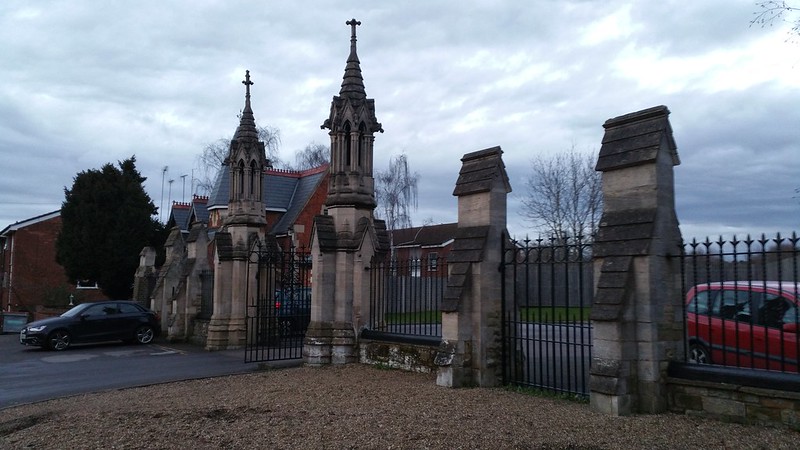
Worse still, I could see from the light that it must be getting very late (ie: the sun would set at 4 or 5pm) and in winter most cemeteries don't open till late! Meaning there was a genuine risk of being locked into this cemetery...

Untitled

Untitled

So I began running for the gates of the cemetery.

Untitled

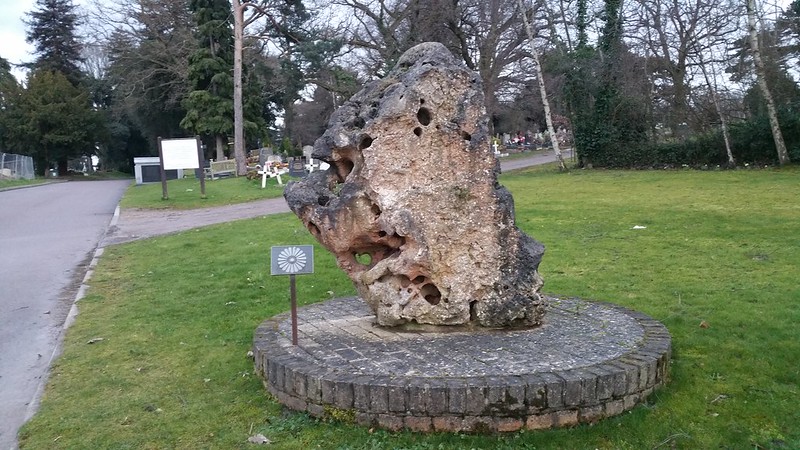
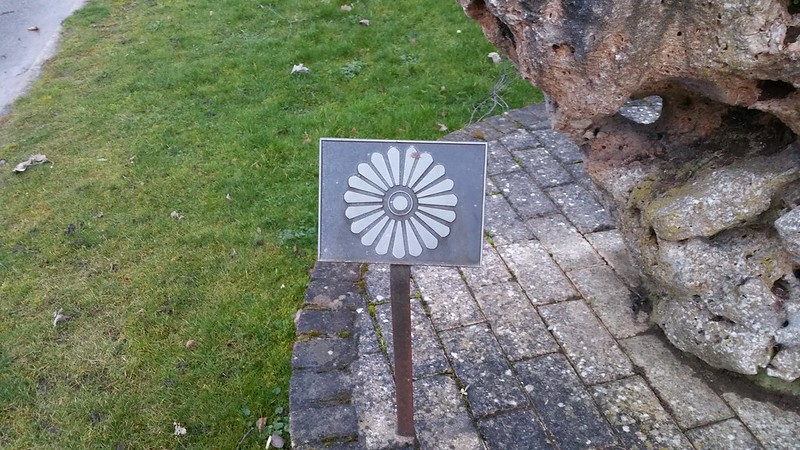
Along the way I saw this curious rock with a flower logo next to it.

Untitled

Just a flower symbol. I still don't know what it is. Any ideas?

Untitled

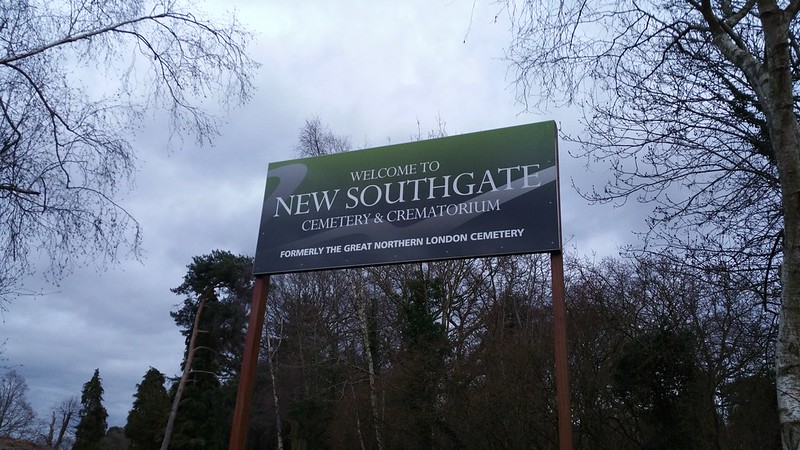
I made it out of the cemetery just in the nick of time but by now it was too late to try to find where Pymmes Brook eemerged on the other end of the Former Great Northern London cemetery.

Untitled

Untitled

So I eventually found my way back to New Southgate Station where I could get straight home from...

The Walk: