Sunday, 18 May 2014

The Tableaux Vivants of Manchester Museum

P5142422

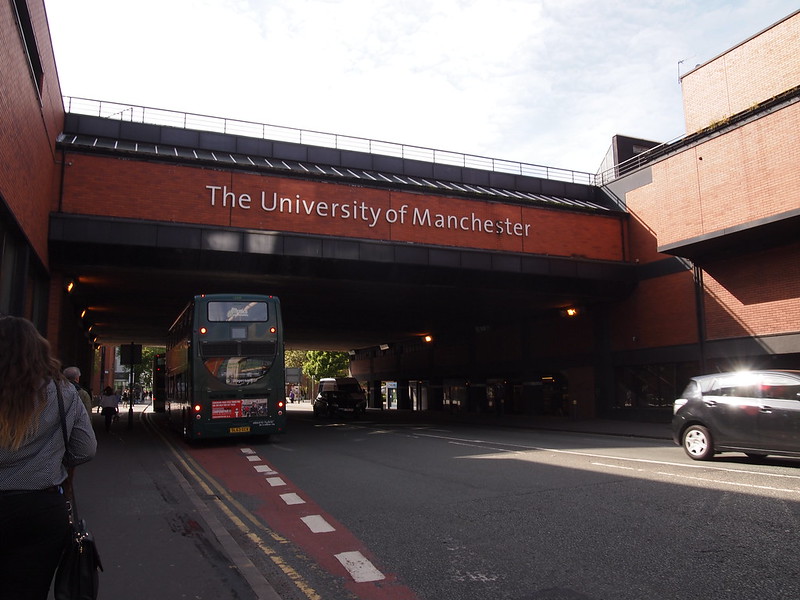
On a recent day trip to Manchester, I visited the Manchester Museum, the museum of the University of Manchester. It happened to be directly opposite the building I was in - right opposite Kilburn Building (blocky, red-bricked Computer Science building) and University Place (building which looks like a big tin can). I was unexpectedly ejected from a campus eatery at 2.30pm, and by this point I required a little break from the non-stop RUINS THEORISING going on, and how fortuitious to have a museum right there...

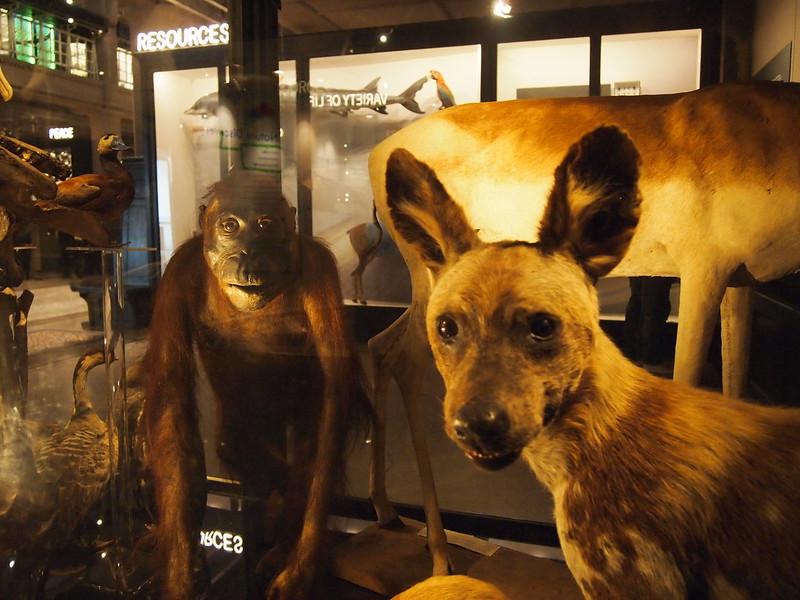
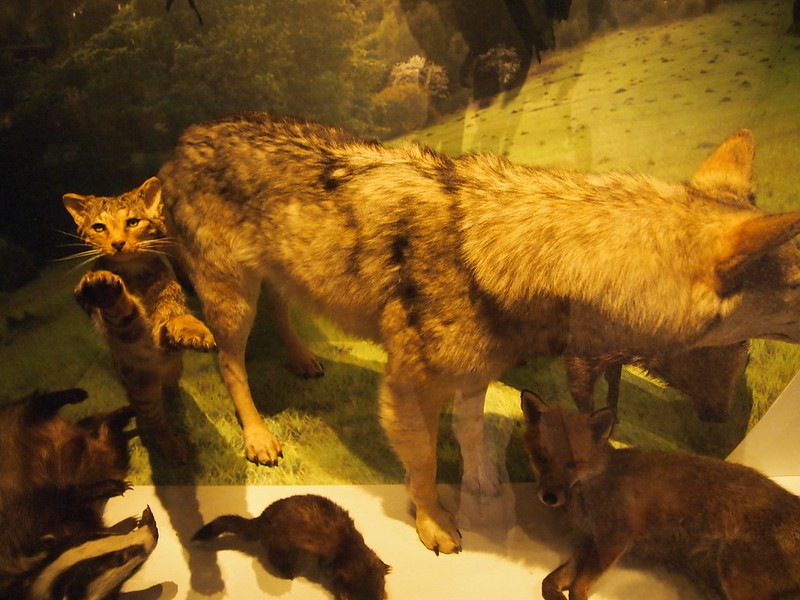
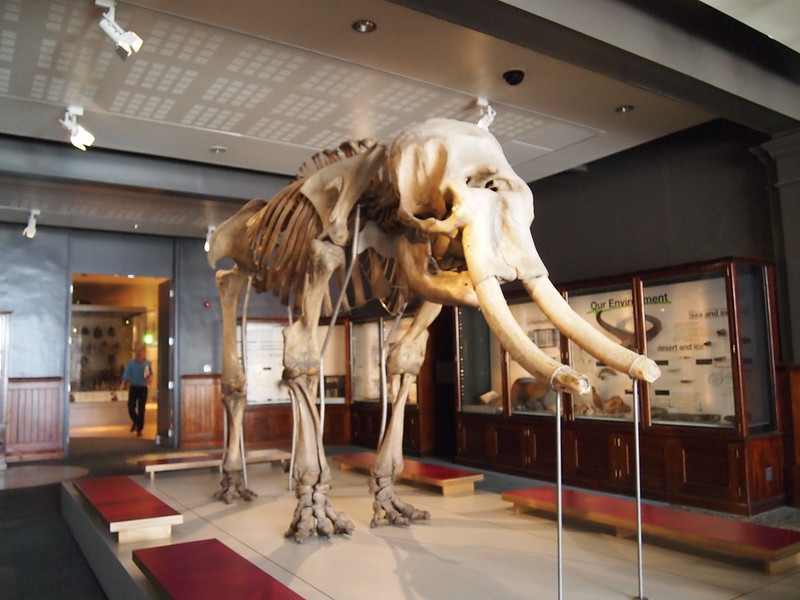
The ground floor has a temporary gallery space which currently has an exhibition called "From the War of Nature", which uses tableaux vivants to tell various stories of different animal communities fighting for survival in nature. This temporary show has no scientific labels and the stories were painted in broad and rather general strokes, which seemed odd to me even if the taxidermy was beautiful. I actually almost stopped at this point, but fortunately I decided I might as well continue on to the second floor...
P5142451

P5142454

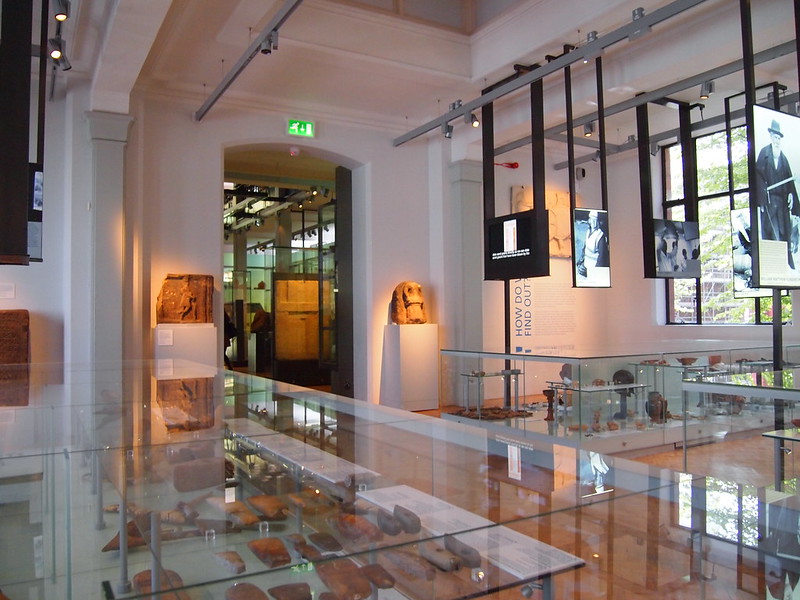
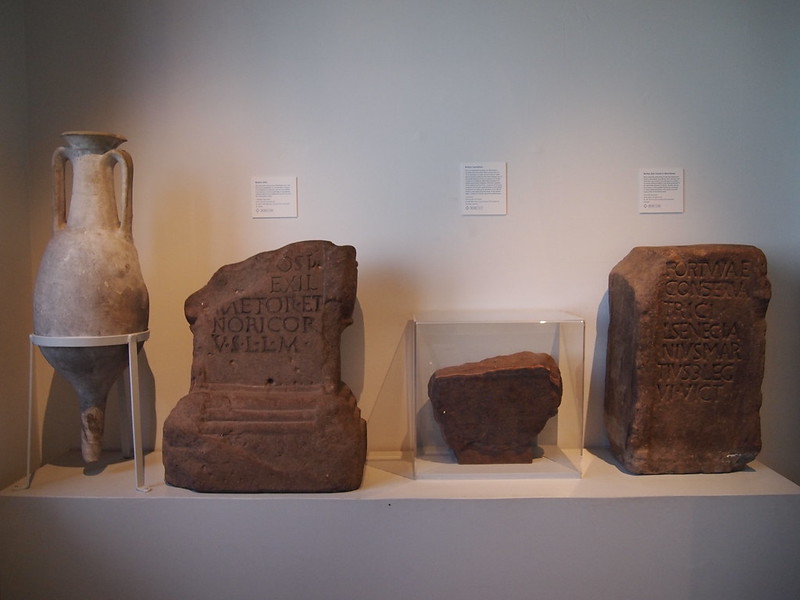
Things looked a lot more exciting upstairs, which began with some local archaeology of Manchester, including a collection of roman artefacts...
P5142455

P5142458

P5142469

P5142474

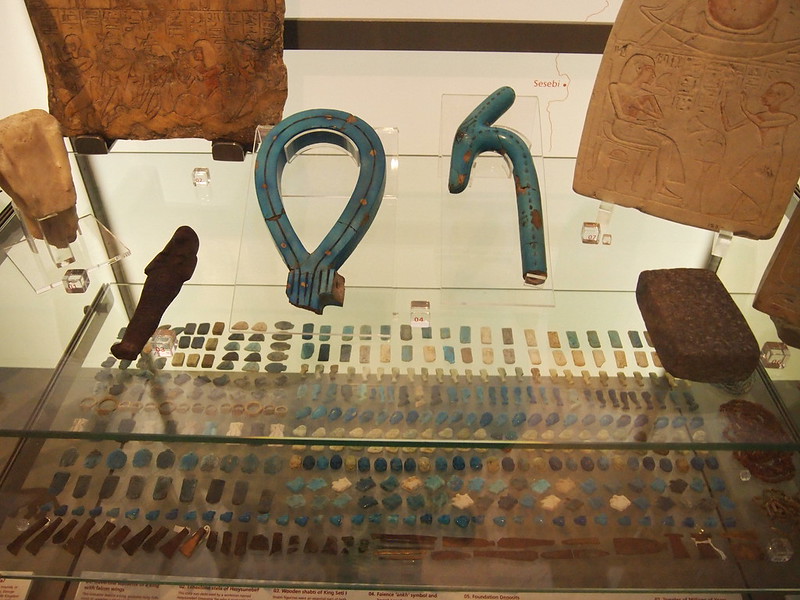
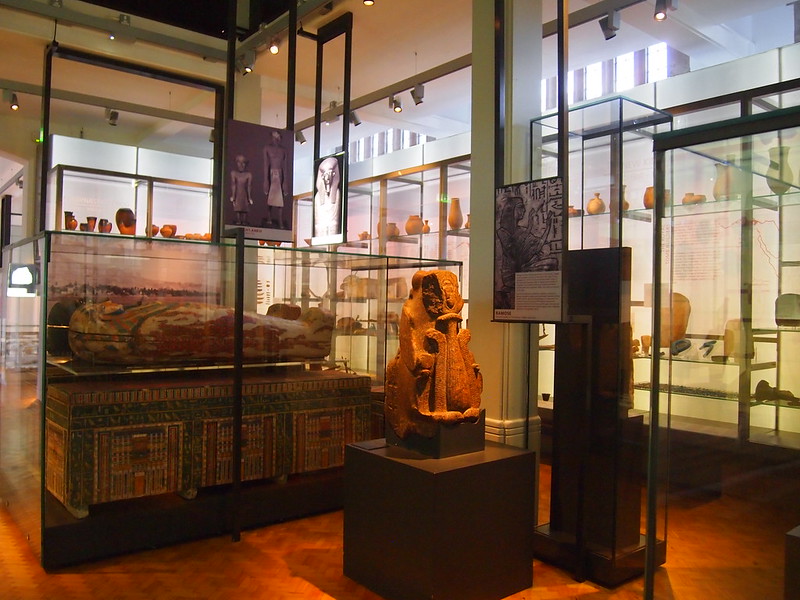
It was followed by what appears to be a rather comprehensive Ancient Egyptian collection, one of the most comprehensive in the UK - with apparently around 16000 objects in their Egyptology collection, including objects from prehistoric Egypt (c. 10,000 BC) to the Byzantine era (up to around AD 600).

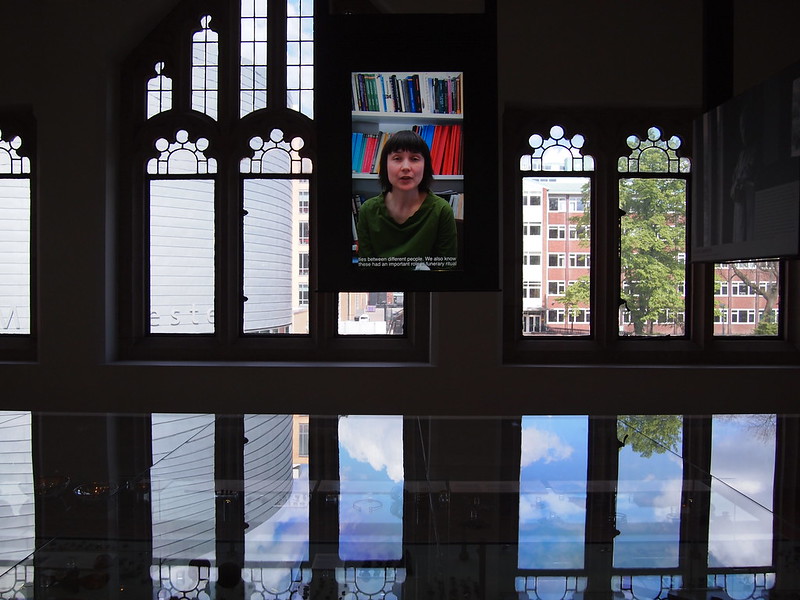
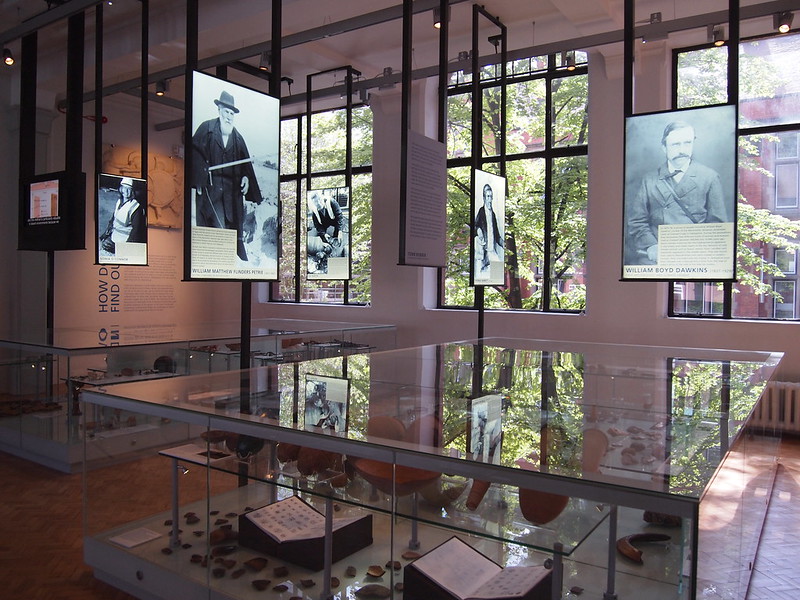
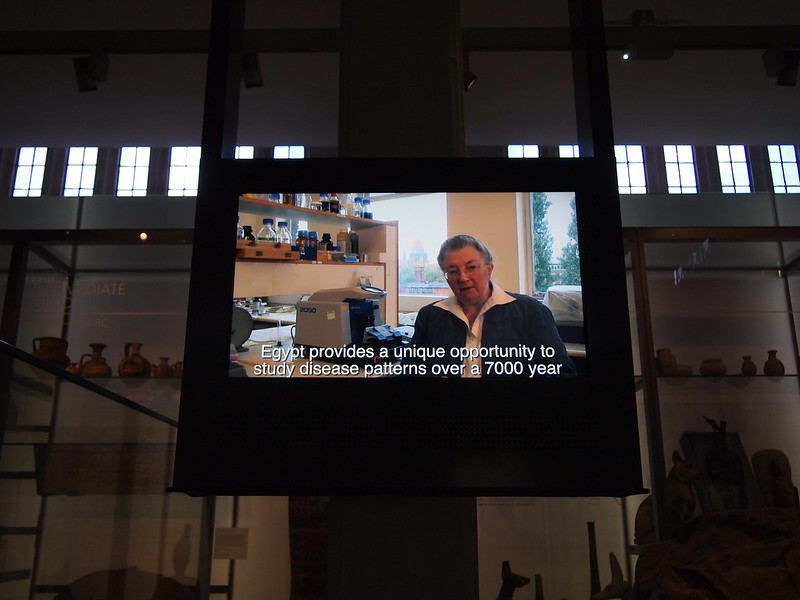
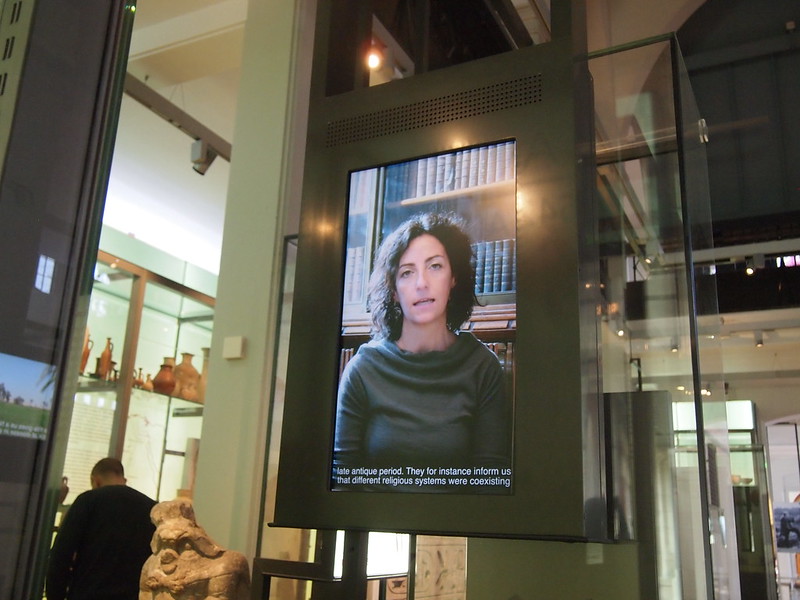
I suppose one thing that endeared me to this museum was the presence of these screens everywhere, which featured actual interviews with people working with the artefacts, and some screens featuring young visitors' reflections on the artefacts, drawing a connection between the artefacts and our daily life. This made the temporary exhibition downstairs make more sense - since I understood that the museum was designed to be as accessible as possible and more of an educational experience, a kind of space which wouldn't really portray Natural History and Science as something technical and complex, but instead as something to inspire the imagination.
P5142475

P5142476

P5142456

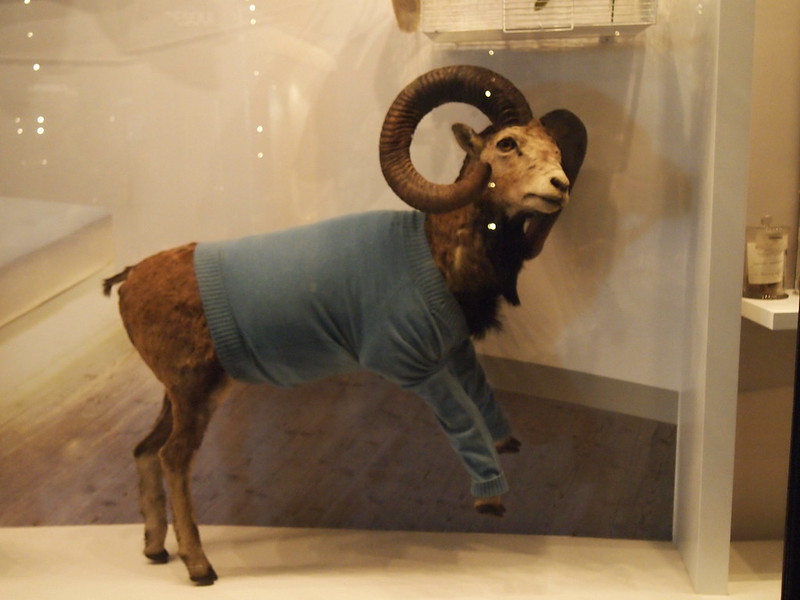
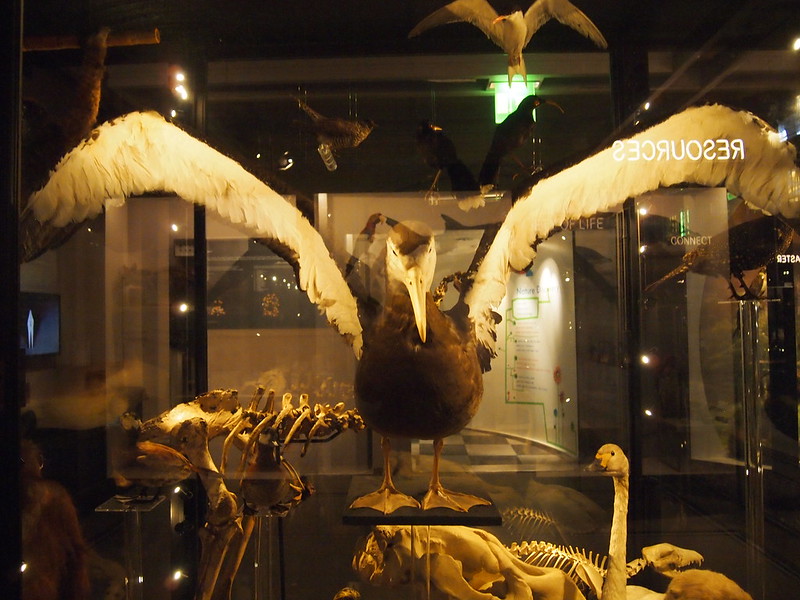
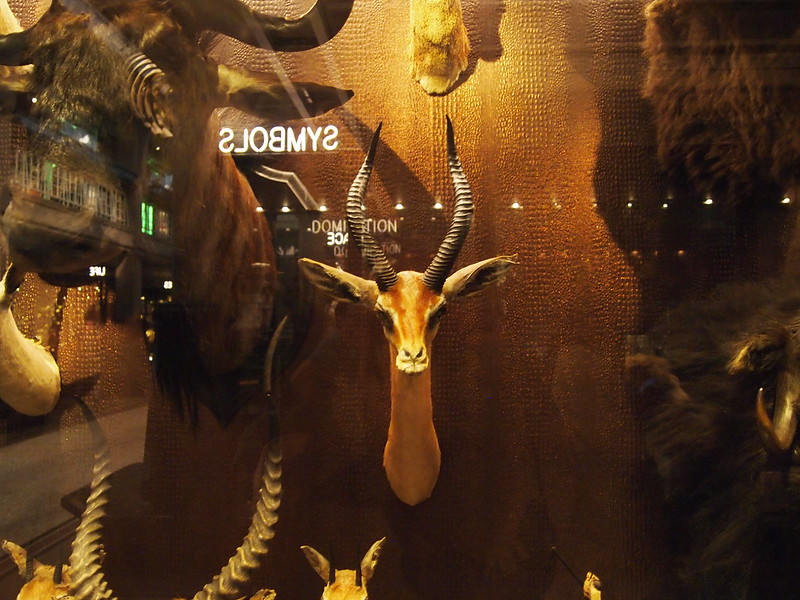
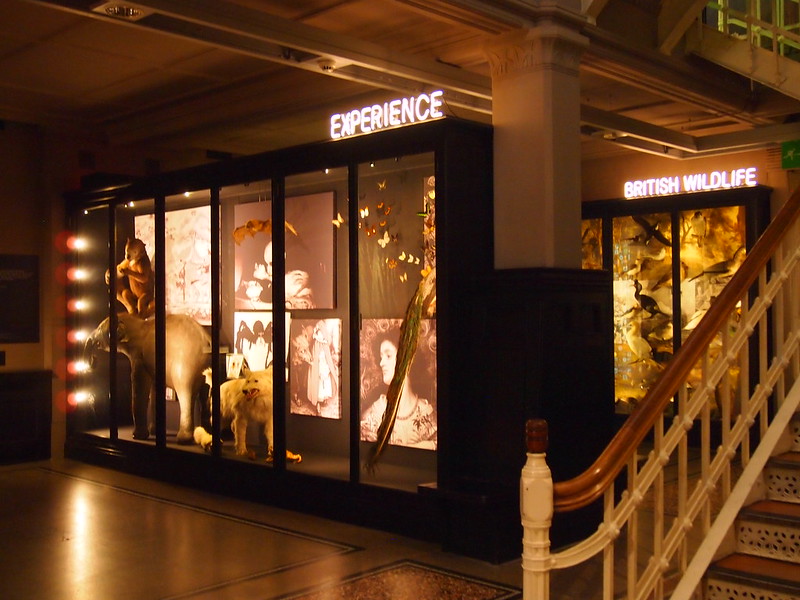
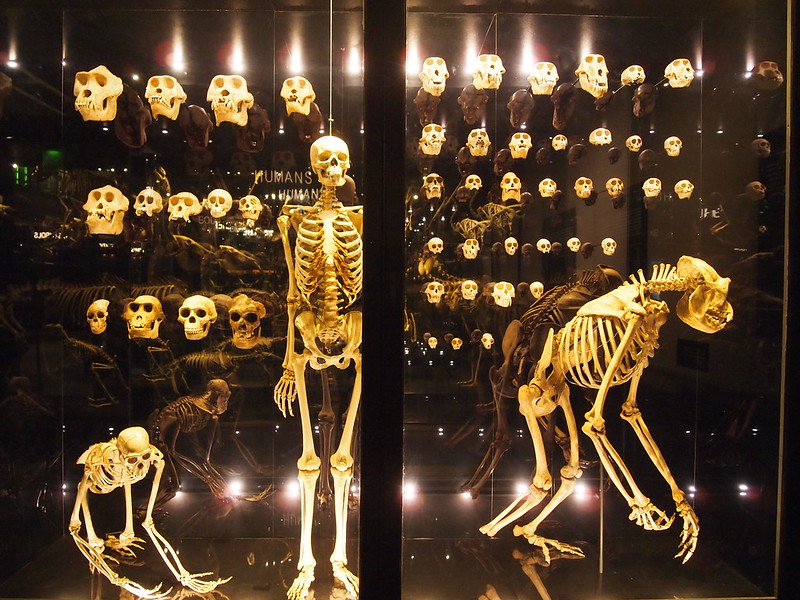
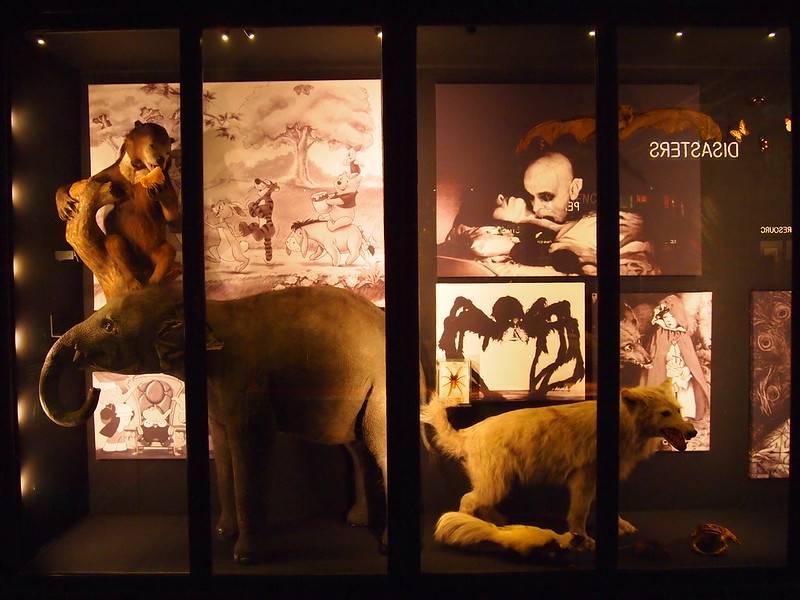
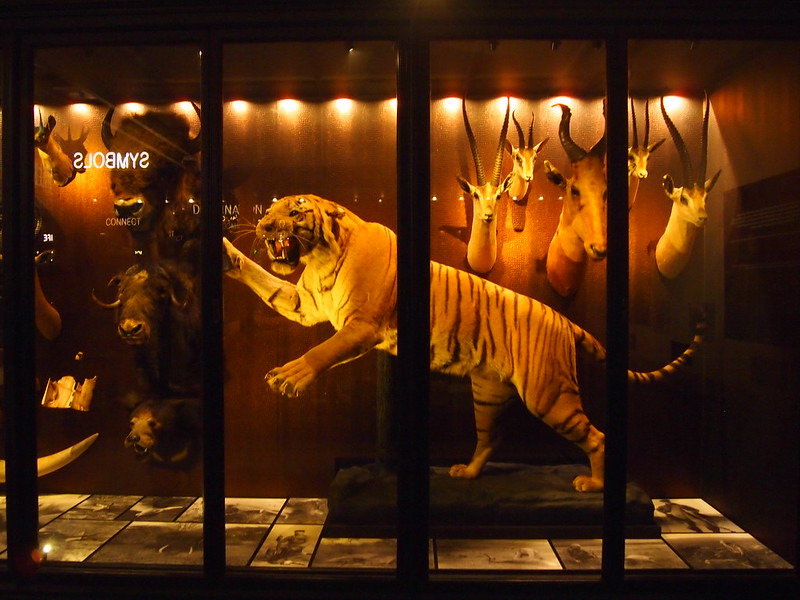
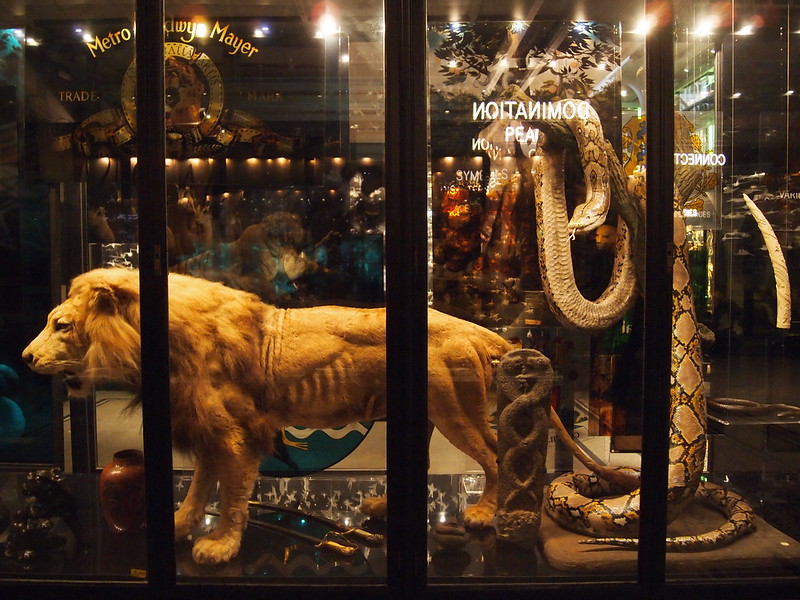
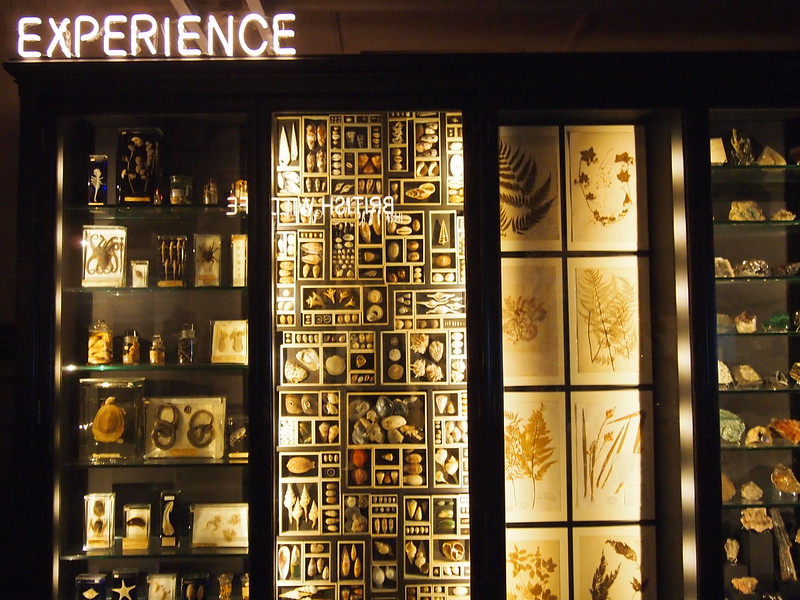
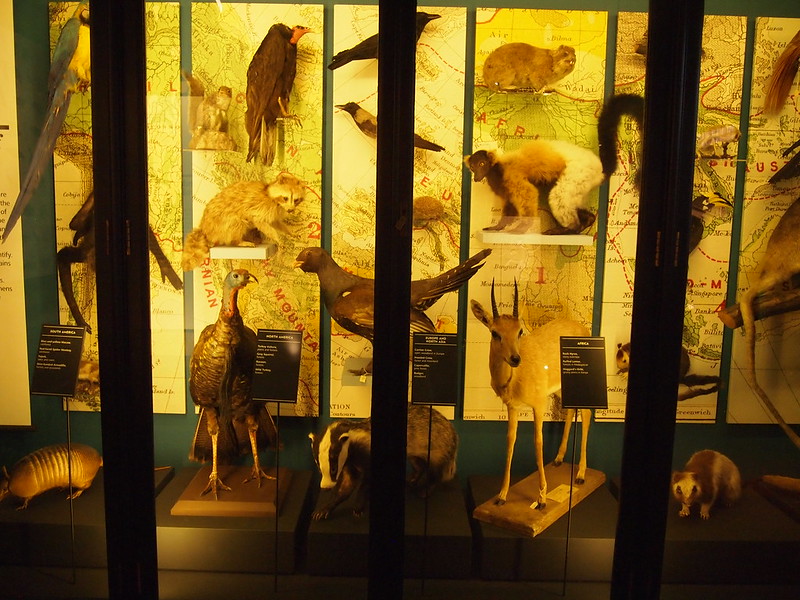
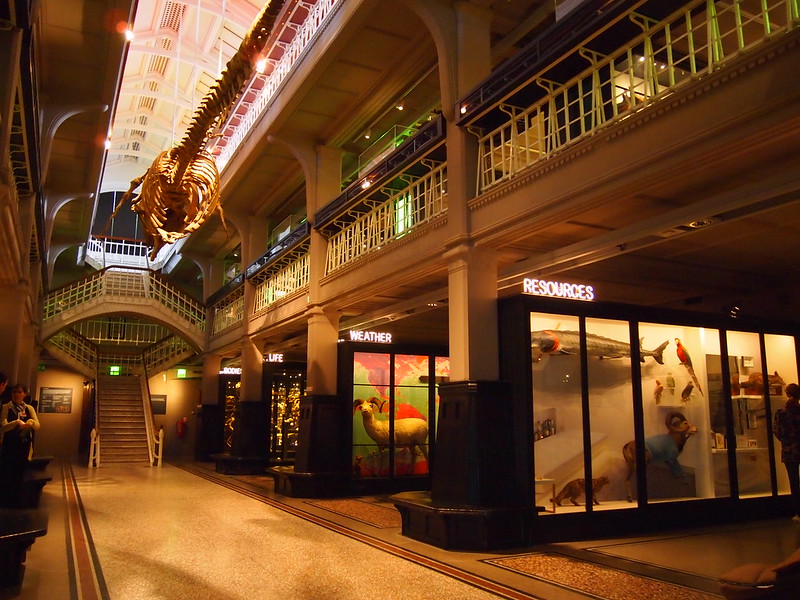
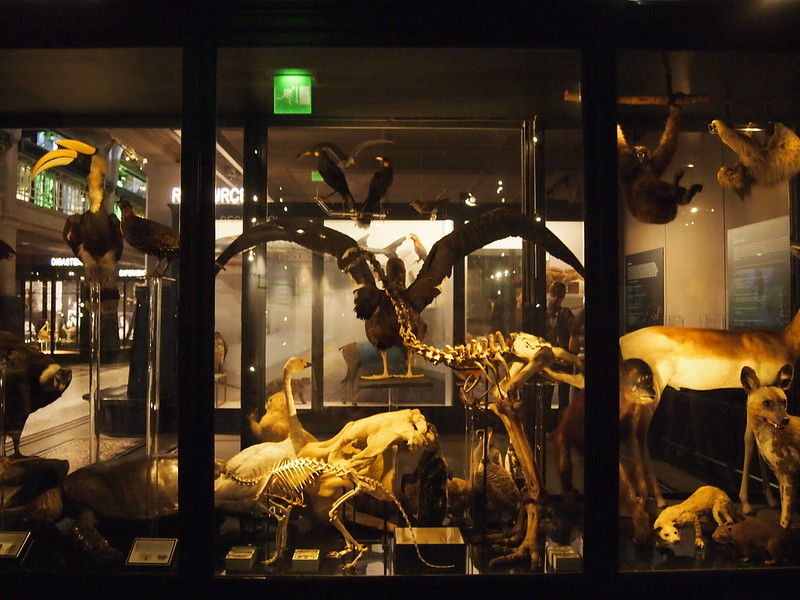
Next up was the most curious hall ever - more tableaux vivants which seemed almost like art installations, based on very broad issues and themes such as EXPERIENCE.... PEACE.... etc.

On the sides, they were flanked with thoughtful quotations by people working at University of Manchester who were deeply involved in researching those areas. For example, in a section about British Wildlife, they had an interview from a guy who worked in a wildlife protection group, and they had him telling a beatific story about how he went camping once and woke up alone in the middle of the English countryside and watched a bird flapping off into the sunrise in a sort of reverie, feeling the interconnectedness of life and the simple beauty of nature. I have to admit that this kind of naive earnestness in the video presentations veered rather dangerously on the romantic and trite - but in the end I still feel the intentions and sentiments behind it all were generally good.
P5142477

P5142478

P5142479

P5142481

P5142482

P5142483

P5142486

P5142487

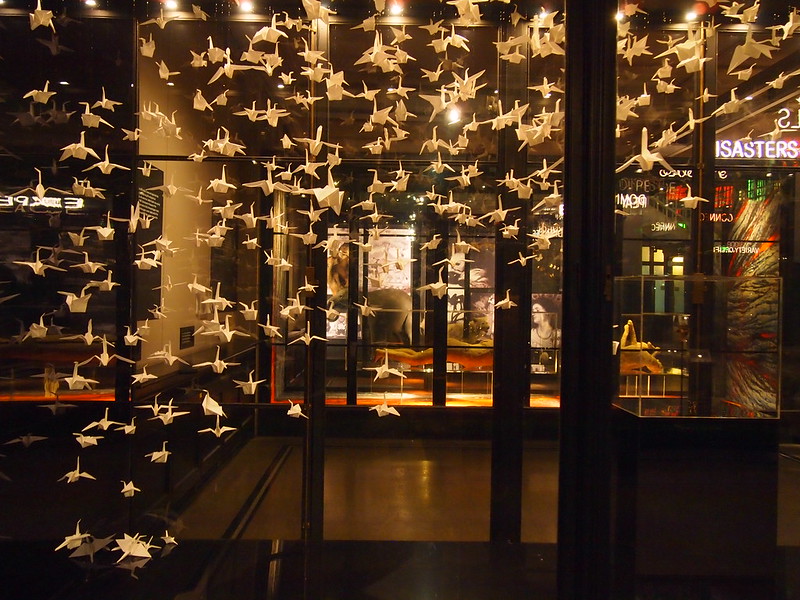
An installation of cranes???

P5142489

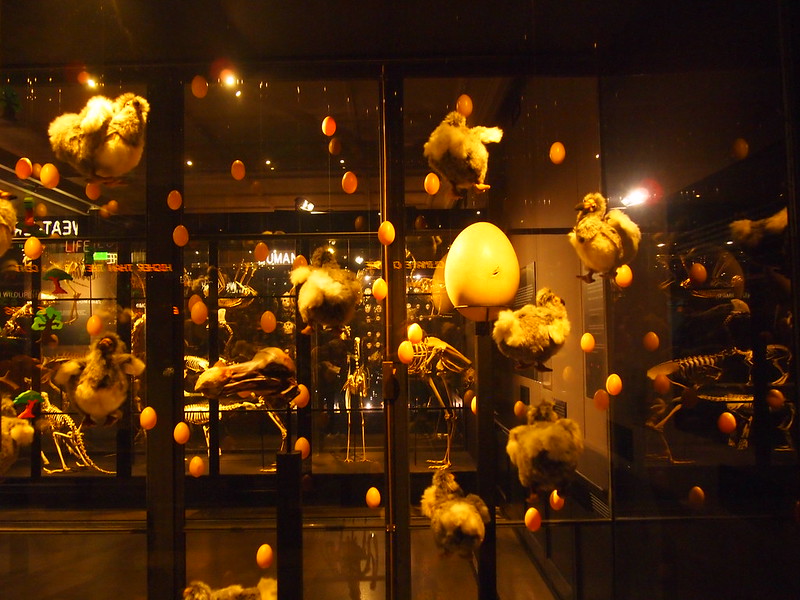
Floating stuffed dodos and eggs???
P5142491

P5142492

P5142496

P5142501

P5142502

P5142503

P5142504

P5142505

P5142513

P5142514

P5142515

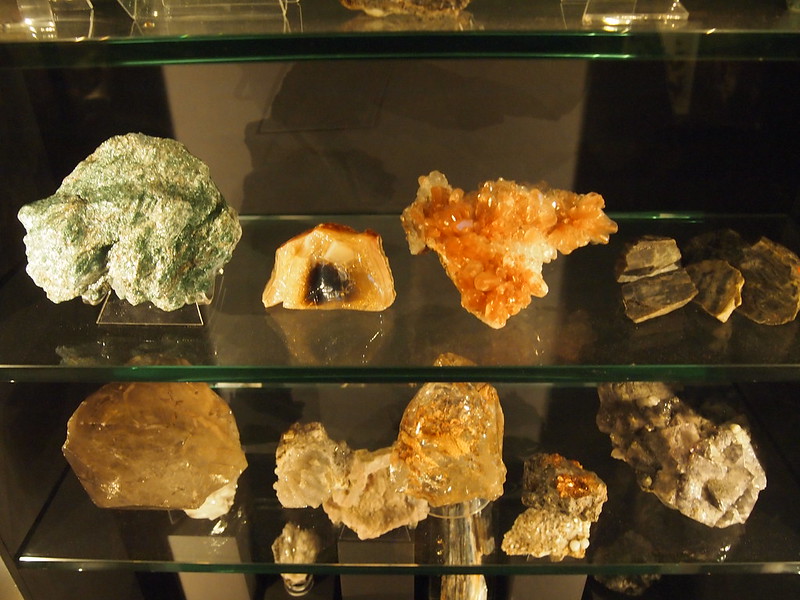
Rock

P5142516

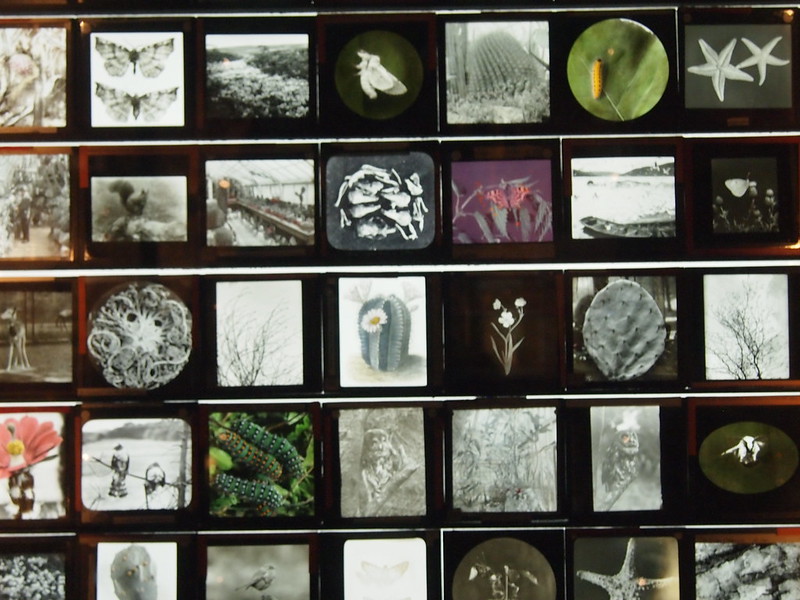
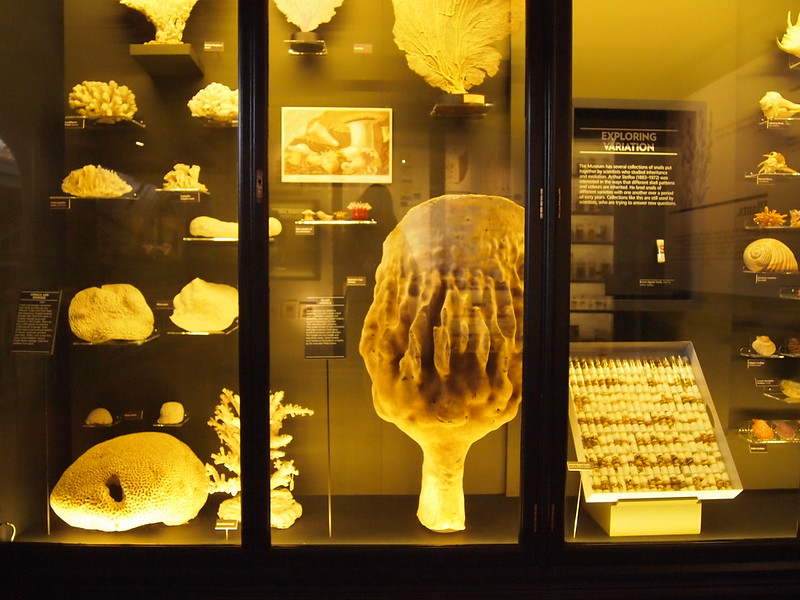
Collections

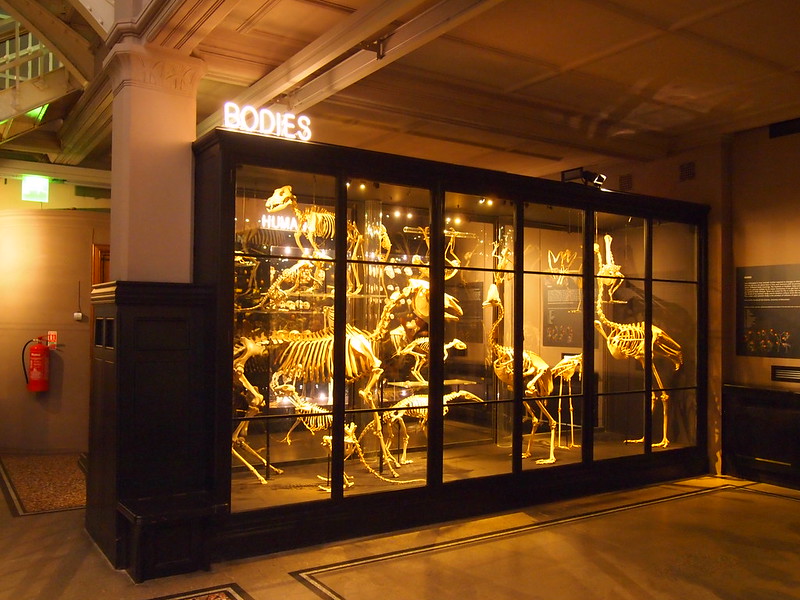
P5142522

P5142529

P5142535

P5142536

P5142540

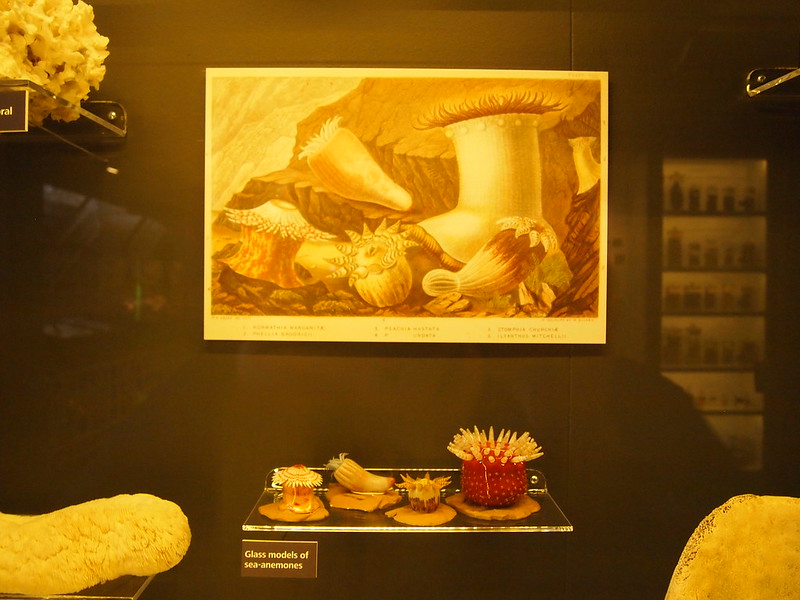
Blaschka Glass Models!

P5142547

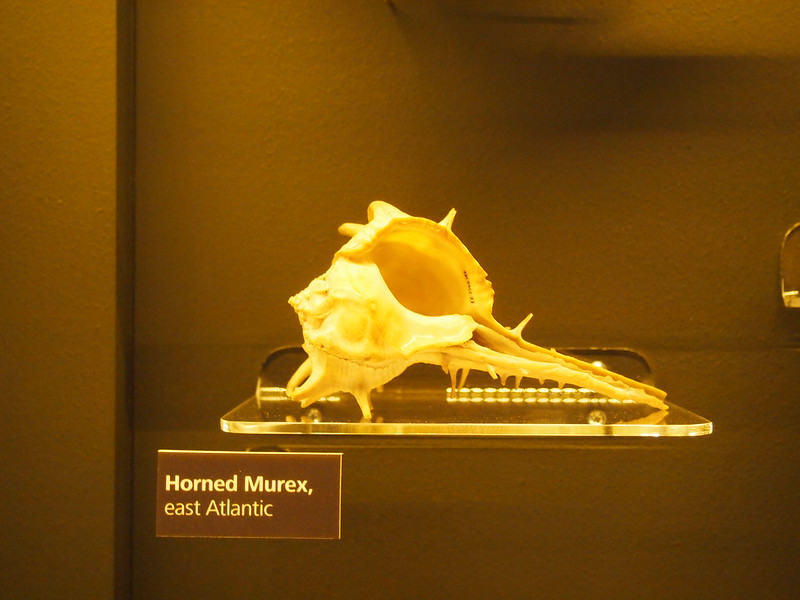
Horned Murex

P5142548

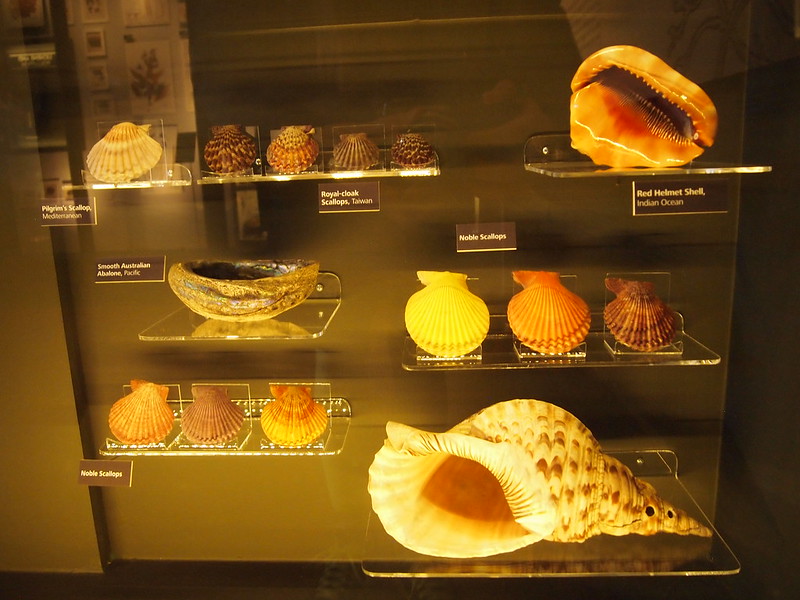
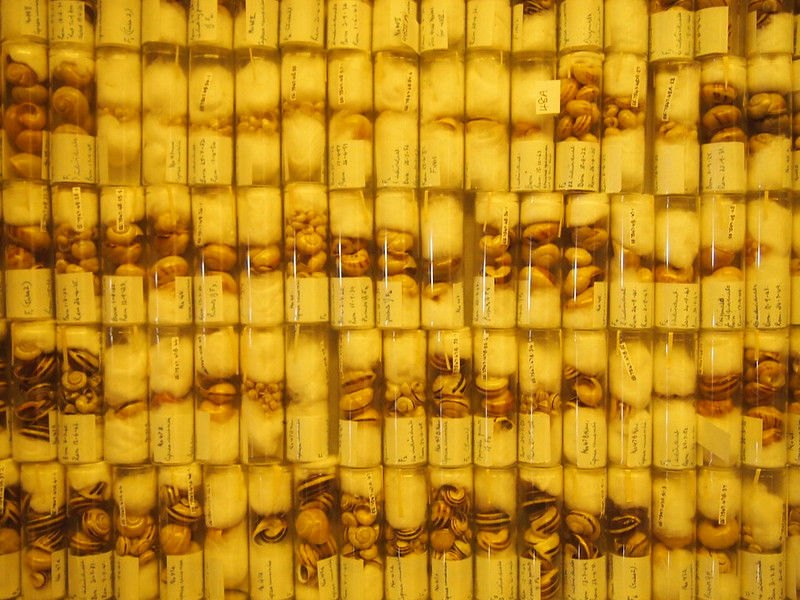
Shells

P5142544

Snails

P5142554

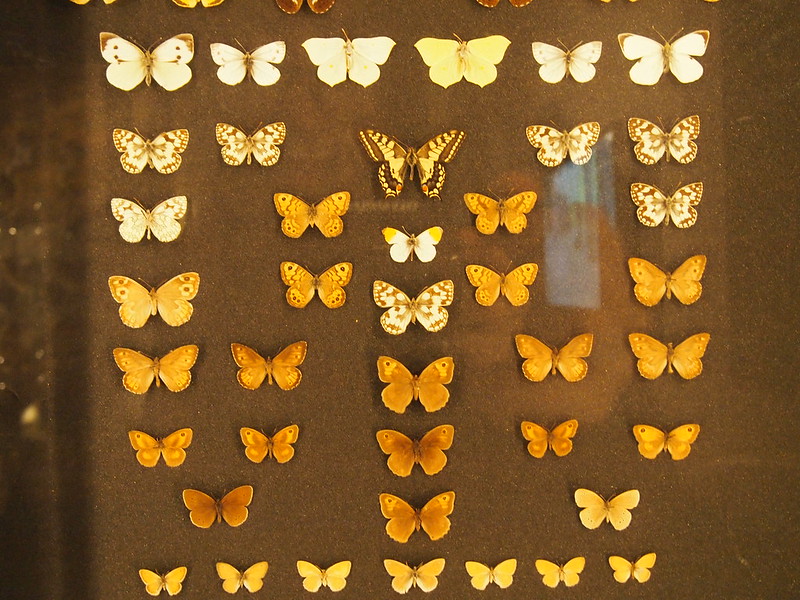
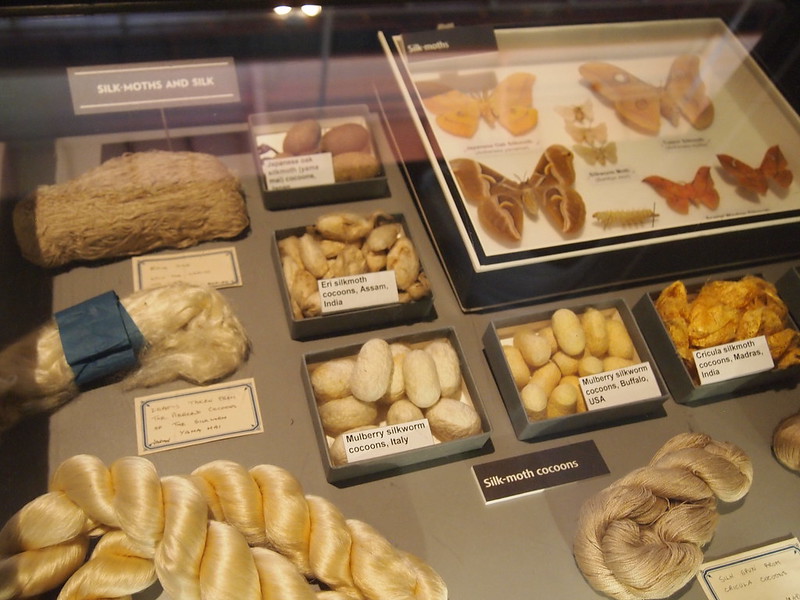
Moths

P5142564

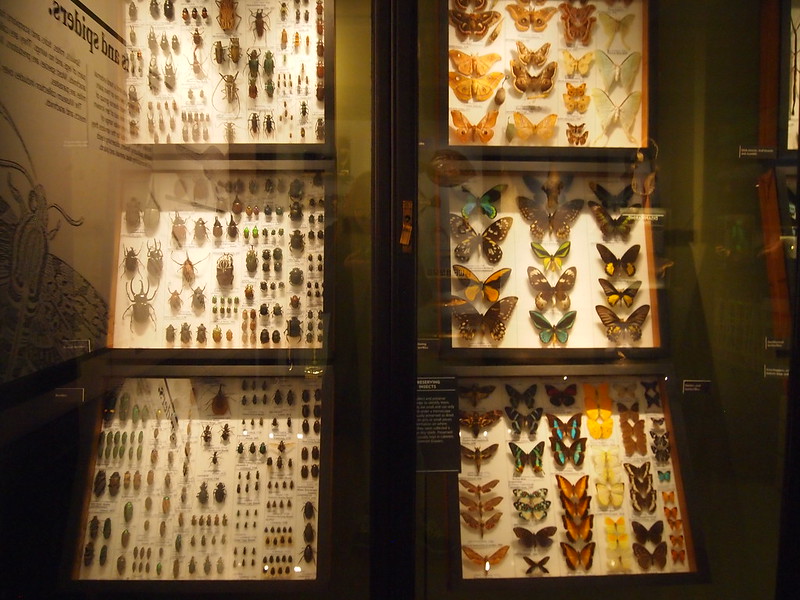
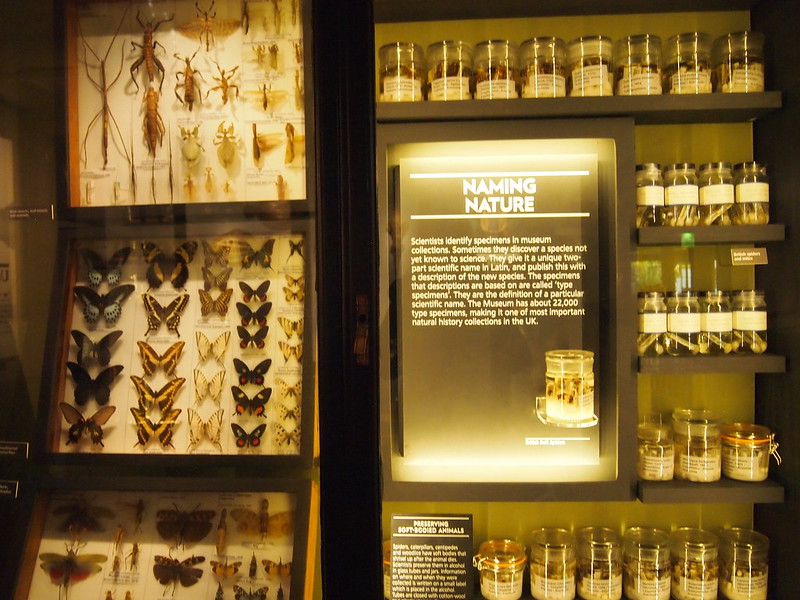
Insects

P5142560

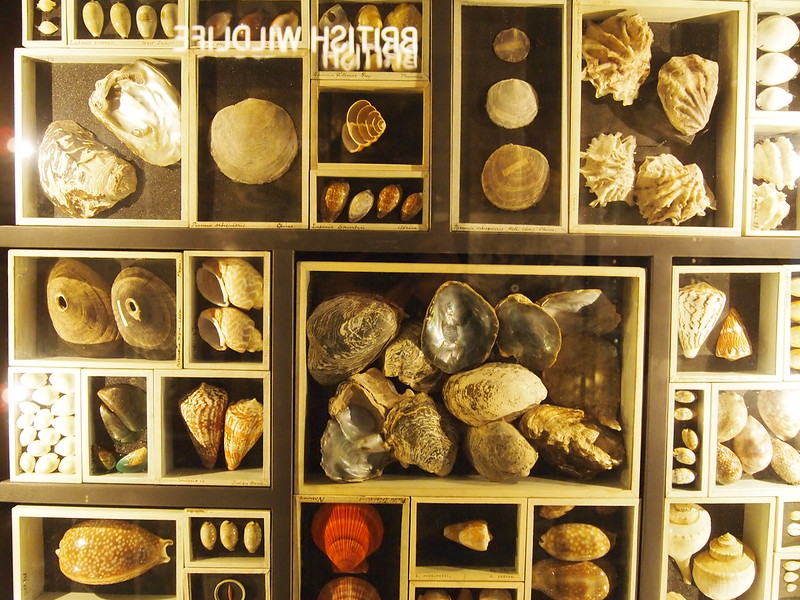
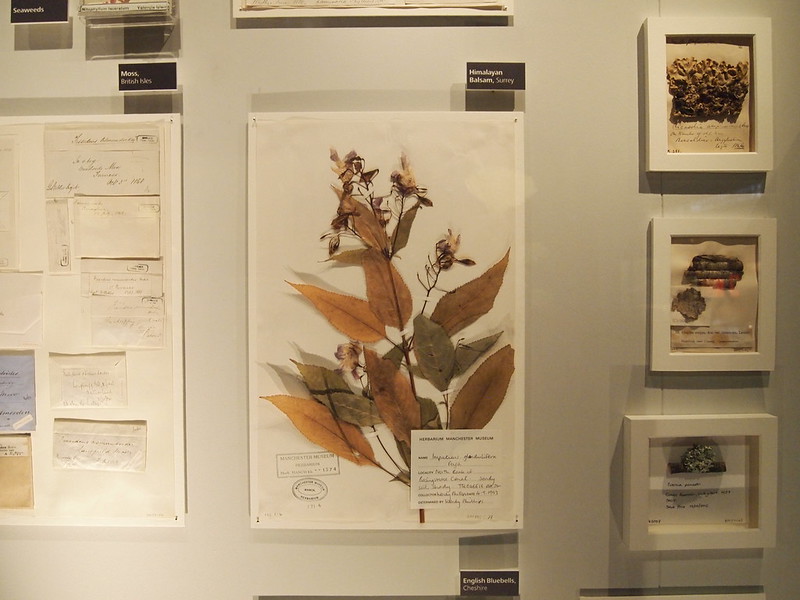
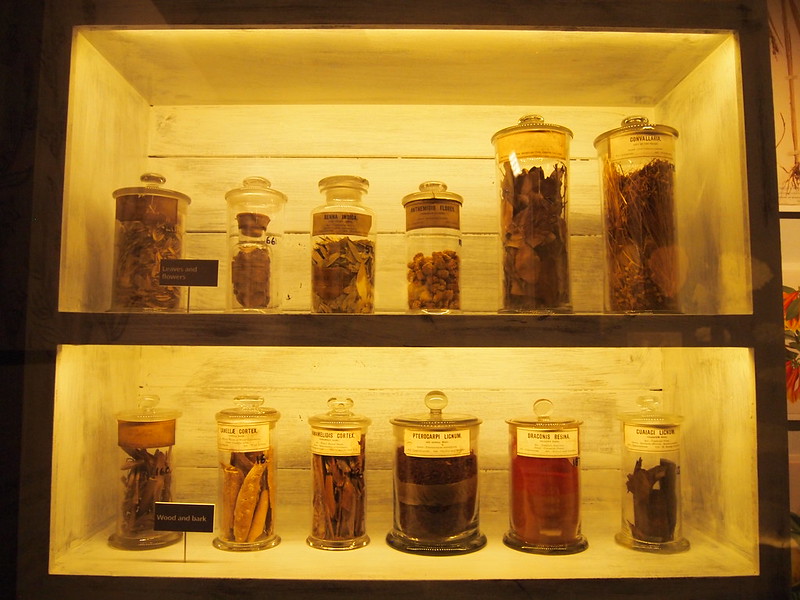
It says here that Manchester Museum has over 22000 type specimens. Also, to put things into perspective, Manchester Museum apparently has around 4 million specimens. Natural History Museum in London has over 28 million specimens. Still, these are collections that have involved the life's work of so many different individuals over the years.
P5142566

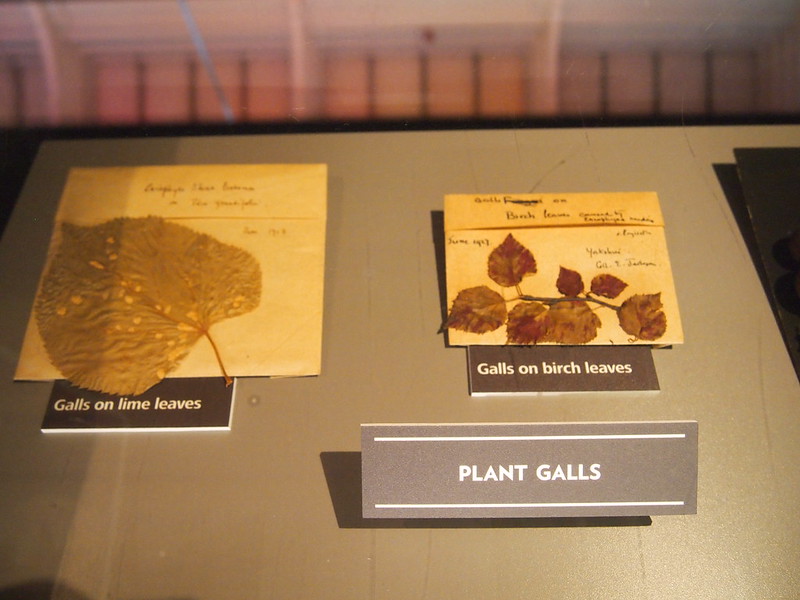
PLANT GALLS!!!

P5142568

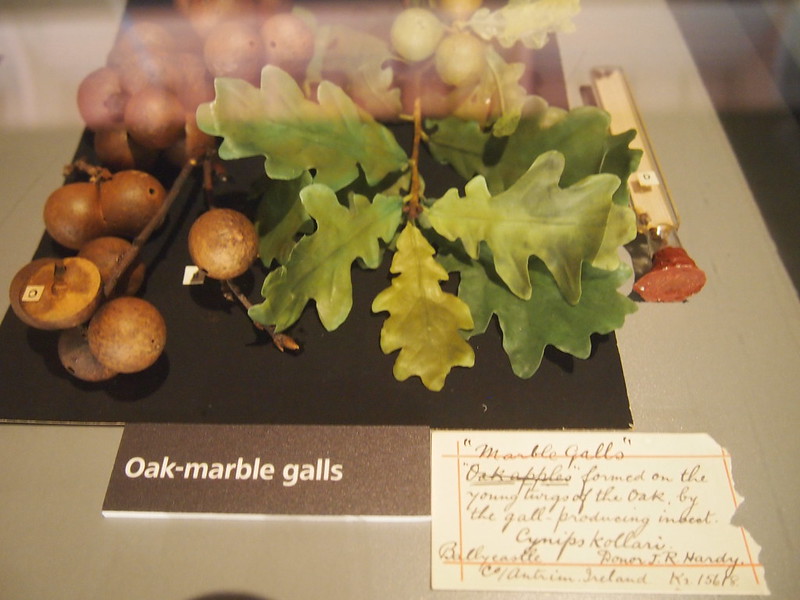
OAK MARBLE GALLS!!!

P5142572

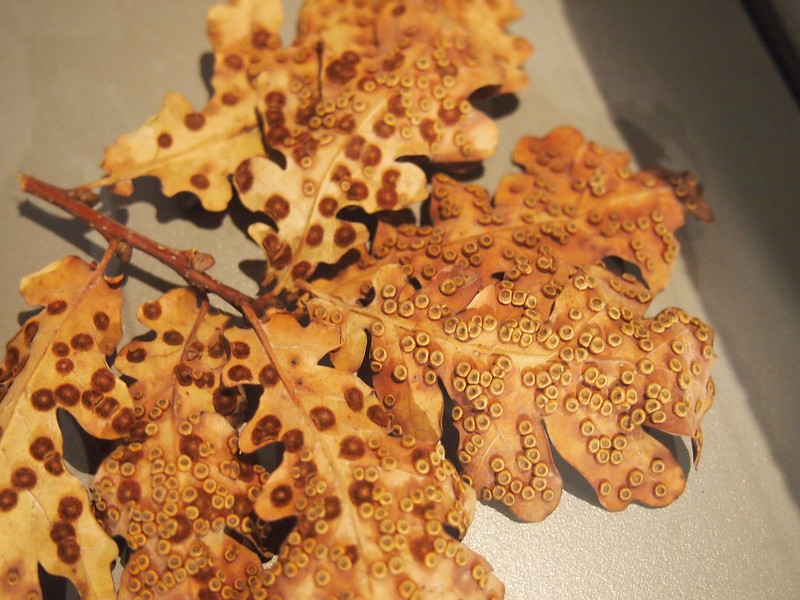
Silk-button Spangle Galls!!!
Need I explain how excited I am to see a plant gall section?
P5142586

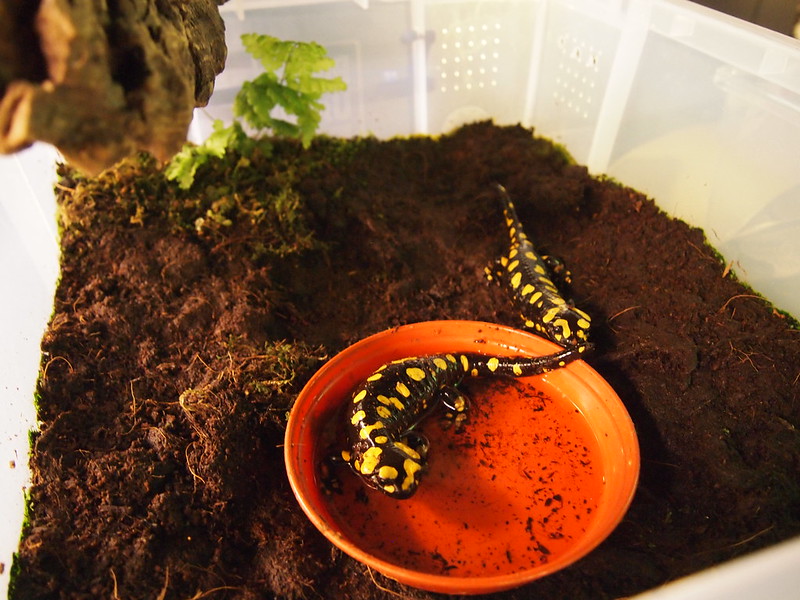
Fire Salamander in the vivarium, just arrived! (living animal section)

There are too many photos so I will end here for now. With such a vast collection including a section dedicated to "Museumology" and "collections", where I saw a section on Egyptian fakes and its no surprise that later when I checked it up, I found out that Mark Dion's "Bureau for the Centre for the Study of Surrealism and Its Legacy" was actually put together from Manchester Museum's vast collections - which, as with any huge collection, is bound to be full of eccentricities and overlooked corners full of strange items, unusable models, fakes, and other items.

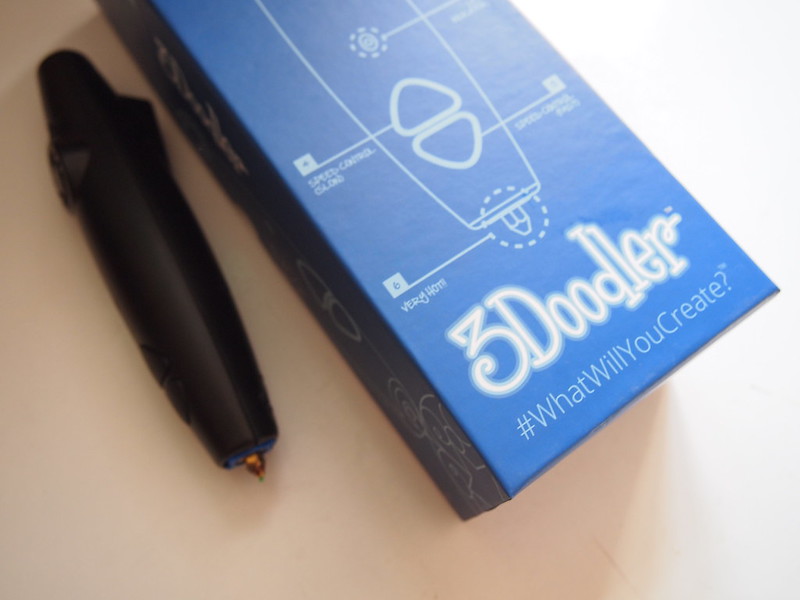
3Doodler: Drawing Hinges and Moving Parts with a 3D extrusion pen

P5182685

I got a 3Doodler last year but only brought it back with me from Singapore to London recently, as I had backed the Kickstarter long before I actually knew for a fact that I would move to London. I backed it for 85 USD, which is around £50/SGD106, and came with a few packs of ABS filament.

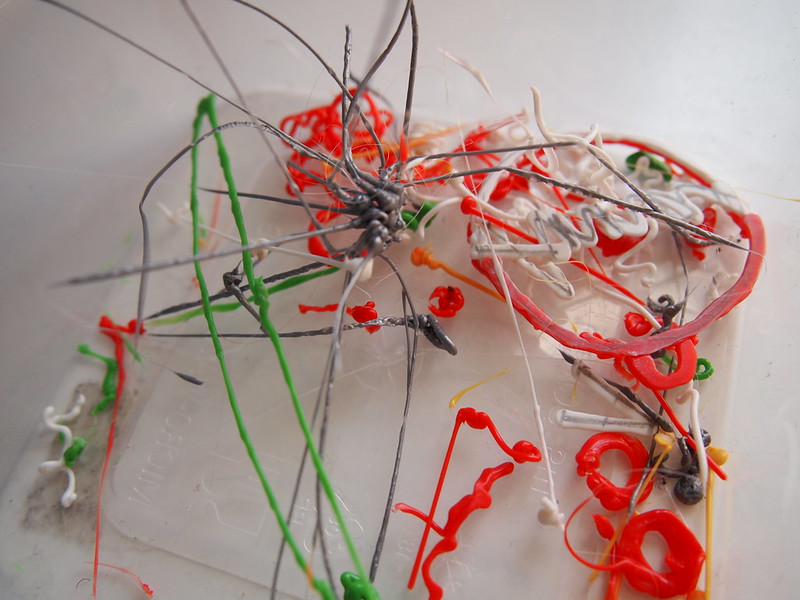
There seems to be dearth of serious, detailed posts on the use of the 3Doodlers - besides the endless pictures of deformed Eiffel tower sketches and squiggly bicycles and lopsided glasses being posted all over the internet. My experience with it was that it was very hard to control and a lot of my initial output looked very sketchy and generally very crap; it will take practice to get better results. Get ready to generate an unholy amount of terrible, useless solid squiggles. And if you were expecting to print something specific with angular and sharp detail, well, this is more like a very specialised glue gun which dispenses a 1mm line of ABS, so it seems to me that this messy, "sketchy" or amateur look to its output is almost unavoidable for most users.

After three weeks of using it fairly intensively, I'm finally getting the hang of the control of the tool, learning how to draw in the air, make consistently straight lines, make decent likeness of objects, and I've also figured out how to draw moving parts.

Simple Models


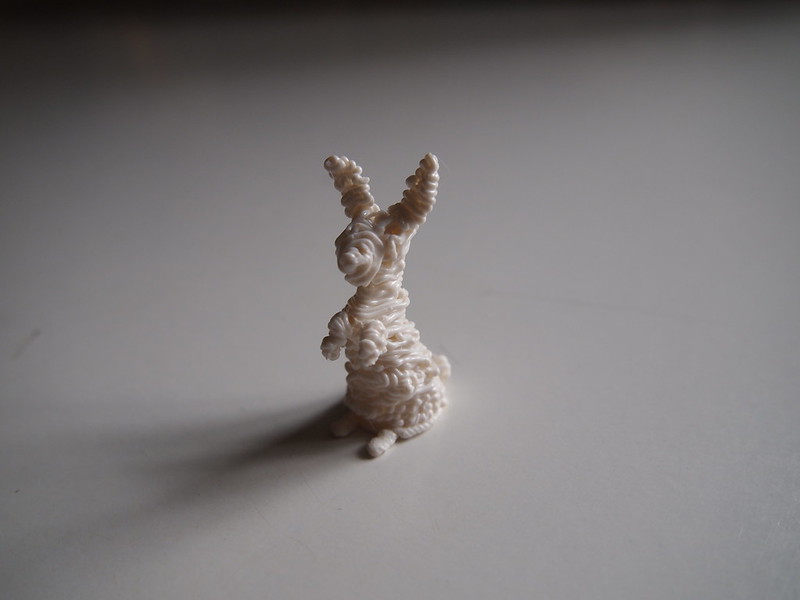
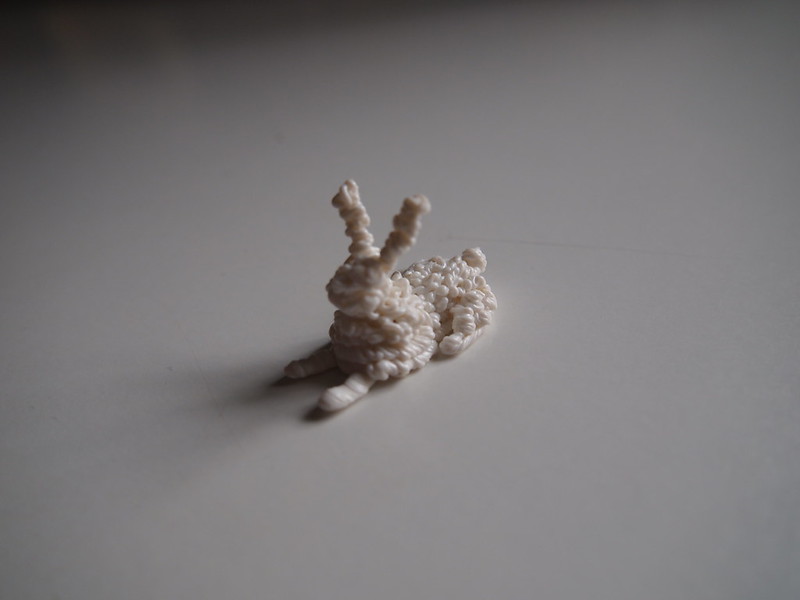
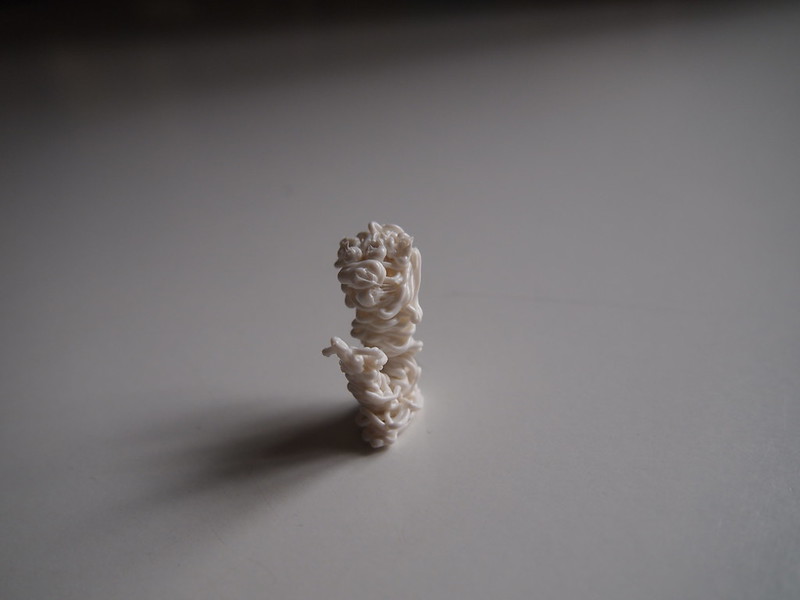
All the following models are actually hollow on the inside. While drawing them I pretended I was a very imprecise 3D printer and did it in layers. And because they are hollow, they are lighter and use up less filament.

P5172662

Rabbit model

P5172664

Rabbit model 2

P5172663

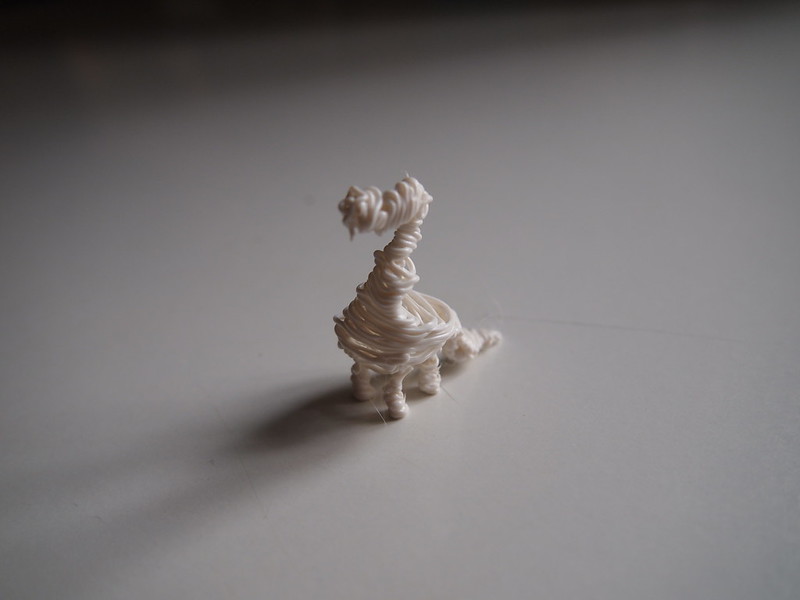
Dinosaur Model (with four feet)

P5172665

Impressionist Merlion Model

P5172666

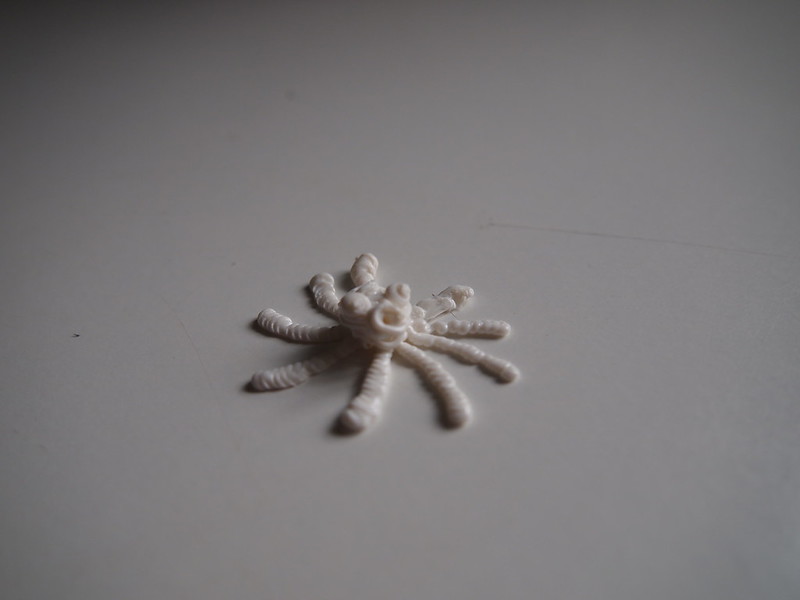
Octopus Model

P5182672

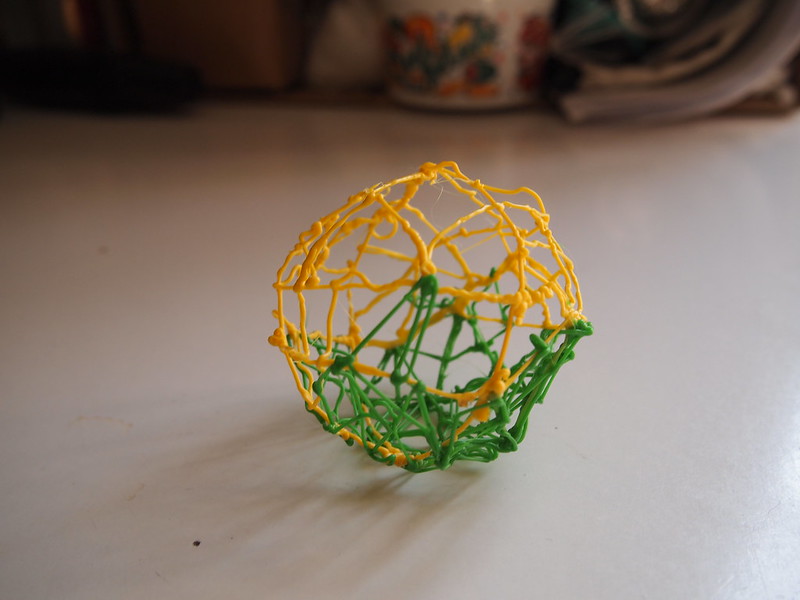
Ball (bouncy)

P5182673

Geometric Half Sphere (half-heartedly)

Models with Moving Parts


P5182677

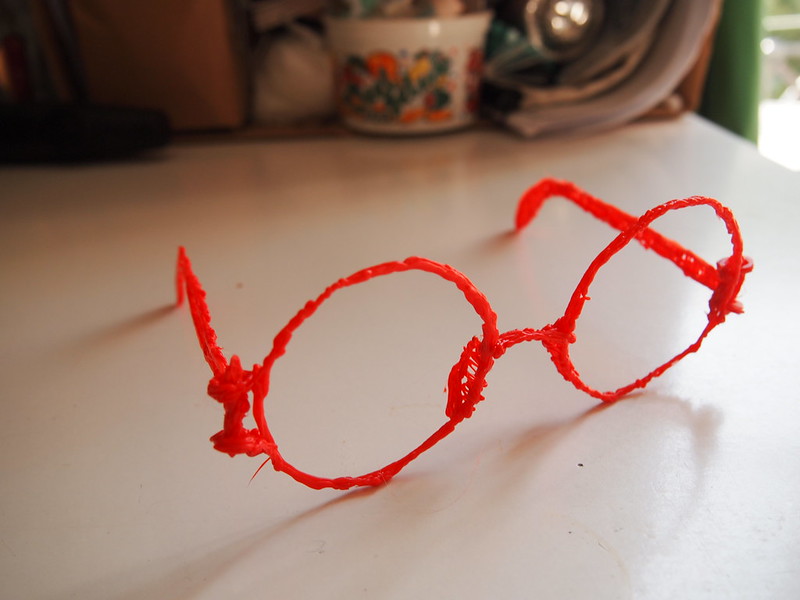
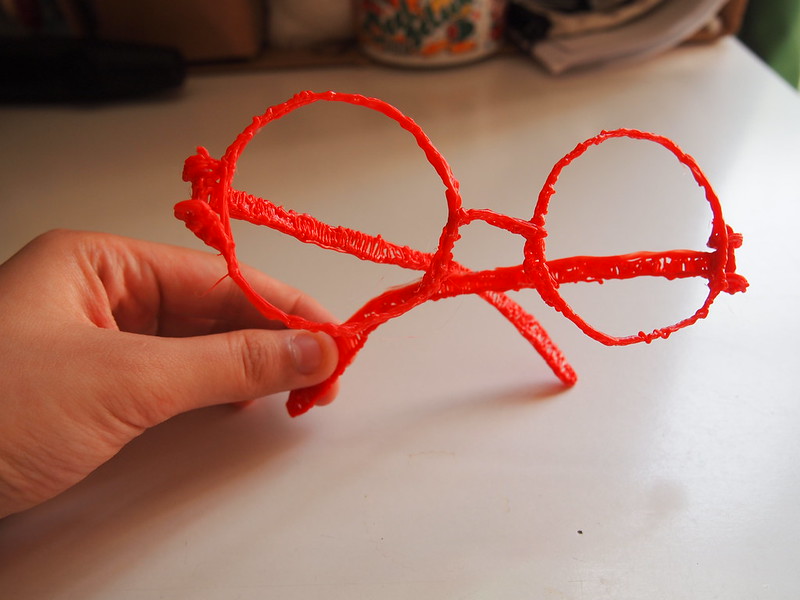
Improved Glasses

P5182676

Improved Glasses (able to fold up)

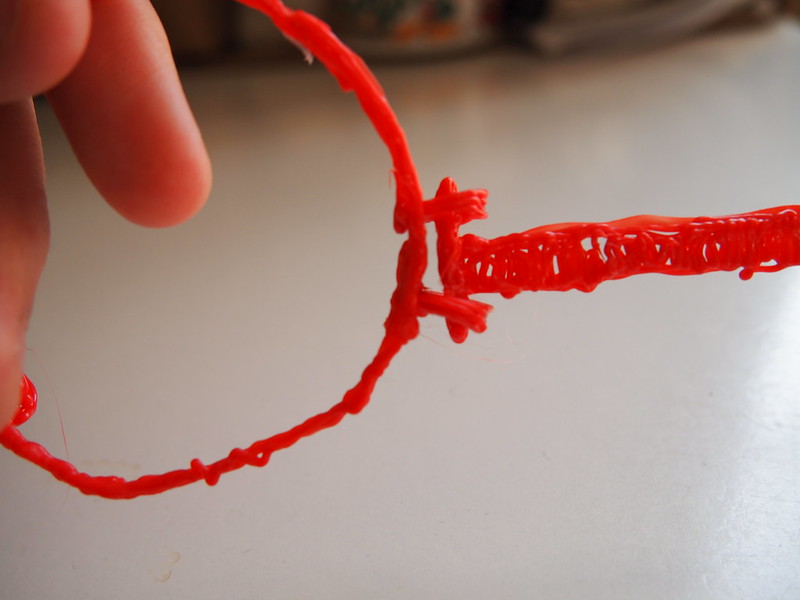
P5182675

Detail of Hinge

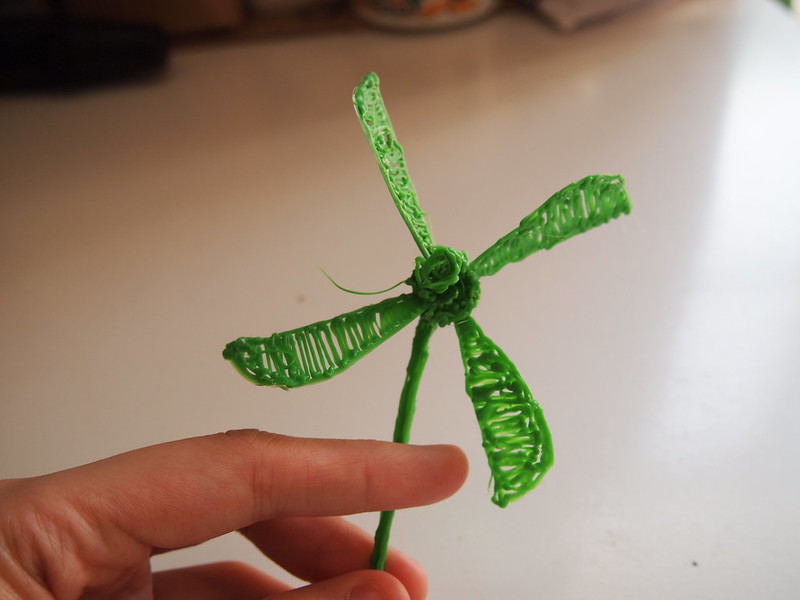
P5182679

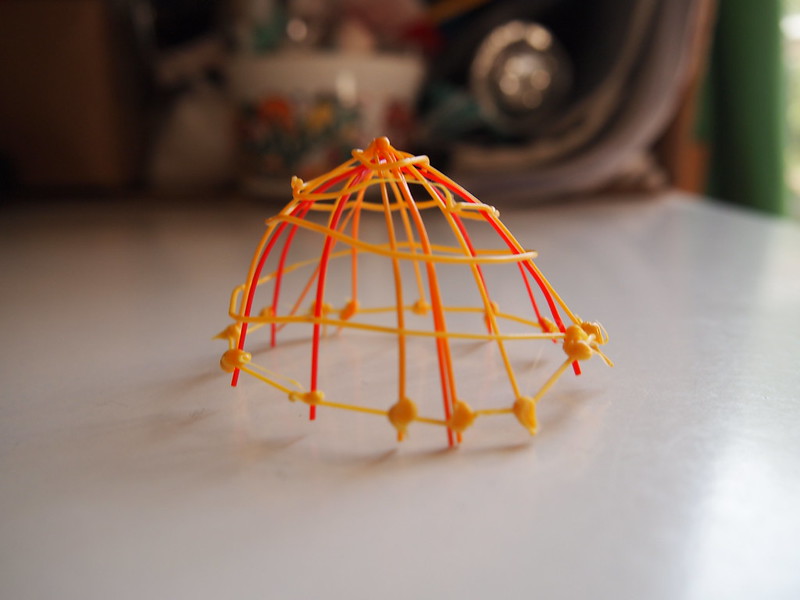
Windmill

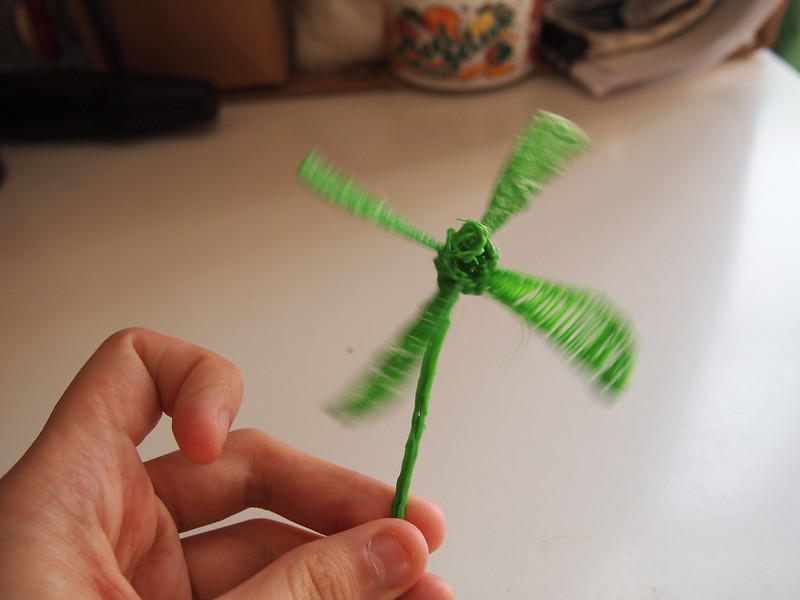
P5182681

Windmill (in action - it even works smoothly when you blow at it!)

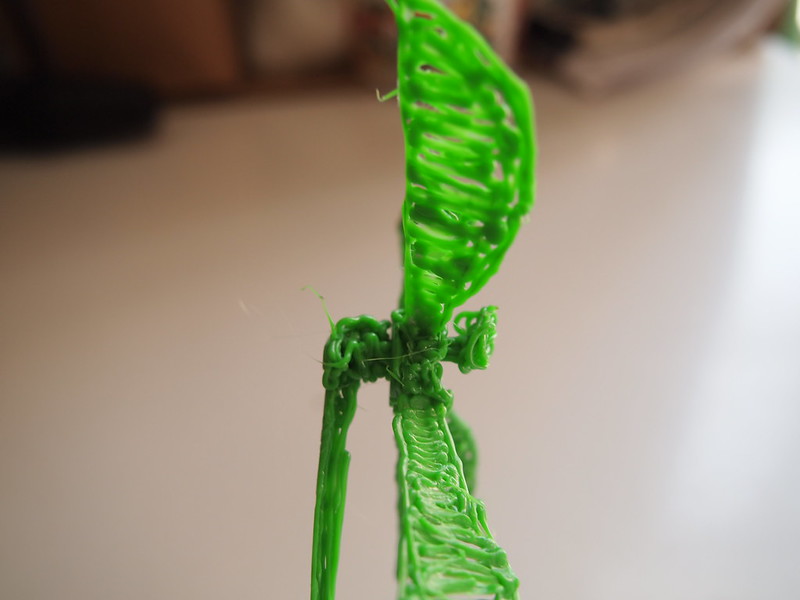
P5182683

Detail of Spindle

Here are some more of my notes on 3Doodler use:

Loading plastic: You really have to jam it in when feeding it a new filament for the first time, until it "catches". The first time I loaded the plastic in, it seemed there was something yellow jammed inside it. I pushed and pushed very hard whilst pressing the slow extrusion button until the blockage came out. Basically you might find that you would need to push pretty hard to get it loaded; I was worried I was pushing too hard but yes that's the way it is.

Speed of extrusion: There are two extrusion speed options, one is "fast" (bottom button, closer to nib) and one is "slow" (top button). I find the "fast" speed too fast and only use the "slow" speed.

Removing plastic: Press both the "fast" and "slow" extrusion button to make the filament go in reverse so you can remove it.

Colour Bleed of plastic: A major issue I noticed is that the previous colour filament may bleed into the new colour filament if the former is a stronger colour than the latter. If your nib has a bit of melted filament on it, if you accidentally touch the nib on something else you might transfer that melted colour onto your other work, or even melt a little "dirty coloured" dent into your other work.

Drawing: As they recommend in their user guides, you should use a piece of paper as your base for drawing. This piece of paper will likely be destroyed, but its essential to give your drawing some starting point which does not move. The ABS will peel off easily when cool - sometimes almost too easily, so be careful while drawing.

When finishing a line, just stop pressing the button and stop moving the 3Doodler and hold it there until it all hardens. When it has (a few seconds later) you can just gently but sharply tug away from the line to detach the 3Doodler from the line that was drawn. If you move immediately after letting go out the extrusion button, this may cause a messy thin strand of residual melted ABS to continue to spool out.

For flat designs, you can draw an outline on paper and then outline it with the 3Doodler - just don't use pencil as it will transfer to the ABS. When doing this, take care NOT to press too hard into the paper if not you will be squeezing the nib into the extruded material, forming a small rivulet, gouged out in the centre of the line of extruded filament. There is a specific distance (which you will discover) at which you should hold the 3Doodler so that its extrusion comes out uninhibited but also straight/well-controlled so it doesn't go crazy and suddenly spool a big uncontrolled squiggle into your work. Sometimes when I extrude for too long in one go or try to drag out the filament more, I get small airbubbles in my extrusion.

For drawing circles, hold the 3Doodler upright when extruding it. Avoid holding the nib at an angle which will increase the likelihood of the circle suddenly collapsing or gathering up on itself, especially with ABS which is easily removed from the paper.

For straight lines in the air, make sure at least one end is grounded on a paper or a fixed point. Allow some quantity of ABS to extrude, and then quickly pull the resultant strand completely straight and hold it there until it hardens. If you don't want straight lines, you can nudge the extrusion gently for a moment or two after it has been extruded and you can guide it into a shape before it totally hardens.

Recycling Material: ABS (Acrylonitrile butadiene styrene) and PLA (Polylactic acid) are both technically possible to recycle. PLA is a bioplastic derived from corn starch so it technically can biodegrade very very slowly, although it would need to be sent to an industrial composting facility for that to happen on an appreciable level.

P5182686

Friday, 16 May 2014

Central Manchester Bouncy Castle Cat Cafe and Chocolate Horse Riding School

Recently I visited Manchester for a conference on BIG RUINS. I thought it would be funny to see Tim Edensor and other ruin theorists speak in person, so I hauled myself up north for a day trip to listen to the talks. It had been a completely fortuitous thing in any event, since the main reason I was going was because on the day after I thought about going to the BIG RUINS CONFERENCE, I chanced upon a big advert in the back of the London Evening Standard and there was an advert with the words "seriously seductive seat sale: £9.50 London to MANCHESTER". Furthermore, the conditions of the travel for the sale were: EXACTLY ON THE DAY OF THE CONFERENCE. Could there not be a clearer sign from the powers that be that I was meant to go to Manchester?

(More on BIG RUINS in another post...)

P5152643

On my way back to Manchester Piccadily I passed an empty, derelict-looking construction site on Princess Street.

P5152637

P5152636

From what was printed on its temporary fencing, it seemed slated to be developed into some upmarket boutique apartments, hotel, and office space.

P5152634

P5152625

On one of the blank construction walls, there were these stickers arranged in rows…

P5152626

Bouncy Castle

P5152627

Useful

P5152628

Less bleak

P5152631

A cat cafe

P5152629

Shark tank!

P5152639

Horse riding school

P5152640

Chocolate factory

P5152630

Etc...

Somehow I think any of these would be more interesting than more unspecified apartments, generic hotels, or more industry-non-specific office spaces. But everything is about the money unfortunately. But at the same time, why do so many people make excuses for not doing what they really want to do? Why don't people have ambitions to do crazy things anymore? "HONEY, I'VE DECIDED TO QUIT MY JOB AND PURSUE MY AMBITION OF BECOMING THE BOSS OF A BOUNCY CASTLE CAT CAFE WITH A SHARK TANK AND CHOCOLATE HORSE RIDING SCHOOL JUST OUTSIDE OF IT - RIGHT IN THE HEART OF CENTRAL MANCHESTER! Why yes then, I should buy this plot of land on Princess street with all my savings and redevelop it before it gets turned into another poncy expensive hotel..."

I have always liked this sort of approach to finding out more about a city. If you never ask people what they really think a city should look like, how do you know what the city should really look like? Most people don't always get to weigh in on these decisions to the changes in their urban environment, but these are questions that should be constantly asked.

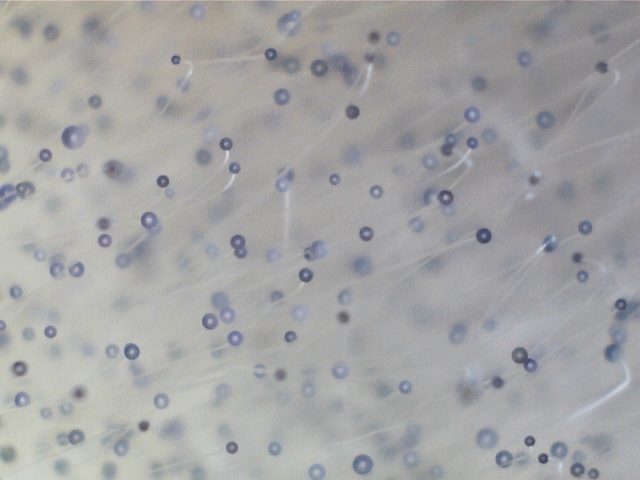
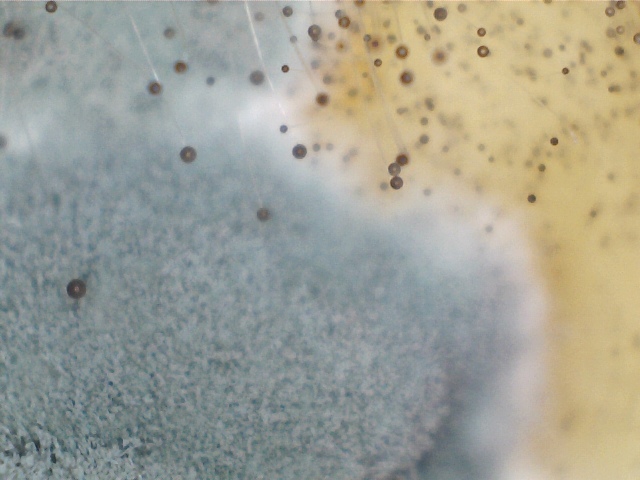
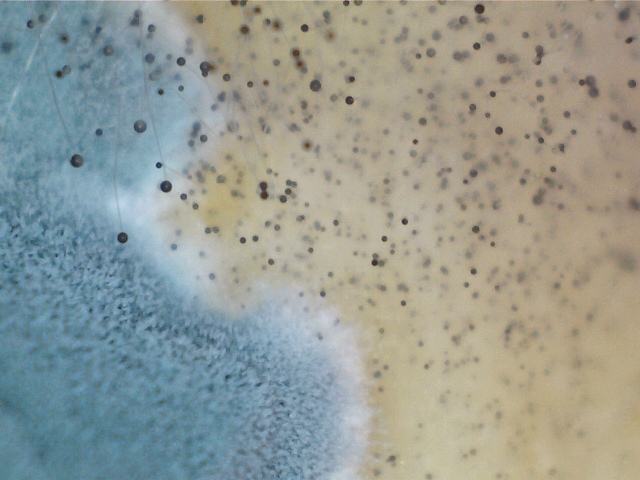
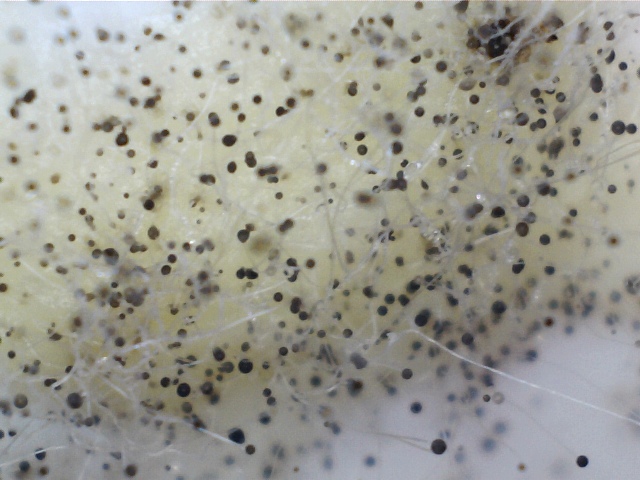
Mucor Mould Magnification

The USB Microscope has been very handy indeed: NOW EVERY CASE OF FOOD SPOILAGE CAN BE TURNED INTO AN INSTANT SCIENCE CLASS!

Here are some images of some mould which I believe (or would like to think) is Mucor mould. The mould colony was extremely fast growing (appeared within two days on Anna's mashed potato which had been accidentally left in the open), and had very dense upright sporangiophores which had long columella.

Those who are squeamish about mould colonies may be glad to know for a fact that Mucor cannot grow on or inside humans and other warm endothermic creatures - because they cannot live in warm environments which are close to the human body temperature of 37 C.

However it is entirely possible to be allergic to mould, and then again, I suppose if your feet were permanently sequestered in very cold damp shoes, your feet might get mouldy (it would be likelier to be another type of mould then though). Well in any case, the mould is unlikely to grow inside you if you inhale it by accident.

1405152055_8

1405152042_1

1405152043_2

1405152049_5

1405152050_6